Kirjojen hintavertailu. Mukana 11 714 064 kirjaa ja 12 kauppaa.

Kirjahaku

Etsi kirjoja tekijän nimen, kirjan nimen tai ISBN:n perusteella.

1000 tulosta hakusanalla Jonathan Edwards

Biografía de Jonathan Edwards: Su Vida, Obra Y Pensamiento
Descubre la cautivadora vida y las profundas ideas de Jonathan Edwards en este convincente libro del aclamado autor Juan Carlos de la Cruz.A lo largo de 16 cap tulos, descubrir s el mundo en el que Edwards vivi , desde el vibrante panorama religioso de Nueva Inglaterra hasta su familia, infancia y educaci n. Sigue su transformador viaje de conversi n, llamado y peregrinaci n espiritual, siendo testigo del impacto en su vida y ministerio. Explora su matrimonio, hijos y las profundas ra ces de su herencia ministerial. Obt n perspicacia sobre su vida laboral, car cter y m todo nico de predicaci n que conmovi a innumerables corazones. Ad ntrate en su influyente teolog a y enriquece tu vida con la sabidur a presente en sus escritos.Presencia la importancia de los avivamientos y su papel en la vida de Edwards. Conoce a sus renombrados amigos y mentores, quienes moldearon su extraordinario viaje, y explora las circunstancias que rodearon su muerte, marcando el fin de una era notable.En este libro meticulosamente investigado y cautivadoramente escrito, Juan Carlos de la Cruz te lleva en un viaje transformador a trav s de la vida extraordinaria de Jonathan Edwards. Descubre al hombre detr s de las ideas influyentes y sum rgete en el rico contexto hist rico que dio forma a su legado extraordinario.The Biography of Jonathan EdwardsDiscover the captivating life and profound insights of Jonathan Edwards in this compelling book by acclaimed author Juan Carlos de la Cruz. Along the 16 chapters, you will uncover the world in which Edwards lived, from the vibrant religious landscape of New England to his family, childhood, and education. Follow his transformative journey of conversion, calling, and spiritual pilgrimage, witnessing the impact on his life and ministry. Explore his marriage, children, and the deep roots of his ministerial heritage. Gain insights into Edwards' working life, character, and unique preaching method that touched countless hearts. Delve into his influential theology and be enriched by the wisdom within his writings. Witness the significance of revivals and their role in Edwards' life. Learn about his renowned friends and mentors, who shaped his remarkable journey and explore the circumstances surrounding his death, which marked the end of a remarkable era. In this meticulously researched and captivatingly written book, Juan Carlos de la Cruz takes you on a transformative journey through the extraordinary life of Jonathan Edwards. Discover the man behind the influential ideas and immerse yourself in the rich historical context that shaped his extraordinary legacy.
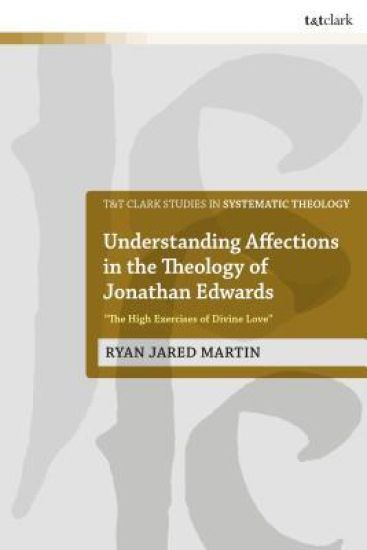
Understanding Affections in the Theology of Jonathan Edwards
This volume argues that the notion of “affections” discussed by Jonathan Edwards (and Christian theologians before him) means something very different from what contemporary English speakers now call “emotions.” and that Edwards’s notions of affections came almost entirely from traditional Christian theology in general and the Reformed tradition in particular. Ryan J. Martin demonstrates that Christian theologians for centuries emphasized affection for God, associated affections with the will, and distinguished affections from passions; generally explaining affections and passions to be inclinations and aversions of the soul. This was Edwards’s own view, and he held it throughout his entire ministry. Martin further argues that Edwards’s view came not as a result of his reading of John Locke, or the pressures of the Great Awakening (as many Edwardsean scholars argue), but from his own biblical interpretation and theological education. By analysing patristic, medieval and post-medieval thought and the journey of Edwards’s psychology, Martin shows how, on their own terms, pre-modern Christians historically defined and described human psychology.
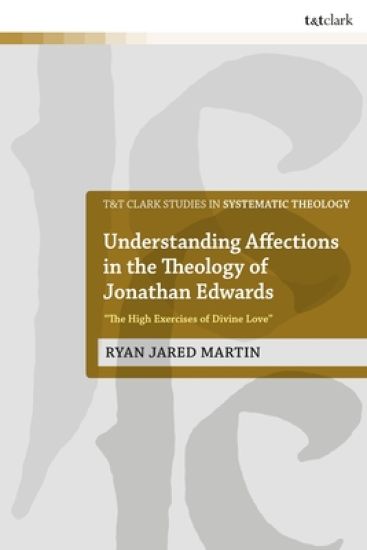
Understanding Affections in the Theology of Jonathan Edwards
This volume argues that the notion of “affections” discussed by Jonathan Edwards (and Christian theologians before him) means something very different from what contemporary English speakers now call “emotions.” and that Edwards’s notions of affections came almost entirely from traditional Christian theology in general and the Reformed tradition in particular. Ryan J. Martin demonstrates that Christian theologians for centuries emphasized affection for God, associated affections with the will, and distinguished affections from passions; generally explaining affections and passions to be inclinations and aversions of the soul. This was Edwards’s own view, and he held it throughout his entire ministry. Martin further argues that Edwards’s view came not as a result of his reading of John Locke, or the pressures of the Great Awakening (as many Edwardsean scholars argue), but from his own biblical interpretation and theological education. By analysing patristic, medieval and post-medieval thought and the journey of Edwards’s psychology, Martin shows how, on their own terms, pre-modern Christians historically defined and described human psychology.
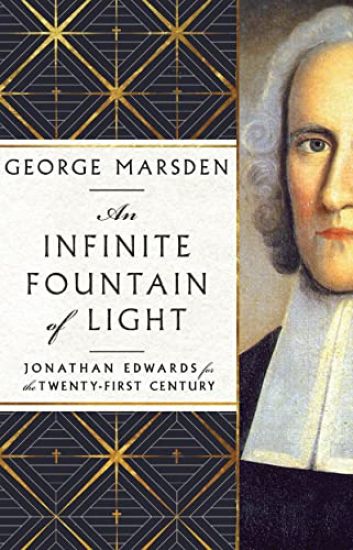
An Infinite Fountain of Light – Jonathan Edwards for the Twenty–First Century
Christians need to pause once in a while to get their bearings. For perspective on our own times and how we got here, it helps to listen to wise guides from other eras. In An Infinite Fountain of Light, the renowned American historian George Marsden illuminates the landscape with wisdom from one such mentor: Jonathan Edwards. Drawing on his deep expertise on Edwards and American culture, Marsden explains where Edwards stood within his historical context and sets forth key points of his complex thought. By also considering Benjamin Franklin and George Whitefield, two of Edwards's most influential contemporaries, Marsden unpacks the competing cultural and religious impulses that have shaped our times. In contrast, Edwards offered us an exhilarating view of the centrality of God's beauty and love. Christians' love for God, he taught, can be the guiding love of our lives, opening us to transformative joy and orienting all our lesser loves. "There is an infinite fullness of all possible good in God, a fullness of every perfection, of all excellency and beauty, and of infinite happiness," wrote Edwards. "This infinite fountain of light should, diffusing its excellent fullness, pour forth light all around." With Marsden's guidance, readers will discover how Edwards's insights can renew our own vision of the divine, of creation, and of ourselves.
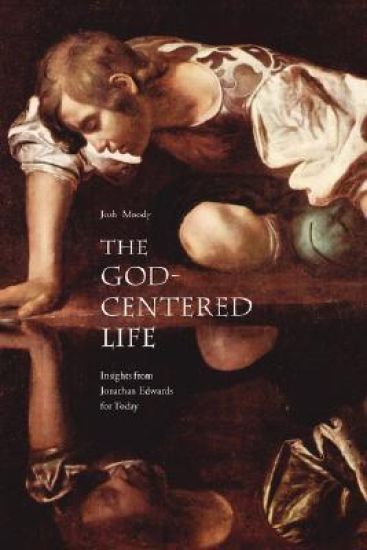
The God-Centered Life: Insights from Jonathan Edwards for Today
Are we looking mostly to please God or ourselves? The myth of Narcissus describes a young man who dies because he falls in love with his own reflection. When surrounded by the Narcissistic messages of contemporary society you ve got to believe in yourself we need to listen to a Bible teacher from a past age who can drag us back to reflecting less on ourselves and more on God. Jonathan Edwards, perhaps the greatest of all American Bible teachers, was so God-centered. In The God-Centered Life, Dr. Josh Moody calls us to listen to Edwards in order that we might stop living for ourselves and start living the God-centered life. How to do church, teach the Bible, have a healthy family, deal with failure, engage postmodernism, assess spiritual experiences and more are envisioned through the eyes of Jonathan Edwards with freshness and accessibility. A study guide is included and further resources can be found at . Josh Moody (PhD, University of Cambridge) is Senior Pastor of Trinity Baptist Church, New Haven, Connecticut, serving the Yale community and surrounding New England region. He is also the author of Authentic Spirituality and Jonathan Edwards and the Enlightenment. The God-Centered Life is a graced prescription for truly engaging today s culture.... R. Kent Hughes, Senior Pastor Emeritus, College Church in Wheaton Tremendous. Extremely well-written. It will be a blessing for many.... I heartily commend this work as a timely and valuable resource.... David S. Dockery, President, Union University Josh Moody is uniquely qualified to bring the reader along the path of a greater joy of knowing God and loving God through a person whose life was ablaze for this Triune God of glory and grace. Paul Lim, Assistant Professor of the History of Christianity, Vanderbilt University Potent, thoughtful, and constructive.... R. Albert Mohler, Jr., President, Southern Baptist Theological Seminary At last, someone who stands in the tradition of Edwards as a pastor-scholar, interpreting and applying the lessons from Jonathan Edwards for today.... E. David Cook, Holmes Professor, Wheaton College, Fellow, Green College, Oxford I recommend this book most highly, praying that Josh Moody s labors will encourage the kinds of Edwards influenced lives and congregations that our world so desperately needs.... Douglas A. Sweeney, Associate Professor of Church History, Trinity Evangelical Divinity School Josh Moody (PhD, University of Cambridge) is Senior Pastor of Trinity Baptist Church, New Haven, Connecticut, serving the Yale community and surrounding New England region. He is also the author of Authentic Spirituality and Jonathan Edwards and the Enlightenment.
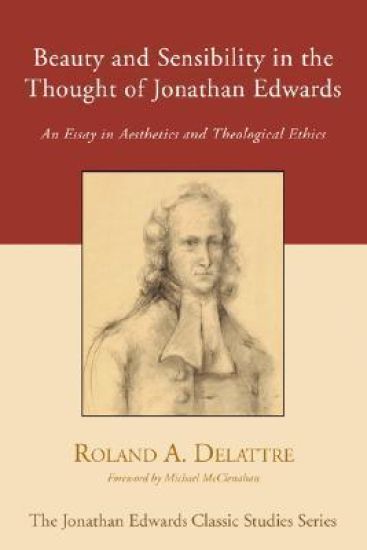
Beauty and Sensibility in the Thought of Jonathan Edwards

Beauty and Sensibility in the Thought of Jonathan Edwards

Roland Delattre; Michael McClenahan

Wipf Stock Publishers
2006
pokkari
This illuminating analysis of Jonathan Edwards' philosophical-theological-ethical program focuses on his concept of beauty as our central clue to the nature of reality and the life of God. Delattre shows that beauty not only provides Edwards with a model for the manner of divine governance but operates throughout his thought as both the goal and means of redemption. Essential to his understanding of the operation of beauty as the law of moral order is Edwards' aesthetic/affectional model of the self, which corresponds to his aesthetic articulation of the system of being and good. Thus the distinguishing mark of Edwards' theology--his elevation to centrality of both the primary beauty of being's cordial consent to being and the secondary beauty of harmony and proportion--is shown to be the key to his interpretation of the dynamics of the moral and spiritual life.
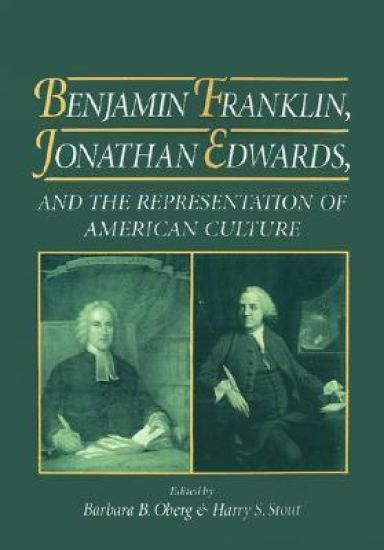
Benjamin Franklin, Jonathan Edwards, and the Representation of American Culture
This is an interdisciplinary collection of comparative essays which look at aspects of the thought of Jonathan Edwards and Benjamin Franklin and consider the place of these two men in American culture. The essays have their origin in a conference held at Yale University, the home of the modern editions of the papers of both these 18th century American thinkers. Franklin and Edwards are probably the two most studied colonial figures and have often been the subject of comparative exercises. In such studies, they have often been treated as having the characteristics of mutually exclusive ideal types and set into categories as different and opposed as `traditional' and `modern.' In the present volume, however, polemical contrasts disappear and Edwards and Franklin emerge as contrapuntal themes in a larger unity.
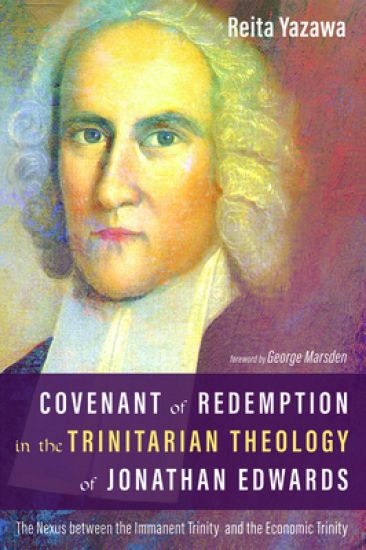
Covenant of Redemption in the Trinitarian Theology of Jonathan Edwards

Covenant of Redemption in the Trinitarian Theology of Jonathan Edwards

Reita Yazawa; George Marsden

Pickwick Publications
2019
pokkari
Recently, the immanent Trinity (God as in himself) has been criticized as abstract and impractical as opposed to the economic Trinity (God in relation to the world). Many scholars argue that the immanent Trinity is detached from the real life of believers and God's economic work of redemption and thus abstract and impractical. But is this assumption itself really true? What if the blueprint of God's work of redemption is already located in the immanent Trinity as the divine idea? What if Jonathan Edwards, arguably the American greatest theologian, expounds this doctrine as a vital driving force in his theology? Rediscovering the doctrine of the covenant of redemption will help us to see that the immanent Trinity actually is not abstract, but highly practical, simply because the redemption of the believers hinges on the divine plan located there. This study is a fruit of the recent convergence of the resurging doctrine of the Trinity and the renaissance of studies of Jonathan Edwards.