Kirjojen hintavertailu. Mukana 12 016 292 kirjaa ja 12 kauppaa.

Kirjahaku

Etsi kirjoja tekijän nimen, kirjan nimen tai ISBN:n perusteella.

1000 tulosta hakusanalla Jonathan Swift

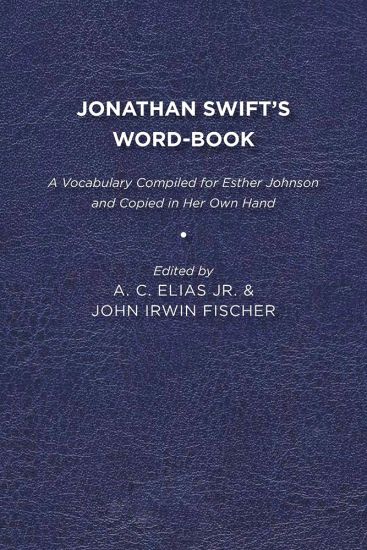
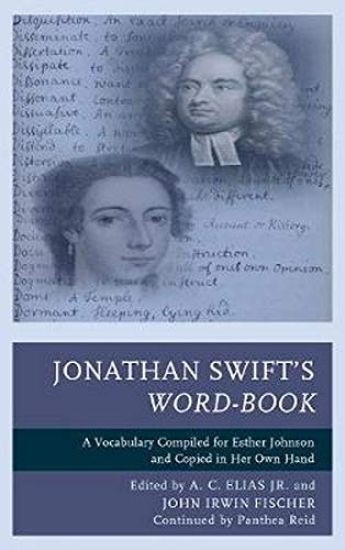
Jonathan Swift’s Word-Book

Jonathan Swift’s Word-Book

University of Delaware Press
2017
sidottu
Appearing for this first time in print, Word-Book is Swift’s dictionary of words and definitions for his protégé Esther Johnson. The volume includes photographs from and a transcript of the original book. Supplementing the transcript are the editors notations showing Swift’s corrections in Johnson’s text, essays comparing Swift’s dictionary to others available at that time and exploring the social and psychological milieu in which it was written, and detailed appendices.
Jonathan Swift's Word-Book

Jonathan Swift's Word-Book

ELIAS FISCHER REI

University of Delaware Press
2017
sidottu
Since the 1690s, Jonathan Swift had been formulating a list of words and definitions for his protégé Esther Johnson, beginning with terms from the Book of Common Prayer. His was apparently an ongoing list, kept rather haphazardly, with open spaces for adding new words.
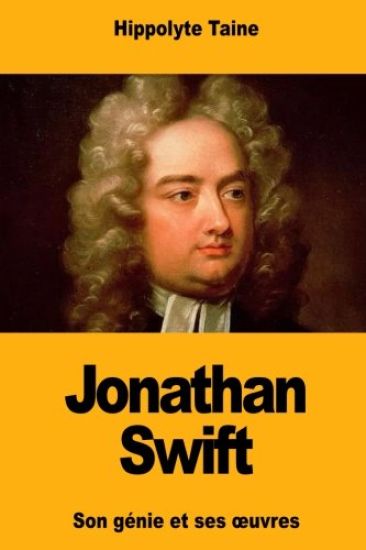
Jonathan Swift: Son génie et ses oeuvres

Jonathan Swift: Son génie et ses oeuvres

Hippolyte Taine

Createspace Independent Publishing Platform
2018
nidottu
En 1685, dans la grande salle de l'universit de Dublin, les professeurs occup s conf rer les grades de bachelier eurent un singulier spectacle: un pauvre colier, tre bizarre, gauche, aux yeux bleus et durs, orphelin, sans amis, mis rablement entretenu par la charit d'un oncle, d j refus pour son ignorance en logique, se pr sentait une seconde fois sans avoir daign lire la logique. En vain son tutor lui apportait les in-folio les plus respectables: Smeglesius, Keckermannus, Burgersdicius. Il en feuilletait trois pages, et les refermait au plus vite. Quand vint l'argumentation, le proctor fut oblig de lui mettre ses arguments en forme. On lui demandait comment il pourrait bien raisonner sans les r gles; il r pondit qu'il raisonnait fort bien sans les r gles. Cet exc s de sottise fit scandale; on le re ut pourtant, mais grand'peine, speciali gratia, dit le registre, et les professeurs s'en all rent, sans doute avec des ris es de piti , plaignant le cerveau d bile de Jonathan Swift...
Jonathan Swift, Dean of St Patricks writes again
This is another consignment of spiritually inspired works. The communicator is a spiritual soul called,'JONATHAN SWIFT'. Born 1667. Died 1745. He would send these writings through all day and every day, if I allowed it. Yet he is always available immediately when I want to link up with him. These wonderful epistles are covering every aspect of human feelings and fears, and also the solutions to many of our day to day problems. The missives in these first five books for me completely prove 'Life after death'. What a wonderful spirit. I feel deeply honoured that he chose me to express himself through.
Jonathan Swift's "On Poetry: A Rapsody"

Jonathan Swift's "On Poetry: A Rapsody"

Melanie Maria Just

Peter Lang Publishing Inc
2004
nidottu
"On Poetry: A Rapsody" is one of Jonathan Swift's most complex and controversial poems. This study presents, for the first time, a detailed analysis and interpretation of what, on a surface level, has to be called a mock "ars poetica," but which, on a deeper level, is a highly allusive political satire. The main emphasis has been placed on providing a commentary which seeks to make this 18th-century text within its historical, political, and religious context comprehensible to present-day readers.
Jonathan Swift’s Allies
The patent for coining copper money granted by King George I to the English manufacturer William Wood aroused nationwide protest in Ireland. It led to the publication of Jonathan Swift’s «Drapier’s Letters», in which the Dean of St. Patrick’s Cathedral, Dublin, attacked both the patent and England’s Irish policy. But this is not the whole story. This annotated edition contains more than 100 pamphlets, declarations, poems, and songs that were published during the dispute. Most of the reproduced texts are extremely rare and have hitherto lain dormant in various libraries. They illustrate that the protest was in fact carried on by the Irish population at large, who regarded the coinage scheme as a severe intrusion into the nation’s circulating cash which threatened to ruin the country’s economy.