

Kirjahaku
Etsi kirjoja tekijän nimen, kirjan nimen tai ISBN:n perusteella.
1000 tulosta hakusanalla Jonathon Stuart Wright

Don't Take Me Home - Following Wales At Euro 2016
Jonathon Rogers
Createspace Independent Publishing Platform
2016
nidottu
The summer of 2016 provided Welsh football fans with a collection of unrivalled sporting memories, but for die-hard supporter Scott Thomas, the tournament would end up meaning much more than that.With his personal and professional life in disarray, Euro 2016 provides Scott with the escape from reality he has been craving. But as he's about to embark on a long-awaited journey across France, events begin to conspire against him. Scott must take drastic measures to be a part of the Red Dragons' historic run to the final four, juggling his love life, job prospects, bank balance - and everything else life has decided to throw at a man who just wants to enjoy his football.As the summer rolls on, Scott's fate and the fortunes of his country's football team intertwine. But whilst Wales's achievements on the pitch reach a grand crescendo at the semi-final stage, what will Scott's life look like by then?

Rhyme & Reason: Poetic Reflections of an Aspiring Theologian
Jonathon Andrew Hallett
Createspace Independent Publishing Platform
2017
nidottu

Compared to previous generations, today’s older adult is much more likely to have natural teeth. Because aging and systemic diseases can influence oral health and function, it is important for clinicians to be able to recognize, diagnose and treat oral conditions in the elderly population. This monograph, part of the American Academy of Oral Medicine's (AAOM) Clinician's Guide series is intended as a quick reference to the etiologic factors, clinical description, currently accepted therapeutic management, and patient education of the more common oral conditions found in geriatric patients.Since oral disease in the elderly can lead directly or indirectly to malnutrition, altered communication, increased susceptibility to infectious diseases, oral health professionals can play a vital role in helping the elderly to achieve optimum quality of life.The book also offers topical and systemic drug regimens for treatment of common oral disorders with special attention to the fact that the pharmacokinetics of drug absorption, distribution and metabolism are considerably altered in elderly patients.
Cryptography, the science of secret writing, is the biggest, baddest security tool in the application programmer's arsenal. Cryptography provides three services that are crucial in secure programming. These include a cryptographic cipher that protects the secrecy of your data; cryptographic certificates, which prove identity (authentication); and digital signatures, which ensure your data has not been damaged or tampered with. This book covers cryptographic programming in Java. Java 1.1 and Java 1.2 provide extensive support for cryptography with an elegant architecture, the Java Cryptography Architecture (JCA). Another set of classes, the Java Cryptography Extension (JCE), provides additional cryptographic functionality. This book covers the JCA and the JCE from top to bottom, describing the use of the cryptographic classes as well as their innards. The book is designed for moderately experienced Java programmers who want to learn how to build cryptography into their applications. No prior knowledge of cryptography is assumed. The book is peppered with useful examples, ranging from simple demonstrations in the first chapter to full-blown applications in later chapters. Topics include: * The Java Cryptography Architecture (JCA) * The Java Cryptography Extension (JCE) * Cryptographic providers * The Sun key management tools * Message digests, digital signatures, and certificates (X509v3) * Block and stream ciphers * Implementations of the ElGamal signature and cipher algorithms * A network talk application that encrypts all data sent over the network * An email application that encrypts its messages Covers JDK 1.2 and JCE 1.2.
Rainforest Medicine
Jonathon Miller Weisberger; Daniel Pinchbeck
North Atlantic Books,U.S.
2013
pokkari
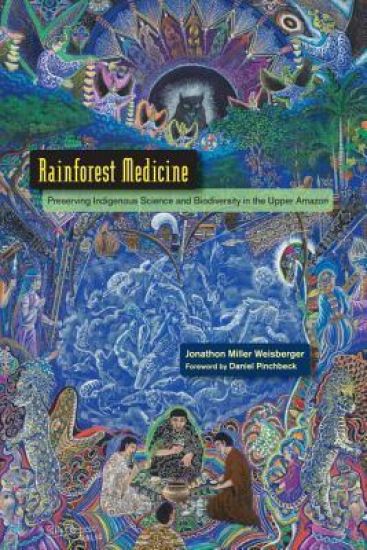
Chronicling the practices, legends, and wisdom of the vanishing traditions of the upper Amazon, this book reveals the area’s indigenous peoples’ approach to living in harmony with the natural world. Rainforest Medicine features in-depth essays on plant-based medicine and indigenous science from four distinct Amazonian societies: deep forest and urban, lowland rainforest and mountain.The book is illustrated with unique botanical and cultural drawings by Secoya elder and traditional healer Agustin Payaguaje and horticulturalist Thomas Y. Wang as well as by the author himself. Payaguaje shares his sincere imaginal view into the spiritual life of the Secoya; plates of petroglyphs from the sacred valley of Cotundo relate to an ancient language, and other illustrations show traditional Secoya ayahuasca symbols and indigenous origin myths. Two color sections showcase photos of the plants and people of the region, and include plates of previously unpublished full-color paintings by Pablo Cesar Amaringo (1938-2009), an acclaimed Peruvian artist renowned for his intricate, colorful depictions of his visions from drinking the entheogenic plant brew, ayahuasca (“vine of the soul” in Quechua languages).Today the once-dense mysterious rainforest realms are under assault as the indiscriminate colonial frontier of resource extraction moves across the region; as the forest disappears, the traditional human legacy of sustainable utilization of this rich ecosystem is also being buried under modern realities. With over 20 years experience of ground-level environmental and cultural conservation, author Jonathon Miller Weisberger’s commitment to preserving the fascinating, unfathomably precious relics of the indigenous legacy shines through. Chief among these treasures is the “shimmering” “golden” plant-medicine science of ayahuasca or yajé, a rainforest vine that was popularized in the 1950s by Western travelers such as William Burroughs and Alan Ginsberg. It has been sampled, reviled, and celebrated by outsiders ever since.Currently sought after by many in the industrialized West for its powerful psychotropic and life-transforming effects, this sacred brew is often imbibed by visitors to the upper Amazon and curious seekers in faraway venues, sometimes with little to no working knowledge of its principles and precepts. Perceiving that there is an evident need for in-depth information on ayahuasca if it is to be used beyond its traditional context for healing and spiritual illumination in the future, Miller Weisberger focuses on the fundamental knowledge and practices that guide the use of ayahuasca in indigenous cultures. Weaving first-person narrative with anthropological and ethnobotanical information, Rainforest Medicine aims to preserve both the record and ongoing reality of ayahuasca’s unique tradition and, of course, the priceless forest that gave birth to these sacred vines. Featuring words from Amazonian shamans–the living torchbearers of these sophisticated spiritual practices–the book stands as testimony to this sacred plant medicine’s power in shaping and healing individuals, communities, and nature alike.

The field of educational psychology is primarily concerned with teaching and learning. Educational psychology has a long historical past and an extensive record of conducting empirical research into the teaching/learning process. Educational psychology has also been involved with the topics of motivation, intelligence, memory, cognition, intellectual development and evaluation and assessment. Over the past 50 years, educational psychology has been predominantly involved with the learning processes of the " normal, average " student. However, over the past 20 years, mainstreaming and later inclusion has presented an additional challenge for educational psychologists and classroom teachers. This book presents leading research on cognition and learning, individual differences and motivation.
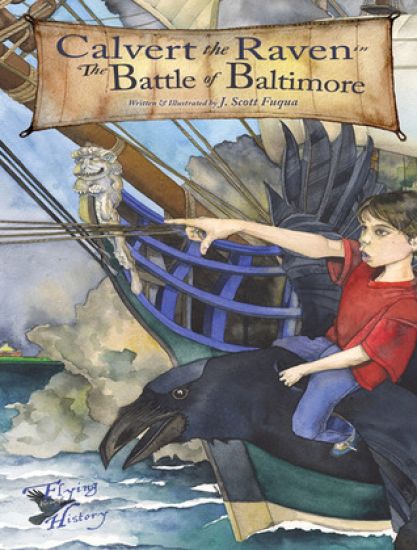
You think history is boring? Baltimore kid Daniel does -- until a chance encounter with a magical talking raven named Calvert sends him flying back to 1814, where he finds his home city under siege by a British army on the verge of defeating the United States.
You think history is boring? Baltimore kid Daniel does -- until a chance encounter with a magical talking raven named Calvert sends him flying back to 1814, where he finds his home city under siege by a British army on the verge of defeating the United States.

"Blighted Beginnings": Coming of Age in Independent Ireland offers a much needed examination of the manner in which narratives of emerging selfhood were used persistently by authors in order to critique and reform problems that have plagued post-independence Ireland. The study begins by examining the struggles peculiar to the generation that either came of age during the Irish revolutionary period or immediately after independences whose individual identity-formation coincides with the birth of the Free State. It then looks at how the freedoms of Anglo-Irish children were circumscribed by the traditions of their class, the inheritance of property, and by sectarian prejudice, thereby impeding their maturity, and how the Big House tradition is used both to redress the privilege and colonial abuses of their class and respond to the culture of their resentment that complicated Anglo-Irish life after independence. This study also analyzes how religious vocations, widely encouraged in Ireland, defied the expectations of maturity by insisting upon a renunciation of worldly ambition, an ongoing paternal and institutional dependency, sexual abstinence, and social separation.
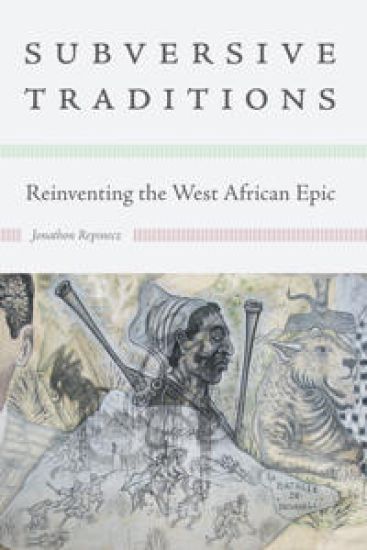
How can traditions be subversive? The kinship between African traditions and novels has been under debate for the better part of a century, but the conversation has stagnated because of a slowness to question the terms on which it is based: orality vs. writing, tradition vs. modernity, epic vs. novel. These rigid binaries were, in fact, invented by colonialism and cemented by postcolonial identity politics. Thanks to this entrenched paradigm, far too much ink has been poured into the so-called Great Divide between oral and writing societies, and to the long-lamented decline of the ways of old. Given advances in social science and humanities research—studies in folklore, performance, invented traditions, colonial and postcolonial ethnography, history, and pop culture—the moment is right to rewrite this calcified literary history. This book is not another story of subverted traditions, but of subversive ones. West African epics like Sunjata, Samori, and Lat-Dior offer a space from which to think about, and criticize, the issues of today, just as novels in European languages do. Through readings of documented performances and major writers like Yambo Ouologuem and Amadou Hampâté Bâ of Mali, Ahmadou Kourouma of Ivory Coast, and Aminata Sow Fall and Boubacar Boris Diop of Senegal, this book conducts an entirely new analysis of West African oral epic and its relevance to contemporary world literature.
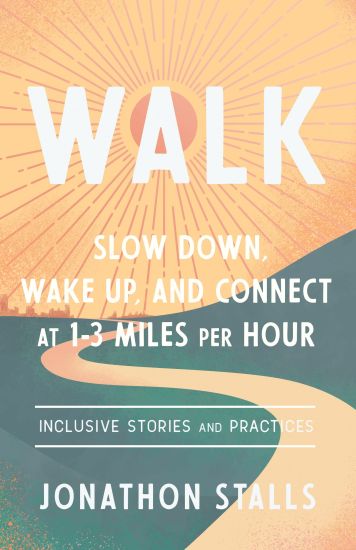
A transformative collection of essays on the power of walking to connect with ourselves, each other, and nature itself. In 2010, Jonathon Stalls and his blue-heeler husky mix began their 242-day walk across the United States, depending upon each other and the kindness of strangers along the way. In this collection of essays, Stalls explores walking as waking up: how a cross-country journey through the family farms of West Virginia, the deep freedom of Nevada's High desert, and everywhere in between unlocked connections to his deepest aches and dreams--and opened new avenues for renewal, connection, and change. While most of us won't walk or roll across the country, the deep wisdom and insights that Stalls receives from the people, land, and animals he meets on his pilgrimage have profound impacts for each of us. He shares how walking deepened his relationship to himself as a gay man, offering deep and clarifying emotional medicine. He confronts the systemic racism, classism, and ableism that shape and reshape the communities he walks through. And he invites readers to become awakened activists, to begin healing our culture's profound separation from the natural world. WALK is for those who crave to feel and embody, not just know and study, their way through complex themes that live in each chapter: vulnerability, human dignity, presence, mystery, and resistance. With dedicated practices--like connecting to Earth stewardship, moving into vulnerability, and walking and rolling with intention--Stalls' WALK is an urgent and glorious call to slow down, look around, and engage with the world in front of us. It awakens us to what we miss when we're driving by, flying over, and rushing past what surrounds us. It's an invitation to move, to connect, to participate deeply in the world--and to dissolve the barriers that disconnect us from each other and the living Earth.
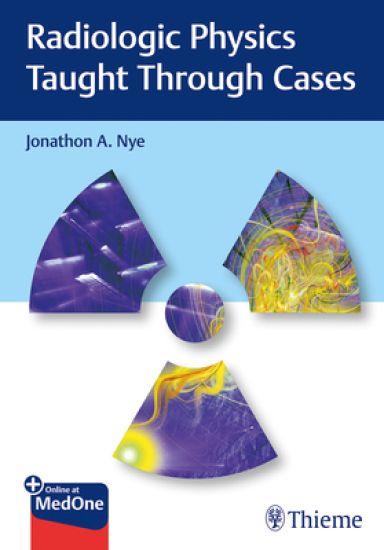
High-yield, image-rich study guide presents complex physics concepts in reader-friendly format Physics is a key component of the American Board of Radiology core and certifying exams, therefore it is an essential area of study for radiology residents and young radiologists prepping for these exams. Radiology residents gather their medical physics knowledge from many sources, often beginning with their first encounter of a radiologic image. As such, Radiologic Physics Taught Through Cases by Jonathon A. Nye and esteemed contributors incorporates an image-rich, case-based layout conducive to learning challenging physics concepts. The book encompasses physical diagnostic radiology scenarios commonly encountered during residency in a format that fosters learning and is perfect for board preparation. Seven technology-specific chapters cover fluoroscopy, mammography, computed tomography, magnetic resonance imaging, nuclear medicine, ultrasound imaging, and image processing. Each chapter features 10 succinct case-based topics intended to quickly convey information. Key Highlights Every chapter starts with a general introduction, followed by case background, images, findings, and a brief explanation of the physical factors underlying the image's creation and displayed contrastSchematics detail important radiation safety topics, such as potential occupational or patient hazards related to fluoroscopic-guided proceduresEnd-of-chapter references provide inspiration for further studyReview questions with correct answers at the end of each chapter reinforce key conceptsThis is a must-have resource for residents prepping for the radiology core exam review and early-career radiologists looking for a robust study guide for radiology certification exam review. This book includes complimentary access to a digital copy on https://medone.thieme.com.
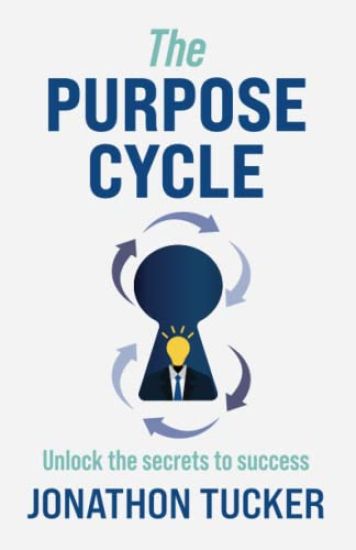
Have you ever missed a flight? A train? You kick yourself, but there's always the next one. What if you missed an opportunity? You're standing on the platform, only you don't know how to get to your destination. You need direction. You need purpose. The Purpose Cycle: Unlock the Secrets to Success is a self-improvement tool to help enhance your life through five key stages: aspiration, realization, initiation, creation and fruition. Unlike many self-development books that go from point A to B, The Purpose Cycle is applicable through all walks of life and the cycle element ensures its continuity and relevance.Author Jonathon Tucker shares stories and insights about manifesting and realizing our goals, such as: The author's journey to find purpose across three timelines in his lifeAcknowledging your weaknesses and turning them into strengthsHow others found their purpose through challenging situationsThis book speaks to young professionals and people who aspire to become their greatest self and want to become fulfilled with their future self. Stop living for the weekend and embark on a journey to make every single day count.

Through the use of psychedelics, achieving an upgraded state of mind isn't just a pipe-dream. The human-animal has been doing it for millions of years.Mind Leap breaks down the taboos that surround psychedelics, equipping you with mental ammunition to rethink the reasons behind psychedelic drug's resurgence in the 21st century.It is loaded with useful information about how you can upgrade perceptions of your mind to increase your cognitive prowess and fortitude.Inside this book you will learn about: Why psychedelics are different from all other types of drugs.How psychedelics affect the mind, and what happens after having a psychedelic experience.How humans have used psychedelics to promote internal growth and self-understanding.How psychedelics can be used as a means to rethink current systems that exist within our society.The valuable lesson techstars like Steve Jobs and Bill Gates found in psychedelics, and how their consumption contributed to their success.In Mind Leap we discover how "psychedelics, if used responsibly and with proper caution, could be for psychiatry", on an individual and social level, "what the microscope is to the study of biology and medicine or the telescope for astronomy," and explore how they can launch us from the confines of our current version of thinking into a more refined and cooperative one.This book investigates one of humanity's most forbidden fruits, psychedelic drugs; tools that can help us rethink reality and aid us in regaining our sense of individuality in cultures so concerned with competitive and social hierarchies.

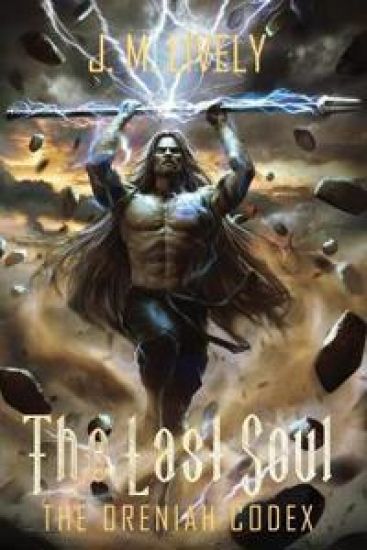
"Lathan was falling, not fast or slow. It was almost like gliding. Comfortably gliding toward a bright light. Specks of white were racing by him, or he was racing past them. He couldn't quite tell. Some lights even seemed to be circling his body. Although they zipped by quickly, the journey took a long time. Some lights pulsed and seemed to pace him. He wasn't sure what to make of that. All he felt was peace, acceptance of where he was, and where he was going.The bright light didn't change in size, until it did. It seemed so distant for so long, never changing. Then it grew and grew. The light was getting larger rather quickly now. It was tinted gold, like yellow flames on the outside of an orb. Right when he passed through the light, those same golden flames licked at him and warmed his whole body. Before it was like traveling through a dark tunnel that was speckled with pinpricks of light, now everything was twilight and open."Finally free from his isolated past, Lathan Greywind is living a stable life with his wife and newborn daughter as a taiko drum coach at UC Davis. Events outside of his control force him to take action. Faltering against the mundane and the supernatural, he is thrust into a reality he doesn't understand. A reality filled with sentient life and power that has a will of its own. Lathan must learn to harness his newfound abilities before he can return home to his family. If he can only figure out how