
Kirjahaku
Etsi kirjoja tekijän nimen, kirjan nimen tai ISBN:n perusteella.
1000 tulosta hakusanalla Joseph Strutt



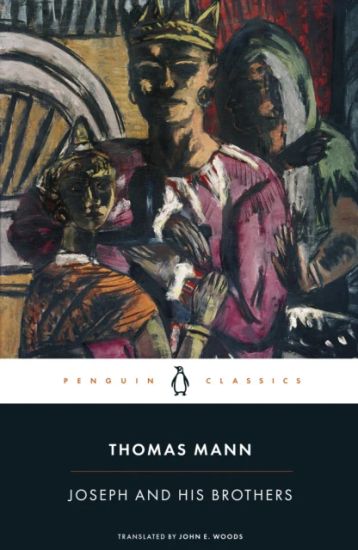
Thomas Mann described Joseph and His Brothers as his ‘pyramid’: his greatest literary achievement, although the Nazi regime in his homeland did their best to tear it down on its first publication. A vivid and dazzlingly ambitious epic, it retells the Biblical story of Joseph, whose dreams and visions set him apart from his siblings and lead him first to slavery and ultimately to power and prestige in Egypt. With rich detail and unexpected humour, Mann paints the lost landscapes of Egypt, Canaan and Palestine and brings to life the great characters of Genesis – patriarchs, pharaohs, avenged sisters and jealous brothers – in a story of epic grandeur with a family drama at its heart.John E. Woods' translation is considered the definitive English version: a rich and immersive reading experience and a towering achievement of its own.

Joseph and his three friends, Eve, Lucy, and Frog, are going to Adventure Island. Join Joseph and his three friends as they learn about the importance of kindness, sharing, and taking turns on their journey to becoming better friends. Includes homework, lessons learned, new words, and a colouring section!
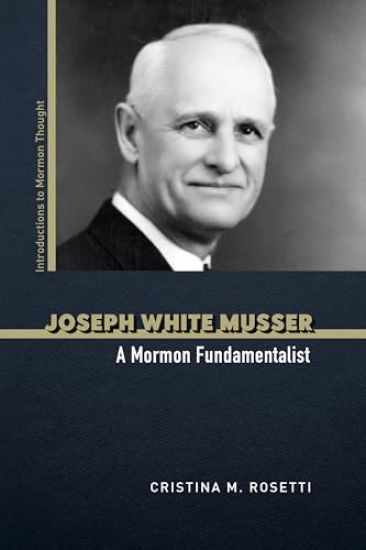
In 1921, the Church of Jesus Christ of Latter-day Saints excommunicated Joseph White Musser for his refusal to give up plural marriage. Cristina M. Rosetti tells the story of how a Church leader followed his beliefs into exile and applied the religious thought he began to develop in the mainline faith to become a foundational theologian of Mormon fundamentalism. Musser’s devotion to Joseph Smith’s vision and the faith’s foundational texts reflected a widespread uneasiness with, and reaction against, changes taking place across society. Rosetti analyzes how Musser’s writing and thought knit a disparate group of outcast LDS believers into a movement. She also places Musser’s eventful life against the backdrop of a difficult period in LDS history, when the Church strained to disentangle itself from plural marriage and leaders like Musser emerged to help dissident members make sense of their lives outside the mainstream. The first book-length account of the Mormon thinker, Joseph White Musser reveals the figure whose teachings helped mold a movement.

In the early and mid-twentieth century, Joseph Fielding Smith’s (1876–1972) life as a public historian and theologian shaped the religious worldview of generations of Latter-day Saints. Matthew Bowman examines Smith’s ideas and his place in American religious history. Smith achieved position and influence at a young age, while his theories about the age of the earth and the falseness of evolutionary theory brought fame and controversy. As Bowman shows, Smith’s strong identity as a Saint influenced how he blended Protestant fundamentalist thought into his distinctly LDS theological views. Bowman also goes beyond Smith’s well-known conservatism to reveal him as an important thinker engaged with the major religious questions of his time. Incisive and illuminating, Joseph Fielding Smith examines the worldview and development of an influential theologian and his place in American religious and intellectual history.
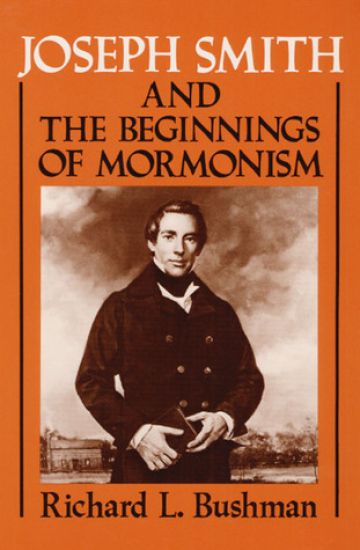
Joseph Smith and the Beginnings of Mormonism
Richard L. Bushman
University of Illinois Press
1987
nidottu
Winner of the David Woolley Evans and Beatrice Evans Biography Award and a History Book Club selection, 1985. The core of Mormon belief was a conviction about actual events. The test of faith was not adherence to a certain confession of faith but belief that Christ was resurrected, that Joseph Smith saw God, that the Book of Mormon was true history, and that Peter, James, and John restored the apostleship. Mormonism was history, not philosophy. It is as history that Richard L. Bushman analyzes the emergence of Mormonism in the early nineteenth century. Bushman, however, brings to his study a unique set of credentials--he is both a prize-winning historian and a faithful member of the Latter-day Saints church. For Mormons and non-Mormons alike, his book provides a very special perspective on an endlessly fascinating subject. Building upon previous accounts and incorporating recently discovered contemporary sources, Bushman focuses on the first twenty-five years of Joseph Smith's life--up to his move to Kirtland, Ohio, in 1831. Bushman shows how the rural Yankee culture of New England and New York--especially evangelical revivalism, Christian rationalism, and folk magic--both influenced and hindered the formation of Smith's new religion. Mormonism, Bushman argues, must be seen not only as the product of this culture, but also as an independent creation based on the revelations of its charismatic leader. In the final analysis, it was Smith's ability to breathe new life into the ancient sacred stories and to make a sacred story out of his own life which accounted for his own extraordinary influence. By presenting Smith and his revelations as they were viewed by the early Mormons themselves, Bushman leads us to a deeper understanding of their faith.

This masterful study charts the extensive common ground and telling differences between two widely separated coal-mining communities: Lanarkshire, in the Clyde Valley of southwest Scotland, and the northern Illinois coalfield that became a prime destination for skilled Scottish migrant miners in the mid-nineteenth century. Challenging the prevailing exceptionalist paradigm of labor history, John Laslett examines the social, economic, and political context of each of these communities in generous detail. He traces the progressive heightening of class consciousness as the coal industry evolved from skilled hand labor to an increasingly mechanized extraction process and the escalating hostility between miners and mineowners as their interests split along class lines. Examining the rise of militant industrial unionism in both areas, Laslett provides a sophisticated explanation of the American and Scottish miners' divergent approaches to collectivist solutions. Based on a profound knowledge of both communities, Colliers across the Sea tells a compelling story of industrial transformation's human costs, of conflict and greed, and of democratic aspirations and community.
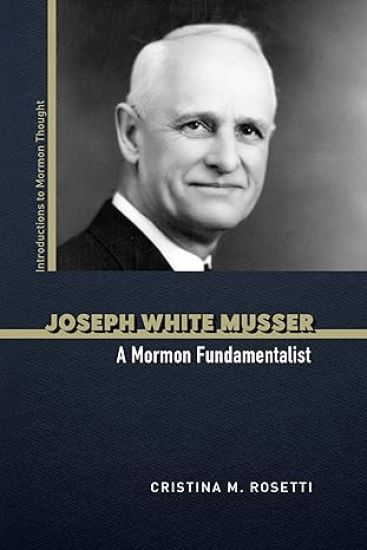
In 1921, the Church of Jesus Christ of Latter-day Saints excommunicated Joseph White Musser for his refusal to give up plural marriage. Cristina M. Rosetti tells the story of how a Church leader followed his beliefs into exile and applied the religious thought he began to develop in the mainline faith to become a foundational theologian of Mormon fundamentalism. Musser’s devotion to Joseph Smith’s vision and the faith’s foundational texts reflected a widespread uneasiness with, and reaction against, changes taking place across society. Rosetti analyzes how Musser’s writing and thought knit a disparate group of outcast LDS believers into a movement. She also places Musser’s eventful life against the backdrop of a difficult period in LDS history, when the Church strained to disentangle itself from plural marriage and leaders like Musser emerged to help dissident members make sense of their lives outside the mainstream. The first book-length account of the Mormon thinker, Joseph White Musser reveals the figure whose teachings helped mold a movement.

In the early and mid-twentieth century, Joseph Fielding Smith’s (1876–1972) life as a public historian and theologian shaped the religious worldview of generations of Latter-day Saints. Matthew Bowman examines Smith’s ideas and his place in American religious history. Smith achieved position and influence at a young age, while his theories about the age of the earth and the falseness of evolutionary theory brought fame and controversy. As Bowman shows, Smith’s strong identity as a Saint influenced how he blended Protestant fundamentalist thought into his distinctly LDS theological views. Bowman also goes beyond Smith’s well-known conservatism to reveal him as an important thinker engaged with the major religious questions of his time. Incisive and illuminating, Joseph Fielding Smith examines the worldview and development of an influential theologian and his place in American religious and intellectual history.

Joseph Haydn's Keyboard Music: Sources and Style
A. Peter Brown
Indiana University Press
1986
sidottu
"Few musical repertoires have attracted such a convenient and thorough compendium of knowledge." —Early Music News "A. Peter Brown has performed an excellent service for devotees of early keyboard music, and for all students of eighteenth-century music . . . " —Early Keyboard Journal "A. Peter Brown has created a unique compendium, discussing all of Haydn's works with keyboard, comparing them and placing them in a variety of contexts, historical, social and scholarly." —Journal of the American Musicological Society " . . . stimulating . . . a book for which pianists . . . must be thankful." —Journal of the American Liszt Society Haydn scholar A. Peter Brown offers the first detailed and comprehensive study of the composer's keyboard works, encompassing the solo sonatas, keyboard trios, accompanied divertimentos, concertos, concertinos, and Klavierstücke.
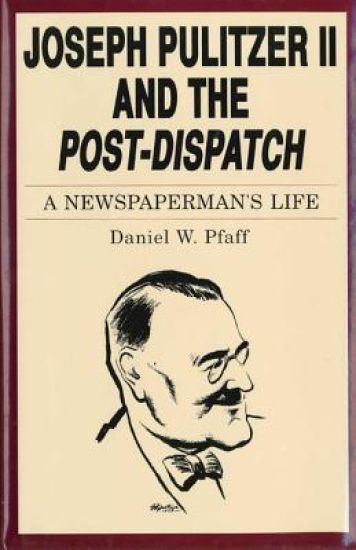
Joseph Pulitzer II and the “Post-Dispatch”
Daniel W. Pfaff
Pennsylvania State University Press
1991
sidottu
This biography brings the song of "the" Joseph Pulitzer out from behind his colorful father's shadow and shows him to have been one of American's most important newspapermen, ranking with Adolph Ochs, William Allen White, and Robert R. McCormick.Based on hitherto untapped archival sources, including a wealth of personal correspondence, this first biography of Joseph Pulitzer II tells the story of his drive and dedication to make the St. Louis Post-Dispatch one of the most effective liberal newspapers in the United States. Daniel Pfaff covers the seventy-year lifetime of the bearer of a famous name who succeeded in advancing the highest ideals of mainstream liberal journalism in his forty-three-year career as editor-publisher of the Post-Dispatch and head of the Pulitzer Publishing Company. Unlike his colorful father (1847–1911), who is now chiefly remembered for establishing the Pulitzer Prizes at Columbia University and for creating a so-called new journalism that combined attention-getting sensationalism with public-service investigatory crusading at the turn of the century, the second Joseph Pulitzer (1885–1955) was a man of more even temperament and measured administrative style. Throughout his career he was unswervingly dedicated to his father's highest ideals. But he and his staff had new waters to navigate: two world wars, the Great Depression, the beginning of the civil rights movement, and involvement in what became the Vietnam War as well as the challenges of combating malfeasance in state and local political and business circles. Operated by one of the ablest staffs in the country, the Post-Dispatch under Joseph Pulitzer II achieved national and international distinction by the late 1920s and maintained that stature throughout his career. In contrast, the New York World, which the first Joseph Pulitzer had intended to be his lasting monument had left in the care of his other two sons, foundered and, in 1931, failed. Had it not been for the journalistic acumen of Pulitzer's namesake son, in whom he had the least confidence, the Pulitzer presence in American journalism would have ended then. Instead, it is still thriving today. While Joseph Pulitzer II's professional life and his newspaper's involvement in events of this era form the major part of this biography, Pfaff also chronicles his personal life—his sometimes stormy relationship with is father, his two marriages, and his social and recreational life. Thus the book succeeds in giving a well-rounded picture of the man and his times.
Joseph Priestley and English Unitarianism in America
J. D. Bowers
Pennsylvania State University Press
2009
pokkari
Many have argued that American Unitarianism originated solely from within Congregationalism and developed independent of outside influences. William Ellery Channing's “Unitarian Christianity” sermon in 1819 was a key moment in the history of the denomination, as Channing consciously sought to define the parameters of the faith and eliminate all vestiges of competing influences. Yet the American Unitarian tradition was far more complex than its nineteenth-century adherents were willing to admit. In Joseph Priestley and English Unitarianism in America, J. D. Bowers reexamines its origins, course, and development and subsequently reveals the extent to which Joseph Priestley's ideas concerning Congregational polity were recognized and established within the United States. In contrast to studies that simply trace the history of the denomination as it flows out of New England and is controlled by Bostonians, Bowers shows that Priestley's legacy grew in importance throughout the nineteenth century and held sway throughout many of the frontier regions of the nation. By discussing the complexity of interdenominational rivalry, lack of central control, and a continuous transatlantic exchange among religious liberals, he shows that English Unitarianism continued to serve as an essential and noteworthy foundation for subsequent developments within the American denomination as it endured the challenges of Protestant orthodoxy, unregulated liberalism, Transcendentalism, and the never-ending quest to define liberal religion in America. This is an insightful account of an often neglected set of tenets and developments in the denomination's history. It uniquely traces the course of continued English influence as it established a new point of reference for understanding the dynamic origins of denominational development, Unitarian thought, and liberal religion.
Joseph Priestley and English Unitarianism in America
Bowers J. D.
Pennsylvania State University Press
2007
sidottu
Many have argued that American Unitarianism originated solely from within Congregationalism and developed independent of outside influences. William Ellery Channing's “Unitarian Christianity” sermon in 1819 was a key moment in the history of the denomination, as Channing consciously sought to define the parameters of the faith and eliminate all vestiges of competing influences. Yet the American Unitarian tradition was far more complex than its nineteenth-century adherents were willing to admit. In Joseph Priestley and English Unitarianism in America, J. D. Bowers reexamines its origins, course, and development and subsequently reveals the extent to which Joseph Priestley's ideas concerning Congregational polity were recognized and established within the United States. In contrast to studies that simply trace the history of the denomination as it flows out of New England and is controlled by Bostonians, Bowers shows that Priestley's legacy grew in importance throughout the nineteenth century and held sway throughout many of the frontier regions of the nation. By discussing the complexity of interdenominational rivalry, lack of central control, and a continuous transatlantic exchange among religious liberals, he shows that English Unitarianism continued to serve as an essential and noteworthy foundation for subsequent developments within the American denomination as it endured the challenges of Protestant orthodoxy, unregulated liberalism, Transcendentalism, and the never-ending quest to define liberal religion in America. This is an insightful account of an often neglected set of tenets and developments in the denomination's history. It uniquely traces the course of continued English influence as it established a new point of reference for understanding the dynamic origins of denominational development, Unitarian thought, and liberal religion.
Mémoires Et Correspondance Politique Et Militaire Du Roi Joseph, Volumes 5-6
Joseph Bonaparte
Wentworth Press
2018
pokkari
Mémoires Et Correspondance Politique Et Militaire Du Roi Joseph, Volumes 5-6
Joseph Bonaparte
Wentworth Press
2018
sidottu
This biography is a complete reassessment of an important American envoy to the Soviet Union in years that were critical in determining postwar East-West relations. Using formerly untouched primary sources, Dr. MacLean sheds a different light on a controversial figure and on his relationship with world leaders, senior diplomats, and Soviet experts during the period under study. She offers intimate glimpses into the perceptions and motivations behind major U.S. and Soviet policies from 1936 to 1946. Her fascinating account of this practical idealist is good reading for all interested in diplomatic history and Soviet-American relations. This is a close study of the complex political, philosophical, and personal factors that guided Joseph Davies in his dealings with Roosevelt, Truman, Stalin and Lipvinov, Molotov, Kennan, and Bohlen, to name just a few. A more balanced interpretation can now be offered of Davies than the traditional two-dimensional stereotype.
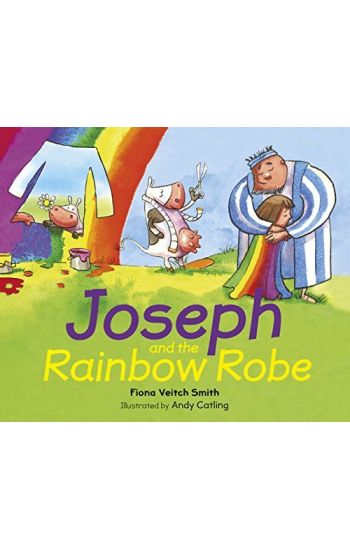
In the first book of the Young Joseph series, we find Joseph living in Canaan with his dad, stepmothers, eleven brothers - and lots of scene-stealing cows! Joseph is his father's favourite, which makes his brothers very cross, especially when he tells them about the dream he has had in which the sun, moon and eleven stars bow down to him. To cheer him up, Joseph's dad gives him a beautiful coat of many colours - a 'rainbow robe' to remind him that God loves everyone - even his brothers.