Kirjojen hintavertailu. Mukana 11 717 486 kirjaa ja 12 kauppaa.

Kirjahaku

Etsi kirjoja tekijän nimen, kirjan nimen tai ISBN:n perusteella.

1000 tulosta hakusanalla Julius Caesar

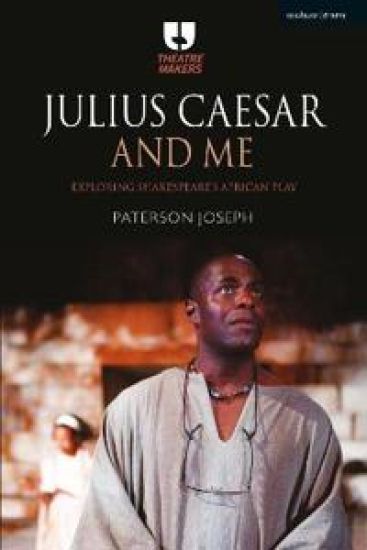
Julius Caesar and Me

Julius Caesar and Me

Joseph Paterson

Methuen Drama
2018
nidottu
'Julius Caesar is, simply, Shakespeare's African play' John Kani In 2012, actor Paterson Joseph played the role of Brutus in the Royal Shakespeare Company's acclaimed production of Julius Caesar - Gregory Doran's first play for the RSC. It is a play, Joseph is quick to acknowledge, that is widely neglected, misunderstood - even dreaded - when it comes to study and performance. Through an incredibly rigorous process of getting to understand his character, the play, its context and the startling parallels with our world today, Paterson Joseph came to realise its power as a play, both dramatically and politically, and its numerous points of relevance for contemporary audience. In this book, Joseph opens up the process of rehearsing and preparing for Julius Caesar and, by doing so, brings a greater understanding to the play's characters; its rhetoric and the power of rhetoric in general, both on and off stage; the play's setting and political context and how this can be interpreted and refreshed for the 21st century. Alongside offering fascinating insights into Julius Caesar and Shakespeare's writing, Joseph also serves up details of the rehearsal process; key collaborations during this time with major practitioners such as John Barton, Patsy Rodenburg, Cicely Berry, Sam Mendes, Steve Unwin, Nicholas Hytner and Declan Donnellan; and the experience of working with a majority white cast and the implications of this for himself and fellow black actors Adjoa Andoh, Ann Ogbomo and Samantha Lawson. He considers the place of minority actors in Shakespeare plays in general, and audience reactions, citing numerous conversations he has had with psychologists, counselors and neurologists on the subject of what happens between performer and spectator. For Paterson Joseph, his experience of playing Brutus in Julius Caesar with the RSC was a defining point in his career and a transformative experience. For any actor or practitioner working on Shakespeare - or for any reader interested in his plays - this is a fascinating and informative read, which unlocks so much about making and understanding theatre from the inside.
Julius Caesar and Me

Julius Caesar and Me

Joseph Paterson

Methuen Drama
2018
sidottu
'Julius Caesar is, simply, Shakespeare's African play' John Kani In 2012, actor Paterson Joseph played the role of Brutus in the Royal Shakespeare Company's acclaimed production of Julius Caesar - Gregory Doran's last play before becoming Artistic Director for the RSC. It is a play, Joseph is quick to acknowledge, that is widely misunderstood - even dreaded - when it comes to study and performance. Alongside offering fascinating insights into Julius Caesar and Shakespeare's writing, Joseph serves up details of the rehearsal process; his key collaborations during an eclectic career; as well as his experience of working with a majority black cast. He considers the positioning of ethnic minority actors in Shakespeare productions in general, and female actors tackling so seemingly masculine a play in particular. Audience reactions are also investigated by Joseph, citing numerous conversations he has had with psychologists, counsellors and neurologists on the subject of what happens between performer and spectator. For Paterson Joseph, his experience of playing Brutus in Julius Caesar with the RSC was a defining point in his career, and a transformative experience. For any actor or practitioner working on Shakespeare - or for any reader interested in his plays - this is a fascinating and informative read, which unlocks so much about making and understanding theatre from the inside.
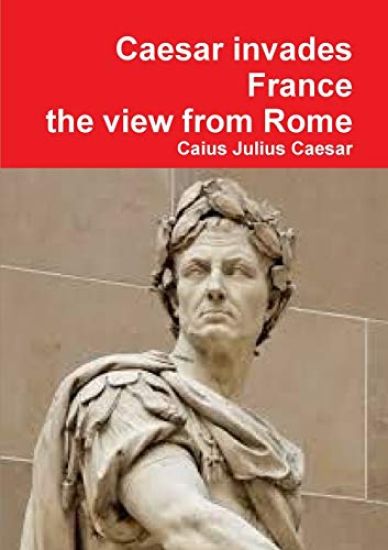
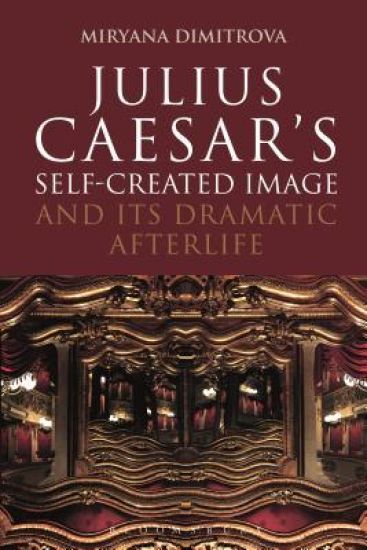
Julius Caesar's Self-Created Image and Its Dramatic Afterlife
The book explores the extent to which aspects of Julius Caesar’s self-representation in his commentaries, constituent themes and characterization have been appropriated or contested across the English dramatic canon from the late 1500s until the end of the 19th century. Caesar, in his own words, constructs his image as a supreme commander characterised by exceptional celerity and mercifulness; he is also defined by the heightened sense of self-dramatization achieved by the self-referential use of the third person and emerges as a quasi-divine hero inhabiting a literary-historical reality. Channelled through Lucan’s epic Bellum Civile and ancient historiography, these Caesarean qualities reach drama and take the shape of ambivalent hubris, political role-playing, self-institutionalization, and an exceptional relationship with temporality.Focusing on major dramatic texts with rich performance history, such as Shakespeare’s Julius Caesar, Handel’s opera Giulio Cesare in Egitto and Bernard Shaw’s Caesar and Cleopatra but also a number of lesser known early modern plays, the book encompasses different levels of drama’s active engagement with the process of reception of Caesar’s iconic and controversial personality.
Julius Cæsar, a Tragedy. By Shakespear

Julius Cæsar, a Tragedy. By Shakespear

Anonymous

Gale Ecco, Print Editions
2018
sidottu
The 18th century was a wealth of knowledge, exploration and rapidly growing technology and expanding record-keeping made possible by advances in the printing press. In its determination to preserve the century of revolution, Gale initiated a revolution of its own: digitization of epic proportions to preserve these invaluable works in the largest archive of its kind. Now for the first time these high-quality digital copies of original 18th century manuscripts are available in print, making them highly accessible to libraries, undergraduate students, and independent scholars.Western literary study flows out of eighteenth-century works by Alexander Pope, Daniel Defoe, Henry Fielding, Frances Burney, Denis Diderot, Johann Gottfried Herder, Johann Wolfgang von Goethe, and others. Experience the birth of the modern novel, or compare the development of language using dictionaries and grammar discourses. ++++The below data was compiled from various identification fields in the bibliographic record of this title. This data is provided as an additional tool in helping to insure edition identification: ++++British LibraryT029286London: printed for D. Williams, 1766]. 74p.; 12
Julius Cæsar. A Tragedy. Writen [sic] by Mr. W. Shakespear
The 18th century was a wealth of knowledge, exploration and rapidly growing technology and expanding record-keeping made possible by advances in the printing press. In its determination to preserve the century of revolution, Gale initiated a revolution of its own: digitization of epic proportions to preserve these invaluable works in the largest archive of its kind. Now for the first time these high-quality digital copies of original 18th century manuscripts are available in print, making them highly accessible to libraries, undergraduate students, and independent scholars.Western literary study flows out of eighteenth-century works by Alexander Pope, Daniel Defoe, Henry Fielding, Frances Burney, Denis Diderot, Johann Gottfried Herder, Johann Wolfgang von Goethe, and others. Experience the birth of the modern novel, or compare the development of language using dictionaries and grammar discourses. ++++The below data was compiled from various identification fields in the bibliographic record of this title. This data is provided as an additional tool in helping to insure edition identification: ++++British LibraryT014952With Johnson's device on the titlepage. Also issued as part of 'A collection of the best English plays', 1711-22, published by Johnson in The Hague.London i.e. The Hague]: printed for T. Johnson] in the year, 1711. 90p.; 8
Julius Cæsar, a Tragedy. By William Shakespeare. Collated With the old and Modern Editions
The 18th century was a wealth of knowledge, exploration and rapidly growing technology and expanding record-keeping made possible by advances in the printing press. In its determination to preserve the century of revolution, Gale initiated a revolution of its own: digitization of epic proportions to preserve these invaluable works in the largest archive of its kind. Now for the first time these high-quality digital copies of original 18th century manuscripts are available in print, making them highly accessible to libraries, undergraduate students, and independent scholars.Western literary study flows out of eighteenth-century works by Alexander Pope, Daniel Defoe, Henry Fielding, Frances Burney, Denis Diderot, Johann Gottfried Herder, Johann Wolfgang von Goethe, and others. Experience the birth of the modern novel, or compare the development of language using dictionaries and grammar discourses. ++++The below data was compiled from various identification fields in the bibliographic record of this title. This data is provided as an additional tool in helping to insure edition identification: ++++British LibraryT029287Collated by Charles Jennens. With a half-title.London: printed by W. Bowyer and J. Nichols: and sold by W. Owen, 1774. 144p., plate; 8
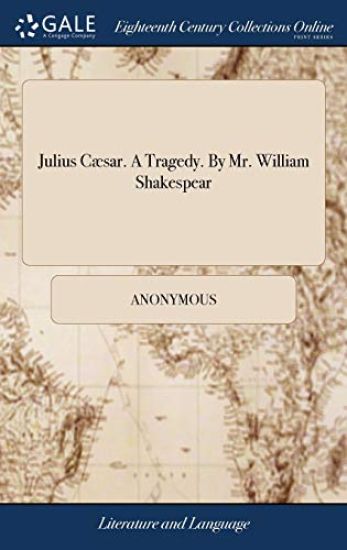
Julius Cæsar. A Tragedy. By Mr. William Shakespear

Julius Cæsar. A Tragedy. By Mr. William Shakespear

Anonymous

Gale Ecco, Print Editions
2018
sidottu
The 18th century was a wealth of knowledge, exploration and rapidly growing technology and expanding record-keeping made possible by advances in the printing press. In its determination to preserve the century of revolution, Gale initiated a revolution of its own: digitization of epic proportions to preserve these invaluable works in the largest archive of its kind. Now for the first time these high-quality digital copies of original 18th century manuscripts are available in print, making them highly accessible to libraries, undergraduate students, and independent scholars.Western literary study flows out of eighteenth-century works by Alexander Pope, Daniel Defoe, Henry Fielding, Frances Burney, Denis Diderot, Johann Gottfried Herder, Johann Wolfgang von Goethe, and others. Experience the birth of the modern novel, or compare the development of language using dictionaries and grammar discourses. ++++The below data was compiled from various identification fields in the bibliographic record of this title. This data is provided as an additional tool in helping to insure edition identification: ++++John Rylands University Library of ManchesterT188487Dublin: printed by and for A. Rhames, 1726. 2],70p.; 12
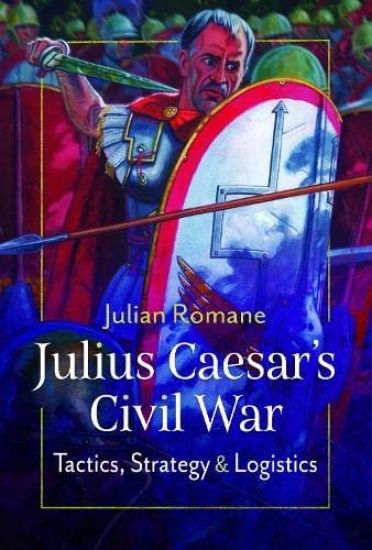
Julius Caesar's Civil War

Julius Caesar's Civil War

Julian Romane

PEN SWORD BOOKS LTD
2023
sidottu
Julian Romane examines the campaigns of Julius Caesar throughout the civil wars that followed his famous crossing of the Rubicon, through to the defeat of the final Pompeian diehards at the battle of Munda. He analyses Caesar's generalship in the widest sense, with a strong emphasis on the logistical and financial effort required to put his legions in the field and keep them equipped, fed and paid. The attention given to this important but often-neglected aspect sets this account apart from many others. The author discusses the nature of late Republican Roman armies, describing their organization, tactics and equipment. The fact that such armies were employed both by and against Caesar only emphasizes the role of generalship in the outcome. This is followed by a detailed account of the strategic manoeuvres in Caesar's epochal duel with Pompey the Great and the resultant battles at Dyrrhachium and Pharsalus. The final campaigns to mop up opposition in Spain and Africa are studied in equal detail to give a complete picture of Caesar's command performance in these history-shaping events.
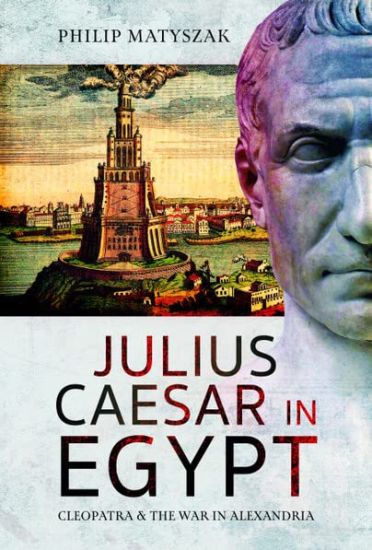
Julius Caesar in Egypt

Julius Caesar in Egypt

Philip Matyszak

PEN SWORD BOOKS LTD
2023
sidottu
In 48 BC the armies of Julius Caesar and Pompey the Great fought a decisive battle at Pharsalus in Greece. Pompey was comprehensively defeated and fled to the last power in the Mediterranean world that was independent of Rome, Ptolemaic Egypt. Caesar pursued Pompey and was presented with his severed head, which the Egyptians hoped would make Caesar leave them in peace. Instead, Caesar - as if he did not have enough to do already - plunged gleefully into the world of Egyptian palace politics, riven by dynastic dispute. He quickly sided with the beguiling Queen Cleopatra (after her famous carpet trick), despite having little more than a bodyguard with him. Most of his army was still in Greece, leaving him massively outnumbered by the Egyptian forces. The Romans were besieged in Alexandria for seven months before reinforcements could get through to them. Julius Caesar in Egypt is a true story of double-cross, assassination and intrigue accompanied by lively battles, daring escapes, disastrous fires (the Great Library of Alexandria was largely destroyed in one fracas) and, if not a love story, at least a tale of sex and power as Caesar and Cleopatra's relationship shaped these world-changing events.
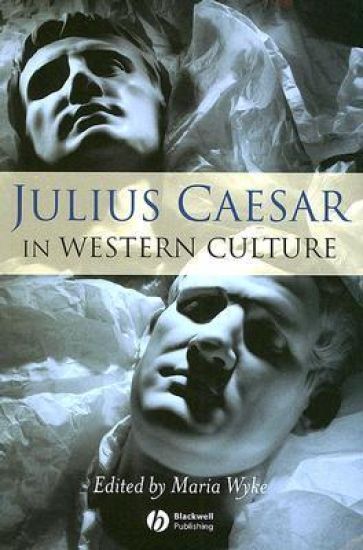
Julius Caesar in Western Culture

Julius Caesar in Western Culture

Wiley-Blackwell (an imprint of John Wiley Sons Ltd)
2006
nidottu
This book explores the significance of Julius Caesar to different periods, societies and people from the 50s BC through to the twenty-first century. This interdisciplinary volume explores the significance of Julius Caesar to different periods, societies and people. Ranges over the fields of religious, military, and political history, archaeology, architecture and urban planning, the visual arts, and literary, film, theatre and cultural studies. Examines representations of Caesar in Italy, France, Germany, Britain, and the United States in particular. Objects of analysis range from Caesar’s own commentaries on the Gallic wars, through Shakespeare’s Julius Caesar, and images of Caesar in Italian fascist popular culture, to contemporary cinema and current debates about American empire. Edited by a leading expert on the reception of ancient Rome. Includes original contributions by international experts on Caesar and his reception.
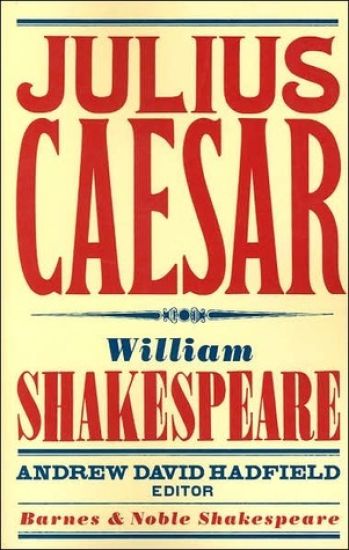
Julius Caesar (Barnes & Noble Shakespeare)

Julius Caesar (Barnes & Noble Shakespeare)

William Shakespeare

Spark Notes
2007
pokkari
"Julius Caesar" portrays the conspiracy against the Roman dictator, Julius Caesar, his assassination and its aftermath. It is the first of his Roman plays, based on true events from Roman history. Part of the "Barnes & Noble Shakespeare" series, this features newly edited texts prepared by leading scholars from Great Britain and America, in collaboration with one of the world's foremost Shakespeare authorities, David Scott Kastan of Columbia University. Together they have produced texts as faithful as possible to those that Shakespeare wrote.
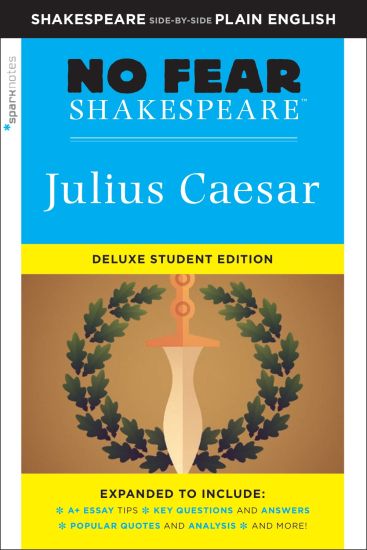
Julius Caesar: No Fear Shakespeare Deluxe Student Edition
Shakespeare everyone can understand—now in this new EXPANDED edition of JULIUS CAESAR! Why fear Shakespeare? By placing the words of the original play next to line-by-line translations in plain English, this popular guide makes Shakespeare accessible to everyone. And now it features expanded literature guide sections that help students study smarter. The expanded sections include: Five Key Questions: Five frequently asked questions about major moments and characters in the play. What Does the Ending Mean?: Is the ending sad, celebratory, ironic . . . or ambivalent? Plot Analysis: What is the play about? How is the story told, and what are the main themes? Why do the characters behave as they do? Study Questions: Questions that guide students as they study for a test or write a paper. Quotes by Theme: Quotes organized by Shakespeare’s main themes, such as love, death, tyranny, honor, and fate. Quotes by Character: Quotes organized by the play’s main characters, along with interpretations of their meaning.
Transformation: Julius Caesar Hendrix: "Drums of Thunder"

Transformation: Julius Caesar Hendrix: "Drums of Thunder"

Julius Caesar Hendrix

Booksurge Publishing
2007
nidottu
Julius Caesar Hendrix's biography, Transformation: 'Drums of Thunder' chronicles his struggle with the dark shadows of success in the music industry, personal tragedies and the ultimate triumph of reaching out with music to troubled youth. Born in Savannah, Georgia, Julius got his first drum set at eight and has entertained audiences ever since. At 15 he started his first band. At 17 they began to play Savannah's lounge circuit under the name 'Special Edition' and quickly rose to become a national touring success in the '80s and '90s. Lessons learned from thirty years in the music industry gave Julius a rich perspective on life. His enduring faith in God transcended struggles with drug addiction and homelessness. Today, he is a self-proclaimed 'Reacher' to at-risk youth, sharing a hope-filled testimony of recovery and redemption. His message: There is no hope in dope. Reverend Hendrix's ministry speaks to young people tempted by drugs and the lure of the music industry as easy escapes from inner city challenges.
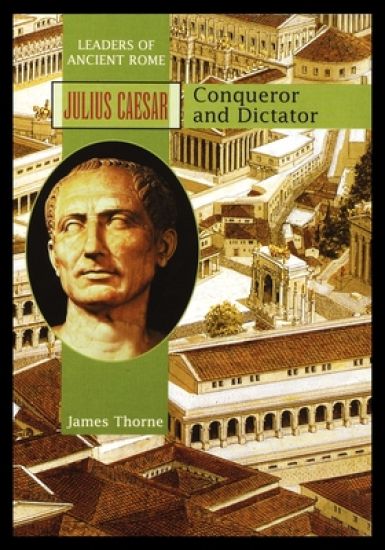
Julius Caesar: Conqueror and Dictator

Julius Caesar: Conqueror and Dictator

James Thorne

ROSEN PUBLISHING GROUP
2003
nidottu
Julius Caesar was the Roman dictator who brought an end to the republic and who was assassinated as a result. Caesar was a great general who extended Roman power into Gaul (France) and the territories of Germania, not to mention his conquest of Egypt. But his attempts to reform the Senate and Roman government led him to dictatorship.
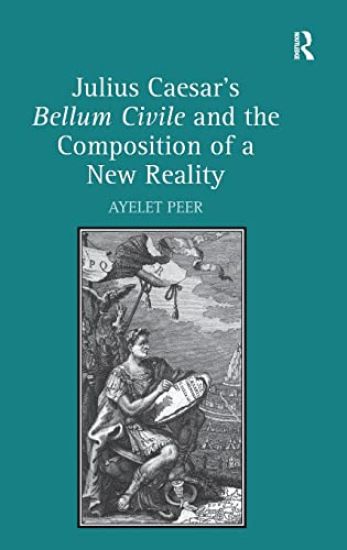
Julius Caesar's Bellum Civile and the Composition of a New Reality
In his Commentarii de Bello Civili Julius Caesar sought to re-invent his image and appear before his present and future readers in a way which he could control and at times manipulate. Offering a new interpretation of the Bellum Civile this book reveals the intricate literary world that Caesar creates using sophisticated techniques such as a studied choice of vocabulary, rearrangement of events, use of indirect speech, and more. Each of the three books of the work is examined independently to set out the gradual transformation of Caesar's literary persona, in step with his ascent in the 'real' world. By analysing the work from Caesar's viewpoint the author argues that by adroit presentation and manipulation of historical circumstances Caesar creates in his narrative a different reality, one in which his conduct is justified. The question of the res publica is also a key point of the volume, as it is in the Bellum Civile, and the author argues that Caesar purposely does not present himself as a Republican, contrary to commonly held views. Employing detailed philological analyses of Caesar's three books on the Civil War, this work significantly advances our understanding of Caesar as author and politician.
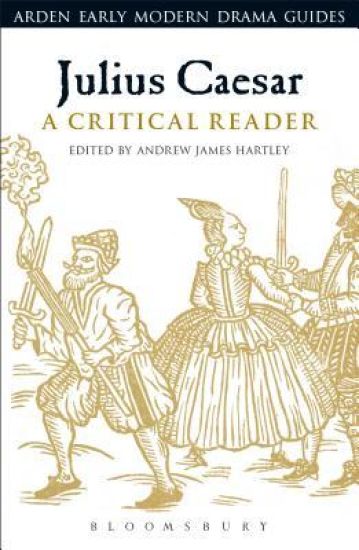
Julius Caesar: A Critical Reader
This volume offers a practical, accessible and thought-provoking guide to this Roman tragedy, surveying its major themes and critical reception. It also provides a detailed and up-to-date history of the play’s performance, beginning with its earliest known staging in 1599, including an analysis of the 2013 film Caesar Must Die starring Italian inmates, and an assessment of why the play is now coming back into vogue on stage. Moving through to four new critical essays, it opens up cutting-edge perspectives on the work, and finishes with a guide to pedagogical approaches by the experienced teacher and leading academic Jeremy Lopez. Detailing web-based and production-related resources, and including an annotated bibliography of critical works, the guide will equip teachers and facilitate students’ understanding of this challenging play.
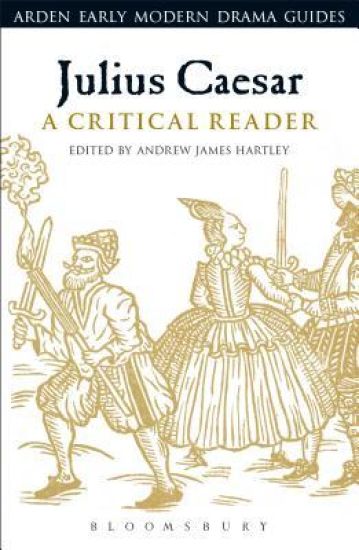
Julius Caesar: A Critical Reader
This volume offers a practical, accessible and thought-provoking guide to this Roman tragedy, surveying its major themes and critical reception. It also provides a detailed and up-to-date history of the play’s performance, beginning with its earliest known staging in 1599, including an analysis of the 2013 film Caesar Must Die starring Italian inmates, and an assessment of why the play is now coming back into vogue on stage. Moving through to four new critical essays, it opens up cutting-edge perspectives on the work, and finishes with a guide to pedagogical approaches by the experienced teacher and leading academic Jeremy Lopez. Detailing web-based and production-related resources, and including an annotated bibliography of critical works, the guide will equip teachers and facilitate students’ understanding of this challenging play.