
Kirjahaku
Etsi kirjoja tekijän nimen, kirjan nimen tai ISBN:n perusteella.
1000 tulosta hakusanalla Julius Ficker

Julius Martow
Lulu.com
2025
pokkari
Julius Caesar and the Grandeur That Was Rome
Victor Thaddeus; W. D. White
Literary Licensing, LLC
2011
nidottu

Julius Tandler: A Biography
Albert Goetzl; Ralph Arthur Reynolds
Literary Licensing, LLC
2013
nidottu

Julius King Optical Co V. Bilhoefer U.S. Supreme Court Transcript of Record with Supporting Pleadings
H Albertts West
Gale Ecco, U.S. Supreme Court Records
2011
pokkari

Julius Wellhausen Und Meine Schrift Der Entstehung Des Judenthums
Duard Meyer; Eduard Meyer
Nabu Press
2012
pokkari
The age-old primer-text for Latin learners in a fresh new English edition, indispensable in all Latin-learning schools
Julius is a Roman centurion with big dreams. When he is put in charge of a strange prisoner, he might just have to rethink his future.
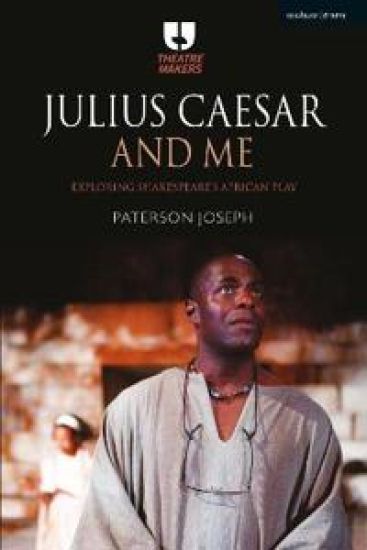
'Julius Caesar is, simply, Shakespeare's African play' John Kani In 2012, actor Paterson Joseph played the role of Brutus in the Royal Shakespeare Company's acclaimed production of Julius Caesar - Gregory Doran's first play for the RSC. It is a play, Joseph is quick to acknowledge, that is widely neglected, misunderstood - even dreaded - when it comes to study and performance. Through an incredibly rigorous process of getting to understand his character, the play, its context and the startling parallels with our world today, Paterson Joseph came to realise its power as a play, both dramatically and politically, and its numerous points of relevance for contemporary audience. In this book, Joseph opens up the process of rehearsing and preparing for Julius Caesar and, by doing so, brings a greater understanding to the play's characters; its rhetoric and the power of rhetoric in general, both on and off stage; the play's setting and political context and how this can be interpreted and refreshed for the 21st century. Alongside offering fascinating insights into Julius Caesar and Shakespeare's writing, Joseph also serves up details of the rehearsal process; key collaborations during this time with major practitioners such as John Barton, Patsy Rodenburg, Cicely Berry, Sam Mendes, Steve Unwin, Nicholas Hytner and Declan Donnellan; and the experience of working with a majority white cast and the implications of this for himself and fellow black actors Adjoa Andoh, Ann Ogbomo and Samantha Lawson. He considers the place of minority actors in Shakespeare plays in general, and audience reactions, citing numerous conversations he has had with psychologists, counselors and neurologists on the subject of what happens between performer and spectator. For Paterson Joseph, his experience of playing Brutus in Julius Caesar with the RSC was a defining point in his career and a transformative experience. For any actor or practitioner working on Shakespeare - or for any reader interested in his plays - this is a fascinating and informative read, which unlocks so much about making and understanding theatre from the inside.

'Julius Caesar is, simply, Shakespeare's African play' John Kani In 2012, actor Paterson Joseph played the role of Brutus in the Royal Shakespeare Company's acclaimed production of Julius Caesar - Gregory Doran's last play before becoming Artistic Director for the RSC. It is a play, Joseph is quick to acknowledge, that is widely misunderstood - even dreaded - when it comes to study and performance. Alongside offering fascinating insights into Julius Caesar and Shakespeare's writing, Joseph serves up details of the rehearsal process; his key collaborations during an eclectic career; as well as his experience of working with a majority black cast. He considers the positioning of ethnic minority actors in Shakespeare productions in general, and female actors tackling so seemingly masculine a play in particular. Audience reactions are also investigated by Joseph, citing numerous conversations he has had with psychologists, counsellors and neurologists on the subject of what happens between performer and spectator. For Paterson Joseph, his experience of playing Brutus in Julius Caesar with the RSC was a defining point in his career, and a transformative experience. For any actor or practitioner working on Shakespeare - or for any reader interested in his plays - this is a fascinating and informative read, which unlocks so much about making and understanding theatre from the inside.
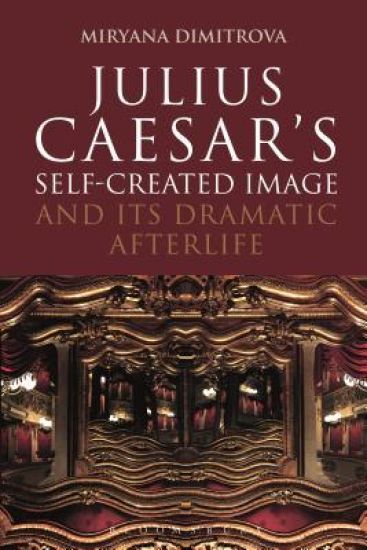
Julius Caesar's Self-Created Image and Its Dramatic Afterlife
Miryana Dimitrova
Bloomsbury Academic
2019
nidottu
The book explores the extent to which aspects of Julius Caesar’s self-representation in his commentaries, constituent themes and characterization have been appropriated or contested across the English dramatic canon from the late 1500s until the end of the 19th century. Caesar, in his own words, constructs his image as a supreme commander characterised by exceptional celerity and mercifulness; he is also defined by the heightened sense of self-dramatization achieved by the self-referential use of the third person and emerges as a quasi-divine hero inhabiting a literary-historical reality. Channelled through Lucan’s epic Bellum Civile and ancient historiography, these Caesarean qualities reach drama and take the shape of ambivalent hubris, political role-playing, self-institutionalization, and an exceptional relationship with temporality.Focusing on major dramatic texts with rich performance history, such as Shakespeare’s Julius Caesar, Handel’s opera Giulio Cesare in Egitto and Bernard Shaw’s Caesar and Cleopatra but also a number of lesser known early modern plays, the book encompasses different levels of drama’s active engagement with the process of reception of Caesar’s iconic and controversial personality.
A powerful general and proconsul in the Roman republic is given absolute authority and given the Roman equivalent of kingship. Certain senators take offense at such arrogance of Caesar and set a plan in motion to assassinate him on the Ides of March. When the plan is executed, the people and Caesar's closest friend Marc Antony turn against the conspirators and wage a civil war against them.

This work has been selected by scholars as being culturally important, and is part of the knowledge base of civilization as we know it. This work was reproduced from the original artifact, and remains as true to the original work as possible. Therefore, you will see the original copyright references, library stamps (as most of these works have been housed in our most important libraries around the world), and other notations in the work.This work is in the public domain in the United States of America, and possibly other nations. Within the United States, you may freely copy and distribute this work, as no entity (individual or corporate) has a copyright on the body of the work.As a reproduction of a historical artifact, this work may contain missing or blurred pages, poor pictures, errant marks, etc. Scholars believe, and we concur, that this work is important enough to be preserved, reproduced, and made generally available to the public. We appreciate your support of the preservation process, and thank you for being an important part of keeping this knowledge alive and relevant.

Extracts Concerning the Greek Theatre and Masks, Translated From the Greek of Julius Pollux
Julius Pollux
Gale Ecco, Print Editions
2018
sidottu
The 18th century was a wealth of knowledge, exploration and rapidly growing technology and expanding record-keeping made possible by advances in the printing press. In its determination to preserve the century of revolution, Gale initiated a revolution of its own: digitization of epic proportions to preserve these invaluable works in the largest archive of its kind. Now for the first time these high-quality digital copies of original 18th century manuscripts are available in print, making them highly accessible to libraries, undergraduate students, and independent scholars.Western literary study flows out of eighteenth-century works by Alexander Pope, Daniel Defoe, Henry Fielding, Frances Burney, Denis Diderot, Johann Gottfried Herder, Johann Wolfgang von Goethe, and others. Experience the birth of the modern novel, or compare the development of language using dictionaries and grammar discourses. ++++The below data was compiled from various identification fields in the bibliographic record of this title. This data is provided as an additional tool in helping to insure edition identification: ++++British LibraryT128411In: 'Aristotle's Poetics', London, 1775. London, 1775]. 29, 1]p.; 8
The 18th century was a wealth of knowledge, exploration and rapidly growing technology and expanding record-keeping made possible by advances in the printing press. In its determination to preserve the century of revolution, Gale initiated a revolution of its own: digitization of epic proportions to preserve these invaluable works in the largest archive of its kind. Now for the first time these high-quality digital copies of original 18th century manuscripts are available in print, making them highly accessible to libraries, undergraduate students, and independent scholars.Western literary study flows out of eighteenth-century works by Alexander Pope, Daniel Defoe, Henry Fielding, Frances Burney, Denis Diderot, Johann Gottfried Herder, Johann Wolfgang von Goethe, and others. Experience the birth of the modern novel, or compare the development of language using dictionaries and grammar discourses. ++++The below data was compiled from various identification fields in the bibliographic record of this title. This data is provided as an additional tool in helping to insure edition identification: ++++British LibraryT029286London: printed for D. Williams, 1766]. 74p.; 12