Kirjojen hintavertailu. Mukana 11 228 534 kirjaa ja 12 kauppaa.

Kirjahaku

Etsi kirjoja tekijän nimen, kirjan nimen tai ISBN:n perusteella.

1000 tulosta hakusanalla Keith A. Neuber

Native American Place Names in Mississippi

Native American Place Names in Mississippi

Keith A. Baca

University Press of Mississippi
2007
nidottu
Biloxi. Tunica. Pascagoula. Yazoo. Tishomingo. Yalobusha. Tallahatchie. Itta Bena. Yockanookany. Bogue Chitto. These and hundreds of other place names of Native American origin are scattered across the map of Mississippi. Described by writer Willie Morris as ""the mysterious, lost euphonious litany,"" such colorful names, which were given by the Choctaw, Chickasaw, and other tribes, contribute significantly to the state's sense of place. Yet the general public is largely unaware of exact meanings and tribal roots. Native American Place Names in Mississippi is the first reference book devoted to a subject of interest to residents and visitors alike. From large rivers and towns to tiny creeks and rural communities, Keith A. Baca identifies the most likely meanings of many names with more than one recorded interpretation. He corrects misconceptions that have arisen over the years and translates numerous names for the first time. For the benefit of travelers, he provides the location of each named place. To bring attention to often inconspicuous and unmarked streams he also indicates points where highways cross rivers and creeks with Native American appellations. Sidebars present Native American history, legends, and myths that surround these enigmatic and alluring designations.

Accountability, Discourse, and Service Provision

Accountability, Discourse, and Service Provision

Aries A Arugay; Justin Keith a Baquisal

Ubiquity Press
2024
pokkari
Civil society has become an indispensable part of the global discourses on democratization, good governance, sustainable development, and security. Differing perspectives view civil society as a legitimizing actor, a critical partner, and even a serious challenger in these discourses. This paper examines the ways in which civil society actions contribute to Security Sector Governance and Reform (SSG/R) and Sustainable Development Goal-16 (SDG-16). It argues that civil society's ability to make significant contributions to SSG/R and SDG-16 rests on the interplay between endogenous factors such as its plurality, robustness, and civility and exogenous variables such as the regime type, state capacity, and relations with security providers. The differing combinations of these factors enable civil society to perform three major roles: (1) an agent of democratic accountability and civilian oversight; (2) a space for new discourses on security and development; and (3) an alternative provider of people-oriented security. This paper uses case studies of the Philippines, Tunisia, and Somalia, among others, to show the variation in the performance of these roles, the gains achieved by civil society organizations (CSOs), and the limitations and challenges posed by their involvement. It argues that efforts of civil society to improve SSG help meet some of the targets of SDG-16 that relate to improving accountability, transparency, and participation. This paper concludes by examining the implications of civil society's participation in the future sustainability of SSG/R as a framework and the progress toward the realization of SDG-16 and providing viable policy recommendations for actors at the international, state, and societal levels.
Lots of Parking

Lots of Parking

Jakle John A.; Sculle Keith A.

UNIVERSITY OF VIRGINIA PRESS
2004
sidottu
When the automobile was first introduced, few Americans predicted its fundamental impact, not only on how people would travel, but on the American landscape itself. It was widely believed that cars and trucks would simply replace, perhaps even reduce, the amount of wheeled transport on public roads, and that former barns and livery stables, and curbside spaces, would easily accommodate the need for overnight storage and parking in daytime. The advent of mass-produced cars for the middle class, however, soon caused congestion, at the curb and in the right-of-way, from small midwestern farm towns to New York, Chicago, Detroit, and Los Angeles. Lost of Parking examines a neglected aspect of America's infatuation with the automobile: the impact on America not of cars in motion, but of cars at rest. While most studies have tended to focus on highway construction and engineering improvements to accommodate increasing flow and the desire for speed, John A. Jakle and Keith A. Sculle examine a neglected but fundamental feature of the urban, and suburban, scene--the parking lot. Their lively and exhaustive exploration traces the history of parking from the curbside to the rise of public and commercial parking lots and garages and the concomitant demolition of the old pedestrian-oriented urban infrastructure. In an accessible style enhanced by a range of interesting and unusual illustrations--including planning documents, vintage postcards, advertisements, and maps--Jakle and Sculle discuss the role of parking in downtown revitalization efforts, and by contrast, its role in the promotion of outlying suburban shopping districts. They look at how institutions such as hospitals, universities, and airports make room for parking, and the ways in which parking has been incorporated into our neighborhoods and residences. Like Jakle and Sculle's earlier works on car culture, Lots of Parking will delight and fascinate professional planners, landscape designers, geographers, environmental historians, and interested citizens alike.
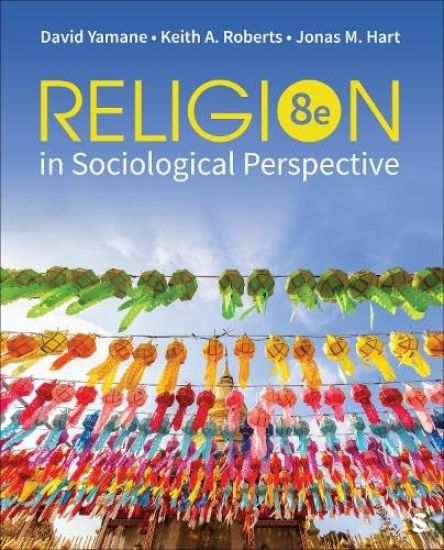
Religion in Sociological Perspective

Religion in Sociological Perspective

Yamane David A.; Roberts Keith A.

Pine Forge
2011
nidottu
continues to draw on a wide range of perspectives. The text aims to help students recognize the contributions of various theoretical perspectives and the blind spots of each theory. Conflict, functional, social constructionist, and rational choice paradigms are used throughout the text. Various middle-range theories are also utilized to explore specific processes. Despite the effort to introduce many perspectives, however, we have made an effort to enhance integration of the text by using one framework throughout the book: the open systems model.
Picturing Illinois

Picturing Illinois

John A. Jakle; Keith A. Sculle

University of Illinois Press
2015
nidottu
At the outset of the twentieth century the debut of the American picture postcard incited widespread enthusiasm for collecting and sending postcard art that lasted decades. In Picturing Illinois, John A. Jakle and Keith A. Sculle examine a diverse set of 200 vintage Illinois picture postcards revealing what locals considered captivating, compelling, and commemorable. They also interpret how individual messages impart the sender's personal perception of local geography and scenery. Jakle and Sculle follow the dialogue between urban Chicago and rural downstate, elucidating the postcard's significance in popular culture and the unique ways in which Illinoisans pictured their world.
Capital Punishment

Capital Punishment

Joseph A. Melusky; Keith A. Pesto

Greenwood Press
2011
sidottu
This balanced approach to legal precedent and moral argument regarding the death penalty presents the evidence so readers can reach their own informed conclusions.Capital Punishment examines the debate around the death penalty, raising questions and attempting to provide an even-handed examination of this controversial practice. The authors combine analysis of important issues with excerpts from landmark legal decisions, important documents, survey results, and empirical data. The first part of the book discusses the origins of the death penalty and traces its development from antiquity to contemporary times. Detailed statistical information about capital punishment is presented and discussed, and the death penalty is considered against a constitutional backdrop with various arguments—for and against—articulated. The second part of the book consists of three appendices. The first appendix presents an annotated list of important capital-punishment cases; the second supplies a more general chronological treatment of capital punishment; and the third provides a bibliographic essay directing readers to other relevant sources of interest. A thorough and insightful treatment, Capital Punishment provides both a summary of the current state of capital punishment and a discussion of areas of continuing controversy.
Lots of Parking

Lots of Parking

John A. Jakle; Keith A. Sculle

University of Virginia Press
2005
nidottu
This lively and exhaustive study traces the history of parking from the curbside to the rise of public and commercial parking lots and garages and the concomitant demolition of the old pedestrian-oriented urban infrastructure. In an accessible style enhanced by a range of interesting and unusual illustrations, Jakle and Sculle discuss the role of parking in downtown revitalization efforts and, by contrast, its role in the promotion of outlying suburban shopping districts and its incorporation into our neighborhoods and residences.
Motoring

Motoring

John A. Jakle; Keith A. Sculle

University of Georgia Press
2009
pokkari
Motoring unmasks the forces that shape the American driving experience—commercial, aesthetic, cultural, mechanical—as it takes a timely look back at our historically unconditional love of motor travel. Focusing on recreational travel between 1900 and 1960, John A. Jakle and Keith A. Sculle cover dozens of topics related to drivers, cars, and highways and explain how they all converge to uphold that illusory notion of release and rejuvenation we call the "open road."Jakle and Sculle have collaborated on five previous books on the history, culture, and landscape of the American road. Here, with an emphasis on the driver's perspective, they discuss garages and gas stations, roadside tourist attractions, freeways and toll roads, truck stops, bus travel, the rise of the convenience store, and much more. All the while, the authors make us think about aspects of driving that are often taken for granted: how, for instance, the many lodging and food options along our highways reinforce the connection between driving and "freedom" and how, by enabling greater speeds, highway engineers helped to stoke motorists' "blessed fantasy of flight." Although driving originally celebrated freedom and touted a common experience, it has increasingly become a highly regulated, isolated activity. The motive behind America's first embrace of the automobile—individual prerogative—still substantially obscures this reality."Americans did not have the automobile imposed on them," say the authors. Jakle and Sculle ask why some of the early prophetic warnings about our car culture went unheeded and why the arguments of its promoters resonated so persuasively. Today, the automobile is implicated in any number of environmental, even social, problems. As the wisdom of our dependence on automobile travel has come into serious question, reassessment of how we first became that way is more important than ever.
Signs in America's Auto Age

Signs in America's Auto Age

John A. Jakle; Keith A. Sculle

University of Iowa Press
2004
nidottu
Cultural geographer John Jakle and historian Keith Sculle explore the ways in which we take meaning from outdoor signs and assign meaning to our surroundings. With an emphasis on how to use signs the authors consider the vast array of signs that have evolved since the beginning of the 20th century.
Religion in Sociological Perspective

Religion in Sociological Perspective

David A. Yamane; Keith A. Roberts; Jonas M. Hart

Sage Publications Inc Ebooks
2025
nidottu
Religion in Sociological Perspective, Eighth Edition introduces the systems of meaning, structure, and belonging that make up the complex social phenomena we know as religion. The author team uses an active learning approach to illustrate the central theories and methods of research in the sociology of religion and show students how to apply these analytical tools to new groups they encounter.
The Death Penalty

The Death Penalty

Joseph A. Melusky; Keith A. Pesto

Greenwood Press
2017
sidottu
This book addresses the myriad controversies and examines the evidence regarding capital punishment in America. It answers questions regarding topics like the efficacy of capital punishment in deterring violent crime, the risks of mistakes, legal issues related to capital punishment, and the monetary costs of keeping inmates on death row.Does the possibility of being put to death deter crime? Do the methods of execution matter? Is it possible for a state-ordered execution to be botched? Are innocent people ever sent to death row? Are there racial biases or other prejudices associated with the death penalty? This book examines the history of capital punishment in the United States; describes the significant issues, events, and cases; and addresses the controversies and legal issues surrounding capital punishment, making this important topic accessible to a wide range of readers.The book presents both sides of the argument on whether capital punishment should continue or be abolished, looking at the evidence regarding whether it is necessary for carrying out justice and deterring violent crime or whether the practice is inhumane, ineffective, biased in its application, and costly. Readers will gain insights into how capital punishment should be used, if at all; whether effective safeguards are in place to ensure that only the guilty receive the death penalty; what crimes deserve this sentence; whether juveniles or individuals with diminished mental capacity should ever be sentenced to death; potentially viable alternatives to the death penalty; and the hidden costs involved in our capital punishment system that make it so expensive. The book also contains primary documents relevant to capital punishment, such as excerpts from documents like the U.S. Constitution, the Hittite case laws, and the Code of Hammurabi, as well as descriptions of and excerpts from key cases decided by the U.S. Supreme Court.
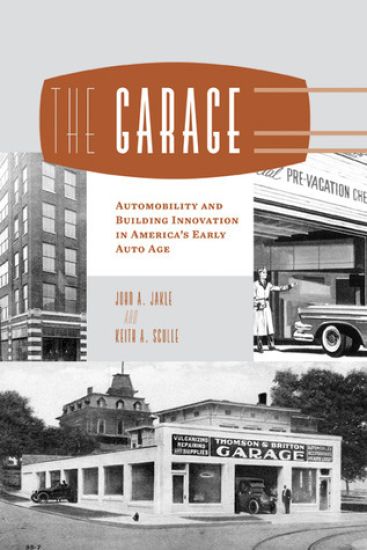
The Garage

The Garage

John A. Jakle; Keith A. Sculle

University of Tennessee Press
2013
nidottu
The garage—whether used for automobile storage, parking, repair, or sales—has been an American commonplace for so long that it is surprising how little attention it has drawn from scholars tracing the country’s architectural and cultural heritage. In this compellingly written and profusely illustrated book, John Jakle and Keith Sculle—two of the nation’s foremost experts on “Roadside America”—bring their analytical acumen and meticulous research skills to bear on the remarkably rich history of this overlooked feature of the U.S. landscape. Beginning with the days when only the wealthy could afford cars (and their chauffeurs doubled as mechanics), the authors show how blacksmiths and carriage repairmen quickly adapted to the increasing ubiquity of the automobile. Noting differences from region to region as well as between large cities and smaller population centres, they look at the growth of car dealerships, with their separation of service and sales floors, and the parallel rise of small, independent repair shops—businesses that have steadily disappeared from the national scene, though some of the buildings that once housed them have survived, refitted for other purposes. The domestic garage—first conceived as a detached structure, then integrated with the house itself—gets its own chapter. And throughout, the authors explore the various ways in which concerns with practicality, commerce, and aesthetics have dictated how garages were laid out and constructed and what services they offered. A worthy complement to the authors’ earlier collaborative studies of the gas station and the parking lot, The Garage will engage an eclectic audience of architectural and material-culture specialists, historic preservationists, antique car enthusiasts, local historians, and others fascinated by the impact of the automobile on early America and its legacy in the built environment of modern communities.
Cruel and Unusual Punishment

Cruel and Unusual Punishment

Joseph A. Melusky; Keith A. Pesto

ABC-CLIO
2003
sidottu
In one of the lengthiest, noisiest, and hottest legal debates in U.S. history, Cruel and Unusual Punishment stands out as a levelheaded, even-handed, and thorough analysis of the issue.The Eighth Amendment to the U.S. Constitution created one of the nation's most valued freedoms but, at the same time, one of its most persistent controversies. On 184 separate occasions, the Supreme Court attempted to decide what constitutes "cruel and unusual punishment."Constitutional scholars Joseph A. Melusky and Judge Keith A. Pesto help readers make sense of the controversy. The authors begin by sketching the context of the debate in a general overview that addresses issues such as excessive bails and fines, and noncapital offenses. But their primary focus is capital punishment. In a detailed, chronologically ordered discussion, they trace the evolving opinion of the nation's highest court from the late 19th century to the present, analyzing issues, arguments, holdings, and outcomes.A focused list of primary source documents includes the Magna Carta, the Northwest Ordinance, the 5th, 8th, and 14th Amendments, and excerpts from the Federalist PapersAppendixes include tables and charts on public opinion on the death penalty, state statistics, federal sentencing guidelines, and a bibliography
The Death Penalty

The Death Penalty

Joseph A. Melusky; Keith A. Pesto

ABC-CLIO
2014
sidottu
When is the death penalty considered "cruel and unusual punishment" or "constitutionally permissible"? This book exposes readers directly to landmark opinions of the U.S. Supreme Court that strive to answer difficult questions regarding capital punishment.This book provides far more than an effective overview of the history, current status, and future of capital punishment in America; it supplies excerpts of the words of the justices themselves to make these judicial opinions readily accessible and understandable to general audiences. As a result, readers can see what the justices had to say for themselves regarding more than 30 important cases involving the death penalty—without relying on any intermediary interpretations of their statements. After a brief historical summary of the debate over capital punishment and the arguments favoring and opposing capital punishment, the book "decodes" how the justices have interpreted and applied constitutional provisions to historical and contemporary controversies. Each case includes brief narrative commentaries inserted by the authors to provide context for the justices' words. Additionally, the excerpted judicial opinions are presented as primary source documents for the reader's inspection and reflection.
Supplanting America's Railroads

Supplanting America's Railroads

John A. Jakle; KEITH A. SCULLE

University of Tennessee Press
2016
nidottu
With their speed and geographical reach, America’s railroads reigned supreme through much of the nineteenth century, knitting together the sprawling country as no other mode of transportation was able to do. Around 1900, however, an upstart challenger—the automobile— arrived on the scene. At first regarded as little more than a plaything for the wealthy, the new invention rapidly gained popularity, especially after Henry Ford’s innovative mass-production techniques made cars affordable to the middling classes. In this engaging book, John A. Jakle and Keith A. Sculle—renowned experts on the wide-ranging effects of automobility on American life—examine the various ways in which the railroads responded to their new competition, not just from the automobile itself but from its close cousins, the motor truck and motor bus, through several decades up to the eve of World War II. Drawing on extensive research in the trade publications of the period, the authors examine the development of interurban and intraurban rail transport, the transition from steam to electric and diesel power, and the railroads’ close involvement in the nascent trucking and passenger-bus industries. They devote a chapter to the places where trains and automobiles came most directly and dangerously into conflict—railroad crossings—and pay special attention throughout to the key role of government in the competition, whether through antitrust legislation, taxation, or the building of the “good roads” that were so necessary to the rise of auto, truck, and bus transport. Although the railroads remain with us, it was the automobile that emerged as the predominant transportation form, owing to its promise of speed, convenience, flexibility of movement, and, most important, self-gratification. In a country that places such high value on individual freedom, the romance of motoring has proven irresistible.
Spy Satellites and Other Intelligence Technologies that Changed History

Spy Satellites and Other Intelligence Technologies that Changed History

Thomas Graham; Keith A. Hansen; Robert Huffstutler

University of Washington Press
2007
pokkari
Much has been said and written about the failure of U.S. intelligence to prevent the terrorist attacks on September 11, 2001, and its overestimation of Iraq's weapons of mass destruction under Saddam Hussein. This book focuses instead on the central role that intelligence-collection systems play in promoting arms control and disarmament.Ambassador Thomas Graham Jr. and Keith Hansen bring more than fifty combined years of experience to this discussion of the capabilities of technical systems, which are primarily based in space. Their history of the rapid advancement of surveillance technology is a window into a dramatic reconceptualization of Cold War strategies and policy planning. Graham and Hansen focus on the intelligence successes against Soviet strategic nuclear forces and the quality of the intelligence that has made possible accurate assessments of WMD programs in North Korea, Iran, and Libya. Their important insights shed a much-needed light on the process of verifying how the world harnesses the proliferation of nuclear arms and the continual drive for advancements in technology.
Spy Satellites and Other Intelligence Technologies that Changed History

Spy Satellites and Other Intelligence Technologies that Changed History

Thomas Graham; Keith A. Hansen; Robert Huffstutler

University of Washington Press
2015
sidottu
Much has been said and written about the failure of U.S. intelligence to prevent the terrorist attacks on September 11, 2001, and its overestimation of Iraq's weapons of mass destruction under Saddam Hussein. This book focuses instead on the central role that intelligence-collection systems play in promoting arms control and disarmament.Ambassador Thomas Graham Jr. and Keith Hansen bring more than fifty combined years of experience to this discussion of the capabilities of technical systems, which are primarily based in space. Their history of the rapid advancement of surveillance technology is a window into a dramatic reconceptualization of Cold War strategies and policy planning. Graham and Hansen focus on the intelligence successes against Soviet strategic nuclear forces and the quality of the intelligence that has made possible accurate assessments of WMD programs in North Korea, Iran, and Libya. Their important insights shed a much-needed light on the process of verifying how the world harnesses the proliferation of nuclear arms and the continual drive for advancements in technology.
Historical Dictionary of United Kingdom

Historical Dictionary of United Kingdom

James Panton; Keith A. Cowlard

Scarecrow Press
1997
sidottu
At the turn of the century, the United Kingdom ruled an empire on which the sun never set. Today, this country, shorn of the bulk of its overseas empire, is currently debating the merits of European integration. Although no longer the ruler of vast dominions, the United Kingdom continues to exert important influence in world affairs. The first volume of the Historical Dictionary of the United Kingdom is an essential and handy reference work to England and the United Kingdom in general. The forthcoming second volume will examine Wales, Scotland, and Northern Ireland. It contains concise dictionary entries on the prominent personalities, events, and institutions that shaped British history as well as entries that detail noteworthy places and aspects of the country's economic, social, and cultural life. This historical dictionary also provides a handy overview of geography and history of the country, a chronology, lists of monarchs and prime ministers, several maps, a substantial bibliography and a useful appendix of entries that will appear in the forthcoming second volume.