
Kirjahaku
Etsi kirjoja tekijän nimen, kirjan nimen tai ISBN:n perusteella.
1000 tulosta hakusanalla Kenneth M. Setton

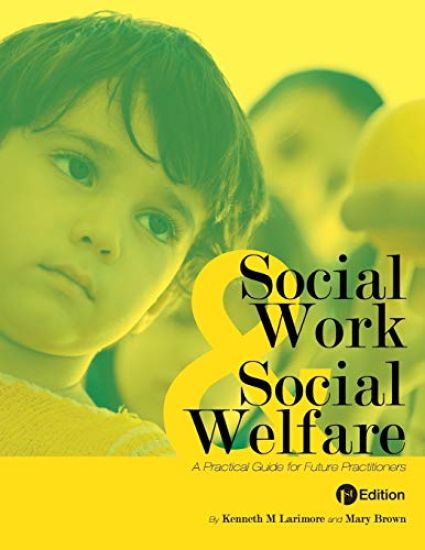
Social Work and Social Welfare: A Practical Guide for Future Practitioners helps students become familiar with the field of social work and assess their genuine interest in becoming a social work professional.Students gain a deeper understanding of what it means to be a social worker through readings exploring the field. The workbook exercises take learning a step further by giving students a feel for what social workers do on the job and helping them judge what practice area they might want to work in.The book includes theoretical perspectives for social workers, an assessment of at-risk populations, and a historical perspective on social welfare policy. Students also explore social work specialties such as family and children's services, mental health and health care, substance abuse services, and social work in the criminal justice system. Chapters include interest-building questions and target social work language.Well-suited to introductory social work courses, Social Work and Social Welfare gives students the opportunity to complete hands-on social work exercises that help them rehearse and practice the core skills needed to succeed in the social work profession.

Thinking Through German Literature with Andrew Jaszi
Kenneth M. Ralston
BOYDELL BREWER LTD
2025
sidottu
Brings to light an important and unconventional teacher of literature whose way of thinking and method are relevant in German Studies and beyond, particularly in view of the present crisis of the humanities. At a time when enrollment in the humanities is said to be in "free fall" (Nathan Heller, The New Yorker, 2/27/2023), the figure of Andrew Jaszi offers an alternative vision of what a literary education might look like. Jaszi was a Hungarian-born philosopher and literary scholar in the German Department at the University of California, Berkeley, from 1948 to 1985. His accessible, jargon-free approach, a method he developed through analogy with Goethe's unique way of doing science, attracted students of diverse backgrounds and majors to his classes, while also winning acclaim from colleagues who compared him to Wittgenstein and Buber. Drawing on a set of previously unknown tape recordings of Jaszi's seminars, this book offers readers the opportunity to witness this legendary teacher in action. The book's immediate benefit is the illumination provided by Jaszi's original interpretations of Goethe's Faust and Kafka's "The Judgment." More broadly, it illustrates the transformative, whole-self education Jaszi advocated and himself embodied, one that runs counter to the technocratic imperatives of our time. Ultimately, the book's goal is to make better known an important literary thinker and an unconventional teacher of German Studies, the value of whose work extends beyond a single discipline to humanities education in general, with special bearing on its present crisis and potential future.

"I don't want to be this way "Lion Slayer: Using the Right Truth to Slay the Enemy deletes that anguished cry from the lips of God's people. God desires His people to grow spiritually strong and to triumph over temptation. Yet sinful habits overwhelm multitudes of believers, who cherish little hope for deliverance. This book provides welcomed relief. Prayerful readers will learn to: - Break the habits of ensnaring sins.- Recognize why we sometimes keep on disobeying God.- Discover the right truth that makes us free.- Believe the right truth that delivers from bondage.- Pray the right truth that rescues us from overwhelming temptations.- Walk in the Holy Spirit and achieve a triumphant life style"You may have looked for a book that helps you grow and overcome sin and Satan. Well, here it is This volume, put to good use, will guide you scripturally to overcome evil. Get it for yourself and give copies to your friends."- Dr. Jay E. Adams, Author, Pastor, Seminary Professor

"I don't want to be this way "Lion Slayer: Using the Right Truth to Slay the Enemy deletes that anguished cry from the lips of God's people. God desires His people to grow spiritually strong and to triumph over temptation. Yet sinful habits overwhelm multitudes of believers, who cherish little hope for deliverance. This book provides welcomed relief. Prayerful readers will learn to: - Break the habits of ensnaring sins.- Recognize why we sometimes keep on disobeying God.- Discover the right truth that makes us free.- Believe the right truth that delivers from bondage.- Pray the right truth that rescues us from overwhelming temptations.- Walk in the Holy Spirit and achieve a triumphant life style"You may have looked for a book that helps you grow and overcome sin and Satan. Well, here it is This volume, put to good use, will guide you scripturally to overcome evil. Get it for yourself and give copies to your friends."- Dr. Jay E. Adams, Author, Pastor, Seminary Professor
John Paul II's Faith and Reason was written against a background of Catholic scholarship focusing notably on the New Testament, St. Augustine's Confessions, St. Thomas's De Veritate, and the encyclicals of various pre-Vatican II popes. A detailed, textually based critique of these early sources reveals inconsistencies and conceptual errors that are shown to carry over into Faith and Reason. John Paul II's treatment of reason, in particular, turns out to be aberrant to the point of incoherence. It is inconceivable how this reason could join with faith in a way that lifts the human spirit to a contemplation of truth, as stated in the Preface of the encyclical. There is another sense of reason, however, which demonstrably is capable of cooperating with faith to achieve this effect. This reason is free from the fetters of Neo-Scholasticism that keep John Paul II's reason grounded. The present study joins forces with the encyclical with a detailed example of this other sense of reason in action. In this example, new truths come to light regarding the complex relation between the first and the second great commandments.
John Paul II's Faith and Reason was written against a background of Catholic scholarship focusing notably on the New Testament, St. Augustine's Confessions, St. Thomas's De Veritate, and the encyclicals of various pre-Vatican II popes. A detailed, textually based critique of these early sources reveals inconsistencies and conceptual errors that are shown to carry over into Faith and Reason. John Paul II's treatment of reason, in particular, turns out to be aberrant to the point of incoherence. It is inconceivable how this reason could join with faith in a way that lifts the human spirit to a contemplation of truth, as stated in the Preface of the encyclical. There is another sense of reason, however, which demonstrably is capable of cooperating with faith to achieve this effect. This reason is free from the fetters of Neo-Scholasticism that keep John Paul II's reason grounded. The present study joins forces with the encyclical with a detailed example of this other sense of reason in action. In this example, new truths come to light regarding the complex relation between the first and the second great commandments.
In the waning days of World War I, William K. Dean was brutally murdered, his body hog-tied and dumped in a rainwater cistern on his farm in the quiet town of Jaffrey, New Hampshire. Suspicion quickly fell on Dean's wife, an invalid in the early stages of dementia. Her friends, outraged at the accusations, pointed instead to a former tenant of Dean’s, whom many suspected of being a German spy. Others believed that Dean's best friend, a politically powerful banker and judge, was involved.Deep Water is based on extensive research into the Dean murder, including thousands of pages of FBI documents, Grand Jury testimonies, newspaper accounts, private correspondence, and the archives of the Jaffrey Historical Society.
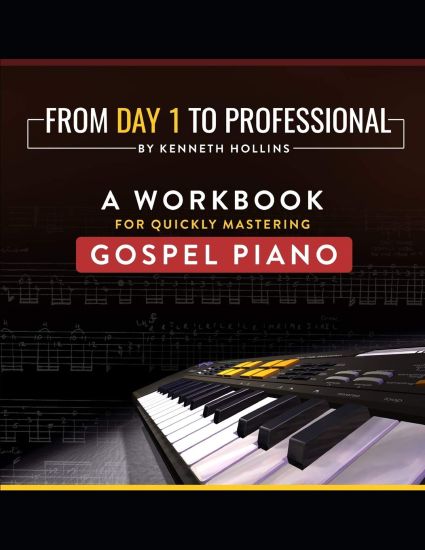
From Day One To Professional is a step by step workbook set that is designed by Kenneth Hollins for the musician that wants to quickly and effectively play gospel piano. This is a proven method to get real results in a short amount of time.

At twelve years old Kaleb Jakobs is running away from a very bad family relationship and has no idea what life has in store for him. His future is full of unknown adventures and he has a very big secret that he is carrying with him.

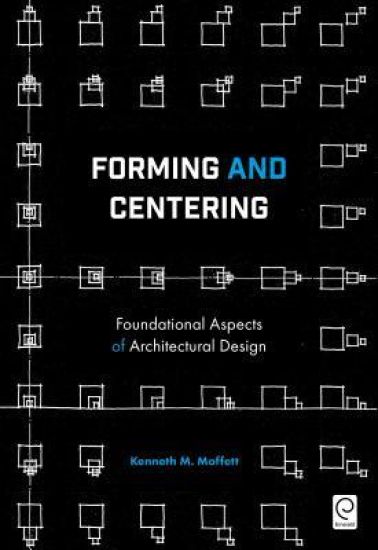
Nearly every work of architecture can be characterized by specific approaches to forming and centering. An awareness of these “underpinnings” would facilitate a more informed approach to architectural design problems, as well as a deeper understanding of the central issues (and flaws) embodied by completed works of architecture. But the addressing of such topics has generally remained multifarious and diverse: more in the nature of a collection of independent issues than an overarching analytical argument. In this book, fresh looks at such issues are assembled and recast into a fully integrated narrative, based on two foundational and complementary aspects of architectural design: those that give shape and those that give focus—forming and centering. The author uses an equally weighted interplay of discussion and diagram, with over 450 illustrations throughout the book. In addition, the text includes many links to further information online in the form of narratives, photographs, delineations, and contextual views.
In Creativity and the Brain, Kenneth Heilman explores the possible brain mechanisms which underlie creativity, by reviewing the existing evidence and putting forward new ideas. On the way, he discusses the relationships between creativity and intelligence, brain anatomy, neuropharmacology, addiction, handedness, sex differences, and mood states such as depression. He also addresses the effects of neurological disorders and aging, as well as the influence of environmental factors such as tolerance and nurturing.The book will be of interest to neuroscientists, psychologists, psychiatrists, neurologists and educators The engaging and succinct style of this book also make it appealing to students, and researchers from a variety of disciplines who have an interest in understanding the brain mechanisms underlying creativity.
About 90% of people have faith in a supreme being, but our yearning for the divine, and whatever it promises, involves a large divergence in mental states and behaviors. Some adhere to doctrine, supplication, and fastidious religious practices; others have a strong sense they are part of something greater and more universal. However, all religious and spiritual paths are mediated by complex brain networks. When different areas of the brain are stimulated, a person can have a variety of experiences, but there is no specific ‘God spot’ where stimulation enhances religiosity or spirituality. Functional brain imaging shows that there are specific areas of the brain that ‘light up’ when subjects perform certain religious activities, but imaging only provides anatomic correlations, not functional explanations.The Believer's Brain takes a step beyond these singular methodologies, providing converging evidence from a variety study methods of how humans’ brain networks mediate different aspects of religious and spiritual beliefs, feelings, actions, and experiences.Although the book reveals how our brain is the home to the religious and spiritual mind, understanding this gift will not diminish our spirituality or our love or our belief in a supreme being, but will increase appreciation of the apparatus that mediates these mental states.