Kirjojen hintavertailu. Mukana 12 083 983 kirjaa ja 12 kauppaa.

Kirjahaku

Etsi kirjoja tekijän nimen, kirjan nimen tai ISBN:n perusteella.

1000 tulosta hakusanalla Kenneth Williams

Legumes and Grasses for Silage: a Report of Experiments

Legumes and Grasses for Silage: a Report of Experiments

W. B. (William Barbour) 1885- Nevens; K. A. (Kenton Augustus) Kendall; K. E. (Kenneth E. ). Harshbarger

Hassell Street Press
2021
nidottu
This work has been selected by scholars as being culturally important and is part of the knowledge base of civilization as we know it.This work is in the public domain in the United States of America, and possibly other nations. Within the United States, you may freely copy and distribute this work, as no entity (individual or corporate) has a copyright on the body of the work.Scholars believe, and we concur, that this work is important enough to be preserved, reproduced, and made generally available to the public. To ensure a quality reading experience, this work has been proofread and republished using a format that seamlessly blends the original graphical elements with text in an easy-to-read typeface.We appreciate your support of the preservation process, and thank you for being an important part of keeping this knowledge alive and relevant.

Painting the French Riviera

Painting the French Riviera

Jean-Louis Andral; Ann Dumas; Aymeric Jeudy; Heather Lemonedes; Marilyn McCully; William H. Robinson; Kenneth E. Silver; Belinda Thomson; Richard Thomson

Royal Academy of Arts
2026
sidottu
The Mediterranean coast of France and Catalonia witnessed the rise and development of modern art over a century, from Cézanne in the 1860s to Matisse, Picasso and Klein in the 1950s and 1960s. These artists and the many more featured here discovered an inexhaustible source of inspiration in this storied region, whose glittering, languid sea stretches out towards the far horizon beneath brilliant azure skies. Indelibly associated with the classical past, this magical land of eternal spring and spiritual renewal came to signify a state of mind, and avant-garde artists sought to convey the vitality and élan it inspired in them through new paradigms of modernist invention.
Occupational Safety and Health Law Handbook

Occupational Safety and Health Law Handbook

Melissa A. Bailey; Matthew C. Cooper; Frank D. Davis; William K. Doran; John B. Flood; Margaret S. Lopez; John F. Martin; Marshall Lee Miller; Gwendolyn K. Nightengale; Shontell Powell; Phillip B. Russell; Arthur G. Sapper; Kenneth B. Siepman; Zachary S. Stinson; R. Lance Witcher

Bernan Press
2016
sidottu
Now in its third edition, this popular Handbook has been your go-to guide to the fundamentals of occupational safety and health law for over a decade. This new edition provides an authoritative and up-to-date reference that you count on for its reliable information and straightforward explanation. Each chapter is written by a highly respected attorney who is an expert in the field. Yet the book is written without legal jargon, in plain English that anyone can understand. In it, the authors provide interpretations of many facets of the Occupational Safety and Health Act, review regulations and standards governing employee protection, and offer advice for dealing with regulatory authorities. The Handbook covers all of the important legal aspects of the Occupational Safety and Health Act with clearly written explanations of such issues as the boundaries of OSHA regulations, general administrative law concepts, and OSHA's enforcement tactics. It provides “Practitioner's Tips”—useful legal guidance given by experienced attorneys for complying with OSHA inspection regulations and enforcing employers' and employees' rights during inspections. It describes changes to the probable cause test under OSHA's “Warrant Requirement.” It also explains the legal and practical consequences facing a business not contesting OSHA citations, OSHA's use of “Monitoring Devices on Employees,” and more. This new edition covers major changes to the Hazard Communication Standard, new enforcement initiatives, updated regulations in the construction industry, new emergency response procedures, and more.
Hypoxia in the Northern Gulf of Mexico

Hypoxia in the Northern Gulf of Mexico

Virginia H. Dale; Catherine L. Kling; Judith L. Meyer; James Sanders; Holly Stallworth; Thomas Armitage; David Wangsness; Thomas Bianchi; Alan Blumberg; Walter Boynton; Daniel J. Conley; William Crumpton; Mark David; Denis Gilbert; Robert W. Howarth; Richard Lowrance; Kyle Mankin; James Opaluch; Hans Paerl; Kenneth Reckhow; Andrew N. Sharpley; Thomas W. Simpson; Clifford S. Snyder; Donelson Wright

Springer-Verlag New York Inc.
2010
sidottu
Since 1985, scientists have been documenting a hypoxic zone in the Gulf of Mexico each year. The hypoxic zone, an area of low dissolved oxygen that cannot s- port marine life, generally manifests itself in the spring. Since marine species either die or ee the hypoxic zone, the spread of hypoxia reduces the available habitat for marine species, which are important for the ecosystem as well as commercial and recreational shing in the Gulf. Since 2001, the hypoxic zone has averaged 2 1 16,500 km during its peak summer months , an area slightly larger than the state 2 2 of Connecticut, and ranged from a low of 8,500 km to a high of 22,000 km . To address the hypoxia problem, the Mississippi River/Gulf of Mexico Watershed Nutrient Task Force (or Task Force) was formed to bring together represen- tives from federal agencies, states, and tribes to consider options for responding to hypoxia. The Task Force asked the White House Of ce of Science and Technology Policy to conduct a scienti c assessment of the causes and consequences of Gulf hypoxia through its Committee on Environment and Natural Resources (CENR).
Hypoxia in the Northern Gulf of Mexico

Hypoxia in the Northern Gulf of Mexico

Virginia H. Dale; Catherine L. Kling; Judith L. Meyer; James Sanders; Holly Stallworth; Thomas Armitage; David Wangsness; Thomas Bianchi; Alan Blumberg; Walter Boynton; Daniel J. Conley; William Crumpton; Mark David; Denis Gilbert; Robert W. Howarth; Richard Lowrance; Kyle Mankin; James Opaluch; Hans Paerl; Kenneth Reckhow; Andrew N. Sharpley; Thomas W. Simpson; Clifford S. Snyder; Donelson Wright

Springer-Verlag New York Inc.
2012
nidottu
Since 1985, scientists have been documenting a hypoxic zone in the Gulf of Mexico each year. The hypoxic zone, an area of low dissolved oxygen that cannot s- port marine life, generally manifests itself in the spring. Since marine species either die or ee the hypoxic zone, the spread of hypoxia reduces the available habitat for marine species, which are important for the ecosystem as well as commercial and recreational shing in the Gulf. Since 2001, the hypoxic zone has averaged 2 1 16,500 km during its peak summer months , an area slightly larger than the state 2 2 of Connecticut, and ranged from a low of 8,500 km to a high of 22,000 km . To address the hypoxia problem, the Mississippi River/Gulf of Mexico Watershed Nutrient Task Force (or Task Force) was formed to bring together represen- tives from federal agencies, states, and tribes to consider options for responding to hypoxia. The Task Force asked the White House Of ce of Science and Technology Policy to conduct a scienti c assessment of the causes and consequences of Gulf hypoxia through its Committee on Environment and Natural Resources (CENR).
Orders Anguilliformes and Saccopharyngiformes

Orders Anguilliformes and Saccopharyngiformes

Eugenia B. Böhlke; James E Böhlke; Mark M Leiby; John E Mccosker; E. Bertelsen; Catherine H Robins; C. Richard Robins; David G Smith; Kenneth A Tighe; Jørgen G Nielsen; William H Hulet

Peabody Museum of Natural History, Yale University
2019
pokkari
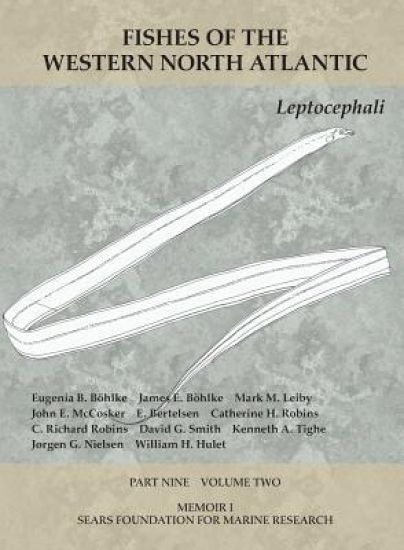
The Fishes of the Western North Atlantic series, which began publication in the 1940s by Yale University’s Sears Foundation for Marine Research, was from its beginnings conceived to synthesize and make accessible the wealth of information in widely scattered published accounts of the fish fauna of the region for both the layman and the specialist, presenting critical reviews rather than compilations. These reference works are still considered valuable and of interest today to both general audiences and the academic community. As described in the Preface to the first volume, the series was “written on the premise that it should be useful to those in many walks of life—to those casually … interested …, to the sportsman …, to the fisherman …, as well as to the amateur ichthyologist and the professional scientist.” These books remain authoritative studies of the anadromous, estuarine, and marine fishes of the waters of the western North Atlantic from Hudson Bay southward to the Amazon, ranking as primary references for both amateurs and professionals interested in fishes, and as significant working tools for students of the sea.
Leptocephali

Leptocephali

Eugenia B. Böhlke; James E Böhlke; Mark M Leiby; John E Mccosker; E. Bertelsen; Catherine H Robins; C. Richard Robins; David G Smith; Kenneth A Tighe; Jørgen G Nielsen; William H Hulet

Peabody Museum of Natural History, Yale University
2019
pokkari
The Fishes of the Western North Atlantic series, which began publication in the 1940s by Yale University’s Sears Foundation for Marine Research, was from its beginnings conceived to synthesize and make accessible the wealth of information in widely scattered published accounts of the fish fauna of the region for both the layman and the specialist, presenting critical reviews rather than compilations. These reference works are still considered valuable and of interest today to both general audiences and the academic community. As described in the Preface to the first volume, the series was “written on the premise that it should be useful to those in many walks of life—to those casually … interested …, to the sportsman …, to the fisherman …, as well as to the amateur ichthyologist and the professional scientist.” These books remain authoritative studies of the anadromous, estuarine, and marine fishes of the waters of the western North Atlantic from Hudson Bay southward to the Amazon, ranking as primary references for both amateurs and professionals interested in fishes, and as significant working tools for students of the sea.
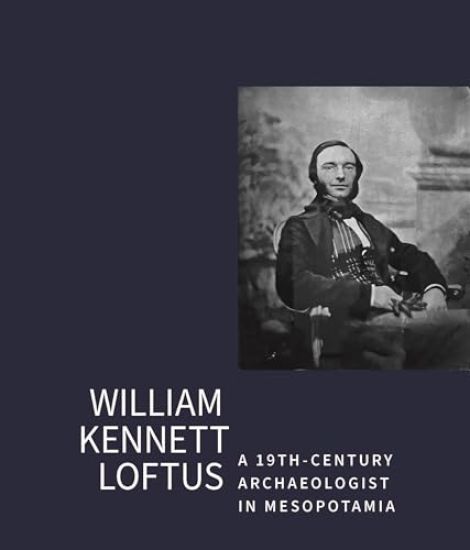
William Kennet Loftus: A 19th-Century Archaeologist in Mesopotamia

William Kennet Loftus: A 19th-Century Archaeologist in Mesopotamia

John Curtis

British Institute for the Study of Iraq (Gertrude Bell Memorial)
2023
nidottu
This book gathers together hitherto unpublished letters from William Kennett Loftus (1820-1858) to friends and relatives in Newcastle-upon-Tyne. The letters have been transcribed and are introduced by John Curtis. Loftus was a geologist attached to the Turco-Persian Frontier Commission which in the years 1849-52 was charged with establishing the border between Persia and the Ottoman Empire. In this position he was able to undertake pioneering archaeological work at sites such as Warka in Mesopotamia (Iraq) and Susa in Persia (Iran). As well as providing information about Loftus’ archaeological work, there are vivid descriptions of celebrating the birthday of Queen Victoria in Baghdad, contending with wild tribesmen, travelling on horseback through the Taurus Mountains in winter, working in temperatures of up to nearly 50° centigrade in the summer, and hunting hyenas and wild pigs. The book also contains genealogical information about Loftus and his family.
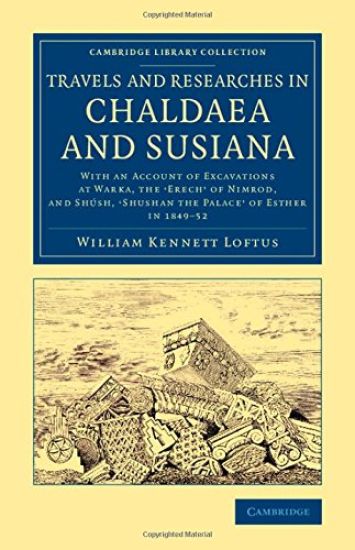
Travels and Researches in Chaldaea and Susiana

Travels and Researches in Chaldaea and Susiana

William Kennett Loftus

Cambridge University Press
2014
pokkari
This book contains two works by William Kennett Loftus (1821–58) in which he describes his archaeological surveying and excavations in Mesopotamia between 1849 and 1855. An enthusiastic antiquarian and geologist, Loftus was appointed to the staff of the Turco-Persian Frontier Commission. On his travels, he located many ruins later identified as biblical cities, including Warkah (Uruk) and Tell el-Muqayyar (Ur). In 1854 Loftus was enabled by the newly formed Assyrian Excavation Fund to return to Warkah, and he excavated over a three-month period, discovering artefacts and cuneiform tablets which he sent to the British Museum. His Travels and Researches, describing his work in Mesopotamia up to 1852, was published in 1857, and his short account of his later work at Warkah in 1859, after his early death. These texts remain a record of the first discoveries in a region significant for its biblical history, but previously hardly visited by Europeans.
A Sermon Preach'd at the Funeral of the Right Noble William Duke of Devonshire, in the Church of All-Hallows in Derby, on Fryday Septemb. 5th. MDCCVII. By White Kennet
The 18th century was a wealth of knowledge, exploration and rapidly growing technology and expanding record-keeping made possible by advances in the printing press. In its determination to preserve the century of revolution, Gale initiated a revolution of its own: digitization of epic proportions to preserve these invaluable works in the largest archive of its kind. Now for the first time these high-quality digital copies of original 18th century manuscripts are available in print, making them highly accessible to libraries, undergraduate students, and independent scholars.The Age of Enlightenment profoundly enriched religious and philosophical understanding and continues to influence present-day thinking. Works collected here include masterpieces by David Hume, Immanuel Kant, and Jean-Jacques Rousseau, as well as religious sermons and moral debates on the issues of the day, such as the slave trade. The Age of Reason saw conflict between Protestantism and Catholicism transformed into one between faith and logic -- a debate that continues in the twenty-first century.++++The below data was compiled from various identification fields in the bibliographic record of this title. This data is provided as an additional tool in helping to insure edition identification: ++++British LibraryT060171London: printed and sold by H. Hills, 1707. 5, 11]p.; 8