

Kirjahaku
Etsi kirjoja tekijän nimen, kirjan nimen tai ISBN:n perusteella.
1000 tulosta hakusanalla Laran Mithras
This work presents thoughts on the Lacanian subject: What are we as a speaking being? What makes us a human subject from a psychoanalytic perspective? Is it feelings and affect that make us a human? Or was it the Freudian invention of the unconscious that drew a line between human and a non-human? What can be learnt from the subject of the unconscious in the clinic of psychoanalysis that can help us to approach these questions? Berjanet Jazani takes examples from the psychoanalytic clinic as well as cultural references ranging from ancient Persia to London’s Theatreland in order to elaborate the question of subjectivity, reality and truth from a psychoanalytic perspective. In the era of hyperreality, the agency of branding and marketing strategies has overshadowed the reality of a human being, his true nature and agency. The hyperreality of contemporary society creates in each individual a false hope of becoming a high-fidelity copy of their idols, and such a fallacy has led many to believe that this is what determines their being in a social bond. Jazani explores the question of the reality and mortality of a subject through a Lacanian prism, from the theorising of analytical subjectivity that starts with the Freudian Oedipal myth more than a century ago to the futurist aspiration to fabricate human beings according to some ideal model. This book will be important reading for students and academics of Lacanian psychoanalysis, as well as professionals concerned with complex social problems.
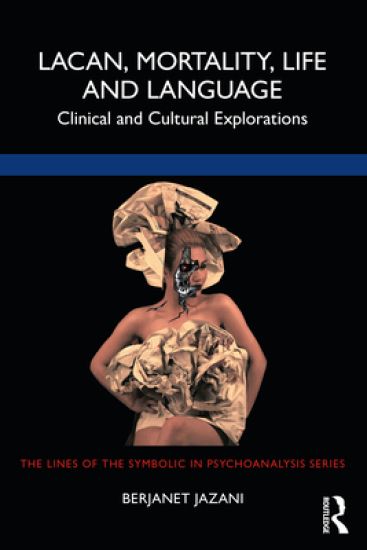
This work presents thoughts on the Lacanian subject: What are we as a speaking being? What makes us a human subject from a psychoanalytic perspective? Is it feelings and affect that make us a human? Or was it the Freudian invention of the unconscious that drew a line between human and a non-human? What can be learnt from the subject of the unconscious in the clinic of psychoanalysis that can help us to approach these questions? Berjanet Jazani takes examples from the psychoanalytic clinic as well as cultural references ranging from ancient Persia to London’s Theatreland in order to elaborate the question of subjectivity, reality and truth from a psychoanalytic perspective. In the era of hyperreality, the agency of branding and marketing strategies has overshadowed the reality of a human being, his true nature and agency. The hyperreality of contemporary society creates in each individual a false hope of becoming a high-fidelity copy of their idols, and such a fallacy has led many to believe that this is what determines their being in a social bond. Jazani explores the question of the reality and mortality of a subject through a Lacanian prism, from the theorising of analytical subjectivity that starts with the Freudian Oedipal myth more than a century ago to the futurist aspiration to fabricate human beings according to some ideal model. This book will be important reading for students and academics of Lacanian psychoanalysis, as well as professionals concerned with complex social problems.
Lacan and Chan Buddhist Thought provides a close reading of how Lacan mobilizes concepts from Chan Buddhist philosophy, culture, and practice in his later teachings. The book emerged from the three co-authors’ engagement with Lacan’s 1962–1963 Seminar on Anxiety, and the significance of Lacan’s original interpretation of the Buddhist principle that desire is the cause of suffering. The book reads key Lacanian concepts – such as the objet a, jouissance, the real, Nirvana, and the mirror – through ancient Buddhist teachings and koans. With this focused exploration of psychoanalysis and Chan Buddhism, the authors offer a philosophically grounded cross-cultural approach to the theory and practice of psychoanalysis in Asian countries. Lacan and Chan Buddhist Thought will be a rich resource for psychoanalysts, academics, and students interested in Lacan and religion, the intellectual and cultural relationship between Asian and Western thought, and Mahayana Buddhism more generally.
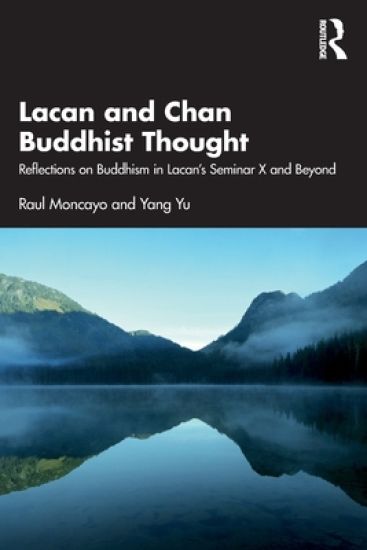
Lacan and Chan Buddhist Thought provides a close reading of how Lacan mobilizes concepts from Chan Buddhist philosophy, culture, and practice in his later teachings. The book emerged from the three co-authors’ engagement with Lacan’s 1962–1963 Seminar on Anxiety, and the significance of Lacan’s original interpretation of the Buddhist principle that desire is the cause of suffering. The book reads key Lacanian concepts – such as the objet a, jouissance, the real, Nirvana, and the mirror – through ancient Buddhist teachings and koans. With this focused exploration of psychoanalysis and Chan Buddhism, the authors offer a philosophically grounded cross-cultural approach to the theory and practice of psychoanalysis in Asian countries. Lacan and Chan Buddhist Thought will be a rich resource for psychoanalysts, academics, and students interested in Lacan and religion, the intellectual and cultural relationship between Asian and Western thought, and Mahayana Buddhism more generally.
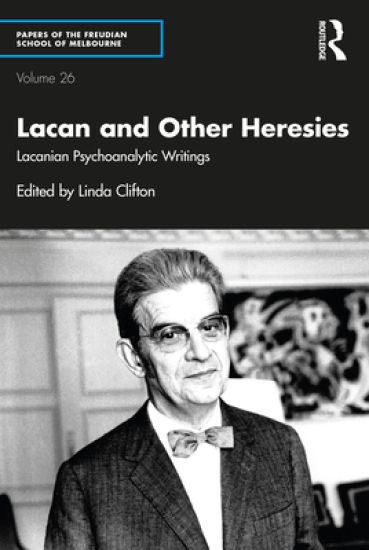
Lacan and Other Heresies
Taylor Francis Ltd
2021
nidottu
This volume gathers together the recent writings of the analysts and members of the Freudian School of Melbourne and the Belgian analyst Christian Fierens, displaying the ongoing interrogation by the School of Lacanian psychoanalysis into its history, theories and practices.Within the framework of Lacan’s interventions in Freudian psychoanalysis, the book in particular highlights Lacan’s inventions in theoretical discourse and clinical practice, including the no-sexual relation, the discursive structures of language, the school, the cartel and the pass. Theoretical shibboleths such as the Oedipus complex are questioned, while the historical writings of Sabina Spielrein are read and interpreted anew. Chapters also engage with the psychoanalysis of children, the questions posed by the psychoses to psychoanalysis and the intersection of creativity and the arts in new and original ways.Bringing together a range of expert contributions, this text will be an illuminating resource for scholars and practitioners of psychoanalysis.
Lacan and Other Heresies
Taylor Francis Ltd
2021
sidottu
This volume gathers together the recent writings of the analysts and members of the Freudian School of Melbourne and the Belgian analyst Christian Fierens, displaying the ongoing interrogation by the School of Lacanian psychoanalysis into its history, theories and practices.Within the framework of Lacan’s interventions in Freudian psychoanalysis, the book in particular highlights Lacan’s inventions in theoretical discourse and clinical practice, including the no-sexual relation, the discursive structures of language, the school, the cartel and the pass. Theoretical shibboleths such as the Oedipus complex are questioned, while the historical writings of Sabina Spielrein are read and interpreted anew. Chapters also engage with the psychoanalysis of children, the questions posed by the psychoses to psychoanalysis and the intersection of creativity and the arts in new and original ways.Bringing together a range of expert contributions, this text will be an illuminating resource for scholars and practitioners of psychoanalysis.
Lacan on Depression and Melancholia
TAYLOR FRANCIS LTD
2022
sidottu
Lacan on Depression and Melancholia considers how clinical, cultural, and personal understandings of depression can be broken down and revisited to properly facilitate psychoanalytical clinical practice.The contributors to this book highlight the role of neurotic conflicts underlying depressive affects, the distinction between neurotic and psychotic structure, the nature of melancholia, and the clinical value of Freudian and Lacanian concepts – such as object a, the Other, desire, the superego, sublimation – as demonstrated via a variety of clinical and historical cases. The book includes discussions of bereavement and mourning, transference in melancholia, suicidality and the death drive, excessive creativity, melancholic identification, neurotic inhibition, and manic-depressive psychosis.Lacan on Depression and Melancholia will be essential reading for psychoanalysts and psychoanalytic psychotherapists in practice and training, Lacanian clinicians, and scholars of Lacanian theory.
Lacan on Depression and Melancholia
TAYLOR FRANCIS LTD
2022
nidottu
Lacan on Depression and Melancholia considers how clinical, cultural, and personal understandings of depression can be broken down and revisited to properly facilitate psychoanalytical clinical practice.The contributors to this book highlight the role of neurotic conflicts underlying depressive affects, the distinction between neurotic and psychotic structure, the nature of melancholia, and the clinical value of Freudian and Lacanian concepts – such as object a, the Other, desire, the superego, sublimation – as demonstrated via a variety of clinical and historical cases. The book includes discussions of bereavement and mourning, transference in melancholia, suicidality and the death drive, excessive creativity, melancholic identification, neurotic inhibition, and manic-depressive psychosis.Lacan on Depression and Melancholia will be essential reading for psychoanalysts and psychoanalytic psychotherapists in practice and training, Lacanian clinicians, and scholars of Lacanian theory.

This book explores themes around the Father, His absence in modern society and the decline of mental health. The nature of this decline can be uniquely psychoanalytically theorised, in both the corresponding ferocity of the internal object and exposure to the Real.The first part of this book underlines what psychoanalysis and psi-sciences continue to overlook: who now provides what Lacan called the “narrow footbridge” between anxiety and death? What terror(ism) must replace the father? How can reality be stabilised once more? The second part follows the atomised world as it turns towards extremism and utopian dreams: in Ireland via Hanaghan’s radical psychoanalysis; in Levinasian ethics; in Gnostic belief in an evil world; and in the clinic of the death drive. The conclusion turns finally to the God beyond God, and the overwhelming evidence for God’s presence in the world.Lacan in the End Times will be of interest to psychoanalysts, psychotherapists, counsellors, social workers, and scholars in critical theory, philosophy, cultural theory, literary theory, and theology.
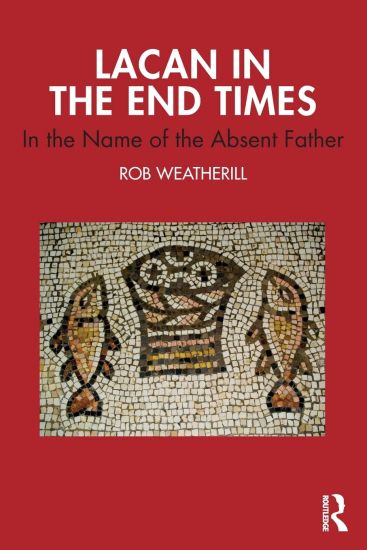
This book explores themes around the Father, His absence in modern society and the decline of mental health. The nature of this decline can be uniquely psychoanalytically theorised, in both the corresponding ferocity of the internal object and exposure to the Real.The first part of this book underlines what psychoanalysis and psi-sciences continue to overlook: who now provides what Lacan called the “narrow footbridge” between anxiety and death? What terror(ism) must replace the father? How can reality be stabilised once more? The second part follows the atomised world as it turns towards extremism and utopian dreams: in Ireland via Hanaghan’s radical psychoanalysis; in Levinasian ethics; in Gnostic belief in an evil world; and in the clinic of the death drive. The conclusion turns finally to the God beyond God, and the overwhelming evidence for God’s presence in the world.Lacan in the End Times will be of interest to psychoanalysts, psychotherapists, counsellors, social workers, and scholars in critical theory, philosophy, cultural theory, literary theory, and theology.
Lacan, Foucault, and the Malleable Subject in Early Modern English Utopian Literature
Dan Mills
TAYLOR FRANCIS LTD
2021
nidottu
Theoretically informed scholarship on early modern English utopian literature has largely focused on Marxist interpretation of these texts in an attempt to characterize them as proto- Marxist. The present volume instead focuses on subjectivity in early modern English utopian writing by using these texts as case studies to explore intersections of the thought of Jacques Lacan and Michel Foucault. Both Lacan and Foucault moved back and forth between structuralist and post-structuralist intellectual trends and ultimately both defy strict categorization into either camp. Although numerous studies have appeared that compare Lacan’s and Foucault’s thought, there have been relatively few applications of their thought together onto literature. By applying the thought of both theorists, who were not literary critics, to readings of early modern English utopian literature, this study will, on the one hand, describe the formation of utopian subjectivity that is both psychoanalytically (Oedipal and pre-Oedipal) and socially constructed, and, on the other hand, demonstrate new ways in which the thought of Lacan and Foucault inform and complement each other when applied to literary texts. The utopian subject is a malleable subject, a subject whose linguistic, psychoanalytical subjectivity determines the extent to which environmental and social factors manifest in an identity that moves among Lacan’s Symbolic, Imaginary, and Real.
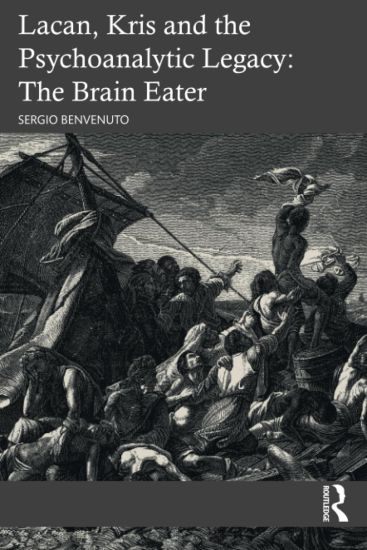
Lacan, Kris and the Psychoanalytic Legacy: The Brain Eater
Sergio Benvenuto
TAYLOR FRANCIS LTD
2023
nidottu
Lacan, Kris and the Psychoanalytic Legacy: The Brain Eater examines the case of a scholar which was commented on by three leading psychoanalysts of the 20th century: Melitta Schmideberg, Ernst Kris, and Jacques Lacan. Sergio Benvenuto unpicks the complex case history of the patient he calls "Professor Brain", a man who struggled to publish his research because of his fixation on plagiarism, and who has never been identified. Benvenuto reconstructs the case through the first-hand accounts of the patient’s analysts and Lacan and sets it in the context of mid-century psychoanalytic debate. As we progress through the patient’s story, Benvenuto explains Lacan’s theories as they apply to the case: the "foreclosure" of orality; obsessional neurosis; mental anorexia; and, above all, the reasons for his opposition to Ego psychology, of which Kris was one of the most important representatives. This book will be of great interest to psychoanalysts in practice and in training, psychiatrists and clinical psychologists. It will also be of interest to academics and scholars of philosophy, the history of psychoanalysis, literature, and cultural studies.

Lacan, Kris and the Psychoanalytic Legacy: The Brain Eater
Sergio Benvenuto
TAYLOR FRANCIS LTD
2023
sidottu
Lacan, Kris and the Psychoanalytic Legacy: The Brain Eater examines the case of a scholar which was commented on by three leading psychoanalysts of the 20th century: Melitta Schmideberg, Ernst Kris, and Jacques Lacan. Sergio Benvenuto unpicks the complex case history of the patient he calls "Professor Brain", a man who struggled to publish his research because of his fixation on plagiarism, and who has never been identified. Benvenuto reconstructs the case through the first-hand accounts of the patient’s analysts and Lacan and sets it in the context of mid-century psychoanalytic debate. As we progress through the patient’s story, Benvenuto explains Lacan’s theories as they apply to the case: the "foreclosure" of orality; obsessional neurosis; mental anorexia; and, above all, the reasons for his opposition to Ego psychology, of which Kris was one of the most important representatives. This book will be of great interest to psychoanalysts in practice and in training, psychiatrists and clinical psychologists. It will also be of interest to academics and scholars of philosophy, the history of psychoanalysis, literature, and cultural studies.
Exploring how a Freudian-Lacanian approach to psychoanalysis intersects with social and cultural theory, Lacan, Jouissance, and the Social Sciences demonstrates the significance of subjectivity as a concept for the study of leadership, social psychology, culture, and political theory.Raul Moncayo examines Lacan’s notion of surplus jouissance in relation to four types of socio-economic value: Productive Value, Exchange Value, Surplus Value, and Profit. Also drawing on the work of Slavoj Žižek, Moncayo contends that surplus production cannot be reduced to alienated labor but rather includes various levels of jouissance-value. In this way, the jouissance that drives capitalization and organization can be theorized as constructive rather than destructive and encompass satisfaction and prosperity rather than individual suffering and asceticism or living with less.This volume will be of great interest to psychoanalysts both in practice and in training and to academics and scholars of psychoanalytic studies, Lacanian studies, and social sciences.
Exploring how a Freudian-Lacanian approach to psychoanalysis intersects with social and cultural theory, Lacan, Jouissance, and the Social Sciences demonstrates the significance of subjectivity as a concept for the study of leadership, social psychology, culture, and political theory.Raul Moncayo examines Lacan’s notion of surplus jouissance in relation to four types of socio-economic value: Productive Value, Exchange Value, Surplus Value, and Profit. Also drawing on the work of Slavoj Žižek, Moncayo contends that surplus production cannot be reduced to alienated labor but rather includes various levels of jouissance-value. In this way, the jouissance that drives capitalization and organization can be theorized as constructive rather than destructive and encompass satisfaction and prosperity rather than individual suffering and asceticism or living with less.This volume will be of great interest to psychoanalysts both in practice and in training and to academics and scholars of psychoanalytic studies, Lacanian studies, and social sciences.
Lacan and Capitalist Discourse explores the political and theoretical connections between the Covid-19 Pandemic and Capitalism, unravelling the direct consequences of Lacan's thesis of so-called "Capitalist Discourse”.Jorge Alemán provides an account of neoliberalism, its mechanisms to produce subjectivities and the new modes of the political far Right. The book begins with the problem of a possible exit from capitalism, continuing to consider the possibilities of mourning and the active production of a new Left. Alemán engages deeply with a range of thinkers: primarily Lacan, but also Heidegger, Marx, Laclau, Foucault, Butler, Badiou, Althusser, and others, in making his case.Lacan and Capitalist Discourse will be of great interest to psychoanalysts and to academics of psychoanalytic and Lacanian studies, cultural theory, philosophy and political thought.
Lacan and Capitalist Discourse explores the political and theoretical connections between the Covid-19 Pandemic and Capitalism, unravelling the direct consequences of Lacan's thesis of so-called "Capitalist Discourse”.Jorge Alemán provides an account of neoliberalism, its mechanisms to produce subjectivities and the new modes of the political far Right. The book begins with the problem of a possible exit from capitalism, continuing to consider the possibilities of mourning and the active production of a new Left. Alemán engages deeply with a range of thinkers: primarily Lacan, but also Heidegger, Marx, Laclau, Foucault, Butler, Badiou, Althusser, and others, in making his case.Lacan and Capitalist Discourse will be of great interest to psychoanalysts and to academics of psychoanalytic and Lacanian studies, cultural theory, philosophy and political thought.
Lacan on Society is an exhaustive archeological and contingent review of Lacan’s approaches to society throughout his work, seminars, and écrits.Through a systematic and chronological analysis of Lacan’s work, Edgar Miguel Juárez-Salazar highlights critical, structural, and divergent surfaces as they emerge within the concept of society. The book explores diverse manifestations of society to conjugate social and structural phenomena such as ideals, the metamorphoses of social enjoyment, the structural demand to produce social order, and the political economy of the signifier and its abstract circulation. Juárez-Salazar’s work evaluates Lacan's critique of the notion of the family complexes, the relation between society and social modes of enjoyment, and the homology between Marx and Lacan, concluding with an invitation to subvert the understanding of society and its diatribes.Lacan on Society will be of great interest to academics and scholars of psychoanalysis, critical theory and Lacanian studies. It will also be relevant to academics and scholars of political economy, cybernetics, post-Marxist thought, gender studies and sociology.
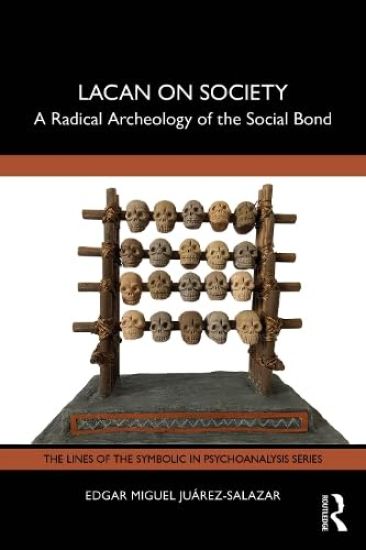
Lacan on Society is an exhaustive archeological and contingent review of Lacan’s approaches to society throughout his work, seminars, and écrits.Through a systematic and chronological analysis of Lacan’s work, Edgar Miguel Juárez-Salazar highlights critical, structural, and divergent surfaces as they emerge within the concept of society. The book explores diverse manifestations of society to conjugate social and structural phenomena such as ideals, the metamorphoses of social enjoyment, the structural demand to produce social order, and the political economy of the signifier and its abstract circulation. Juárez-Salazar’s work evaluates Lacan's critique of the notion of the family complexes, the relation between society and social modes of enjoyment, and the homology between Marx and Lacan, concluding with an invitation to subvert the understanding of society and its diatribes.Lacan on Society will be of great interest to academics and scholars of psychoanalysis, critical theory and Lacanian studies. It will also be relevant to academics and scholars of political economy, cybernetics, post-Marxist thought, gender studies and sociology.