Kirjojen hintavertailu. Mukana 11 518 949 kirjaa ja 12 kauppaa.

Kirjahaku

Etsi kirjoja tekijän nimen, kirjan nimen tai ISBN:n perusteella.

1000 tulosta hakusanalla Maral Atmaca

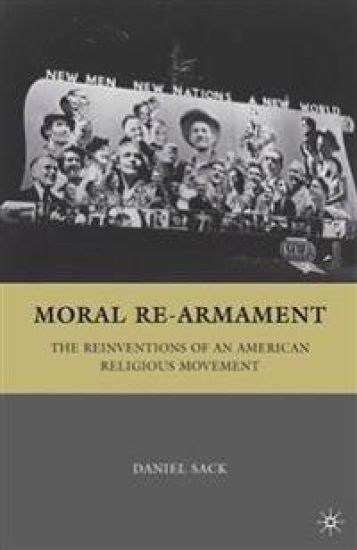
Moral Re-Armament

Moral Re-Armament

D. Sack

Palgrave Macmillan
1950
nidottu
With its mixture of American evangelicalism, popular psychology and show business, Moral Re-Armament attracted men and women on six continents. This book traces Moral Re-Armament's reinventions over fifty years, from its Ivy League beginnings to its spiritual heirs, Up With People and Alcoholics Anonymous.
Mara's Stories

Mara's Stories

Gary D Schmidt

St. Martin's Press
2008
pokkari
A testament to the power of stories, and how they may bring hope even in times of darkness.As night falls, the women gather their children to listen to Mara tell her stories. They are stories of light and hope and freedom, stories of despair and stories of miracles, stories of expected pain and stories of unexpected joy--all told in the darkness of the concentration camp barracks. Through extensive research noted in the back of the book, Gary Schmidt has skillfully woven together stories from such sources as the Jewish religious scholar, Martin Buber; Holocaust survivor, Elie Wiesel; and folklorists, Steve Zeitlin and Yaffa Eliach. Combining lore of the past with tales born in the concentration camps, Mara's stories speak to us from a time that must never be forgotten.
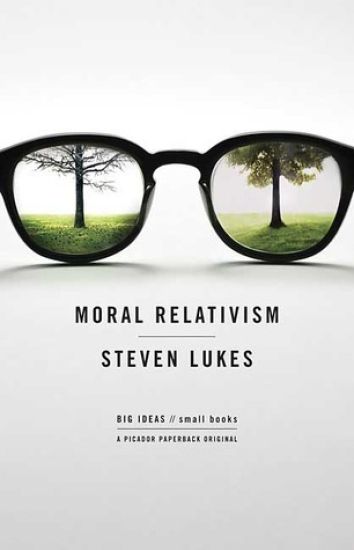
Moral Relativism: Big Ideas/Small Books

Moral Relativism: Big Ideas/Small Books

Steven Lukes

St. Martins Press-3pl
2008
nidottu
Moral relativism attracts and repels. What is defensible in it and what is to be rejected? Do we as human beings have no shared standards by which we can understand one another? Can we abstain from judging one another's practices? Do we truly have divergent views about what constitutes good and evil, virtue and vice, harm and welfare, dignity and humiliation, or is there some underlying commonality that trumps it all? These questions turn up everywhere, from Montaigne's essay on cannibals, to the UN Declaration of Human Rights, to the debate over female genital mutilation. They become ever more urgent with the growth of mass immigration, the rise of religious extremism, the challenges of Islamist terrorism, the rise of identity politics, and the resentment at colonialism and the massive disparities of wealth and power between North and South. Are human rights and humanitarian interventions just the latest form of cultural imperialism? By what right do we judge particular practices as barbaric? Who are the real barbarians? In this provocative new book, the distinguished social theorist Steven Lukes takes an incisive and enlightening look at these and other challenging questions and considers the very foundations of what we believe, why we believe it, and whether there is a profound discord between "us" and "them."
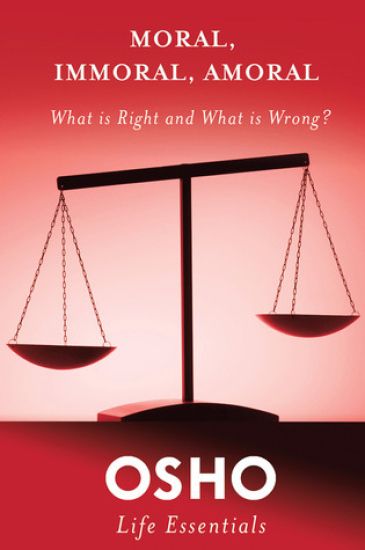
Moral, Immoral, Amoral

Moral, Immoral, Amoral

GRIFFIN PUBLISHING
2013
nidottu
The "Osho Life Essentials" series focuses on the most important questions in the life of the individual. Each volume contains timeless and always-contemporary investigations and discussions into questions vital to our personal search for meaning and purpose. In a global world, we are in search of universal values - values based on a contemporary understanding that unifies us as human beings beyond the divisions of religions, nations, and race. In "Moral, Immoral, Amoral", Osho speaks directly to this contemporary search as he introduces us to a quest for values that make sense in the world we live in - a quest that goes far beyond moral codes of behavior and comes from an inner connectivity and oneness with existence.
Moral Imperium

Moral Imperium

Ronald Richardson

Praeger Publishers Inc
1987
sidottu
During the past decade, the problem of British slave emancipation has generated considerable historiographical debate. Yet, until now, this debate has emphasized the relative importance of ideals and material self-interest in the British emancipation movement. In Moral Imperium, Ronald Richardson offers a new assessment of the relative importance of ideas, religious enthusiasm, national interest, and political circumstances. Arguing that historians have yet to develop an understanding of the impact of the Afro-Caribbean population on the development of British anti-slavery thought in general and the anti-slavery movement as a whole, he contends that abolition and emancipation were carried out in the context of British rule and were designed to create a social environment that would be receptive to British needs.
Moral Education and the Liberal Arts

Moral Education and the Liberal Arts

Michael Mitias

Praeger Publishers Inc
1992
sidottu
Education shapes character, particularly through the liberal arts. This collection of essays explores the importance of moral education to the liberal arts and discusses how moral education fosters character development. The contributors examine the meaning of moral education, the rationale for promoting ethical values in an academic environment, and the conditions under which morality can best be taught. Though the text addresses philosophical issues, the essays focus on how the liberal arts institution can implement moral education to fulfill its objectives.The volume begins with a thoughtful consideration of how the liberal arts can embrace moral concepts. The study then overviews the place of moral education and the humanities in the contemporary world. The following essays show how moral education influences character development and how moral pluralism functions in academic culture. The book closes with essays on business ethics and the liberal arts and on the moral commitments of teachers. College administrators and educational philosophers will find this work valuable and insightful.
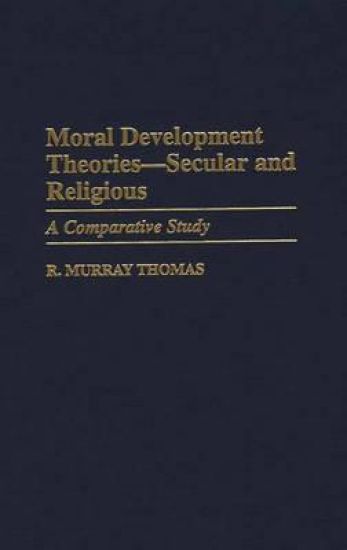
Moral Development Theories -- Secular and Religious

Moral Development Theories -- Secular and Religious

R. Murray Thomas

Praeger Publishers Inc
1997
sidottu
Moral Development Theories—Secular and Religious introduces readers to 13 secular models and 13d religious theories in a wide-ranging comparative study of the roots of moral development. The secular models include attribution theory, cognitive-structural views, social-learning and social-cognition approaches, Freud's psychoanalysis (plus Erikson and Fromm), Marxist beliefs, a composite theory, Hoffman's conception of empathy, Anderson's information-integration view, Gilligan's gender distinction, Sutherland and Cressey's explanation of delinquency, and Lovinger on ego development. Religious theories represent the Judaic-Christian-Islamic line, Hinduism and derivatives (Buddhism, Jainism, Sikhism), Confucianism, Shinto, and four minor theories drawn from the belief systems of the Navajo, Zulus, Vodou adherents, and Okinawans.The description of each theory is designed to answer a common set of questions introduced in Chapter 1. The closing section of each chapter evaluates that chapter's theories in terms of a series of assessment standards described in Chapter 2. The book's final chapter inspects all of the theories from the viewpoint of five desires that people often hold in relation to their conceptions of moral development. The desires are: (a) for immanent justice; (b) to understand the causes of the consequences that result from people's behavior in moral situations; (c) to become immortal; (d) to enjoy a happy life, and (e) to understand the moral-development process in order to help others who need moral guidance.
Moral Reasoning for Journalists, 2nd Edition

Moral Reasoning for Journalists, 2nd Edition

Steven Knowlton; Bill Reader

Praeger Publishers Inc
2008
sidottu
Despite the fact that the public's trust in the news media is at historic lows, despite the fact that hardly a day goes by without another report of unethical behavior by news professionals, journalists and teachers remain dedicated to ethical issues—perhaps more so now than at any other time in history. News companies are developing rigorous codes of conduct; journalists and editors are vigorously reporting on ethical lapses by their peers, and many journalism schools are creating standalone courses in journalism ethics and hiring faculty members who are devoted to ethics research and instruction. Using more than two-dozen actual cases from around the world to examine and apply those principles of ethical journalism, Knowlton and Reader suggest an easy-to-follow, commonsense approach to making ethical decisions in the newsroom as deadlines loom. Moral Reasoning for Journalists serves as an introduction to the underpinnings of journalism ethics, and as a guide for journalists and journalism teachers looking for ways to make ethical choices beyond going with your gut.
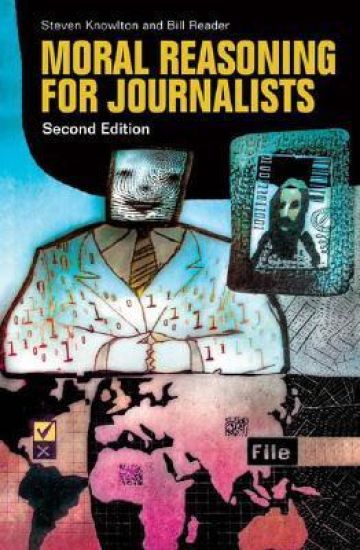
Moral Reasoning for Journalists, 2nd Edition

Moral Reasoning for Journalists, 2nd Edition

Steven Knowlton; Bill Reader

Praeger Publishers Inc
2008
nidottu
Despite the fact that the public's trust in the news media is at historic lows, despite the fact that hardly a day goes by without another report of unethical behavior by news professionals, journalists and teachers remain dedicated to ethical issues—perhaps more so now than at any other time in history. News companies are developing rigorous codes of conduct; journalists and editors are vigorously reporting on ethical lapses by their peers, and many journalism schools are creating standalone courses in journalism ethics and hiring faculty members who are devoted to ethics research and instruction. Using more than two-dozen actual cases from around the world to examine and apply those principles of ethical journalism, Knowlton and Reader suggest an easy-to-follow, commonsense approach to making ethical decisions in the newsroom as deadlines loom. Moral Reasoning for Journalists serves as an introduction to the underpinnings of journalism ethics, and as a guide for journalists and journalism teachers looking for ways to make ethical choices beyond going with your gut.
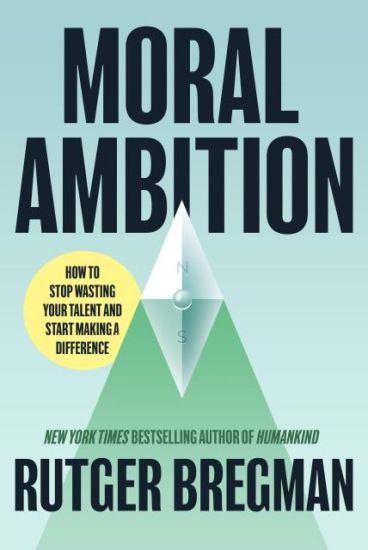
Moral Ambition: Stop Wasting Your Talent and Start Making a Difference
INTERNATIONAL BESTSELLER From the author of the New York Times bestsellers Humankind and Utopia for Realists--"a more politically radical Malcolm Gladwell" (The New York Times)--comes a bold manifesto daring us to harness our talents and transform our idealism into action, all with the goal of making the world a wildly better place. A career consists of 2,000 workweeks, and how you spend that time is one of the most important decisions of your life. Still, millions of people are stuck in in mind-numbing, pointless, or just plain harmful jobs. There's an antidote to this waste of talent, and it's called moral ambition. Moral ambition is the will to be among the best, but with different measures of success. Not a fancy title, fat salary, or corner office, but a career dedicated to the best solutions to the world's biggest problems-- whether that means tackling climate change, making pandemics history or fighting Big Tobacco. In Moral Ambition, internationally bestselling author Rutger Bregman reveals how our conventional definitions of success are harming us and the planet, and shows how we can shift the focus from personal gain to societal benefit. In the process, he explains, we will join a growing movement of pioneers who are already living out this ethos. They're the builders, the problem-solvers, the doers who have chosen a path less traveled. A guidebook to finding that path for ourselves, Moral Ambition reminds us that the real measure of success lies not in what we accumulate, but in what we contribute, and shows how we, too, can build a legacy that truly matters.
Moral Opposition to Authoritarian Rule in Chile, 1973-90
The book examines the political importance of moral opposition to authoritarian rule in Chile, 1973-90, as a challenge to the government's systematic human rights' violations. It was initially led by the Catholic Church, whose primate founded an organisation to defend human rights: the Vicariate of Solidarity (1976-92). The book assesses the impact of moral opposition as a force for redemocratisation by tracing the history and achievements of the Vicariate. It also argues that such moral matters are often underestimated in regime transition analysis.
Moral Order/World Order

Moral Order/World Order

H. Dyer

Palgrave Macmillan
1997
sidottu
Moral Order/World Order argues for the centrality of normative theory in the study of international relations. Two themes develop, each reflecting opposing pairs: fact/value, is/ought, description/prescription, feasibility/desirability. The first theme concerns the epistemological framework provided by a normative account. The second theme concerns the political conditions of knowledge which determine the role of different theories, indicating the need for adaptation of traditional normative scholarship, overcoming the separation of ethics from politics which has so far limited its role.
Moral Issues in International Affairs
A number of eminent international scholars have come together in this volume to address the question of morality in international affairs and to explore some of the central, normative issues which arise in the context of European integration. The essays examine the general question of morality and address specific areas of concern in the proposals for further integration..
Moral Questions

Moral Questions

R. Rhees

Palgrave Macmillan
1999
sidottu
Rush Rhees questions the viability of moral theories and the general claims they make in ethics. He shows how one can both be concerned with knowing what one ought to do while recognising that one's answer is a personal one. These insights, arrived at in a distinctive style, characteristic of Rhees, are then applied to issues of life and death, human sexuality and our relations to animals. To recognise why philosophy cannot answer such questions for us is an affirmation, not a denial, of their importance.
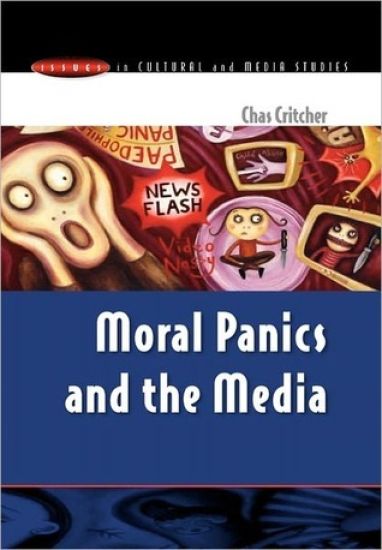
MORAL PANICS AND THE MEDIA

MORAL PANICS AND THE MEDIA

Chas Critcher

Open University Press
2003
nidottu
"Chas Critcher's study is doubly welcome as it discusses theoretical underpinnings thoroughly, and also provides a set of illustrative case studies... This is an important and stimulating book for a range of audiences." VISTA Vol 8 no 3How are social problems defined and responded to in contemporary society? What is the role of the media in creating, endorsing and sustaining moral panics? The term `moral panic' is frequently applied to sudden outbreaks of concern about social problems. Chas Critcher critically evaluates the usefulness of moral panic models for understanding how politicians, the public and pressure groups come to recognise apparent new threats to the social order, and he scrutinizes the role of the media, especially the popular press. Two models of moral panics are identified and explained, then applied to a range of case studies: AIDS; rave culture and the drug ecstasy; video nasties; child abuse; paedophilia. Examples of moral panics from a range of countries reveal many basic similarities but also significant variations between different national contexts. The conclusion is that moral panic remains a useful tool for analysis but needs more systematic connection to wider theoretical concerns, especially those of the risk society and discourse analysis.
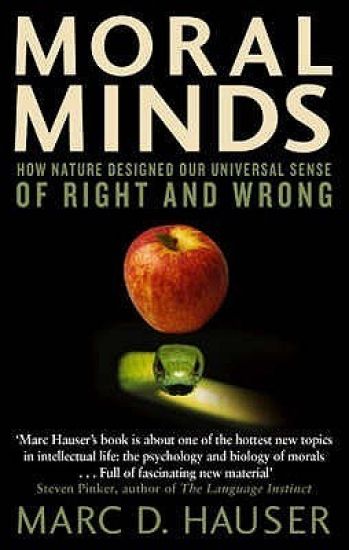
Moral Minds

Moral Minds

Marc Hauser

Little, Brown Book Group
2008
nidottu
Scholars have long argued that moral judgements arise from rational deliberations about what society determines is right and wrong. This has generated the idea that our moral psychology is founded on cultural experience. In the revolutionary MORAL MINDS, Marc Hauser challenges these concepts, showing that this view is illusory and arguing instead that humans have evolved a 'moral instinct', a universal feature of the human mind rather than one informed by gender, education or religion.Combining his own cutting-edge research with cognitive psychology, linguistics, evolutionary biology and economics, Hauser examines his groundbreaking theory in terms of bioethics, religion and law, as well as our everyday lives.
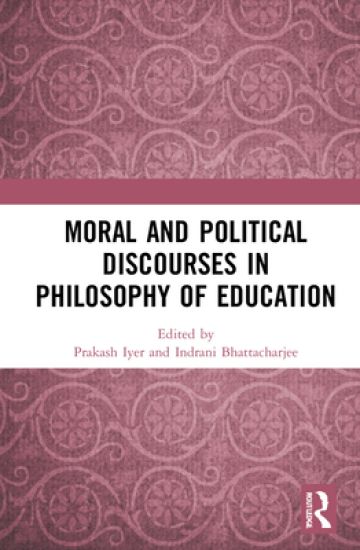
Moral and Political Discourses in Philosophy of Education
This book focuses on moral and political education and critically engages with educational issues from a philosophical perspective. It engages with questions of moral education as well as questions about citizenship education, to address apprehensions on learning in a liberal democracy while parallelly invoking issues from within the curriculum, the school environment and teacher-student relationship.With contributions from renowned philosophers and educationists, this volume discusses themes like civic education and liberal democracy; toleration and freedom; Tagore’s conception of the moral and political self; key issues in moral education; cosmopolitanism, compassion, care ethics and moral purpose of schooling; to revisit and rethink some foundational questions related to education, curriculum and pedagogy.This volume will be essential reading for educationists and educators and will be important for scholars and researchers of philosophy of education, education, teacher education and school education.