In the mid-1800s, a turbulent time when women were often thought to be unworthy of higher education, Maria Mitchell rose above the prejudices of her day to become America's first professional woman astronomer. This exciting biography tells the story of Maria Mitchell's life, her amazing achievements, and her faith that saw God's handiwork in the heavens.
Since the recent republication of her novel The Squatter and the Don, María Amparo Ruiz de Burton (1832–95) has become a key figure in the recovery of nineteenth-century Mexican American literature. An aristocratic Californiana, she championed the rights of Mexican Americans in novels, plays, and letters. Her 1885 novel called attention to the illegal appropriation of Mexican land by the United States government, and she critiqued the political mores of America after the Civil War in light of the Mexican-American war. Her keen assessment of corporate capitalism at the end of the nineteenth century, frank acknowledgment of feminine desire, and deft insights about economic realities and class relations were unique among her American peers. Using Ruiz de Burton's work to analyze the critical schism conventionally imposed on nineteenth-century literary culture in America, the essays in this collection also draw connections between her work and the contemporary Chicana and Chicano canons. At once richly historical and critically nuanced, these essays appraise a politically complex Mexican American writer alternately celebrated as marginalized and censured for her identification with a social elite. This volume includes a section on pedagogy that offers a discussion of teaching approaches, syllabi, discussion questions, and assignments.
Maria Zef was considered the farthest limit of verismo in contemporary Italian literature when it was first published in 1936. Like the great films to come after the war, Shoeshine and The Bicycle Thief, Paola Drigo's gritty novel portrays the struggle to come of age or even survive in a harsh environment. But its setting is more rural and its protagonist is a young girl whose voice will now be heard around the world in this English translation by Blossom Steinberg Kirschenbaum. Born in the medieval town of Castelfranco in the Venéto, Paola Drigo (1879–1938) wrote frankly about the poor and brutal lives of toilers in preindustrial northern Italy. Maria Zef, her masterpiece, focuses on the orphaned Maria, who assumes responsibilities beyond her years in protecting her baby sister and staying alive. Poverty, toil, illness, solitude, and abuse contribute to one of the most horrifying climaxes in modern fiction.
**Freeman Book Awards - Honorable Mention - Children's and Young Adult's Literature on East and Southeast Asia"As a food scientist, she sought to reduce the Philippines' dependence on imported food, pioneering new ways to use local products. And that was before she became a war hero." —New York TimesThis delightful children's book follows the life of Maria Orosa—a pioneering woman scientist who studied food science in the United States then returned to a war-torn Philippines and created super-nutritious foods to help her nation in a time of crisis.A champion of native products from her homeland, Orosa is celebrated for her daring war exploits as well as her scientific inventions. Today she is honored and remembered for:Sneaking food into World War II internment camps concealed in hollow tubes of bambooWorking as an undercover agent in the underground forces fighting the Japanese occupationDeveloping new ways to preserve seasonal products in a time of grave food shortages, including making vinegar from pineapples, flour from cassava and ketchup from bananas— all now staples on Filipino tablesTransforming vitamin-rich rice bran, previously a waste product, into tasty disease-preventing dessertsOrganizing rural-improvement clubs, inventing the palayok or clay oven and developing delicious recipes for coconuts, soybeans and a range of native plants, vegetables and herbsThis book celebrates the life and achievements of a daring daughter of the Philippines, war heroine, culinary scientist and bold freedom fighter who helped to feed the nation!
Everyone knows about Mary and her little lamb. But do you know Maria? With gorgeous, Peruvian-inspired illustrations and English and Spanish retellings, Angela Dominguez's Maria Had a Little Llama / Mar a Ten a Una Llamita gives a fresh new bilingual twist to the classic rhyme. Maria and her mischievous little llama will steal your heart. Todos saben acerca de Mary y su corderito, pero, conoce usted a Mar a? Con hermosas ilustraciones inspiradas en el Per , Angela Dominguez nos ofrece una versi n nueva y original de la rima cl sica, en ingl s y en espa ol. Mar a y su traviesa llamita le robar n el coraz n.
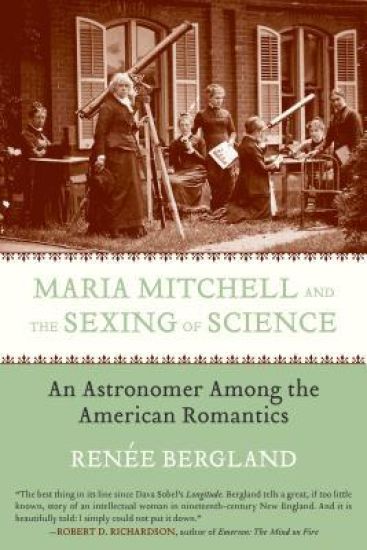
The story of one of America's first professional astronomers and the changes that led to science being a male-dominated field There are a number of intellectual women from the 19th century whose crucial roles in the philosophical, social, and scientific debates that roiled the era have not been fully examined.Among them is the astronomer Maria Mitchell. Given the relative dearth of women scientists today, most of us assume that science has always been a masculine domain. But as Ren e Bergland reminds us, science and humanities were not seen as separate spheres in the nineteenth century; indeed, before the Civil War, women flourished in science and mathematics, disciplines that were considered less politically threatening and less profitable than the humanities. Mitchell apprenticed with her father, an amateur astronomer; taught herself the higher math of the day; and for years regularly swept the clear Nantucket night sky with the telescope in her rooftop observatory. In 1847, thanks to these diligent sweeps, Mitchell discovered a comet and was catapulted to international fame. Within a few years she was one of America's first professional astronomers; as computer of Venus--a sort of human calculator--for the U.S. Navy's Nautical Almanac, she calculated the planet's changing position. After an intellectual tour of Europe that included a winter in Rome with Sophia and Nathaniel Hawthorne, Mitchell was invited to join the founding faculty at Vassar College, where she spent her later years mentoring the next generation of women astronomers. Tragically, opportunities for her students dried up over the next few decades as the increasingly male scientific establishment began to close ranks. Mitchell protested this cultural shift in vain. In this compulsively readable biography, Ren e Bergland chronicles the ideological, academic, and economic changes that led to the original sexing of science--now so familiar that most of us have never known it any other way.
John Russell Fearn (1908-1960) was an extremely prolific and popular British writer, who began in the American pulps, then almost single-handedly drove the post-World War II boom in British publishing with a flood of science fiction, detective stories, westerns, and adventure fiction. He employed numerous pseudonyms, such as Vargo Statten, Volstead Gridban, Hugo Blayn, Thorton Ayre, Polton Cross, Geoffrey Armstrong, Dennis Clive, John Cotton, Ephriam Winiki, Spike Gordon, and many others. He is noted for such grandly extravagant science fiction as _The Intelligence Gigantic_ and _The Liners of Time, _ "Mathematica," and the Golden Amazon series. He was so popular that one of his pseudonyms became the editor of VARGO STATEN'S SCIENCE FICTION MAGAZINE in the 1950's. His work is noted for its vigor amd wild imagination. He has always had a substantial cult following and has been popular in translation around the world.
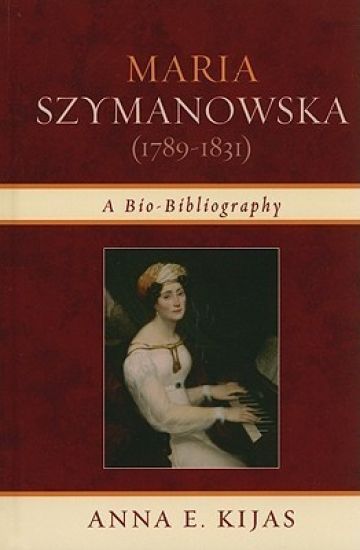
In Maria Szymanowska (1789-1831): A Bio-Bibliography, Anna E. Kijas examines the career of the highly-influential Polish pianist and composer. Kijas focuses on Szymanowska's life from her days as a young artist to her public concert tours between 1822 and 1828 to the last three years of her life in St. Petersburg. Kijas examines the daily aspects of touring, including organizing concerts, securing transportation and lodging, and managing finances, and she reviews Szymanowska's reception in the cities in which she performed, paying attention to her repertoire, the critic's remarks, ticket prices, and other artists on the program. Separated into Works, Discography, and Literature, the bibliography lists more than 100 compositions for piano, voice, and chamber ensemble. The discography provides details for CD, LP, and cassette recordings between 1960 and the present, and the literature section examines more than 120 primary source documents such as 19th-century reviews and advertisements, personal correspondence, journals, and scrapbooks. Secondary sources include articles, books, and essays about Szymanowska as a composer and pianist. Complete with a list of sources and an index, this comprehensive reference provides insight into the struggles and accomplishments related to concert life for a professional woman in early 19th-century Europe.
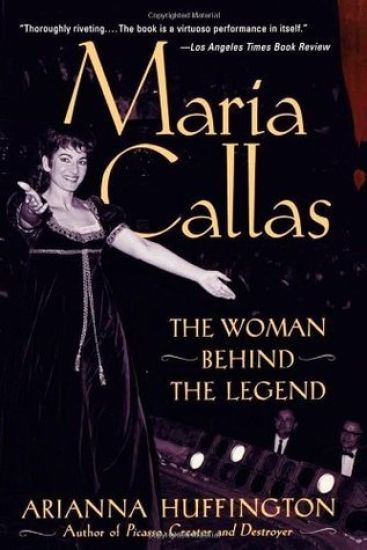
For millions of people, the great soprano Maria Callas (1923-1977) remains the focus of such unparalleled fascination that there is still no higher praise for singers than "…the best since Callas." In this biography, Callas' career is brought brilliantly to life, from her transformation from a chubby, painfully shy girl into a magnificent, celebrated soprano, to her conflict with her larger-than-life image. Huffington makes this struggle, which was at the center of her life, also the center of the biography. Using a wealth of previously unpublished material and numerous first-hand interviews, Huffington documents Callas' interminable conflict with her mother, her deeply emotional relationship with her voice, the gradual unraveling of her first marriage, her passionate love affair with of Aristotle Onassis, her agony and humiliation at his leaving her, and her secret abortion.
The first book-length treatment of one of John James Audubon’s background painters.Maria Martin (1796–1863) was an evangelical Lutheran from Charleston, South Carolina, who became an accomplished painter within months of meeting John James Audubon. Martin met Audubon through her brother-in-law, Reverend John Bachman, who befriended Audubon while passing through Charleston on route to Florida where he expected to find new avian species. Martin was an amateur artist, but by the time Audubon left, she had familiarized herself with his style of drawing. Six months after their initial meeting, her background botanicals were deemed good enough to embellish Audubon’s exquisite bird paintings.Martin’s botanicals and insects appeared in volumes two and four of The Birds of America (1830–1838). She painted snakes for John Edwards Holbrook’s North American Herpetology (1842) and assisted in drafting the descriptive taxonomies prepared by John Bachman—who later became her husband in 1848 following the death of her older sister—for The Viviparous Quadrupeds of North America (1846–1854). Until now, her contributions have been unknown to all but the most astute students of natural history and art history and a close circle of family and friends.Maria Martin’s World is a heavily illustrated volume examining how Maria Martin learned to paint aesthetically beautiful botanicals with exacting accuracy. Drawing on deep research into archival documents and family-held artifacts, Debra Lindsay brings Maria Martin out from behind the curtain of obscurity and disinformation that has previously shrouded her and places her centrally in her own time and milieu. In the telling of Maria Martin’s story, Lindsay also uncovers many nuances of the behavior and actions of the two prominent men in her life that readers interested in Audubon and Bachman will find noteworthy.Martin was a gifted artist recognized for having contributed beautiful paintings to a natural history. But beyond the natural world this is a biography of an evangelical Lutheran steeped in the faith of her German ancestors and raised to respect the patriarchal norms of her time. Maria Martin pursued her scientific and artistic interests only when they did not conflict with her religious and familial responsibilities.
De la Garza weaves a powerful examination of the complex processes that work together to constrain self-expression in a woman of Mexican ancestry. The book demonstrates the use of a variety of creative and reflexive methodologies, including poetry, prayers, de/reconstructed narratives, autobiography, and letters to historical and cultural female archetypes of Mexican origin. This methodology of art as meditation , for obtaining insight into the dynamics of culture, is used to produce an autoethnographic study of how one can reclaim voice through rigorous interrogation of our own lives as cultural texts. De la Garza offers us a template for a new methodology, as applicable in academic studies of culture as it is in the everyday lives of those seeking to find voice within silenced cultural domains.
Maria of Agreda's exceptional attributes spread from her cloistered convent in seventeenth-century Agreda (Spain) to the court in Madrid and beyond. Without leaving her village, the abbess impacted the kingdom, her church, and the New World. Based upon her transcendent visionary experiences, Sor Maria chronicled the life of Mary, mother of Jesus of Nazareth, in Mystical City of God, a work the Spanish Inquisition temporarily condemned. In America, reports emerged that she had miraculously appeared to Jumano Native Americans - a feat corroborated by witnesses in Spain, Texas, and New Mexico, where she is known as the legendary ""Lady in Blue."" Today Sor Maria is lauded in Spain as one of the most influential women in its history and in the United States as an inspiring pioneer. Fedewa's biography of this spirited abbess integrates voluminous autobiographical, historical, and literary sources published by and about Maria of Agreda.
Maria Montessori is indisputably a major thinker in education. Marion O'Donnell's volume offers the most coherent account of Montessori's educational thought. This work is divided into: intellectual biography, critical exposition of Montessori's work, and, the reception and influence of Montessori's work and the relevance of the work today.This is a major international reference series providing comprehensive accounts of the work of seminal educational thinkers from a variety of periods, disciplines and traditions. It is the most ambitious and prestigious such project ever published - a definitive resource for at least a generation. The thinkers include: Aquinas, Aristotle, Bourdieu, Bruner, Dewey, Foucault, Freire, Holt, Kant, Locke, Montessori, Neill, Newman, Owen, Peters, Piaget, Plato, Rousseau, Steiner, Vygotsky, West and Wollstonecraft.
Maria Cornejo established her atelier in 1998, and in the nineteen years since her label has grown a devoted following of fashion icons including First Lady Michelle Obama. A champion of women in the fashion industry and beyond, Cornejo is guided by the idea of creating wearable luxury for real women. Her designs are timeless and accessible, using only the highest-quality fabrics to make minimalist, modern, understated luxury and effortless elegance. This is an intimate portrait of Cornejo s processes and inspirations that combines a mix of Polaroids, sketches, runway shots, and photographs created especially for this book by her fashion-photographer husband, Mark Borthwick, including images of Tilda Swinton, Cindy Sherman, and many other fashion muses. This much-anticipated volume will be a must-have for lovers of fashion, culture, and personal style alike.
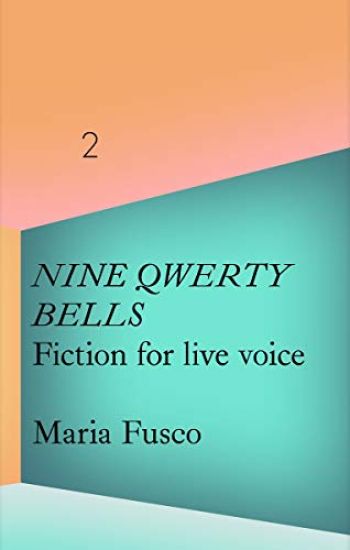
The first of four special publications to accompany a year-long display of works from Barcelona’s `la Caixa’ Collection at Whitechapel Gallery, selected by and featuring newlycommissioned fictional works by some of the most original English and Spanish-language writers working today. Established in Barcelona in 1985 by Fundación `la Caixa’, the `la Caixa’ Collection of Contemporary Art features over 1,000 works of international contemporary art from the last 30 years, including artists such as Antoni Tàpies, Joseph Beuys, Cornelia Parker and Doris Salcedo. For a major four-part display running from 2019–20, Whitechapel Gallery has partnered with `la Caixa’ Collection to showcase key pieces from the Collection, with each of the four `chapters’ curated by a contemporary writer, who will also contribute a brand new work of fiction in response to their selection. Each display will be accompanied by a fullyillustrated catalogue featuring the works displayed and the new text, accompanied by a foreword and introduction from both institutions.
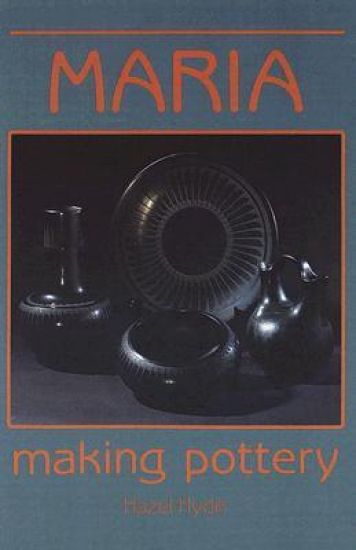
Retrace the steps it took for the most famous Indian potters in the American Southwest, Maria Martinez, to produce one of her prized pieces of black on black pottery.
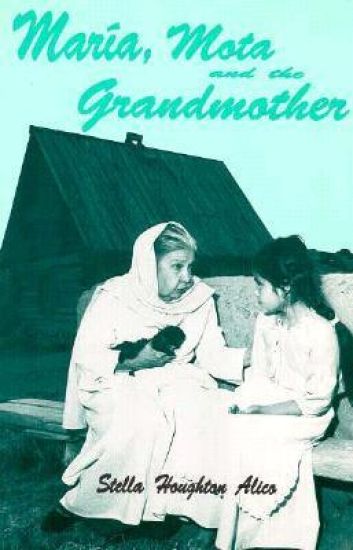
Little Maria doesn't want to go live with her grandmother. But grandmother is elderly and needs Maria's company even though they have to live in a one-room house away from all the familiar surroundings. Soon a kitten arrives and Maria comes to love her new world in this family story set in rural New Mexico at the turn of the century with photographic re-recreations by Jan Young. Includes glossary of Spanish terms.
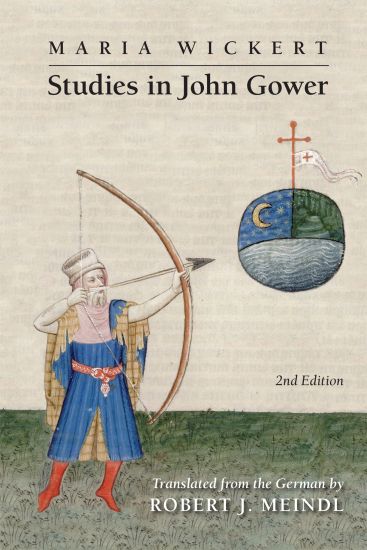
Studies in John Gower is a translation of Maria Wickert’s Studien zu John Gower, the book that began the modern study of the Vox Clamantis. It is a monograph in six chapters, the first five on various aspects of the Vox — textual development, the vision of the Peasants’ Revolt, influence of the medieval sermon, the open letter to Richard II, world view — and the sixth a penetrating study of Gower’s narrative technique in the Confessio Amantis.
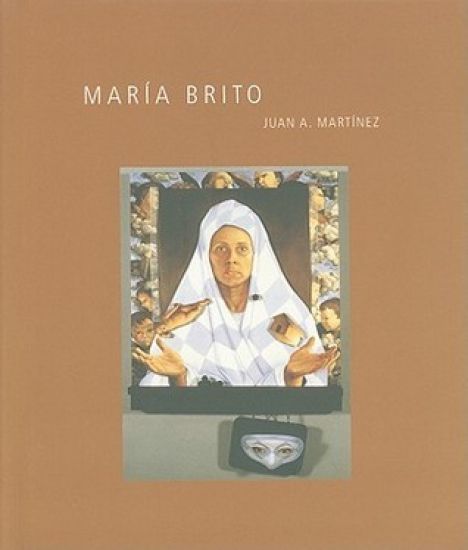
One of the most revered members of “the Miami Generation,” a group of Cuban-born artists who emigrated to the United States, María Brito is a painter, sculptor, and installation artist best known for her elaborately constructed room-like works that embody narratives of loss and displacement. Brito also draws on personal iconography to create challenging works that are at once deeply autobiographical and reflect a profound fluency with the history of Western art. In this new volume in the landmark A Ver series and the first major book on Brito’s career, Juan A. Martinez examines the unique interplay of the personal and the universal in this Miami-based artist’s diverse mixed-media works.
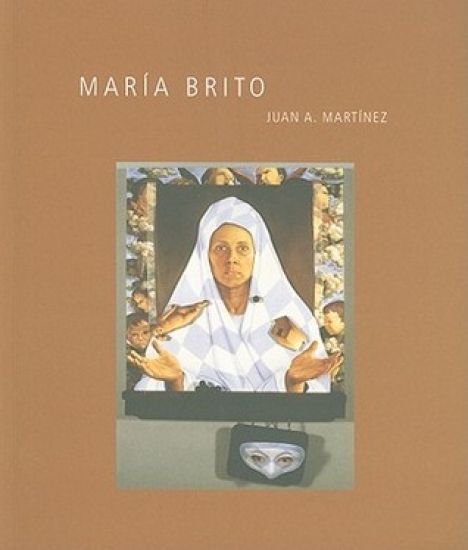
One of the most revered members of “the Miami Generation,” a group of Cuban-born artists who emigrated to the United States, María Brito is a painter, sculptor, and installation artist best known for her elaborately constructed room-like works that embody narratives of loss and displacement. Brito also draws on personal iconography to create challenging works that are at once deeply autobiographical and reflect a profound fluency with the history of Western art. In this new volume in the landmark A Ver series and the first major book on Brito’s career, Juan A. Martinez examines the unique interplay of the personal and the universal in this Miami-based artist’s diverse mixed-media works.