
Kirjahaku
Etsi kirjoja tekijän nimen, kirjan nimen tai ISBN:n perusteella.
1000 tulosta hakusanalla Mark Barton Stringer
Here is young Sam Clemens - in the world, getting famous, making love - in 155 magnificently edited letters that trace his remarkable self-transformation from a footloose, irreverent West Coast journalist to a popular lecturer and author of "The Jumping Frog", soon to be a national and international celebrity. And on the move he was - from San Francisco to New York, to St. Louis, and then to Paris, Naples, Rome, Athens, Constantinople, Yalta, and the Holy Land; back to New York and on to Washington; back to San Francisco and Virginia City; and, on to lecturing in Ohio, Michigan, Pennsylvania, and New York. Resplendent with wit, love of life, ambition, and literary craft, this new volume in the wonderful Bancroft Library edition of "Mark Twain's Letters" will delight and inform both scholars and general readers. This volume has been supported by the National Endowment for the Humanities, the Mark Twain Foundation, Jane Newhall, and The Friends of The Bancroft Library.
'Don't scold me, Livy - let me pay my due homage to your worth; let me honor you above all women; let me love you with a love that knows no doubt, no question - for you are my world, my life, my pride, my all of earth that is worth the having'. These are the words of Samuel Clemens in love. Playful and reverential, jubilant and despondent, they are filled with tributes to his fiancee Olivia Langdon and with promises faithfully kept during a thirty-four-year marriage. The 188 superbly edited letters gathered here show Samuel Clemens having few idle moments in 1869. When he was not relentlessly 'banged about from town to town' on the lecture circuit or busily revising "The Innocents Abroad", the book that would make his reputation, he was writing impassioned letters to Olivia. These letters, the longest he ever wrote, make up the bulk of his correspondence for the year and are filled with his acute wit and dazzling language. This latest volume of "Mark Twain's Letters" captures Clemens on the verge of becoming the celebrity and family man he craved to be. This volume has been supported by the National Endowment for the Humanities and by a major donation to the Friends of The Bancroft Library from the Pareto Fund.
'You ought to see Livy & me, now-a-days - you never saw such a serenely satisfied couple of doves in all your life. I spent Jan 1, 2, 3 & 5 there & left at 8 last night. With my vile temper & variable moods, it seems an incomprehensible miracle that we two have been right together in the same house half the time for a year & a half, & yet have never had a cross word, or a lover's 'tiff,' or a pouting spell, or a misunderstanding, or the faintest shadow of a jealous suspicion. Now isn't that absolutely wonderful? Could I have had such an experience with any other girl on earth? I am perfectly certain I could not...We are to be married on Feb. 2d'. So begins Volume 4 of the letters, with Samuel Clemens anticipating his wedding to Olivia L. Langdon. The 338 letters in this volume document the first two years of a loving marriage that would last more than thirty years. They recount, in Clemens' own inimitable voice, a tumultuous time: a growing international fame, the birth of a sickly first child, and the near-fatal illness of his wife. At the beginning of 1870, fresh from the success of "The Innocents Abroad", Clemens is on 'the long agony' of a lecture tour and planning to settle in Buffalo as editor of the "Express". By the end of 1871, he has moved to Hartford and is again on tour, anticipating the publication of "Roughing It" and the birth of his second child. The intervening letters show Clemens bursting with literary ideas, business schemes, and inventions, and they show him erupting with frustration, anger, and grief, but more often with dazzling humor and surprising self-revelation. In addition to "Roughing It", Clemens wrote some enduringly popular short pieces during this period, but he saved some of his best writing for private letters, many of which are published here for the first time.
'Livy darling, it was flattering, at the Lord Mayor's dinner, tonight, to have the nation's honored favorite, the Lord High Chancellor of England, in his vast wig and gown, with a splendid, sword-bearing lackey, following him and holding up his train, walk me arm-in-arm through the brilliant assemblage, and welcome me with all the enthusiasm of a girl, and tell me that when affairs of state oppress him and he can't sleep, he always has my books at hand and forgets his perplexities in reading them!' - 10 November, 1872. On his first trip to England to gather material for a book and cement relations with his newly authorized English publishers, Samuel Clemens was astounded to find himself hailed everywhere as a literary lion. America's premier humorist had begun his long tenure as an international celebrity. Meanwhile, he was coming into his full power at home. "The Innocents Abroad" continued to produce impressive royalties and his new book, "Roughing It", was enjoying great popularity. In newspaper columns he appeared regularly as public advocate and conscience, speaking on issues as disparate as safety at sea and political corruption. Clemens' personal life at this time was for the most part fulfilling, although saddened by the loss of his nineteen-month-old son, Langdon, who died of diphtheria. "Life in the Nook Farm" community of writers and progressive thinkers and activists was proving to be all the Clemenses had hoped for. The 309 letters in this volume, more than half of them never before published, capture the events of these years with detailed intimacy. Thoroughly annotated and indexed, they are supplemented by genealogical charts of the Clemens and Langdon families, a transcription of the journals Clemens kept during his 1872 visit to England, book contracts, his preface to the English edition of "The Gilded Age", contemporary photographs of family and friends, and a gathering of all newly discovered letters written between 1865 and 1871. This volume is the fifth in the only complete edition of Mark Twain's letters ever attempted, and the twenty-fourth in the comprehensive edition known as "The Mark Twain Papers" and "Works of Mark Twain".
Mark Twain's letters for 1874 and 1875 encompass one of his most productive and rewarding periods as author, husband and father, and man of property. He completed the writing of The Adventures of Tom Sawyer, published the major collection Sketches, New and Old, became a leading contributor to the Atlantic Monthly, and turned The Gilded Age, the novel he had previously coauthored with Charles Dudley Warner, into one of the most popular comedies of the nineteenth-century American stage. His personal life also was gratifying, unmarred by the family tragedies that had darkened the earlier years of the decade. He and his wife welcomed a second healthy daughter and moved into the showplace home in Hartford, Connecticut, that they occupied happily for the next sixteen years. All of these accomplishments and events are vividly captured, in Mark Twain's inimitable language and with his unmatched humor, in letters to family and friends, among them some of the leading writers of the day. The comprehensive editorial annotation supplies the historical and social context that helps make these letters as fresh and immediate to a modern audience as they were to their original readers. This volume is the sixth in the only complete edition of Mark Twain's letters ever attempted. The 348 letters it contains, many of them never before published, have been meticulously transcribed, either from the original manuscripts (when extant) or from the most reliable sources now available. They have been thoroughly annotated and indexed and are supplemented by genealogical charts, contemporary notices of Mark Twain and his works, and photographs of him, his family, and his friends.

Irreverent, charming, eminently quotable, this handbook--an eccentric etiquette guide for the human race--contains sixty-nine aphorisms, anecdotes, whimsical suggestions, maxims, and cautionary tales from Mark Twain's private and published writings. It dispenses advice and reflections on family life and public manners; opinions on topics such as dress, health, food, and childrearing and safety; and more specialized tips, such as those for dealing with annoying salesmen and burglars. Culled from Twain's personal letters, autobiographical writings, speeches, novels, and sketches, these pieces are delightfully fresh, witty, startlingly relevant, and bursting with Twain's characteristic ebullience for life. They also remind us exactly how Mark Twain came to be the most distinctive and well-known American literary voice in the world. These texts, some of them new or out of print for decades, have been selected and meticulously prepared by the editors at the Mark Twain Project.
This beautifully illustrated book - the definitive volume on American sculptor Mark di Suvero - features more than two hundred images of his most important works interspersed with short texts by the artist and by other writers who have inspired his art-making practice, plus a contribution by Francois Barre. Humanist in approach and populist in sensibility, di Suvero's sculpture is accessible, inviting, and inclusive. Praised in particular for his monumental assemblages incorporating steel and wood, di Suvero emerged as a superstar in the 1960s.He was the first living artist to show his sculpture at the Tuileries Gardens, Paris, and the first honored with three major exhibitions at Storm King Art Center. His distinctive, bold pieces can be found in museums and public collections all over the world, and he continues to be the subject of numerous exhibitions both in the United States and in Europe. "Mark di Suvero: Dreambook" is a celebration of his artistic oeuvre and of his long, distinguished career. It is copublished by Offsite.
Autobiography of Mark Twain READER'S EDITION Now Available! Half the Size, All the Twain! ISBN 978052027255 "I've struck it!" Mark Twain wrote in a 1904 letter to a friend. "And I will give it away--to you. You will never know how much enjoyment you have lost until you get to dictating your autobiography." Thus, after dozens of false starts and hundreds of pages, Twain embarked on his "Final (and Right) Plan" for telling the story of his life. His innovative notion--to "talk only about the thing which interests you for the moment"--meant that his thoughts could range freely. The strict instruction that many of these texts remain unpublished for 100 years meant that when they came out, he would be "dead, and unaware, and indifferent," and that he was therefore free to speak his "whole frank mind." The year 2010 marks the 100th anniversary of Twain's death. In celebration of this important milestone and in honor of the cherished tradition of publishing Mark Twain's works, UC Press is proud to offer for the first time Mark Twain's uncensored autobiography in its entirety and exactly as he left it. This major literary event brings to readers, admirers, and scholars the first of three volumes and presents Mark Twain's authentic and unsuppressed voice, brimming with humor, ideas, and opinions, and speaking clearly from the grave as he intended. Editors: Harriet E. Smith, Benjamin Griffin, Victor Fischer, Michael B. Frank, Sharon K. Goetz, Leslie Myrick
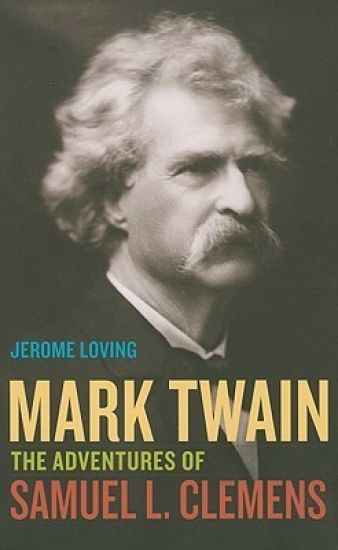
Mark Twain, who was often photographed with a cigar, once remarked that he came into the world looking for a light. In this new biography, published on the centennial of the writer's death, Jerome Loving focuses on Mark Twain, humorist and quipster, and sheds new light on the wit, pathos, and tragedy of the author of "Adventures of Huckleberry Finn." In brisk and compelling fashion, Loving follows Twain from Hannibal to Hawaii to the Holy Land, showing how the southerner transformed himself into a westerner and finally a New Englander. This re-examination of Twain's life is informed by newly discovered archival materials that provide the most complex view of the man and writer to date.
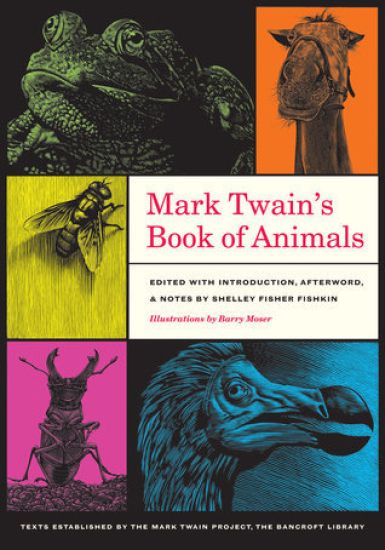
Longtime admirers of Mark Twain are aware of how integral animals were to his work as a writer, from his first stories through his final years, including many pieces that were left unpublished at his death. This beautiful volume, illustrated with 30 new images by master engraver Barry Moser, gathers writings from the full span of Mark Twain's career and elucidates his special attachment to and regard for animals. What may surprise even longtime readers and fans is that Twain was an early and ardent animal welfare advocate, the most prominent American of his day to take up that cause. Edited and selected by Shelley Fisher Fishkin, who has also supplied an introduction and afterword, Mark Twain's Book of Animals includes stories that are familiar along with those that are appearing in print for the first time.
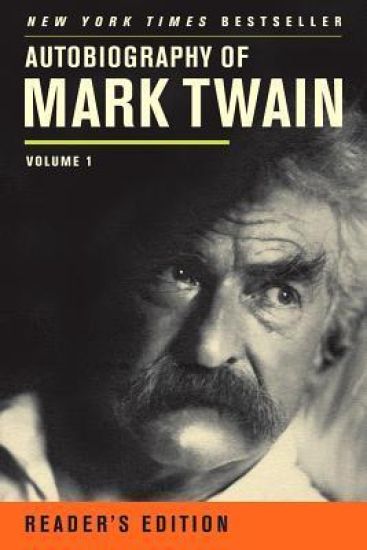
The year 2010 marked the 100th anniversary of Mark Twain's death. In celebration of this important milestone and in honor of the cherished tradition of publishing Mark Twain's works, UC Press published "Autobiography of Mark Twain, Volume 1", the first of a projected three-volume edition of the complete, uncensored autobiography. The book became an immediate bestseller and was hailed as the capstone of the life's work of America's favorite author. This Reader's Edition, a portable paperback in larger type, republishes the text of the hardcover "Autobiography" in a form that is convenient for the general reader, without the editorial explanatory notes. It includes a brief introduction describing the evolution of Mark Twain's ideas about writing his autobiography, as well as a chronology of his life, brief family biographies, and an excerpt from the forthcoming "Autobiography of Mark Twain, Volume 2" - a controversial but characteristically humorous attack on Christian doctrine.
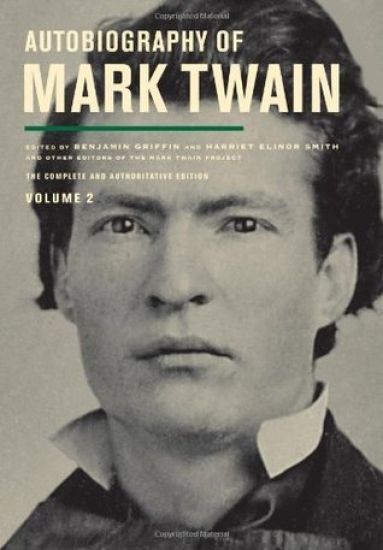
Mark Twain's complete, uncensored Autobiography was an instant bestseller when the first volume was published in 2010, on the centennial of the author's death, as he requested. Published to rave reviews, the Autobiography was hailed as the capstone of Twain's career. It captures his authentic and unsuppressed voice, speaking clearly from the grave and brimming with humor, ideas, and opinions. The eagerly-awaited Volume 2 delves deeper into Mark Twain's life, uncovering the many roles he played in his private and public worlds. Filled with his characteristic blend of humor and ire, the narrative ranges effortlessly across the contemporary scene. He shares his views on writing and speaking, his preoccupation with money, and his contempt for the politics and politicians of his day. Affectionate and scathing by turns, his intractable curiosity and candor are everywhere on view. Editors: Benjamin Griffin and Harriet E. Smith Associate Editors: Victor Fischer, Michael B. Frank, Sharon K. Goetz and Leslie Diane Myrick

Mark Twain among the Indians and Other Indigenous Peoples
Kerry Driscoll
University of California Press
2018
sidottu
Mark Twain among the Indians and Other Indigenous Peoples is the first book-length study of the writer’s evolving views regarding the aboriginal inhabitants of North America and the Southern Hemisphere, and his deeply conflicted representations of them in fiction, newspaper sketches, and speeches. Using a wide range of archival materials—including previously unexamined marginalia in books from Clemens’s personal library—Driscoll charts the development of the writer’s ethnocentric attitudes about Indians and savagery in relation to the various geographic and social milieus of communities he inhabited at key periods in his life, from antebellum Hannibal, Missouri, and the Sierra Nevada mining camps of the 1860s to the progressive urban enclave of Hartford’s Nook Farm. The book also examines the impact of Clemens’s 1895–96 world lecture tour, when he traveled to Australia and New Zealand and learned firsthand about the dispossession and mistreatment of native peoples under British colonial rule. This groundbreaking work of cultural studies offers fresh readings of canonical texts such as The Adventures of Tom Sawyer, A Connecticut Yankee in King Arthur’s Court, Roughing It, and Following the Equator, as well as a number of Twain’s shorter works.
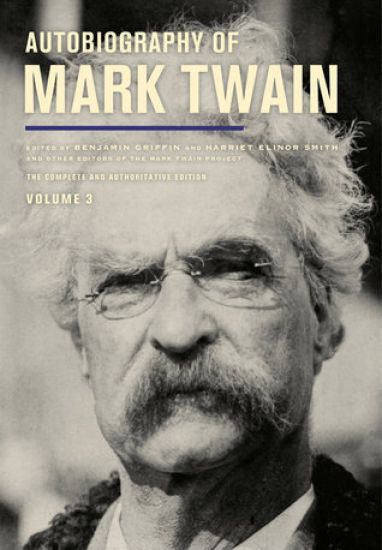
The surprising final chapter of a great American life. When the first volume of Mark Twain's uncensored Autobiography was published in 2010, it was hailed as an essential addition to the shelf of his works and a crucial document for our understanding of the great humorist's life and times. This third and final volume crowns and completes his life's work. Like its companion volumes, it chronicles Twain's inner and outer life through a series of daily dictations that go wherever his fancy leads. Created from March 1907 to December 1909, these dictations present Mark Twain at the end of his life: receiving an honorary degree from Oxford University; railing against Theodore Roosevelt, founding numerous clubs; incredulous at an exhibition of the Holy Grail; credulous about the authorship of Shakespeare's plays; relaxing in Bermuda; observing (and investing in) new technologies. The Autobiography's "Closing Words" movingly commemorate his daughter Jean, who died on Christmas Eve 1909. Also included in this volume is the previously unpublished "Ashcroft-Lyon Manuscript," Mark Twain's caustic indictment of his "putrescent pair" of secretaries and the havoc that erupted in his house during their residency. Fitfully published in fragments at intervals throughout the twentieth century, Autobiography of Mark Twain has now been critically reconstructed and made available as it was intended to be read. Fully annotated by the editors of the Mark Twain Project, the complete Autobiography emerges as a landmark publication in American literature. Editors: Benjamin Griffin and Harriet Elinor Smith Associate Editors: Victor Fischer, Michael B Frank, Amanda Gagel, Sharon K Goetz, Leslie Diane Myrick, Christopher M Ohge.

Mark Twain among the Indians and Other Indigenous Peoples
Kerry Driscoll
University of California Press
2019
pokkari
Mark Twain among the Indians and Other Indigenous Peoples is the first book-length study of the writer’s evolving views regarding the aboriginal inhabitants of North America and the Southern Hemisphere, and his deeply conflicted representations of them in fiction, newspaper sketches, and speeches. Using a wide range of archival materials—including previously unexamined marginalia in books from Clemens’s personal library—Driscoll charts the development of the writer’s ethnocentric attitudes about Indians and savagery in relation to the various geographic and social milieus of communities he inhabited at key periods in his life, from antebellum Hannibal, Missouri, and the Sierra Nevada mining camps of the 1860s to the progressive urban enclave of Hartford’s Nook Farm. The book also examines the impact of Clemens’s 1895–96 world lecture tour, when he traveled to Australia and New Zealand and learned firsthand about the dispossession and mistreatment of native peoples under British colonial rule. This groundbreaking work of cultural studies offers fresh readings of canonical texts such as The Adventures of Tom Sawyer, A Connecticut Yankee in King Arthur’s Court, Roughing It, and Following the Equator, as well as a number of Twain’s shorter works.
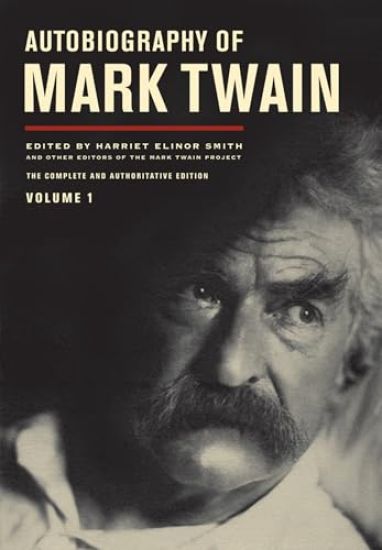
Mark Twain's final and uncensored masterpiece, presented in three volumes, is a landmark publication in American literature. “Twain will begin to seem strange again, alluring and still astonishing . . . in ways that still resonate with us.”—New York Times “His crystalline humor and expansive range are a continuous source of delight and awe.”—Los Angeles Times Book Review "I've struck it!" Mark Twain wrote in a 1904 letter to a friend. "And I will give it away—to you. You will never know how much enjoyment you have lost until you get to dictating your autobiography." Thus, after dozens of false starts and hundreds of pages, Twain embarked on his "Final (and Right) Plan" for telling the story of his life. His innovative notion—to "talk only about the thing which interests you for the moment"—meant that his thoughts could range freely. The strict instruction that many of these texts remain unpublished for 100 years meant that when they came out, he would be "dead, and unaware, and indifferent," and that he was therefore free to speak his "whole frank mind." The year 2010 marks the 100th anniversary of Twain's death. In celebration of this important milestone and in honor of the cherished tradition of publishing Mark Twain's works, UC Press is proud to offer for the first time Mark Twain's uncensored autobiography in its entirety and exactly as he left it. This major literary event brings to readers, admirers, and scholars the first of three volumes and presents Mark Twain's authentic and unsuppressed voice, brimming with humor, ideas, and opinions, and speaking clearly from the grave as he intended. Editors: Harriet E. Smith, Benjamin Griffin, Victor Fischer, Michael B. Frank, Sharon K. Goetz, Leslie Myrick

Mark Twain's final and uncensored masterpiece, presented in three volumes, is a landmark publication in American literature. “Twain will begin to seem strange again, alluring and still astonishing . . . in ways that still resonate with us.”—New York Times “His crystalline humor and expansive range are a continuous source of delight and awe.”—Los Angeles Times Book Review Mark Twain’s complete, uncensored Autobiography was an instant bestseller when the first volume was published in 2010, on the centennial of the author’s death, as he requested. Published to rave reviews, the Autobiography was hailed as the capstone of Twain’s career. It captures his authentic and unsuppressed voice, speaking clearly from the grave and brimming with humor, ideas, and opinions. The eagerly-awaited Volume 2 delves deeper into Mark Twain’s life, uncovering the many roles he played in his private and public worlds. Filled with his characteristic blend of humor and ire, the narrative ranges effortlessly across the contemporary scene. He shares his views on writing and speaking, his preoccupation with money, and his contempt for the politics and politicians of his day. Affectionate and scathing by turns, his intractable curiosity and candor are everywhere on view. Editors: Benjamin Griffin and Harriet E. Smith Associate Editors: Victor Fischer, Michael B. Frank, Sharon K. Goetz and Leslie Diane Myrick
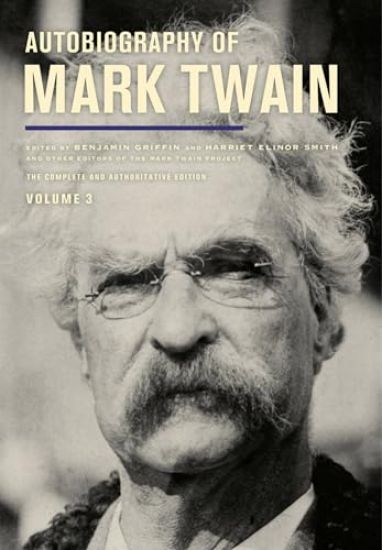
Mark Twain's final and uncensored masterpiece, presented in three volumes, is a landmark publication in American literature. “Twain will begin to seem strange again, alluring and still astonishing . . . in ways that still resonate with us.”—New York Times “His crystalline humor and expansive range are a continuous source of delight and awe.”—Los Angeles Times Book Review When the first volume of Mark Twain’s uncensored Autobiography was published in 2010, it was hailed as an essential addition to the shelf of his works and a crucial document for our understanding of the great humorist’s life and times. This third and final volume crowns and completes his life’s work. Like its companion volumes, it chronicles Twain's inner and outer life through a series of daily dictations that go wherever his fancy leads. Created from March 1907 to December 1909, these dictations present Mark Twain at the end of his life: receiving an honorary degree from Oxford University; railing against Theodore Roosevelt; founding numerous clubs; incredulous at an exhibition of the Holy Grail; credulous about the authorship of Shakespeare’s plays; relaxing in Bermuda; observing (and investing in) new technologies. The Autobiography’s “Closing Words” movingly commemorate his daughter Jean, who died on Christmas Eve 1909. Also included in this volume is the previously unpublished “Ashcroft-Lyon Manuscript,” Mark Twain’s caustic indictment of his “putrescent pair” of secretaries and the havoc that erupted in his house during their residency. Fitfully published in fragments at intervals throughout the twentieth century, Autobiography of Mark Twain has now been critically reconstructed and made available as it was intended to be read. Fully annotated by the editors of the Mark Twain Project, the complete Autobiography emerges as a landmark publication in American literature. Editors: Benjamin Griffin and Harriet Elinor Smith Associate Editors: Victor Fischer, Michael B. Frank, Amanda Gagel, Sharon K. Goetz, Leslie Diane Myrick, Christopher M. Ohge
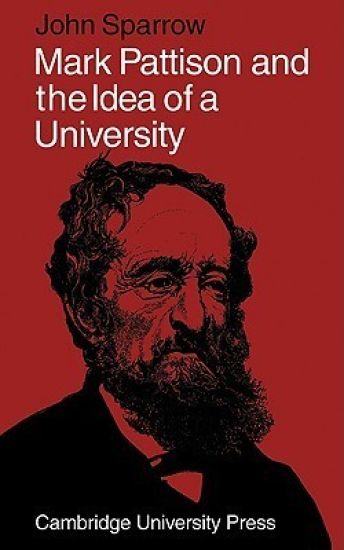
Mark Pattison was Rector of Lincoln College, Oxford, from 1861 to 1884, and a rival of Jowett in the promotion of university reform. His strongly marked personality served as a model for several characters in Victorian fiction, including Mr Casaubon in George Eliot's Middlemarch. Mr Sparrow traces Pattison's career, analyses his intellectual aims and his conception of the function of a university, and presents him in the context of Victorian Oxford, as he appeared to the outside world, and as he revealed himself in his letters and journals. Finally, Mr Sparrow relates Pattison's ideals to some of the problems arising out of the unprecedented expansion of university education.