Kirjojen hintavertailu. Mukana 12 459 402 kirjaa ja 12 kauppaa.

Kirjahaku

Etsi kirjoja tekijän nimen, kirjan nimen tai ISBN:n perusteella.

1000 tulosta hakusanalla Marques a. Clark

Minimum Error Entropy Classification

Minimum Error Entropy Classification

Joaquim P. Marques de Sá; Luís M.A. Silva; Jorge M.F. Santos; Luís A. Alexandre

Springer-Verlag Berlin and Heidelberg GmbH Co. K
2012
sidottu
This book explains the minimum error entropy (MEE) concept applied to data classification machines. Theoretical results on the inner workings of the MEE concept, in its application to solving a variety of classification problems, are presented in the wider realm of risk functionals.Researchers and practitioners also find in the book a detailed presentation of practical data classifiers using MEE. These include multi-layer perceptrons, recurrent neural networks, complexvalued neural networks, modular neural networks, and decision trees. A clustering algorithm using a MEE-like concept is also presented. Examples, tests, evaluation experiments and comparison with similar machines using classic approaches, complement the descriptions.
Minimum Error Entropy Classification

Minimum Error Entropy Classification

Joaquim P. Marques de Sá; Luís M.A. Silva; Jorge M.F. Santos; Luís A. Alexandre

Springer-Verlag Berlin and Heidelberg GmbH Co. K
2014
nidottu
This book explains the minimum error entropy (MEE) concept applied to data classification machines. Theoretical results on the inner workings of the MEE concept, in its application to solving a variety of classification problems, are presented in the wider realm of risk functionals.Researchers and practitioners also find in the book a detailed presentation of practical data classifiers using MEE. These include multi-layer perceptrons, recurrent neural networks, complexvalued neural networks, modular neural networks, and decision trees. A clustering algorithm using a MEE-like concept is also presented. Examples, tests, evaluation experiments and comparison with similar machines using classic approaches, complement the descriptions.
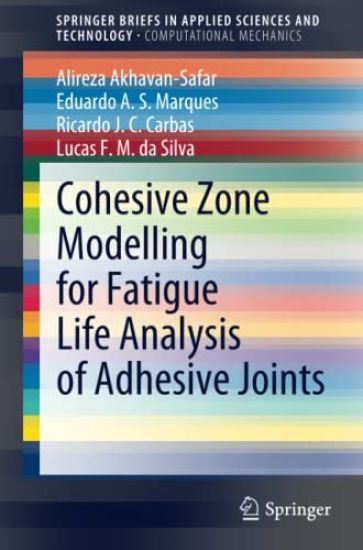
Cohesive Zone Modelling for Fatigue Life Analysis of Adhesive Joints

Cohesive Zone Modelling for Fatigue Life Analysis of Adhesive Joints

Alireza Akhavan-Safar; Eduardo A. S. Marques; Ricardo J. C. Carbas; Lucas F. M. da Silva

Springer Nature Switzerland AG
2022
nidottu
This book explains the numerical method for fatigue life analysis of adhesive joints using the CZM technique. CZM is a robust approach that is widely used for failure analysis of adhesive joints exposed to various stress conditions including fatigue. In this book, various aspects of the numerical evaluation of adhesive bonds using CZM are discussed. First of all, it is explained how different load and environmental parameters influence the service life of adhesive connections. Various types of CZM shapes and their applications are then discussed. It was answered how different parameters of a CZM should be defined. It is also discussed which CZM form should be used for each condition. The book then describes how the CZM parameters should be degraded to simulate the cyclic loading behavior of bonded structures. Various CZM strategies for the fatigue life assessment of adhesive joints are discussed. The book presents various techniques that can be followed for the simulation of load cycles for both high-cycle and low-cycle fatigue regimes based on the concepts of the CZM. Details of numerical methods to be considered in the FE software for the fatigue life assessment of adhesives with CZM are also described in this book. Finally, some numerical examples using CZM are also provided.
Mechanical Joining by Material Flow

Mechanical Joining by Material Flow

Mohammad Mehdi Kasaei; Reza Beygi; Eduardo A.S. Marques; Ricardo J.C. Carbas; Lucas F. M. da Silva

Elsevier - Health Sciences Division
2026
nidottu
Mechanical Joining by Material Flow provides sought-after experimental information on process design, process modeling, and joint characterization techniques for students, researchers, and engineering professionals who want to learn about advanced joining systems for lightweight materials. Chapters cover mechanical joining by plastic deformation, including clinching and self-piercing riveting, and friction-based processes, such as friction stir welding to form a mechanical joint. Though these processes are mainly used to establish metallurgical bonding, their unique characteristics and the material flow they generate has led to an increased use of these techniques for joining difficult-to-weld materials. Other sections introduce innovative technologies developed based on material flow to meet existing industry needs to join materials with different structural properties in different scales or shapes. To furnish readers with a more usefully comprehensive coverage, the team of experts behind the book has included methodological principles as well as discussions on advantages, drawbacks, and future directions of each technique, alongside application examples and case studies.
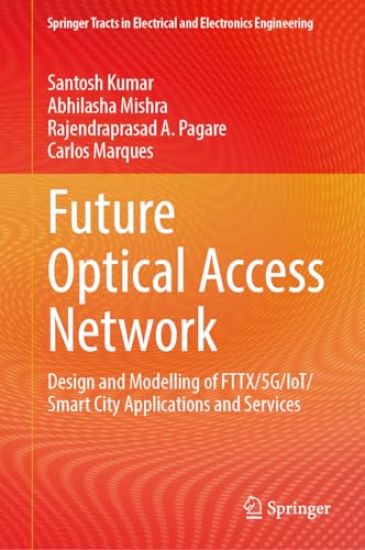
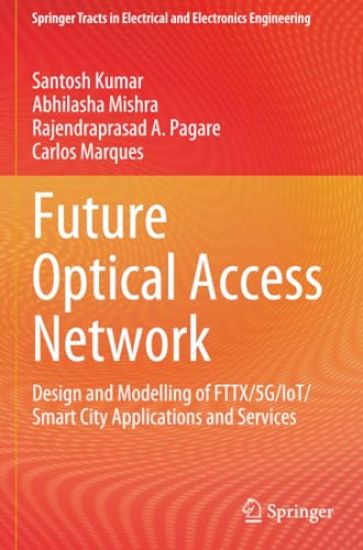
Future Optical Access Network

Future Optical Access Network

Santosh Kumar; Abhilasha Mishra; Rajendraprasad A. Pagare; Carlos Marques

SPRINGER VERLAG, SINGAPORE
2024
sidottu
This book provides detailed information on a low-cost, high-speed infrastructure to support applications and services based on 5G/6G, the Internet of Things (IoT), smart cities, and fiber-to-the-x (FTTX). The contents will serve as a ready reference for researchers, design engineers, network operators, and service providers, as well as graduating engineers interested in pursuing careers in the optical access network domain. The book is a road map for designing and developing access networks for a variety of applications, including smart cities and long-distance high-speed access networks. The book is useful for undergraduate, postgraduate, and research students, particularly in developing South-East Asian countries.
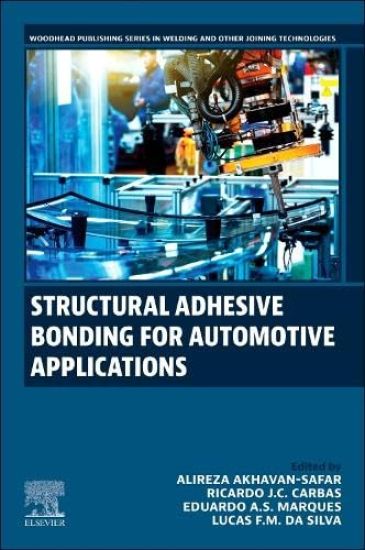
Structural Adhesive Bonding for Automotive Applications

Structural Adhesive Bonding for Automotive Applications

Alireza Akhavan-Safar; Ricardo J.C. Carbas; Eduardo A.S. Marques; Lucas F. M. da Silva

Elsevier - Health Sciences Division
2025
nidottu
Structural adhesive bonding is a key approach to making cars better and safer while also reducing their environmental impact. Structural Adhesive Bonding for Automotive Applications covers several aspects of bonded joints, including materials selection, design and manufacturing processes, quality control techniques, durability analysis, and repair methods. Practical examples support the investigations into the improvements that adhesively bonded configurations offer, including enhanced resistance to dynamic fatigue, increased body stiffness, better crash performance compared with other conventional joining methods, and greater corrosion resistance. The book provides a timely compendium of specialized knowledge alongside the current state of the art, which should appeal to a broad range of audiences – from students who wish to further their understanding of adhesive science and bonded vehicle structures to manufacturing and design engineers who wish to gain an appreciation of new technology in adhesive joining.
Bio-joining

Bio-joining

Lucas F. M. da Silva; Beatriz D. Simões; Eduardo A.S. Marques; Ricardo J.C. Carbas; Stanislav Gorb

Elsevier - Health Sciences Division
2026
nidottu
Bio-joining: Adhesion in Biomaterials, Biological adhesives, and Biomimetic Adhesive Systems explores the use of adhesives in biomedical applications, with a focus on sustainable development. This book introduces the core concepts of adhesive bonding and the different types of biological adhesives, before reviewing applications in dentistry and joint design and engineering. Biodegradability, sustainability, and degradation impact of bioadhesives are recurring themes throughout each chapter, with an emphasis on development and engineering of natural materials. This book is of interest to researchers, engineers and academics working in the fields of materials science, biomedical engineering, and orthopaedics, with a focus on bio-joining and joint development.
Distance Sampling: Methods and Applications

Distance Sampling: Methods and Applications

S. T. Buckland; E.A. Rexstad; T.A. Marques; C.S. Oedekoven

Springer International Publishing AG
2015
sidottu
In this book, the authors cover the basic methods and advances within distance sampling that are most valuable to practitioners and in ecology more broadly. This is the fourth book dedicated to distance sampling. In the decade since the last book published, there have been a number of new developments. The intervening years have also shown which advances are of most use. This self-contained book covers topics from the previous publications, while also including recent developments in method, software and application.Distance sampling refers to a suite of methods, including line and point transect sampling, in which animal density or abundance is estimated from a sample of distances to detected individuals. The book illustrates these methods through case studies; data sets and computer code are supplied to readers through the book’s accompanying website. Some of the case studies use the software Distance, while others use R code. The book is in three parts. The first part addresses basic methods, the design of surveys, distance sampling experiments, field methods and data issues. The second part develops a range of modelling approaches for distance sampling data. The third part describes variations in the basic method; discusses special issues that arise when sampling different taxa (songbirds, seabirds, cetaceans, primates, ungulates, butterflies, and plants); considers advances to deal with failures of the key assumptions; and provides a check-list for those conducting surveys.
Distance Sampling: Methods and Applications

Distance Sampling: Methods and Applications

S. T. Buckland; E.A. Rexstad; T.A. Marques; C.S. Oedekoven

Springer International Publishing AG
2016
nidottu
In this book, the authors cover the basic methods and advances within distance sampling that are most valuable to practitioners and in ecology more broadly. This is the fourth book dedicated to distance sampling. In the decade since the last book published, there have been a number of new developments. The intervening years have also shown which advances are of most use. This self-contained book covers topics from the previous publications, while also including recent developments in method, software and application.Distance sampling refers to a suite of methods, including line and point transect sampling, in which animal density or abundance is estimated from a sample of distances to detected individuals. The book illustrates these methods through case studies; data sets and computer code are supplied to readers through the book’s accompanying website. Some of the case studies use the software Distance, while others use R code. The book is in three parts. The first part addresses basic methods, the design of surveys, distance sampling experiments, field methods and data issues. The second part develops a range of modelling approaches for distance sampling data. The third part describes variations in the basic method; discusses special issues that arise when sampling different taxa (songbirds, seabirds, cetaceans, primates, ungulates, butterflies, and plants); considers advances to deal with failures of the key assumptions; and provides a check-list for those conducting surveys.
Gabriel Garcia Marquez: A Selective Annotated Bibliography of Dissertations and Theses

Gabriel Garcia Marquez: A Selective Annotated Bibliography of Dissertations and Theses

Louis V. Allene

Createspace Independent Publishing Platform
2015
nidottu
This volume is a selective listing of doctoral dissertations and master's theses worldwide that examine the work of the writer Gabriel Garc a M rquez, who was with the Latin American Boom movement and the Magical Realism movement. Each listing contains the author's name, title of dissertation/theses, degree awarded, educational institution and author abstract. Garc a M rquez won the Neustadt International Prize for Literature in 1972, and the Nobel Prize for Literature in 1982.
Ruined by the Marquess: A Forced Marriage Historical Romance

Ruined by the Marquess: A Forced Marriage Historical Romance

Paige Parker

Createspace Independent Publishing Platform
2016
nidottu
**A FORCED MARRIAGE HISTORICAL ROMANCE** William Stanley is called back from the military when his elder brother and the future Marquess of Devonshire perishes in a fatal carriage accident. Now he is expected to accept the title and the duties that come along with it.Katherine is being forced to marry an ageing Duke by her own father who views the match as an end to secure a valuable political ally. Katherine absolutely loathes the idea of marriage, having seen first-hand how torturous it could be for some women, especially docile ones like her mother. She doesn't want to suffer the same fate but when her father threatens to harm her mother, she is left with little choice but to agree to his sickening order.What happens when William decides to rescue Katherine, his little cousin's best friend whom he'd never paid much attention to until now? Katherine has had a silly crush on William since childhood but now that he's come back from the Army looking better than ever, will she be able to control her traitorous feelings?