Kirjojen hintavertailu. Mukana 11 342 296 kirjaa ja 12 kauppaa.

Kirjahaku

Etsi kirjoja tekijän nimen, kirjan nimen tai ISBN:n perusteella.

1000 tulosta hakusanalla Martin Bechthold

Martin Luther

Martin Luther

James A. Nestingen

Augsburg Fortress
2009
pokkari
Martin Luther: A Life tells the dramatic story of the renegade monk whose heroic personal struggle ignited a revolution and shook Christendom to its foundations. Through vivid anecdotes and lively historical descriptions, Martin Luther: A Life captures the turbulent times and historic events through which Luther lived as well as his profound vision of God. A fast-moving narrative, it shows how his stinging criticisms of the Christian church struck a deep and liberating chord in the German people and led to the momentous change we know as the Reformation. For all who wish to understand Luther the man, the rebel, and the visionary, James Nestingen's account also offers insight into Luther's momentous contributions to the Western world and his personal encounter with God, the Christian Scriptures, and the relentless demands of his own conscience. James A. Nestingen is Professor of Church History Emeritus at Luther Seminary in Saint Paul, Minnesota. He is a nationally recognized Luther scholar as well as a popular speaker and lecturer. Nestingen is the author of numerous books, including The Faith We Hold and editor, with Robert Kolb, of Sources and Contexts of the Book of Concord.
Martin Luther, the Bible, and the Jewish People

Martin Luther, the Bible, and the Jewish People

Brooks Schramm; Kirsi I. Stjerna

Augsburg Fortress
2012
pokkari
The place and significance of Martin Luther in the long history of Christian anti-Jewish polemic has been and continues to be a contested issue. The literature on the subject is substantial, and diverse. While efforts to exonerate Luther as merely a man of his times who merely perpetuated what he had received from his cultural and theological tradition have rightly been jettisoned, there still persists even among the educated public the perception that the truly problematic aspects of Luthers anti-Jewish attitudes are confined to the final stages of his career. It is true that Luthers anti-Jewish rhetoric intensified toward the end of his life, but reading Luther with a careful eye toward the Jewish question, it becomes clear that Luthers theological presuppositions toward Judaism and the Jewish people are a central, core component of his thought throughout his career, not just at the end. It follows then that it is impossible to understand the heart and building blocks of Luthers theology (justification, faith, liberation, salvation, grace) without acknowledging the crucial role of the Jews in his fundamental thinking.
Martin Luther's Theology

Martin Luther's Theology

Bernhard Lohse

Fortress Press,U.S.
2011
pokkari
The theology of the great reformer Martin Luther is the foundation of all theological expressions deriving from the Reformation. That Luther's theology is so powerful is attested by its continuing impact on Lutherans and non-Lutherans alike, including the most influential theologian of the 20th century Karl Barth who borrowed from and quoted Luther more than any other theologian. But Luther's theology was formed in the crucible of persecution by the Roman Catholic church and in the great and intellectually rigorous tradition of scholasticism. Yet, Luther's theology due to its lack of systematic expression is often understood as overly "black & white" or accused of contradiction. However, such accusations forget Luther's training as a logician (just ask Erasmus) and miss the power, consistency, and coherence of Luther's thought. In Martin Luther's Theology: Its Historical and Systematic Development BernHard Lohse presents the theology of the Reformation's seminal thinker and personality. His work is comprised of three major sections: 1. Introduction Here Lohse examines methodological issues concerning the possibility of describing Luther's theology, while also noting Luther's historical context both individually and socially on a broad level. 2. Luther's Theology in its Historical Development In this section Lohse follows Luther's development chronologically beginning with Luther's interaction with The Sentences of Peter Lombard and through his "discovery" sometime during1515-1518. He then examines Luther's engagement with Cajetan, Eck, the Pope, Radical Reformers, Erasmus, Zwingli, and others in relation to the major theological issues raised by these and other interlocutors. 3. Luther's Theology in its Systematic Context The primary concen in this section is to demonstrate the internal coherence of Luther's theology across a wide spectrum of theological issues. Lohse argument suggests that we to understand Luther we must begin with the Reformation creed Sola Scriptura and then understand Luther's theology built from that point upwards. In addition to traditional points of emphasis such as Justification or the Eucharist, Lohse examines Reason & Faith, Ontology, Eschatology and several other major theological areas. This study is a fully comprehensive presentation of the development and nature of Luther's intellectual training, output, and life. It is a foundational text for anyone interested in the reformer and his theology, and will make an accessible, clear, and provides cutting edge scholarship for scholars and students.
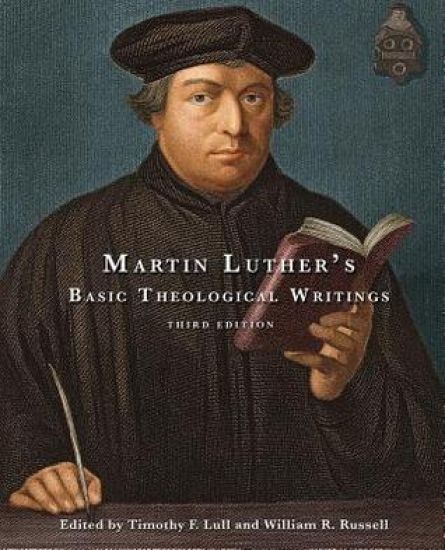
Martin Luther's Basic Theological Writings

Martin Luther's Basic Theological Writings

William R. Russell

Augsburg Fortress
2012
pokkari
The best one-volume reader of Luther's writingsnow revisedMartin Luther's Basic Theological Writings, a single-volume introduction to Luther's most influential, noted, and important writings in the modern translationsincluding excerpts of his sermons and letterspresents Luther the theologian "steeped in the word of God, speaking to the whole church," even as it takes the reader straight to Luther the man, to his controversial Reformation insights, to his strongest convictions about God and Scripture and the life of the church, and most importantly to his theologya still-exciting encounter with the meaning of Jesus Christ for each age.The third edition includes revised introductions, updated bibliography, index, and the addition of "A Meditation on Christ's Passion" (1519), "Treatise on the Blessed Sacrament" (1519), "Sermon on the Sacrament of the Body and Blood of ChristAgainst the Fanatics" (1526), "Sermon in Castle Pleissenburg" (1539), and "Consolation to Women Whose Pregnancies Have Not Gone Well" (1542), as well as new translations of "A Practical Way to Pray" (1535) and "On the Freedom of a Christian" (1520).
Martin Luther in His Own Words

Martin Luther in His Own Words

Baker Academic, Div of Baker Publishing Group
2017
nidottu
Though most of the Protestant world can trace its roots back to the Reformation, many people today have only a vague knowledge of Martin Luther's writings. "Didn't he write the Ninety-Five Theses?" Jack Kilcrease and Erwin Lutzer step into this vacuum with a carefully selected collection of Luther's works.Centered around the five solas of the Reformation (sola Scriptura, sola fide, sola gratia, sola Christus, soli Deo gloria), the selections offer readers an accessible primer on works that are foundational to the theology of Protestantism in all its forms. Introductions to each writing include an explanation of the historical context and the theological significance of the piece. Students of the Bible, pastors, teachers, and seminary students will find this collection an enlightening introduction to Luther in his own words and a useful addition to their libraries.
Martin Luther`s Understanding of God`s Two Kingd – A Response to the Challenge of Skepticism

Martin Luther`s Understanding of God`s Two Kingd – A Response to the Challenge of Skepticism

William J. Wright; Richard Muller

Baker Academic, Div of Baker Publishing Group
2010
nidottu
The concept of God's two kingdoms was foundational to Luther and subsequent Lutheran theology. Since the middle of the nineteenth century, that concept has been understood primarily as a political concept. But is a political reading of the two kingdoms a perversion of Luther's teaching?Leading Reformation scholar William Wright contends that those who read Luther politically and see in Luther a compartmentalized approach to Christian life are misreading the Reformer. Wright reassesses the original breadth of Luther's theology of the two kingdoms and the cultural contexts from which it emerged. He argues that Luther's two-kingdom worldview was not a justification for living irresponsibly on planet earth.
Martin Luther and Seven Sacraments

Martin Luther and Seven Sacraments

B Brewer

Baker Academic, Div of Baker Publishing Group
2017
nidottu
This introduction to Martin Luther's sacramental theology addresses a central question in the life of the church and in ecumenical dialogue. Although Luther famously reduced the sacraments from seven to two (baptism and the Lord's Supper), he didn't completely dismiss the others. Instead, he positively recast them as practices in the church. This book explores the medieval church's understanding of the seven sacraments and the Protestant rationale for keeping or eliminating each sacrament. It also explores implications for contemporary theology and worship, helping Protestants imagine ways of reclaiming lost benefits of the seven sacraments.
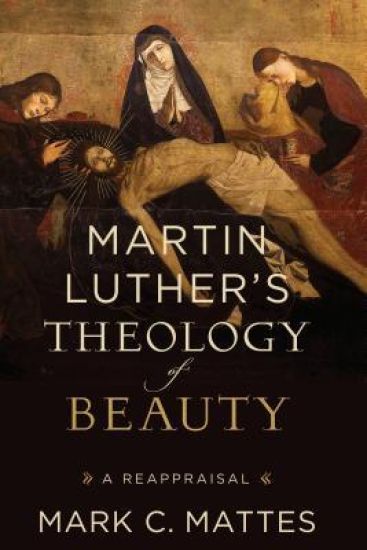
Martin Luther`s Theology of Beauty – A Reappraisal

Martin Luther`s Theology of Beauty – A Reappraisal

Mark C. Mattes

Baker Academic, Div of Baker Publishing Group
2017
sidottu
Many contemporary theologians seek to retrieve the concept of beauty as a way for people to encounter God. This groundbreaking book argues that while Martin Luther's view of beauty has often been ignored or underappreciated, it has much to contribute to that quest. Mark Mattes, one of today's leading Lutheran theologians, analyzes Luther's theological aesthetics and discusses its implications for music, art, and the contemplative life. Mattes shows that for Luther, the cross is the lens through which the beauty of God is refracted into the world.
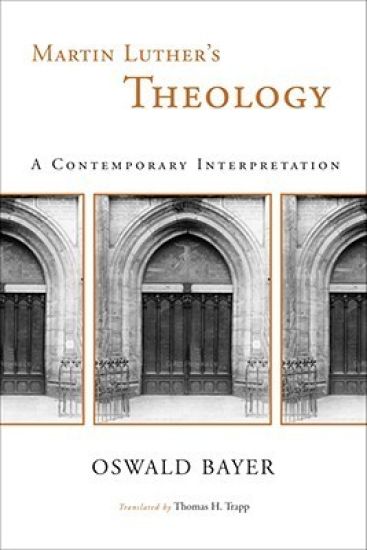
Martin Luther's Theology

Martin Luther's Theology

Oswald Bayer

William B Eerdmans Publishing Co
2008
nidottu
Forty years of in-depth research on Martin Luther's theology has left Oswald Bayer uniquely qualified to present this comprehensive study. He does so with clarity and care, simply enough for nontheologians to access. This remarkable book offers the basics of Luther's understanding of theology, discussing his response to the philosophy of science tradition, the formula by which he studied theology, and the basic philosophy that informed him. Bayer then takes Luther's stance on Christian dogmatics and ethics and applies it to our own theological understanding in the modern age. With such a complete Lutheran dogmatic concept -- the first of its kind offered -- the stunning inner consistency of Luther's theology and its ease of application to contemporary studies become unmistakably clear. Martin Luther's Theology is a valuable tool for students and teachers of theology and for those looking for a guide into the mind and heart of Luther -- a theologian for today.
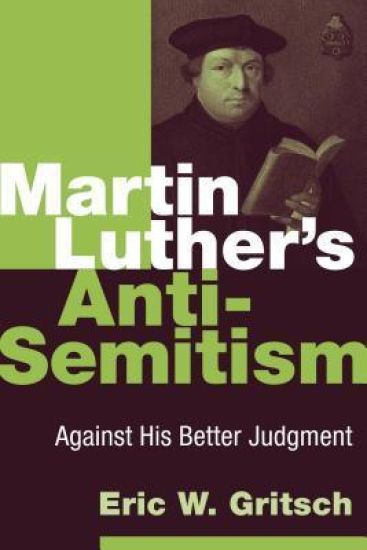
Martin Luther's Anti-Semitism

Martin Luther's Anti-Semitism

Eric W. Gritsch

William B Eerdmans Publishing Co
2012
nidottu
In this book Eric W. Gritsch, a Lutheran and a distinguished Luther scholar, faces the glaring ugliness of Martin Luther's anti- Semitism head-on, describing Luther's journey from initial attempts to proselytize Jews to an appallingly racist position, which he apparently held until his death. Comprehensively laying out the textual evidence for Luther's virulent anti-Semitism, Gritsch traces the development of Luther's thinking in relation to his experiences, external influences, and theological convictions. Revealing greater impending danger with each step, Martin Luther's Anti-Semitism marches steadily onward until the full extent of Luther's racism becomes apparent. Gritsch's unflinching analysis also describes the impact of Luther's egregious words on subsequent generations and places Luther within Europe's long history of anti-Semitism. Throughout, however, Gritsch resists the temptation either to demonize or to exonerate Luther. Rather, readers will recognize Luther's mistakes as links in a chain that pulled him further and further away from an attitude of respect for Jews as the biblical people of God. Gritsch depicts Luther as a famous example of the intensive struggle with the enduring question of Christian-Jewish relations. It is a great historical tragedy that Luther, of all people, fell victim to anti-Semitism -- albeit against his better judgment.
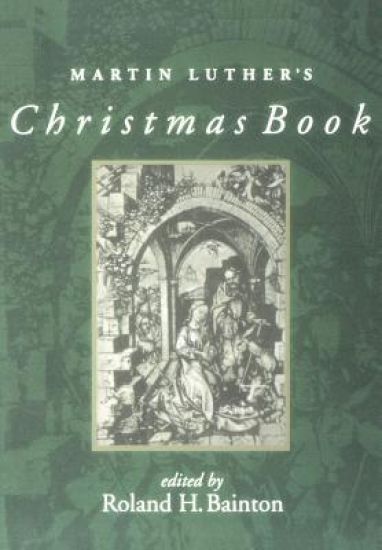
Martin Luther's Christmas Book
This collection contains thirty excerpts from Martin Luther's Christmas sermons. In his unique and powerful voice, Luther portrays the human reality of God's birth on earth - Mary's distress at giving birth with no midwife or water, Joseph's misgivings, the Wise Men's perplexity, Herod's cunning. And throughout these sermon-meditations, Martin Luther reminds us that keeping Christmas is a year-round mission of caring for those in need. Nine illustrations by Luther's contemporaries - including four by noted engraver Albrecht Durer - capture timeless scenes from the Christmas story. And two of Luther's beautiful Christmas carols are included on the final pages of the book.
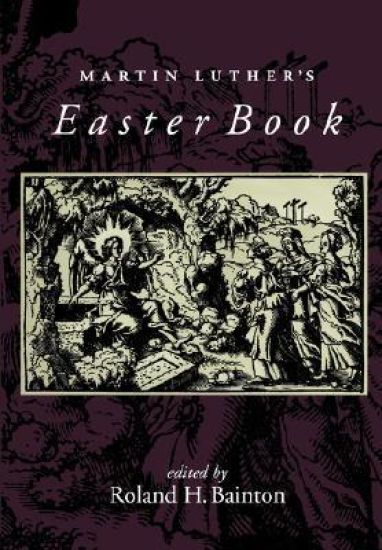
Martin Luther's Easter Book
This powerful book of passages from Martin Luther's Easter sermons portrays the reformer's lasting thoughts on faith, human imperfection, salvation through grace, and the wonder of God. The sermons explore events from Holy Week through the Resurrection. They combine marvelous insights with inspiring calls to action that are so characteristic of the great reformer: "The resurrection consists not in words, but in life and power."
Martin Delany, Frederick Douglass, and the Politics of Representative Identity
The differences between Frederick Douglass and Martin Delany have historically been reduced to a simple binary pronouncement: assimilationist versus separatist. Now Robert S. Levine restores the relationship of these two important nineteenth-century African American writers to its original complexity. He explores their debates over issues like abolitionism, emigration, and nationalism, illuminating each man's influence on the other's political vision. He also examines Delany and Douglass's debates in relation to their own writings and to the work of Harriet Beecher Stowe. Though each saw himself as the single best representative of his race, Douglass has been accorded that role by history--while Delany, according to Levine, has suffered a fate typical of the black separatist: marginalization. In restoring Delany to his place in literary and cultural history, Levine makes possible a fuller understanding of the politics of antebellum African American leadership.
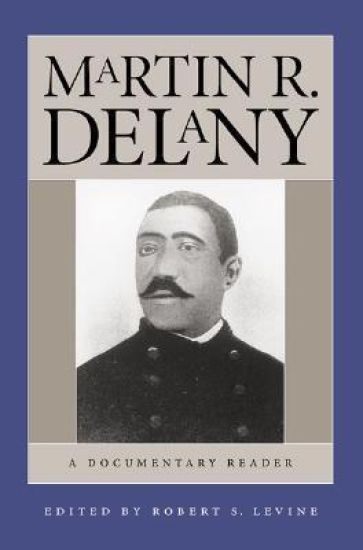
Martin R. Delany

Martin R. Delany

The University of North Carolina Press
2003
nidottu
Martin R. Delany (1812-85) has been called the ""Father of Black Nationalism,"" but his extraordinary career also encompassed the roles of abolitionist, physician, editor, explorer, politician, army officer, novelist, and political theorist. Despite his enormous influence in the nineteenth century, and his continuing influence on black nationalist thought in the twentieth century, Delany has remained a relatively obscure figure in U.S. culture, generally portrayed as a radical separatist at odds with the more integrationist Frederick Douglass. This pioneering documentary collection offers readers a chance to discover, or rediscover, Delany in all his complexity. Through nearly 100 documents - approximately two-thirds of which have not been reprinted since their initial nineteenth-century publication - it traces the full sweep of his fascinating career. Included are selections from Delany's early journalism, his emigrationist writings of the 1850s, his 1859-62 novel, Blake (one of the first African American novels published in the United States), and his later writings on Reconstruction. Incisive and shrewd, angry and witty, Delany's words influenced key nineteenth-century debates on race and nation, addressing issues that remain pressing in our own time.
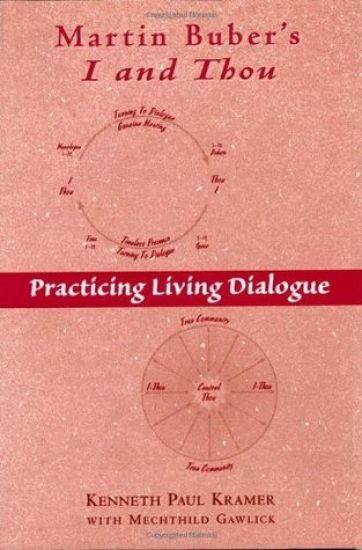
Martin Buber's Ontology

Martin Buber's Ontology

Wood

Northwestern University Press
1969
nidottu
At the turn of the century Martin Buber arrived on the philosophic scene. His path to maturity was one long struggle with the problem of unity--in particular with the problem of the unity of spirit and life--and he saw the problem itself to be rooted in the supposition of the primacy of the subject-object relation, with subjects "over here," objects "over there," and their relation a matter of subjects "taking in" objects or, alternatively, constituting them. But Buber moved into a position which undercuts the subject-object dichotomy and initiates a second "Copernican revolution" in philosophical thought.