Kirjojen hintavertailu. Mukana 11 342 296 kirjaa ja 12 kauppaa.

Kirjahaku

Etsi kirjoja tekijän nimen, kirjan nimen tai ISBN:n perusteella.

1000 tulosta hakusanalla Martin Meisel

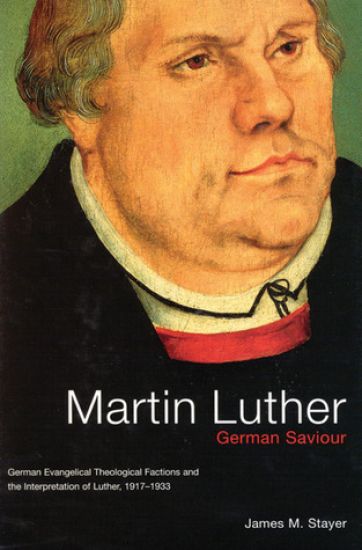
Martin Luther, German Saviour

Martin Luther, German Saviour

James M. Stayer

McGill-Queen's University Press
2000
sidottu
Theological trend-setters after the war were dogmatic or systematic theologians. Whether men of the right like Karl Holl or men of the left like Karl Barth, they wanted to return to Luther's fundamental Reformation theology and to justification through faith alone. In the mid-1920s, however, Barth saw the dangers of Lutheran theocentrism wedded to German nationalism and moved towards a more Reformed Christology and a greater critical distance from Luther. The other six major Weimar-era theologians discussed - Karl Holl, Friedrich Gogarten, Werner Elert, Paul Althaus, Emanuel Hirsch, and Erich Vogelsang - connected their theology to their Luther studies and to their hopes for rebirth of Germany after the humiliation of the Versailles order. To differing degrees they presented Martin Luther as the German saviour and all except Karl Holl, who died in 1926, worked out specifically theological reasons for supporting Hitler when he came to power in 1933.
Martin Sherman

Martin Sherman

Tish Dace

McFarland Co Inc
2012
pokkari
Playwright and screenwriter Martin Sherman dramatizes outsiders--gay, female, foreign, disabled, different in religion, class or color--skipping over quicksand as they strive to survive. This book analyzes and evaluates Sherman's work, while correcting previously published errors and establishing the flavor of the critical debate. Devoting more attention to such internationally acclaimed works as Bent and Mrs. Henderson Presents, it also considers less well known and even unpublished and unproduced scripts as well as his working relationships with the luminaries of stage and screen who have appeared in, directed, and produced his plays and screenplays.
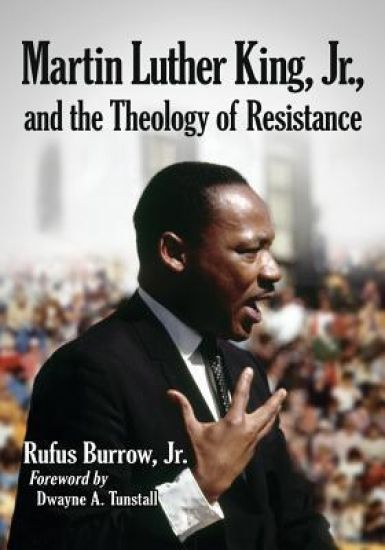
Martin Luther King, Jr., and the Theology of Resistance
It has been nearly fifty years since Martin Luther King, Jr., was assassinated at the Lorraine Motel in Memphis, Tennessee. Appraisals of King's contributions began almost immediately and continue to this day. The author explores a great many of King's chief ideas and socio-ethical practices: his concept of a moral universe, his doctrine of human dignity, his belief that not all suffering is redemptive, his brand of personalism, his contribution to the development of social ethics, the inclusion of young people in the movement, sexism as a contradiction to his personalism, the problem of black-on-black violence, and others. The book reveals both the strengths and the limitations in King's theological socio-ethical project, and shows him to have relentlessly applied personalist ideas to organized nonviolent resistance campaigns in order to change the world. Instructors considering this book for use in a course may request an examination copy here.
Martin Luther

Martin Luther

Larry D. Mansch; Curtis H. Peters

McFarland Co Inc
2016
pokkari
Combining biographical narrative and analytical essays, this book provides a new, comprehensive view of Martin Luther's life and times, along with a new examination of the radical theology that sparked the Reformation and changed the Christian world forever. Drawing on sources new and old, the authors chronicle the fascinating, turbulent life of the Great Reformer from a historical point of view. Luther's revolutionary thoughts on scripture and salvation are explored from a theological perspective, offering a fresh appraisal of the doctrine that irrevocably divided the Roman Catholic Church.
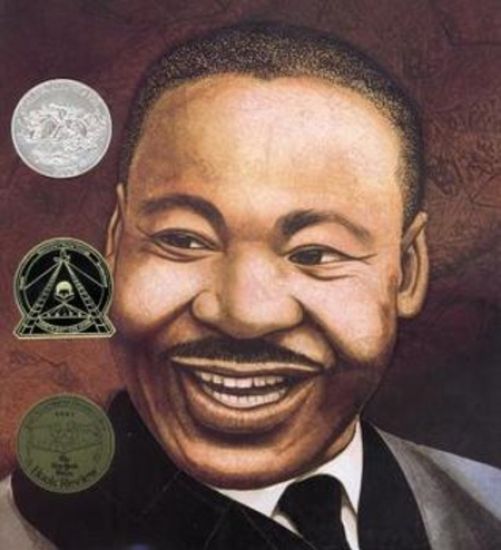
Martin's Big Words

Martin's Big Words

Doreen Rappaport

Jump at the Sun
2001
sidottu
This picture book biography of Dr. Martin Luther King, Jr. brings his life and the profound nature of his message to young readers through his own words, using quotes from some of his most beloved speeches to tell his life story in a simple, direct way. Full color.
Martin Luther

Martin Luther

Bernhard Lohse

Augsburg Fortress
1986
nidottu
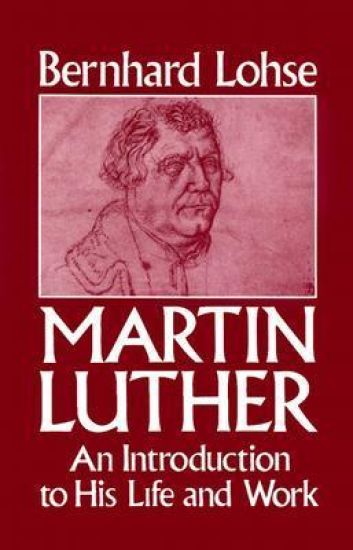
Attention is given to major writings, relative importance, genre, and historical context. Guides reader through significant issues in Luther's theology and discusses contributions.
Martin Luther's Catechisms

Martin Luther's Catechisms

Timothy J. Wengert

Augsburg Fortress
2009
nidottu
Martin Luther's catechisms 3 the Small Catechism in 1528-29, and the Large Catechism in spring 1529 - responded in part to "the deplorable, wretched deprivation that I recently encountered while I was a visitor" to rural Saxon congregations. The former was for laity, the latter an elaboration largely for the education of clergy, with Luther excoriating "their pure laziness and concern for their bellies." Reformation scholar Timothy Wengert has studied Luther's catechisms for the light they shed on the maturing Reformation faith but also for the fascinating lens they afford into the social world of Wittenberg in those years: children, clergy, education and publishing, marriage customs, devotion and prayer, and celebration of the Lord's Supper in this period, along with Luther's own hearty faith, are all illumined by these Western classics. In this volume, which also includes the texts of the catechisms, Wengert follows the traditional catechism order to demonstrate the dynamic faith exhibited in the catechisms in their original context and ours. An ideal resource for college and seminary classes, as well as individual and group reading, this volume will be a valued vehicle for understanding Reformation faith for many years to come.
Martin Luther, Volume 1

Martin Luther, Volume 1

Martin Brecht; James L. Schaaf

Augsburg Fortress
1985
pokkari
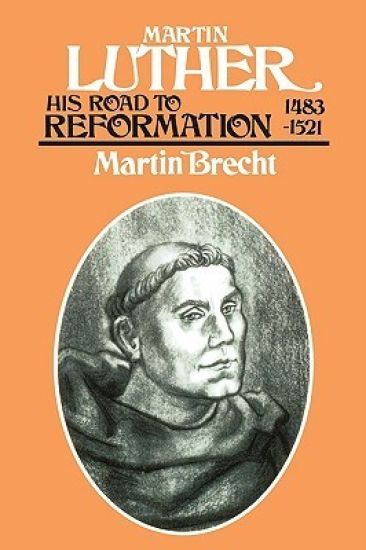
This first volume in Martin Brecht's three-volume biography recounts Luther's youth and young adulthood up to the period of the Diet of Worms. Brecht, in a clear, eloquent translation by James Schaaf, discusses Luther's education at the University of Erfurt, his monastic life, his canonical trial in 1519, the Leipzig debate, and his earliest contributions to the beginning of the Reformation. Illustrations enrich the text.
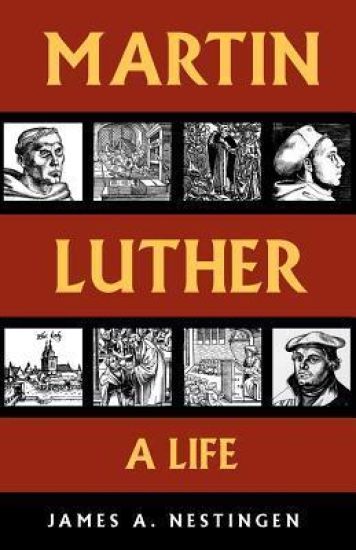
Martin Luther

Martin Luther

James A. Nestingen

Augsburg Fortress
2009
pokkari
Martin Luther: A Life tells the dramatic story of the renegade monk whose heroic personal struggle ignited a revolution and shook Christendom to its foundations. Through vivid anecdotes and lively historical descriptions, Martin Luther: A Life captures the turbulent times and historic events through which Luther lived as well as his profound vision of God. A fast-moving narrative, it shows how his stinging criticisms of the Christian church struck a deep and liberating chord in the German people and led to the momentous change we know as the Reformation. For all who wish to understand Luther the man, the rebel, and the visionary, James Nestingen's account also offers insight into Luther's momentous contributions to the Western world and his personal encounter with God, the Christian Scriptures, and the relentless demands of his own conscience. James A. Nestingen is Professor of Church History Emeritus at Luther Seminary in Saint Paul, Minnesota. He is a nationally recognized Luther scholar as well as a popular speaker and lecturer. Nestingen is the author of numerous books, including The Faith We Hold and editor, with Robert Kolb, of Sources and Contexts of the Book of Concord.
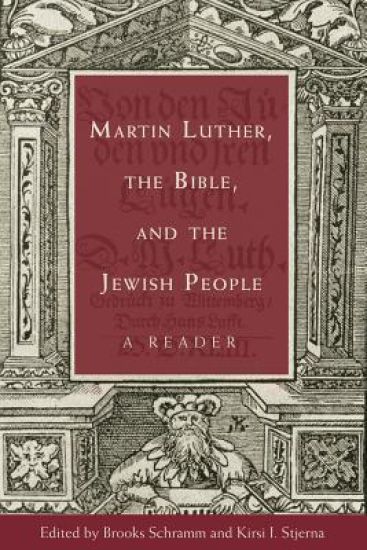
Martin Luther, the Bible, and the Jewish People

Martin Luther, the Bible, and the Jewish People

Brooks Schramm; Kirsi I. Stjerna

Augsburg Fortress
2012
pokkari
The place and significance of Martin Luther in the long history of Christian anti-Jewish polemic has been and continues to be a contested issue. The literature on the subject is substantial, and diverse. While efforts to exonerate Luther as merely a man of his times who merely perpetuated what he had received from his cultural and theological tradition have rightly been jettisoned, there still persists even among the educated public the perception that the truly problematic aspects of Luthers anti-Jewish attitudes are confined to the final stages of his career. It is true that Luthers anti-Jewish rhetoric intensified toward the end of his life, but reading Luther with a careful eye toward the Jewish question, it becomes clear that Luthers theological presuppositions toward Judaism and the Jewish people are a central, core component of his thought throughout his career, not just at the end. It follows then that it is impossible to understand the heart and building blocks of Luthers theology (justification, faith, liberation, salvation, grace) without acknowledging the crucial role of the Jews in his fundamental thinking.
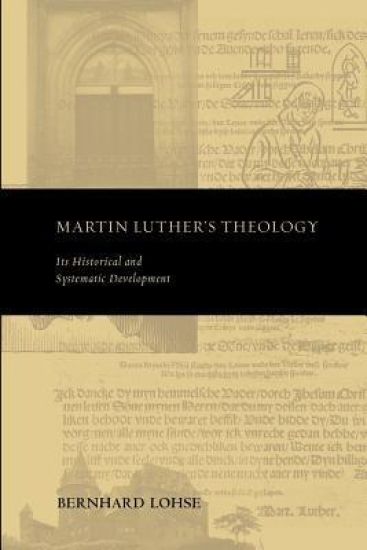
Martin Luther's Theology

Martin Luther's Theology

Bernhard Lohse

Fortress Press,U.S.
2011
pokkari
The theology of the great reformer Martin Luther is the foundation of all theological expressions deriving from the Reformation. That Luther's theology is so powerful is attested by its continuing impact on Lutherans and non-Lutherans alike, including the most influential theologian of the 20th century Karl Barth who borrowed from and quoted Luther more than any other theologian. But Luther's theology was formed in the crucible of persecution by the Roman Catholic church and in the great and intellectually rigorous tradition of scholasticism. Yet, Luther's theology due to its lack of systematic expression is often understood as overly "black & white" or accused of contradiction. However, such accusations forget Luther's training as a logician (just ask Erasmus) and miss the power, consistency, and coherence of Luther's thought. In Martin Luther's Theology: Its Historical and Systematic Development BernHard Lohse presents the theology of the Reformation's seminal thinker and personality. His work is comprised of three major sections: 1. Introduction Here Lohse examines methodological issues concerning the possibility of describing Luther's theology, while also noting Luther's historical context both individually and socially on a broad level. 2. Luther's Theology in its Historical Development In this section Lohse follows Luther's development chronologically beginning with Luther's interaction with The Sentences of Peter Lombard and through his "discovery" sometime during1515-1518. He then examines Luther's engagement with Cajetan, Eck, the Pope, Radical Reformers, Erasmus, Zwingli, and others in relation to the major theological issues raised by these and other interlocutors. 3. Luther's Theology in its Systematic Context The primary concen in this section is to demonstrate the internal coherence of Luther's theology across a wide spectrum of theological issues. Lohse argument suggests that we to understand Luther we must begin with the Reformation creed Sola Scriptura and then understand Luther's theology built from that point upwards. In addition to traditional points of emphasis such as Justification or the Eucharist, Lohse examines Reason & Faith, Ontology, Eschatology and several other major theological areas. This study is a fully comprehensive presentation of the development and nature of Luther's intellectual training, output, and life. It is a foundational text for anyone interested in the reformer and his theology, and will make an accessible, clear, and provides cutting edge scholarship for scholars and students.
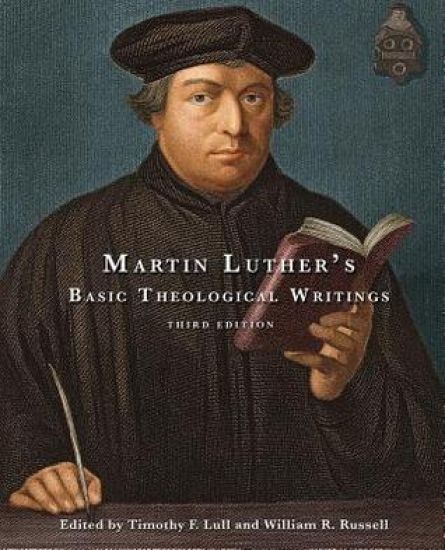
Martin Luther's Basic Theological Writings

Martin Luther's Basic Theological Writings

William R. Russell

Augsburg Fortress
2012
pokkari
The best one-volume reader of Luther's writingsnow revisedMartin Luther's Basic Theological Writings, a single-volume introduction to Luther's most influential, noted, and important writings in the modern translationsincluding excerpts of his sermons and letterspresents Luther the theologian "steeped in the word of God, speaking to the whole church," even as it takes the reader straight to Luther the man, to his controversial Reformation insights, to his strongest convictions about God and Scripture and the life of the church, and most importantly to his theologya still-exciting encounter with the meaning of Jesus Christ for each age.The third edition includes revised introductions, updated bibliography, index, and the addition of "A Meditation on Christ's Passion" (1519), "Treatise on the Blessed Sacrament" (1519), "Sermon on the Sacrament of the Body and Blood of ChristAgainst the Fanatics" (1526), "Sermon in Castle Pleissenburg" (1539), and "Consolation to Women Whose Pregnancies Have Not Gone Well" (1542), as well as new translations of "A Practical Way to Pray" (1535) and "On the Freedom of a Christian" (1520).
Martin Luther in His Own Words

Martin Luther in His Own Words

Baker Academic, Div of Baker Publishing Group
2017
nidottu
Though most of the Protestant world can trace its roots back to the Reformation, many people today have only a vague knowledge of Martin Luther's writings. "Didn't he write the Ninety-Five Theses?" Jack Kilcrease and Erwin Lutzer step into this vacuum with a carefully selected collection of Luther's works.Centered around the five solas of the Reformation (sola Scriptura, sola fide, sola gratia, sola Christus, soli Deo gloria), the selections offer readers an accessible primer on works that are foundational to the theology of Protestantism in all its forms. Introductions to each writing include an explanation of the historical context and the theological significance of the piece. Students of the Bible, pastors, teachers, and seminary students will find this collection an enlightening introduction to Luther in his own words and a useful addition to their libraries.
Martin Luther`s Understanding of God`s Two Kingd – A Response to the Challenge of Skepticism

Martin Luther`s Understanding of God`s Two Kingd – A Response to the Challenge of Skepticism

William J. Wright; Richard Muller

Baker Academic, Div of Baker Publishing Group
2010
nidottu
The concept of God's two kingdoms was foundational to Luther and subsequent Lutheran theology. Since the middle of the nineteenth century, that concept has been understood primarily as a political concept. But is a political reading of the two kingdoms a perversion of Luther's teaching?Leading Reformation scholar William Wright contends that those who read Luther politically and see in Luther a compartmentalized approach to Christian life are misreading the Reformer. Wright reassesses the original breadth of Luther's theology of the two kingdoms and the cultural contexts from which it emerged. He argues that Luther's two-kingdom worldview was not a justification for living irresponsibly on planet earth.
Martin Luther and Seven Sacraments

Martin Luther and Seven Sacraments

B Brewer

Baker Academic, Div of Baker Publishing Group
2017
nidottu
This introduction to Martin Luther's sacramental theology addresses a central question in the life of the church and in ecumenical dialogue. Although Luther famously reduced the sacraments from seven to two (baptism and the Lord's Supper), he didn't completely dismiss the others. Instead, he positively recast them as practices in the church. This book explores the medieval church's understanding of the seven sacraments and the Protestant rationale for keeping or eliminating each sacrament. It also explores implications for contemporary theology and worship, helping Protestants imagine ways of reclaiming lost benefits of the seven sacraments.
Martin Luther`s Theology of Beauty – A Reappraisal

Martin Luther`s Theology of Beauty – A Reappraisal

Mark C. Mattes

Baker Academic, Div of Baker Publishing Group
2017
sidottu
Many contemporary theologians seek to retrieve the concept of beauty as a way for people to encounter God. This groundbreaking book argues that while Martin Luther's view of beauty has often been ignored or underappreciated, it has much to contribute to that quest. Mark Mattes, one of today's leading Lutheran theologians, analyzes Luther's theological aesthetics and discusses its implications for music, art, and the contemplative life. Mattes shows that for Luther, the cross is the lens through which the beauty of God is refracted into the world.
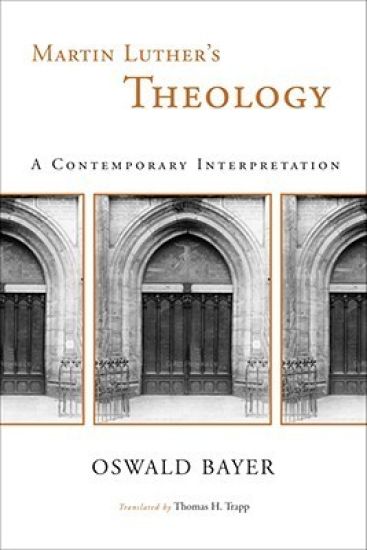
Martin Luther's Theology

Martin Luther's Theology

Oswald Bayer

William B Eerdmans Publishing Co
2008
nidottu
Forty years of in-depth research on Martin Luther's theology has left Oswald Bayer uniquely qualified to present this comprehensive study. He does so with clarity and care, simply enough for nontheologians to access. This remarkable book offers the basics of Luther's understanding of theology, discussing his response to the philosophy of science tradition, the formula by which he studied theology, and the basic philosophy that informed him. Bayer then takes Luther's stance on Christian dogmatics and ethics and applies it to our own theological understanding in the modern age. With such a complete Lutheran dogmatic concept -- the first of its kind offered -- the stunning inner consistency of Luther's theology and its ease of application to contemporary studies become unmistakably clear. Martin Luther's Theology is a valuable tool for students and teachers of theology and for those looking for a guide into the mind and heart of Luther -- a theologian for today.