
Kirjahaku
Etsi kirjoja tekijän nimen, kirjan nimen tai ISBN:n perusteella.
1000 tulosta hakusanalla Matthew Leverich
Matthew 1-2 and the Virginal Conception examines early Palestinian and Hellenistic Jewish accounts of the birth of Israel's first redeemer, Moses. The author shows how these accounts provide the background of Mary's "virginal conception" of Jesus, Israel's final redeemer, in Matthew 1-2.

Saints are real-life heroes and heroines of faith who inspire us by their virtues to become more like Christ. In this series of beautifully illustrated early reader books, real stories of saints come to life and connect with today's children, ages 4 to 9. Matthew was a tax collector. In Jesus' day, Jewish tax collectors worked for the Romans and were often disliked for being unfair. One day, Jesus asked Matthew to follow his way. Matthew invited Jesus into his home and became an apostle, which meant leaving behind his old way of life. After Jesus ascended into heaven, Matthew spread the Good News and wrote one of the gospels. He is the patron (September 21) of tax collectors, bankers, and accountants.

Matthew Henry's Concise Commentary on the Whole Bible
Matthew Henry
Thomas Nelson Publishers
2003
sidottu
Read the best of Matthew Henry's classic commentary on the Bible in one convenient book. Henry's profound spiritual insights have touched lives for over 300 years. Indexed maps and charts make this a book any pastor, student, Bible teacher, or devotional reader will treasure!
A visit to an art museum inspires a young mouse to become a painter
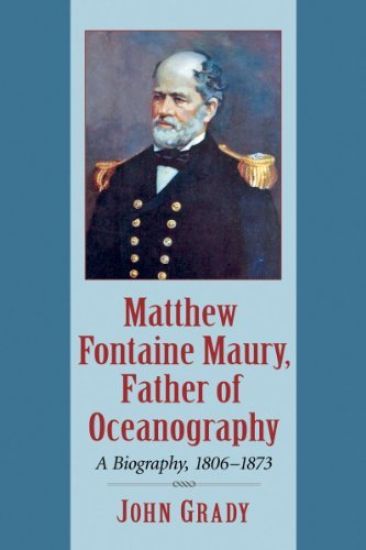
In becoming "a useful man" on the maritime stage, Matthew Fontaine Maury focused on the ills of a clique-ridden Navy, charted sea lanes and bested Great Britain's admiralty in securing the fastest, safest routes to India and Australia. He helped bind the Old and New worlds with the laying of the transatlantic cable, forcefully advocated Southern rights in a troubled union, and preached Manifest Destiny from the Arctic to Cape Horn. And he revolutionized warfare in perfecting electronically detonated mines.Maury's eagerness to go to the public on the questions of the day riled powerful men in business and politics, and the U.S., Confederate and Royal navies. He more than once ran afoul of Jefferson Davis and Stephen R. Mallory, secretary of the Confederate States Navy. But through the political, social and scientific struggles of his time, Maury had his share of powerful allies, like President John Tyler.

This work uses literary (narrative) criticism to explore the world of the evangelist Matthew. The focus is on the plot of the gospel story, with discussions of the storylines, Jesus' speeches and journey, the disciples' experiences, and the contemporary community. The book is a completely revised and enlarged version of the first edition. Two chapters have been added: one discussing the speeches of Jesus and one tracing the storline of the religious leaders. Also, chapter 5 on Jesus' use of "the Son of man" has been substantially rewritten to explain more fully and more clearly the meaning and function of this self-designation. Throughout the book, new topics and insights have been added and developed, and the citations and bibliography have been updated.
The birth narrative, the baptism and temptation of Jesus, the beginnings of his Galilean ministry, and the Sermon on the Mount are all brilliantly illumined by Ulrich Luz's expert textual and historical-critical analysis and theological commentary. Luz brings special attention to the subsequent history of Christian appropriation of Matthew in homiletical and artistic interpretation, and addresses the terrible legacy of Christian anti-Judaism. This volume completes Luz's three-volume commentary on the Gospel of Matthew in the Hermeneia series. A translation of the earlier German edition of Matthew 1-7 appeared in Fortress Press's Continental Commentary series. The text has been thoroughly revised and updated.
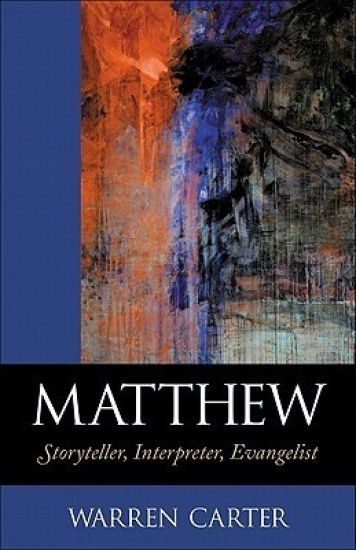
Matthew – Storyteller, Interpreter, Evangelist
Warren Carter
Baker Academic, Div of Baker Publishing Group
2004
nidottu
For ten years, the well-received first edition of this introduction offered readers a way to look at scriptural texts that combines historical, narrative, and contemporary interests. Carter explores Matthew by approaching it from the perspective of the "authorial audience"--by identifying with and reading along with the audience imagined by the author. Now an updated second edition is available as part of a series focusing on each of the gospel writers as storyteller, interpreter, and evangelist.This edition preserves the essential identity of the original material, while adding new insights from Carter's more recent readings of Matthew's gospel in relation to the Roman Imperial world.Four of the seventeen chapters have been significantly revised, and most have had minor changes. There are also new endnotes directing readers to Carter's more recent published work on Matthew. Scholars and pastors will use the full bibliography and appendix on redaction and narrative approaches, while lay readers will appreciate the clear and straightforward text.
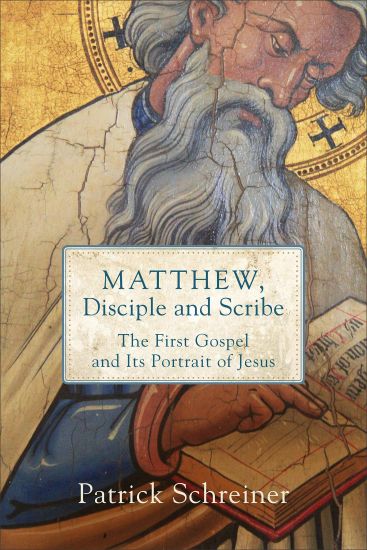
Matthew, Disciple and Scribe
Patrick Schreiner
Baker Academic, Div of Baker Publishing Group
2019
nidottu
This fresh look at the Gospel of Matthew highlights the unique contribution Matthew's rich and multilayered portrait of Jesus makes to understanding the connection between the Old and New Testaments. Patrick Schreiner argues that Matthew obeyed the Great Commission by acting as scribe to his teacher Jesus in order to share Jesus's life and work with the world, thereby making disciples of future generations. The First Gospel presents Jesus's life as the fulfillment of the Old Testament story of Israel and shows how Jesus brings new life in the New Testament.
An insightful commentary on the Gospel of Matthew that focuses on historical context and reception history Building on decades of focused work on the first Gospel, Warren Carter brings the fruit of that research to bear in a tour de force of historical insight and methodological rigor. Within this remarkable two-volume commentary, Carter situates the Gospel of Matthew within the context of Jewish traditions and negotiations of Roman imperialism after the destruction of Jerusalem in 70 CE. He positions the Gospel as illuminating how a community of Jesus-followers constantly navigates Roman power. He pays particular attention to Jesus's strategies for dealing with Roman rule, showing how Jesus alternately replicates it, accommodates it, resists it, and develops a way of life committed to the empire of God. In addition to examining the Gospel of Matthew in its historical and social context, Carter shines new light on instances of the book's reception, illustrating how scholars have interpreted it from the era of the early church up to the present. This fascinating commentary is an essential and distinctive resource for New Testament scholars and students of theology.
Matthew Arnold the Ethnologist, originally published in 1951, makes the original argument that the renowned English critic Matthew Arnold contributed to the climate of “racialism” current during his lifetime. Frederic E. Faverty shows that in his essays on national character, Arnold used anthropological concepts of race and language, albeit inconsistently. Faverty’s critique of Arnold draws particular attention to the lack of a specifically cultural (rather than racial) analysis of the type pioneered by his contemporary Edward Burnett Tylor.
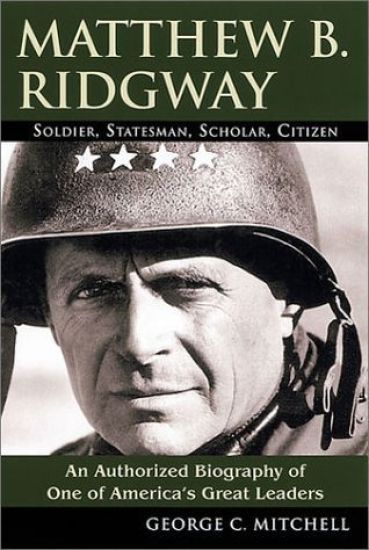
Although Matthew B. Ridgway's life is almost entirely overlooked today, he was a highly significant figure in twentieth-century United States political and military history. He commanded the 82nd Airborne Division in the invasion in Europe in World War II, succeeded MacArthur in Korea, was the U.S. delegate to the United Nations and served as Supreme Commander of the Far East and Supreme Commander in Europe - the only general to hold both supreme commands. He was counsellor to four presidents. He helped found a university research centre on national security, and was a powerful influence in national political-military affairs for 40 years. Using Ridgway's personal papers, George Mitchell offers a unique and compelling view of this American hero. The author is in the unique position of knowing many of the places, events and people involved extremely well; he brings to Ridgway's life an understanding of the times and events that few could match and his global understanding is second to none.
Matthew Arnold and the Betrayal of Language
David G. Riede
University of Virginia Press
1987
sidottu
Matthew Arnold was one of the nineteenth century's greatest spokesmen for the saving power of culture, especially of poetry, to substitute for a vanishing religion. Yet he was persistently troubled throughout his career by the difficulty of finding adequate authority in language. Matthew Arnold and the Betrayal of Language explores Arnold's attempts to find an authoritative language, and argues that his occasional claims for such a language reveal more uneasiness than confidence in the value of ""letters."" It examines Arnold's poetry within this context and demonstrates that his various experiments - to speak in oracular voice, to use classic forms, to achieve a grand style - and their failures, reflect the inevitable difficulties facing any poet in an age of intellectual and cultural upheaval. Riede argues that Arnold's determined efforts to write with authority, combined with his deep-seated suspicion of his medium, result in an exciting if often agonized tension in his poetic language - a language that strains against its inevitable but generally unacknowledged limitations.
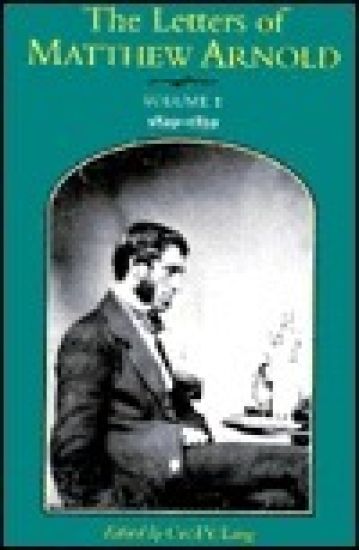
The Letters of Matthew Arnold v. 1; 1829-59
Matthew Arnold
University of Virginia Press
1996
sidottu
The publication of all the known letters of Matthew Arnold (1822-1888), when complete in seven volumes, will present close to 4000 letters, nearly five times the number in G.W.E. Russell's two-volume compilation of 1895, many of which appear in their entirety here for the first time. Renowned as a poet and critic, Arnold will be celebrated now as a letter writer. In his introduction, Cecil Y. Lang writes that the letters ""may well be the finest portrait of an age and of a person, representing the main movements of mind and of events of nearly half a century and at the same time revealing the intimate life of the participant-observer, in any collection of letters in the 19th century, possibly in existence"". Volume 1 begins in 1829 with an account of the Arnold children by their father, the notable headmaster of Rugby School, and closes in 1859, when already a poet and literary critic, Matthew Arnold returned to England after several months on a government educational commission in Europe to find himsef acquiring a European reputation. The letters show him as a child; a schoolboy at Winchester and Rugby; a foppish Oxonian; a worldly young main in a perfect, undemanding job; then as a new husband in an imperfect, too-demanding job; Professor of Poetry at Oxford; and finally as an emergent European critic. The letters, with a consecutiveness rare in such editions, contain a great deal of new information about Arnold and his family, both personal (somtimes intimate) and professional. Two new diaries are included, a long, boyish travelogue-letter and a mature essay-letter on architecture, never before recognized as Arnold's, as well as a handful of letters written to Arnold. Matthew Arnold wrote with wit, humour and warmth of his poetry, his work, his travels throughout Europe and America, and his large and loving family. But most of all, what comes across in these letters, writes Lang, is that ""Arnold loved to live - the world within and the world without chiming togther...And he learned to live with a boring, demanding, underpaid, unrewarding occupation largely because - questing intellectual, husband and father, school inspector, clubbable man-about-town and cosmopolite-about-Europe and America, fisherman, skater, voracious reader - he learned to live"".

The Letters of Matthew Arnold v. 2; 1860-65
Matthew Arnold
University of Virginia Press
1997
sidottu
Volume 2 of this six volume set covers the years 1860-65, when Arnold emerged as a critic and went on to consolidate his reputation. His letters record his impressions of Europe on an official school study, with observations of nature within and nature without.