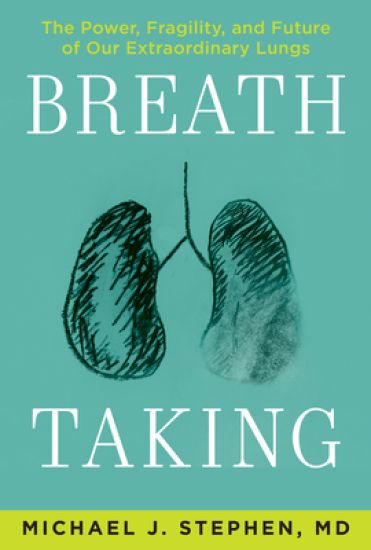
From an expert in pulmonary medicine, the story of our extraordinary lungs, the organ that both explains our origins and holds the keys to our future as a speciesWe take an average of 7.5 million breaths a year and some 600 million in our lifetime, and what goes on in our body each time oxygen is taken in and carbon dioxide expelled is nothing short of miraculous. "Our lungs are the lynchpin between our bodies and the outside world," writes Dr. Michael Stephen. And yet, we take our lungs for granted until we're incapacitated and suddenly confronted with their vital importance.In Breath Taking, pulmonologist Michael Stephen takes us on a journey to shed original and much-needed light on our neglected and extraordinary lungs, at a most critical societal moment. He relates the history of oxygen on Earth and the evolutionary origins of breathing, and explores the healing power of breath and its spiritual potential. He explains in lay terms the links our lungs have with our immune system and with society at large. And he offers illuminating chronicles of pulmonary research and discovery--from Galen in the ancient world to pioneers of lung transplant--and poignant human stories of resilience and recovery--from the frantic attempts to engage his own son's lungs at birth to patients he treats for cystic fibrosis today.Despite great advances in science, our lungs are ever more threatened. Asthma is more prevalent than ever; rising stress levels make our lungs vulnerable to disease; and COVID-19 has revealed that vulnerability in historic ways. In this time, Breath Taking offers inspiration and hope to millions whose lungs are affected and vital perspective to us all.
From an expert in pulmonary medicine, the story of our extraordinary lungs, the organ that both explains our origins and holds the keys to our future as a speciesWe take an average of 7.5 million breaths a year and some 600 million in our lifetime, and what goes on in our body each time oxygen is taken in and carbon dioxide expelled is nothing short of miraculous. "Our lungs are the lynchpin between our bodies and the outside world," writes Dr. Michael Stephen. And yet, we take our lungs for granted until we're incapacitated and suddenly confronted with their vital importance.In Breath Taking, pulmonologist Michael Stephen takes us on a journey to shed original and much-needed light on our neglected and extraordinary lungs, at a most critical societal moment. He relates the history of oxygen on Earth and the evolutionary origins of breathing, and explores the healing power of breath and its spiritual potential. He explains in lay terms the links our lungs have with our immune system and with society at large. And he offers illuminating chronicles of pulmonary research and discovery--from Galen in the ancient world to pioneers of lung transplant--and poignant human stories of resilience and recovery--from the frantic attempts to engage his own son's lungs at birth to patients he treats for cystic fibrosis today.Despite great advances in science, our lungs are ever more threatened. Asthma is more prevalent than ever; rising stress levels make our lungs vulnerable to disease; and COVID-19 has revealed that vulnerability in historic ways. In this time, Breath Taking offers inspiration and hope to millions whose lungs are affected and vital perspective to us all.
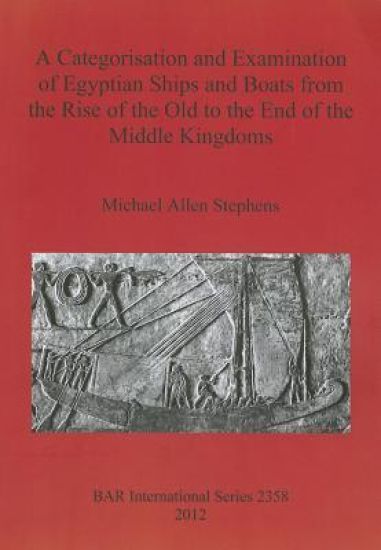
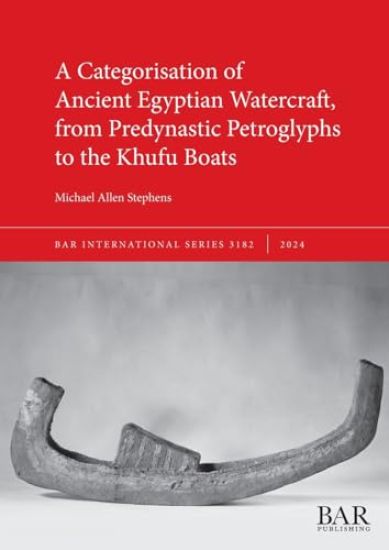
This fresh categorisation and examination grew from the author's innate curiosity about the shapes and forms of the ships and boats of the Ancient World and particularly of the Ancient Egyptians. Many years sailing and the book by Nancy Jenkins, "The Boat beneath the Pyramid" which considered the vessel buried alongside the Great Pyramid of Giza sparked this curiosity, and from this start point, the focus of the research moved to the catalogue of model vessels in the Cairo Museum collection, published by Reisner, and the surviving hulls from Dahshur. These sources were augmented and supported by the work by Boreux. Finds such as the timbers from Lisht added valuable information. An interest in the greater variety of vessels to be known from the Old and Middle Kingdoms concentrated the researcher's attention upon the craft of these periods. Three fragmentary examples of hull forms, supposedly not known until the Old Kingdom, have been included, as the categorization system proposed in this research attempts to push back the previously accepted dates of some Egyptian hull shapes.
We-Topia is the true and shocking story of how ego conquered the world. From happier, healthier, and more spiritually evolved nomadic ancestors to a selfish globalized world that exploits, divides, and petrifies today, We-Topia explores how a powerless society has always been part of the plan. And it’s worked. Across the millennia, society gradually devalued human consciousness while social systems such as slavery, money, and religion turned people into resources. Now, like a James Bond villain, this purposeful manipulation mesmerizes us to be consumers and tells us that higher spiritual evolution is a delusion. How did this happen? How do we change? What is life’s purpose and meaning? We-Topia answers these questions with some good news - there’s a way out of this mess and there always has been. As our ancestors knew, liberty from ego is possible when society values real human needs, and We-Topia provides the concepts for you to begin. It is a spiritual odyssey from me to we - the ultimate inside-out rebellion against 13,000 years of conditioning.
Listen to what some of Americas opinion-shapers are saying about The Book thats Sweeping America! "This book will stand the business world on its head." Christopher Buckley author of Wry Martinis "Ill risk twenty dollars that he can outjump any frog in Calaveras county." Mark Twain "Thomas hits the nail on the headwith a scud missile. CEOs everywhere will be underlining entire chapters with magic marker." John Rothchild columnist, Fortune magazine "This book is short and so full of visuals that it seems less obvious than it actually is." Raymond Wilson Proprietor, Wilsons Fish Market, Inc. "Consciously or unconsciously, every one of us does render some service or other." Mahatma Gandhi
For America's native peoples, Fabian writes, the sky is a daily - and nightly - influence on their society and culture. In a comprehensive study of a lowland South American people's astronomy, he explains how the Bororo Indians of Brazil integrate the social, natural and cosmic dimensions of time and space into their environment. Fabian introduces the Bororo by recounting a newly collected version of their birdnester myth that alludes to the spatial dimensions that govern Bororo village organization. Time is mapped onto the circular village structure, astronomical observations plot the nature and location of daily activities, and the perimeter of the settlement is synchronized with circadian and seasonal cycles. The village itself acts as a retrieval and classification system that functions much as lists or tables would in a literate society. By using extensive cross-cultural materials and a holistic approach that emphasizes relationships rather than objects, Fabian lets the Bororo speak for themselves. His interpretive work combines myth and folklore with personal interviews, archival research, and discussion of his own participation in ceremonies and secular activities during the ten-month period he and his wife lived among the Bororo. Of interest to anthropologists, folklorists, ethnoastronomers, and students of religion, ""Space-time of the Bororo of Brazil"" shows that the Bororo animate a complex, rational system, a realization, Fabian writes, ""that must both broaden and deepen our understanding, appreciation and respect for all native societies"".
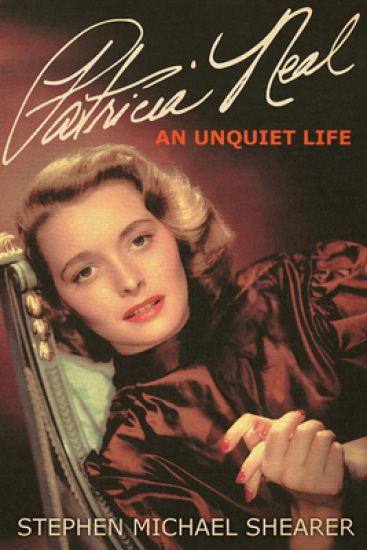
The internationally acclaimed actress Patricia Neal has been a star on stage, film, and television for nearly sixty years. On Broadway she appeared in such lauded productions as Lillian Hellman's Another Part of the Forest, for which she won the very first Tony Award, and The Miracle Worker. In Hollywood she starred opposite the likes of Ronald Reagan, Gary Cooper, John Wayne, Paul Newman, Fred Astaire, and Tyrone Power in some thirty films. Neal anchored such classic pictures as The Day the Earth Stood Still, A Face in the Crowd, and Breakfast at Tiffany's, but she is perhaps best known for her portrayal of Alma Brown in Hud, which earned her the Academy Award for Best Actress in 1963. But there has been much, much more to Neal's life. She was born Patsy Louise Neal on January 20, 1926, in Packard, Kentucky, though she spent most of her childhood in Knoxville, Tennessee. Neal quickly gained attention for her acting abilities in high school, community, and college performances. Her early stage successes were overshadowed by the unexpected death of her father in 1944. Soon after she left New York for Hollywood in 1947, Neal became romantically involved with Gary Cooper, her married co-star in The Fountainhead, an attachment which brought them both a great deal of notoriety in the press and a great deal of heartache in their personal lives. In 1953, Neal married famed children's author Roald Dahl, a match that would bring her five children and thirty years of dramatic ups and downs. In 1961, their son, Theo, was seriously injured in an automobile accident and required multiple neurosurgeries and years of rehabilitation; the following year their daughter, Olivia, died of measles. At the pinnacle of her screen career, Patricia Neal suffered a series of strokes which left her in a coma for twenty-one days. Variety even ran a headline erroneously stating that she had died. At the time, Neal was pregnant with her and Dahl's fifth child, Lucy, who was born healthy a few months later. After a difficult recovery, Neal returned to film acting, earning a second Academy Award nomination for The Subject Was Roses. She appeared in a number of television movie roles in the 1970s and 1980s and won a Golden Globe for Best Actress in a Dramatic TV Movie in 1971 for her role in The Homecoming.Patricia Neal: An Unquiet Life is the first critical biography detailing the actress's impressive film career and remarkable personal life. Author Stephen Michael Shearer has conducted numerous interviews with Neal, her professional colleagues, and her intimate friends and was given access to the actress's personal papers. The result is an honest and comprehensive portrait of an accomplished woman who has lived her life with determination and bravado.
A heartwarming story of a three-legged dog who follows his nose all over the city, out to the country, and into the arms of a new friend. One, two, three...One, two, three...Every day was a skipAnd a hop For Three. As a three-legged dog on his own in the big city, Three does pretty well for himself. His waggly tail keeps him fed, and he meets so many different legged creatures along the way. He's happy just the way he is, but sometimes he wonders what it'd be like to have a real home. That all changes when he wanders into the country and meets a quirky young girl and her welcoming family.