

Kirjahaku
Etsi kirjoja tekijän nimen, kirjan nimen tai ISBN:n perusteella.
264 tulosta hakusanalla Mitsu Emig

Competition Policy in Global Trading System
Clifford Jones; Mitsuo Matsushita
Kluwer Law International
2002
sidottu
While the global trade regime has made significant strides in eliminating tariffs and other barriers to free trade, it has yet to develop a consistent and enforceable antitrust and competition policy that combats monopolies, cartels, and other private arrangements that continue to hamper equitable access to the world's goods and services. This book takes a step toward achieving this goal. Based on a conference of national authorities and leading scholars in antitrust and competition law and policy, the text presents 20 essays which together provide an in-depth assessment of achievements and impasses, as well as a variety of possible ways forward.

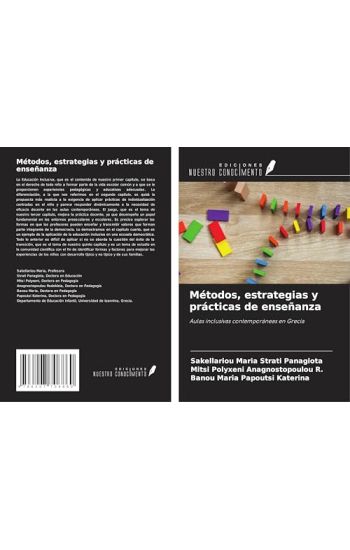
Métodos, estrategias y prácticas de enseñanza
Sakellariou Maria Strati Panagiota; Mitsi Polyxeni Anagnostopoulou R.; Banou Maria Papoutsi Katerina
Ediciones Nuestro Conocimiento
2024
nidottu

An Adopted Husband
Shimei Futabatei; Buhachiro Mitsui; Gregg M Sinclair
Tradd Street Press
2026
sidottu

An Adopted Husband
Shimei Futabatei; Buhachiro Mitsui; Gregg M Sinclair
Tradd Street Press
2026
pokkari
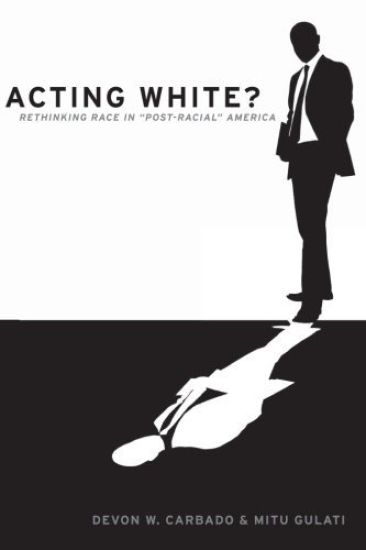
What does it mean to "act black" or "act white"? Is race merely a matter of phenotype, or does it come from the inflection of a person's speech, the clothes in her closet, how she chooses to spend her time and with whom she chooses to spend it? What does it mean to be "really" black, and who gets to make that judgment? In Acting White?, leading scholars of race and the law Devon Carbado and Mitu Gulati argue that, in spite of decades of racial progress and the pervasiveness of multicultural rhetoric, racial judgments are often based not just on skin color, but on how a person conforms to behavior stereotypically associated with a certain race. Specifically, racial minorities are judged on how they "perform" their race. This performance pervades every aspect of their daily life, whether it's the clothes they wear, the way they style their hair, the institutions with which they affiliate, their racial politics, the people they befriend, date or marry, where they live, how they speak, and their outward mannerisms and demeanor. Employing these cues, decision-makers decide not simply whether a person is black but the degree to which she or he is so. Relying on numerous examples from the workplace, higher education, and police interactions, the authors demonstrate that, for African Americans, the costs of "acting black" are high, and so are the pressures to "act white." But, as the authors point out, "acting white" has costs as well. Provocative yet never doctrinaire, Acting White? will boldly challenge your assumptions and make you think about racial prejudice from a fresh vantage point.
In Acting White, Devon Carbado and Mitu Gulati argue that racial judgments are often based not just on skin color, but on how a person conforms to behavior stereotypically associated with a certain race. Specifically, people judge racial minorities on how they "perform" their race. That includes the clothes they wear, how they style their hair, the institutions with which they affiliate, their racial politics, the people they befriend, date or marry, where they live, how they speak, and their outward mannerisms and demeanor. Employing these cues, decision-makers decide not simply whether a person is black but the degree to which she or he is so. Relying on numerous examples from the workplace, higher education, and police interactions, the authors demonstrate that, for African Americans, the costs of "acting black" are high. This creates pressures for blacks to "act white." But, as the authors point out, "acting white" has costs as well. Written in an easy style that is non-doctrinaire and provocative, the book makes complex concepts both accessible and interesting. Whether you agree and disagree with Acting White, the book will challenge your assumptions and make you think about racial prejudice from a fresh vantage point.
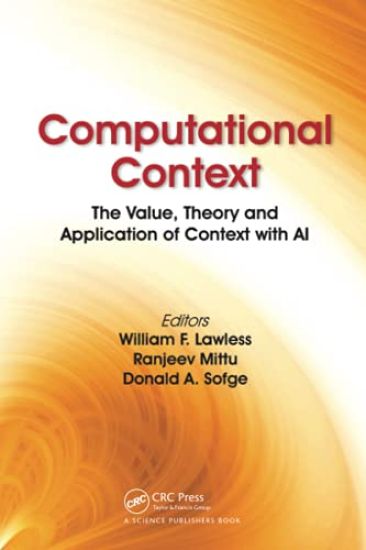
This volume addresses context from three comprehensive perspectives: first, its importance, the issues surrounding context, and its value in the laboratory and the field; second, the theory guiding the AI used to model its context; and third, its applications in the field (e.g., decision-making). This breadth poses a challenge. The book analyzes how the environment (context) influences human perception, cognition and action. While current books approach context narrowly, the major contribution of this book is to provide an in-depth review over a broad range of topics for a computational context no matter its breadth. The volume outlines numerous strategies and techniques from world-class scientists who have adapted their research to solve different problems with AI, in difficult environments and complex domains to address the many computational challenges posed by context.Context can be clear, uncertain or an illusion. Clear contexts: A father praising his child; a trip to the post office to buy stamps; a policewoman asking for identification. Uncertain contexts: A sneak attack; a surprise witness in a courtroom; a shout of "Fire! Fire!" Contexts as illusion: Humans fall prey to illusions that machines do not (Adelson’s checkerboard illusion versus a photometer). Determining context is not easy when disagreement exists, interpretations vary, or uncertainty reigns. Physicists like Einstein (relativity), Bekenstein (holographs) and Rovelli (universe) have written that reality is not what we commonly believe. Even outside of awareness, individuals act differently whether alone or in teams.Can computational context with AI adapt to clear and uncertain contexts, to change over time, and to individuals, machines or robots as well as to teams? If a program automatically "knows" the context that improves performance or decisions, does it matter whether context is clear, uncertain or illusory? Written and edited by world class leaders from across the field of autonomous systems research, this volume carefully considers the computational systems being constructed to determine context for individual agents or teams, the challenges they face, and the advances they expect for the science of context.
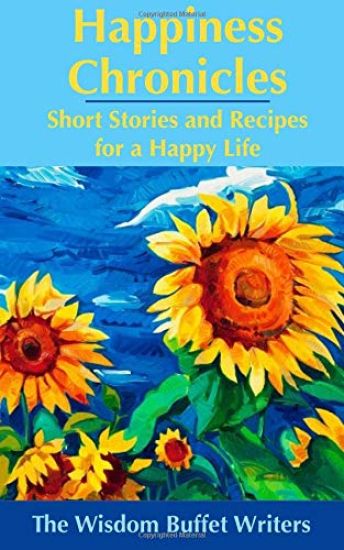
Happiness Chronicles: Short Stories and Recipes for a Happy Life
Mary Jane Kasliner; Belinda Mendoza; Janet Mitsue Brown
MIA Staysko
2014
nidottu
I was reading this book, The Master Key System by Charles F. Haanel, a turn-of-the-century 'New Thought' writer. What's now a complete book, in 1916, it was broken up into twenty-four subsets or periodicals. It has action steps at the end of each subset to unlock the law of attraction and change your life forever. Approximately two years after reading a passage from Frederick Elias Andrews in The Master Key System, I sought seven like-minded writing partners interested in exploring these ideas of guiding principles to becoming happy in their own lives. Together, we are writing eight books about our collective wisdom on the affirmations; "I am whole, perfect, strong, powerful, loving, harmonious, happy, and healthy." We call ourselves The Wisdom Buffet Writers. Welcome to our first book: Happiness Chronicles - Short Stories and Recipes for a Happy Life. Customer Reviews: Catherine says: - 5 Stars. I particularly appreciated the chapter by Katherine Graham, a wife, mother, and business owner, about how to be a happy woman in modern society. Her advice is, *Let go of expecting yourself or your life to be perfect. *Gain perspective by not taking things personally. *Set boundaries with your time and energy by learning to say no to excessive demands to trust the unfoldment of your life. Ruth says: - 5 Stars What a great book that helps us find what we all want anyway I love that each chapter is written by someone with a different perspective so that depending on my mood, I can dip in and pull up something to carry around in my mind for the day. A great book for morning meditation, evening relaxation, or when I'm holding an interminable hold on the phone. The little aphorisms are wonderful. "Be yourself, everyone else is taken." from Oscar Wilde. The chapter that spoke volumes to me was Angi Ma Wong's Secrets to Happiness. She advises readers to make a list of the things that make them happy and do at least one, every day. Such simple advice, and how astonished I am that I don't do that Belinda Mendoza's chapter on pets and the happiness they create is very insightful, especially since it starts with her talking about the loss of a beloved pet. We spend all kinds of money and time pursuing happiness, but this is an inexpensive book that will provide more happiness than all the other diversions of a lifetime. Frankie says: - 5 Stars Excellent inspirational read...you will not be disappointed I'll return to this book several times this year (and for years to come) to draw on its happiness energy "M" says: - 5 Stars This is a great book to read in small pieces. The table of contents is perfect as I can choose a chapter based on how I feel that day. Mary Jane's chapter on recipes to experience a happy life is fun and impactful. I'm looking forward to their next seven books.
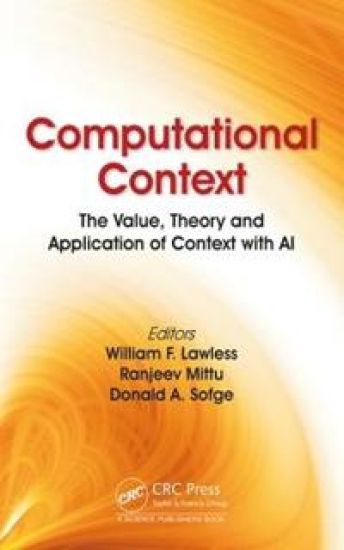
This volume addresses context from three comprehensive perspectives: first, its importance, the issues surrounding context, and its value in the laboratory and the field; second, the theory guiding the AI used to model its context; and third, its applications in the field (e.g., decision-making). This breadth poses a challenge. The book analyzes how the environment (context) influences human perception, cognition and action. While current books approach context narrowly, the major contribution of this book is to provide an in-depth review over a broad range of topics for a computational context no matter its breadth. The volume outlines numerous strategies and techniques from world-class scientists who have adapted their research to solve different problems with AI, in difficult environments and complex domains to address the many computational challenges posed by context.Context can be clear, uncertain or an illusion. Clear contexts: A father praising his child; a trip to the post office to buy stamps; a policewoman asking for identification. Uncertain contexts: A sneak attack; a surprise witness in a courtroom; a shout of "Fire! Fire!" Contexts as illusion: Humans fall prey to illusions that machines do not (Adelson’s checkerboard illusion versus a photometer). Determining context is not easy when disagreement exists, interpretations vary, or uncertainty reigns. Physicists like Einstein (relativity), Bekenstein (holographs) and Rovelli (universe) have written that reality is not what we commonly believe. Even outside of awareness, individuals act differently whether alone or in teams.Can computational context with AI adapt to clear and uncertain contexts, to change over time, and to individuals, machines or robots as well as to teams? If a program automatically "knows" the context that improves performance or decisions, does it matter whether context is clear, uncertain or illusory? Written and edited by world class leaders from across the field of autonomous systems research, this volume carefully considers the computational systems being constructed to determine context for individual agents or teams, the challenges they face, and the advances they expect for the science of context.

Cellular Manufacturing Systems
Gürsel A. (EDT) Süer; Mitsuo (EDT) Gen
Nova Science Pub Inc
2017
sidottu

Advanced Laser Diode Reliability
Massimo Vanzi; Laurent Bechou; Mitsuo Fukuda; Giovanna Mura
ISTE Press Ltd - Elsevier Inc
2021
sidottu
Advanced Laser Diode Reliability focuses on causes and effects of degradations of state-of-the-art semiconductor laser diodes. It aims to provide a tool for linking practical measurements to physical diagnostics. To this purpose, it reviews the current technologies, addressing their peculiar details that can promote specific failure mechanisms. Two sections will support this kernel: a) Failure Analysis techniques, procedures and examples; b) Device-oriented laser modelling and parameter extraction.

Griechische Pädagogen über co-inklusive Bildung
Maria Sakellariou; Panagiota Strati; Polyxeni Mitsi
Verlag Unser Wissen
2020
nidottu

Educadores griegos sobre la educación inclusiva
Maria Sakellariou; Panagiota Strati; Polyxeni Mitsi
Ediciones Nuestro Conocimiento
2020
nidottu

Les éducateurs grecs sur l'éducation co-inclusive
Maria Sakellariou; Panagiota Strati; Polyxeni Mitsi
Editions Notre Savoir
2020
nidottu

Educadores gregos na educação co-inclusiva
Maria Sakellariou; Panagiota Strati; Polyxeni Mitsi
Edições Nosso Conhecimento
2020
nidottu

Griekse opvoeders op het gebied van co-inclusief onderwijs
Maria Sakellariou; Panagiota Strati; Polyxeni Mitsi
Uitgeverij Onze Kennis
2020
nidottu

Educatori greci sull'educazione co-inclusiva
Maria Sakellariou; Panagiota Strati; Polyxeni Mitsi
Edizioni Sapienza
2020
nidottu

Greccy nauczyciele w zakresie edukacji integracyjnej
Maria Sakellariou; Panagiota Strati; Polyxeni Mitsi
Wydawnictwo Nasza Wiedza
2020
nidottu