Kirjahaku
Etsi kirjoja tekijän nimen, kirjan nimen tai ISBN:n perusteella.
1000 tulosta hakusanalla Moritz Hartmann

Moritz Götze
Sandstein Kommunikation
2024
sidottu

Moritz und der Furz, der fast eine Klasse lahmlegte
BoD - Books on Demand
2026
pokkari

Moritz von Uslar
Edition Text + Kritik
2026
pokkari

Moritz und der Furz, der fast eine Klasse lahmlegte: Eine lustige Geschichte aus dem Klassenzimmer
Abir Ahmad
BoD - Books on Demand
2026
nidottu
Moritz erlebt einen ganz besonderen Schultag: Sein Bauch macht pl tzlich laute und sehr peinliche Ger usche. Was als kleines Missgeschick beginnt, sorgt schnell f r viel Gel chter im Klassenzimmer. Eine humorvolle Kinderbuchgeschichte ber Freundschaft, Mut und dar ber, dass man auch ber sich selbst lachen darf.

Moritz College of Law
OmniScriptum
2026
nidottu

Moritz Moszkowski
VDM Publishing House
2010
nidottu
Observera att förlaget som ger ut denna produkt baserar innehållet i sina produkter på fria källor som Wikipedia. Boken är med stor sannolikhet endast ett utdrag ur dessa informationskällor, alltså inte en vanlig bok i den bemärkelsen.

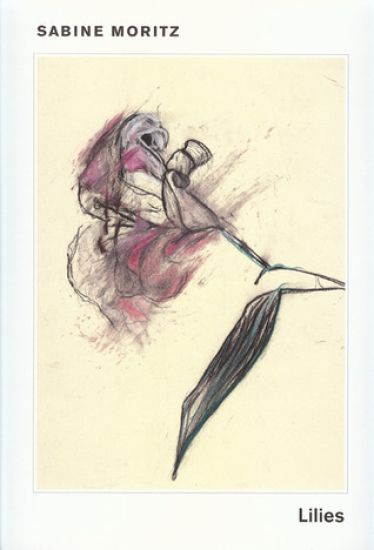
Following her 2010 publication dedicated to roses, Cologne-based artist Sabine Moritz here turns her attention to lilies, which she first began depicting in the mid 1990s. Working on paper to produce fifty-nine charcoal, pastel and oil pastel drawings, similiarly she often approaches works as studies or exercises in observation and representation. During the development of this publication, which was originally conceived as a collection of Moritz s drawings of lilies, the artist had the idea to introduce another ongoing body of work drawings of objects alongside the lilies. These objects are primarily statues, statuettes and figurines hand-made works of art from different periods in history, such as a classical torso, an African figurine, and a Buddhist head. Moritz s drawings of objects reflect a range of ideas and registers, moods and sentiments. Including the objects alongside the lilies opens up questions of time, life, death, belief, truth, human psychology and the very process o



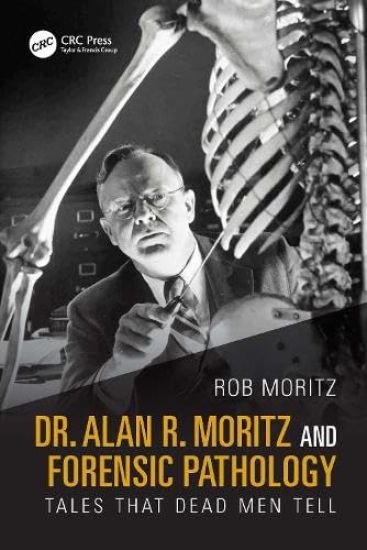
Forensic science has become a mainstay of popular culture on television, in movies, books, and podcasts. Dr. Alan R. Moritz (1899-1986) was a highly influential figure in the development of the field of forensic science as we know it today.Dr. Alan R. Moritz and Forensic Pathology: Tales that Dead Men Tell, written by Dr. Moritz’s journalist grandson Rob Moritz, recounts his life and career from personal papers and correspondence, interviews, newspaper accounts and other sources, including archived materials from Harvard Medical School, the Rockefeller Foundation, Case Western Reserve University and the University Hospitals of Cleveland. Chapters chronicle more than a half-century of ground-breaking research and high-profile investigations, including some of the 20th century’s most infamous cases. This includes the assassination of President John F. Kennedy, the Sam Shepherd case, the Cocoanut Grove nightclub fire, the Attica prison riots and the Texas Tower sniper, as well as his contributions to the well-known Nutshell Studies of Unexplained Death. Dr. Moritz, the inspiration for the first on-screen forensic scientist, is credited with being one of the most prominent pioneers of the last century, helping to move forensic medicine from the political jurisdiction of untrained local coroners to a respected scientific discipline that fascinates the public.The book also details Dr. Moritz’s travels, during which he experienced some of society’s darkest chapters. This includes an infamous lynching during the “Red Summer” of 1919, the rise of Nazi Germany and the degradation of apartheid in South Africa, all of which influenced and shaped his worldview. Highlights of Dr. Moritz’s work, recounted in detail, include career stops at Case Western Reserve University in Cleveland and Harvard Medical School in Boston. Coverage details his most salient and well-known research—as well as insightful anecdotes and stories that demonstrate Dr. Moritz’s character and the development and evolution of his scientific views over the years.This book:Profiles the life of a well-known and impactful figure in the advancement of forensic pathology’s public perception and practices in the United States.Provides background on Dr. Moritz’s seminal work, the article Classical Mistakes in Forensic Pathology Is of interest to medical practitioners, history of science buffs, and forensic practitioners interested in the early history and development of forensic pathology as a disciplineDr. Alan R. Moritz and Forensic Pathology fills in a missing chapter on the life, research, and lasting legacy of Dr. Moritz, providing insight into the development of modern forensic pathology practice by examining the momentous contributions and character of one of its true pioneers.
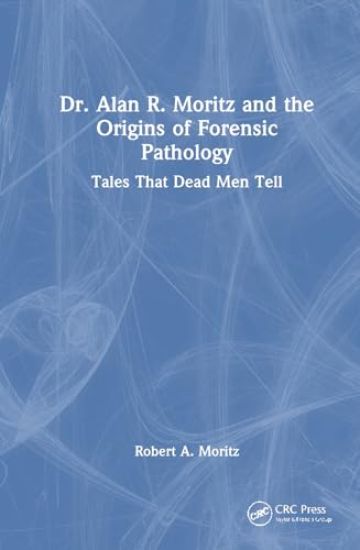
Forensic science has become a mainstay of popular culture on television, in movies, books, and podcasts. Dr. Alan R. Moritz (1899-1986) was a highly influential figure in the development of the field of forensic science as we know it today.Dr. Alan R. Moritz and Forensic Pathology: Tales that Dead Men Tell, written by Dr. Moritz’s journalist grandson Rob Moritz, recounts his life and career from personal papers and correspondence, interviews, newspaper accounts and other sources, including archived materials from Harvard Medical School, the Rockefeller Foundation, Case Western Reserve University and the University Hospitals of Cleveland. Chapters chronicle more than a half-century of ground-breaking research and high-profile investigations, including some of the 20th century’s most infamous cases. This includes the assassination of President John F. Kennedy, the Sam Shepherd case, the Cocoanut Grove nightclub fire, the Attica prison riots and the Texas Tower sniper, as well as his contributions to the well-known Nutshell Studies of Unexplained Death. Dr. Moritz, the inspiration for the first on-screen forensic scientist, is credited with being one of the most prominent pioneers of the last century, helping to move forensic medicine from the political jurisdiction of untrained local coroners to a respected scientific discipline that fascinates the public.The book also details Dr. Moritz’s travels, during which he experienced some of society’s darkest chapters. This includes an infamous lynching during the “Red Summer” of 1919, the rise of Nazi Germany and the degradation of apartheid in South Africa, all of which influenced and shaped his worldview. Highlights of Dr. Moritz’s work, recounted in detail, include career stops at Case Western Reserve University in Cleveland and Harvard Medical School in Boston. Coverage details his most salient and well-known research—as well as insightful anecdotes and stories that demonstrate Dr. Moritz’s character and the development and evolution of his scientific views over the years.This book:Profiles the life of a well-known and impactful figure in the advancement of forensic pathology’s public perception and practices in the United States.Provides background on Dr. Moritz’s seminal work, the article Classical Mistakes in Forensic Pathology Is of interest to medical practitioners, history of science buffs, and forensic practitioners interested in the early history and development of forensic pathology as a disciplineDr. Alan R. Moritz and Forensic Pathology fills in a missing chapter on the life, research, and lasting legacy of Dr. Moritz, providing insight into the development of modern forensic pathology practice by examining the momentous contributions and character of one of its true pioneers.



Ernst Moritz Arndt
KESSINGER PUBLISHING, LLC
2010
nidottu