L'Afrique centrale conna t une r volution strat gique silencieuse. Derri re les conflits arm s classiques mergent de nouvelles formes de guerre cyberattaques, d sinformation massive, mercenariat num rique et manipulation des r seaux sociaux. De la RDC au Sahel, des acteurs tels que le M23, le groupe Wagner ou Boko Haram red finissent les quilibres g opolitiques et fragilisent durablement les tats. Face ces menaces hybrides, comment les pays africains peuvent-ils reprendre le contr le de leur souverainet et de leur s curit ? S'appuyant sur des donn es in dites issues du terrain, de la base ACLED et d'entretiens d'experts, Donat-Soft Mukuna Muya propose une doctrine africaine de riposte adaptative. Il esquisse les fondements d'une r silience strat gique endog ne, pens e par et pour l'Afrique. Un ouvrage de r f rence pour comprendre, analyser et anticiper les conflits africains du XXIᵉ si cle.
Creative Analysis of 23+ years of data on 'mind-sets' collected by direct interface with 5,050 individuals comprising Senior Managers, Management Students, and Government Officers. The mind-set percentages of the select sample of 5,050 are presented against those of a larger sample of 13,365 respondents of various other categories.Here is a never-before and likely a never-again kind of data on the incidence of mind-sets that work at the level of mental traps in India. Do your own analysis, interpretations, and conclusions.
'This is a beautiful work, extremely well written, almost an encyclopaedia for those interested in children's education.' - Dr Yash Pal, National Research Professor This insightful and well-researched book is for teachers and educators, as well as anyone interacting closely with children. Applying frontline research in child psychology, the author calls for a dramatic change in approach towards school teaching. The skill of being able to ask the 'right questions' is far more important than giving the right answers, says Mukunda, and urges teachers to adopt good teaching practices and an open mind towards the learning process of a child. Using a step-by-step approach, and giving varied examples from school situations around the world, the book unravels interesting questions on learning, memory, intelligence, child development and emotional health. This is an enlightening read for parents, social workers, psychologists and counsellors.
Explores aeronautical and space chemical propulsion. The book provides an understanding of propulsion systems through illustrative description of the systems; analysis of modeled systems; examination of the performance of real systems in this light; and a comparative assessment of aeronautical and space propulsion system elements.
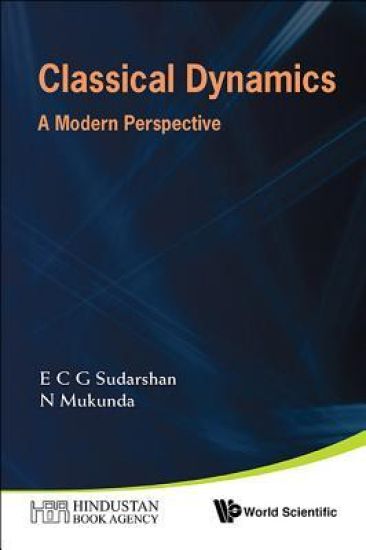
Classical dynamics is traditionally treated as an early stage in the development of physics, a stage that has long been superseded by more ambitious theories. Here, in this book, classical dynamics is treated as a subject on its own as well as a research frontier. Incorporating insights gained over the past several decades, the essential principles of classical dynamics are presented, while demonstrating that a number of key results originally considered only in the context of quantum theory and particle physics, have their foundations in classical dynamics.Graduate students in physics and practicing physicists will welcome the present approach to classical dynamics that encompasses systems of particles, free and interacting fields, and coupled systems. Lie groups and Lie algebras are incorporated at a basic level and are used in describing space-time symmetry groups. There is an extensive discussion on constrained systems, Dirac brackets and their geometrical interpretation. The Lie-algebraic description of dynamical systems is discussed in detail, and Poisson brackets are developed as a realization of Lie brackets. Other topics include treatments of classical spin, elementary relativistic systems in the classical context, irreducible realizations of the Galileo and Poincaré groups, and hydrodynamics as a Galilean field theory. Students will also find that this approach that deals with problems of manifest covariance, the no-interaction theorem in Hamiltonian mechanics and the structure of action-at-a-distance theories provides all the essential preparatory groundwork for a passage to quantum field theory.This reprinting of the original text published in 1974 is a testimony to the vitality of the contents that has remained relevant over nearly half a century.
Classical dynamics is traditionally treated as an early stage in the development of physics, a stage that has long been superseded by more ambitious theories. Here, in this book, classical dynamics is treated as a subject on its own as well as a research frontier. Incorporating insights gained over the past several decades, the essential principles of classical dynamics are presented, while demonstrating that a number of key results originally considered only in the context of quantum theory and particle physics, have their foundations in classical dynamics.Graduate students in physics and practicing physicists will welcome the present approach to classical dynamics that encompasses systems of particles, free and interacting fields, and coupled systems. Lie groups and Lie algebras are incorporated at a basic level and are used in describing space-time symmetry groups. There is an extensive discussion on constrained systems, Dirac brackets and their geometrical interpretation. The Lie-algebraic description of dynamical systems is discussed in detail, and Poisson brackets are developed as a realization of Lie brackets. Other topics include treatments of classical spin, elementary relativistic systems in the classical context, irreducible realizations of the Galileo and Poincaré groups, and hydrodynamics as a Galilean field theory. Students will also find that this approach that deals with problems of manifest covariance, the no-interaction theorem in Hamiltonian mechanics and the structure of action-at-a-distance theories provides all the essential preparatory groundwork for a passage to quantum field theory.This reprinting of the original text published in 1974 is a testimony to the vitality of the contents that has remained relevant over nearly half a century.
Stavacintmai is a collection of Sanskrit hymns attributed to Nryaa Bhaa of Kashmir and Ksemarja, a Rjnaka from the 11th century. This work, edited by Mukunda Rama Shastri, offers a glimpse into the rich tradition of aiva poetry and Hindu devotional literature. The hymns explore themes of mysticism, spirituality, and devotion, reflecting the profound philosophical insights of the time. "Stavacintmai" stands as a testament to the enduring power of Sanskrit literature and its capacity to inspire spiritual reflection. This work has been selected by scholars as being culturally important, and is part of the knowledge base of civilization as we know it. This work was reproduced from the original artifact, and remains as true to the original work as possible. Therefore, you will see the original copyright references, library stamps (as most of these works have been housed in our most important libraries around the world), and other notations in the work. This work is in the public domain in the United States of America, and possibly other nations. Within the United States, you may freely copy and distribute this work, as no entity (individual or corporate) has a copyright on the body of the work. As a reproduction of a historical artifact, this work may contain missing or blurred pages, poor pictures, errant marks, etc. Scholars believe, and we concur, that this work is important enough to be preserved, reproduced, and made generally available to the public. We appreciate your support of the preservation process, and thank you for being an important part of keeping this knowledge alive and relevant.