Kirjojen hintavertailu. Mukana 12 016 292 kirjaa ja 12 kauppaa.

Kirjahaku

Etsi kirjoja tekijän nimen, kirjan nimen tai ISBN:n perusteella.

1000 tulosta hakusanalla P. C. Cast

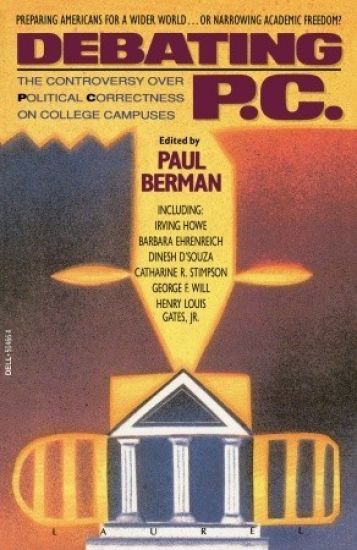
Debating P.C.

Debating P.C.

Bantam Doubleday Dell Publishing Group
1995
pokkari
The debate over "P.C." at America's universities is the most important discussion in American education today and has grown into a major national controversy raging on the covers of our top magazines and news shows. This provocative anthology gives voice to the top thinkers of our time, liberal and conservative, as they tackle the question. From the multicultural perspective of Henry Louis Gates, Jr., who argues passionately for more diversity, to the erudition of Irving Howe, who stresses the profound value of the literary canon, this exciting collection is required reading for thinking Americans . . . and for everyone concerned with the future of higher education and the shaping of young minds. Contents include: "The Big Chill? Interview with Dinesh D'Souza" by Robert MacNeil "On Differences: Modern Language Association Presidential Address 1990" by Catharine R. Stimpson "The Periphery v. the Center: The MLA in Chicago" by Roger Kimball "The Storm over the University" by John Searle "Public Imaged Limited: Political Correctness and the Media's Big Lie" by Michael Berube "The Value of the Canon" by Irving Howe "The Politics of Knowledge" by Edward W. Said "Whose Canon Is It, Anyway?" by Henry Louis Gates, Jr. "Why Do We Read?" by Katha Pollitt "'Speech Codes' on the Campus and Problems of Free Speech" by Nat Hentoff "Freedom of Hate Speech" by Richard Perry and Patricia Williams "There's No Such Thing as Free Speech and It's a Good Thing, Too" by Stanley Fish "The Statement of the Black Faculty Caucus" by Ted Gordon and Wahneema Lubiano "Radical English" by George F. Will "Critics of Attempts to Democratize the Curriculum Are Waging a Campaign to Misrepresent the Work of Responsible Professors" by Paula Rothenberg "Multiculturalism: E Pluribus Plures" by Diane Ravitch "Multiculturalism: An Exchange" by Molefi Kete Asante "The Prospect Before Us" by Hilton Kramer "P.C. Rider" by Enrique Fernandez "Diverse New World" by Cornel West "The Challenge for the Left" by Barbara Ehrenreich
S M P L C T Y

S M P L C T Y

Samuel Alexander

Simplicity Institute
2023
pokkari
This collection of essays presents an aesthetics of existence called the 'Will to Art'. Readers will be invited to consider the possibility that the universe is fundamentally an aesthetic phenomenon, understood as a process of creative evolution that is moving, albeit agonistically, towards ever-increasing opportunities for artistic expression and aesthetic experience. Art is defined broadly and openly as the meaningful and pleasurable expression of creative labour, and human experience can be considered 'aesthetic' if it flows from the sensuous engagement with art or nature. To speak of the Will to Art is to interpret the world as having an underlying tendency toward artistic and aesthetic flourishing, even though the outcome of this evolutionary process, due to its indeterminate nature, is unknowable in advance.Two premises guide the development of this vision: first, that material sufficiency is all that is needed for human beings to live rich, meaningful, and artful lives; and second, that material sufficiency is all that is possible, over the long term, on a finite planet in an age of environmental limits. Based on those premises, Samuel Alexander proposes and defends a conception of ecological civilisation which he calls SMPLCTY. This is not a utopian prediction about what is a likely future for our species. Rather, it is an orienting vision, one in which individuals and communities thrive in humble conditions of material sufficiency but cultural richness, meaningfully engaged in pleasurable and creative labour in collaboration with others. According to this vision, life itself would become an aesthetic project, a never-ending process of creative activity, sensuous experience, aesthetic engagement, and spiritual exploration. Such a society would be structured with the aim of sustainably providing opportunities for all people to find meaning and pleasure through creative labour and aesthetic experience.
S M P L C T Y

S M P L C T Y

Samuel Alexander

Simplicity Institute
2023
sidottu
This collection of essays presents an aesthetics of existence called the 'Will to Art'. Readers will be invited to consider the possibility that the universe is fundamentally an aesthetic phenomenon, understood as a process of creative evolution that is moving, albeit agonistically, towards ever-increasing opportunities for artistic expression and aesthetic experience. Art is defined broadly and openly as the meaningful and pleasurable expression of creative labour, and human experience can be considered 'aesthetic' if it flows from the sensuous engagement with art or nature. To speak of the Will to Art is to interpret the world as having an underlying tendency toward artistic and aesthetic flourishing, even though the outcome of this evolutionary process, due to its indeterminate nature, is unknowable in advance.Two premises guide the development of this vision: first, that material sufficiency is all that is needed for human beings to live rich, meaningful, and artful lives; and second, that material sufficiency is all that is possible, over the long term, on a finite planet in an age of environmental limits. Based on those premises, Samuel Alexander proposes and defends a conception of ecological civilisation which he calls SMPLCTY. This is not a utopian prediction about what is a likely future for our species. Rather, it is an orienting vision, one in which individuals and communities thrive in humble conditions of material sufficiency but cultural richness, meaningfully engaged in pleasurable and creative labour in collaboration with others. According to this vision, life itself would become an aesthetic project, a never-ending process of creative activity, sensuous experience, aesthetic engagement, and spiritual exploration. Such a society would be structured with the aim of sustainably providing opportunities for all people to find meaning and pleasure through creative labour and aesthetic experience.
The Chief Stages in the History of the C.P.S.U; Part 4
This work has been selected by scholars as being culturally important and is part of the knowledge base of civilization as we know it.This work is in the public domain in the United States of America, and possibly other nations. Within the United States, you may freely copy and distribute this work, as no entity (individual or corporate) has a copyright on the body of the work.Scholars believe, and we concur, that this work is important enough to be preserved, reproduced, and made generally available to the public. To ensure a quality reading experience, this work has been proofread and republished using a format that seamlessly blends the original graphical elements with text in an easy-to-read typeface.We appreciate your support of the preservation process, and thank you for being an important part of keeping this knowledge alive and relevant.
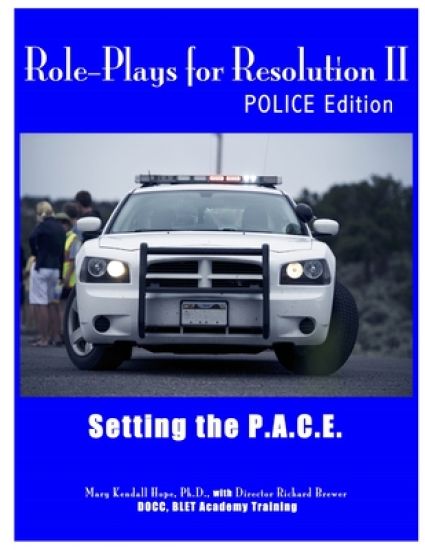
Role-Plays for Resolution II: Setting the P.A.C.E.: Polce Edition
ThIs Workbook contains 40 role-plays in 3 separate categories. Topics covered include man-made crisis; nature driven disasters; active crime-scenes; auto accidents; terrorist situations and domestic violence.Every academic program in criminal justice & police science including trainers of continuing education units - can use the situations in this workbook to provide existing & auxiliary professionals the practice needed in critical incident situations and 9-1-1 emergency response.
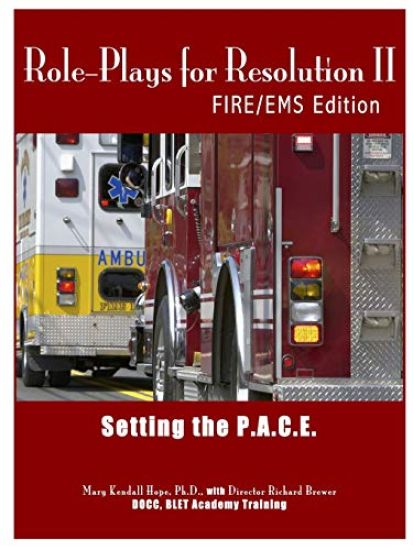
Role-Plays for Resolution II: Setting the P.A.C.E.: Fire/EMS Edition
ThIs Workbook contains 40 role-plays in 3 separate categories. Topics covered include man-made crisis; nature driven disasters; auto accidents; terrorist situations; and domestic violence situations. All trainers in the field of Fire/EMS Service can use the situations in this workbook to provide existing & auxiliary professionals the needed practice in critical incident situations and 9-1-1 emergency response.