Kirjojen hintavertailu. Mukana 11 699 587 kirjaa ja 12 kauppaa.

Kirjahaku

Etsi kirjoja tekijän nimen, kirjan nimen tai ISBN:n perusteella.

1000 tulosta hakusanalla Patrick B Simpson

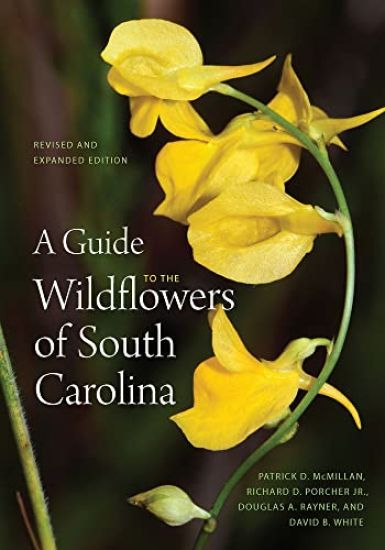
A Guide to the Wildflowers of South Carolina

A Guide to the Wildflowers of South Carolina

Patrick D. McMillan; Richard Dwight Porcher Jr.; Douglas A. Rayner; David B. White

UNIVERSITY OF SOUTH CAROLINA PRESS
2022
sidottu
From its summits to its shores, South Carolina brims with life and unparalleled beauty thanks to its abundant array of native and naturalized flora, all carefully documented in this revised and expanded edition of A Guide to the Wildflowers of South Carolina. Dramatic advances in plant taxonomy and ecology have occurred since the guide's publication 20 years ago; new species have been discovered while others struggle to survive in the face of vanishing habitats and climate change.The authors, all experienced botanists, offer essays on carnivorous plants, native orchids, Carolina bays, the roles and effects of fire and agriculture on the landscape, and detailed descriptions of the plant communities throughout the state's major natural regions. This expanded edition catalogs nearly 1,000 species organized by habitat, with descriptions, color photographs, range maps, and comments on pharmacological uses, suitability for garden cultivation, origin of common and scientific names, and conservation status.
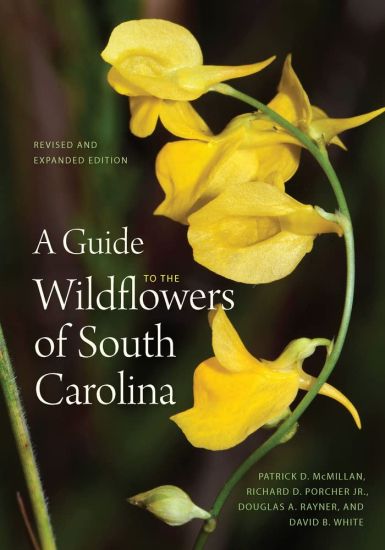
A Guide to the Wildflowers of South Carolina

A Guide to the Wildflowers of South Carolina

Patrick D. McMillan; Richard Dwight Porcher Jr.; Douglas A. Rayner; David B. White

UNIVERSITY OF SOUTH CAROLINA PRESS
2022
pokkari
From its summits to its shores, South Carolina brims with life and unparalleled beauty thanks to its abundant array of native and naturalized flora, all carefully documented in this revised and expanded edition of A Guide to the Wildflowers of South Carolina. Dramatic advances in plant taxonomy and ecology have occurred since the guide's publication 20 years ago; new species have been discovered while others struggle to survive in the face of vanishing habitats and climate change.The authors, all experienced botanists, offer essays on carnivorous plants, native orchids, Carolina bays, the roles and effects of fire and agriculture on the landscape, and detailed descriptions of the plant communities throughout the state's major natural regions. This expanded edition catalogs nearly 1,000 species organized by habitat, with descriptions, color photographs, range maps, and comments on pharmacological uses, suitability for garden cultivation, origin of common and scientific names, and conservation status.

Endless Summer, Vol. 1

Endless Summer, Vol. 1

B. Clay Moore; Shane Patrick White

INSIGHT EDITIONS
2022
nidottu
Former FBI agent Scott Ivory gathers a group of young kids to counter communist and criminal activities on the streets of the California coast. With a modest budget and a loose agenda, his simple counterintelligence program quickly becomes an outlet for Ivory to use for his own designs, and the kids become pawns in a game of tug-of-war between government agents. A dark spin on early sixties pop culture, Endless Summer Vol. 1: Dead Man’s Curve is based on 1960s Huntington Beach, California—a thrilling sunshine-noir graphic novel rampant with drugs, murder, and government espionage.
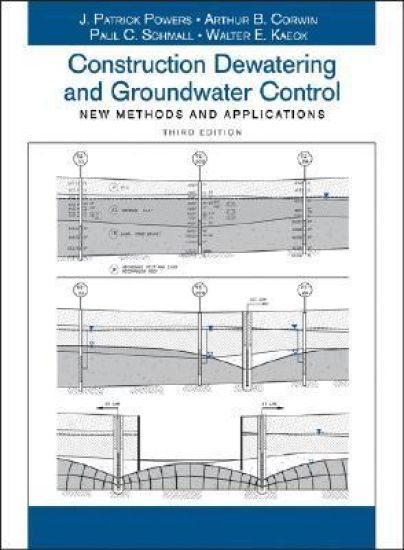
Construction Dewatering and Groundwater Control

Construction Dewatering and Groundwater Control

J. Patrick Powers; Arthur B. Corwin; Paul C. Schmall; Walter E. Kaeck

John Wiley Sons Inc
2007
sidottu
The most up-to-date guide to construction dewatering and groundwater control In the past dozen years, the methods of analyzing and treating groundwater conditions have vastly improved. The Third Edition of Construction Dewatering and Groundwater Control, reflecting the most current technology and practices, is a timely and much-needed overview of this rapidly changing field. Illustrated with hundreds of new figures and photographs and including numerous detailed case histories, the Third Edition of Construction Dewatering and Groundwater Control is a comprehensive and valuable reference for both students and practicing engineers alike. Drawing on real-world experience, the authors lead the reader through all facets of the theory and practice of this fascinating and often complex engineering discipline. Discussion includes: Dozens of case histories demonstrating various groundwater control practices and lessons learned in groundwater control and work performedDetailed methods of controlling groundwater by use of conventional dewatering methods as well as vertical barrier, grouted cutoff, and frozen ground techniquesContracting practices and conflict resolution methods that will help minimize disputesAlternatives and effective practices for handling and treating contaminated groundwaterInnovations in equipment and materials that improve the performance and efficiency of groundwater control systemsPractices and procedures for success in artificial rechargeGroundwater modeling to simulate and plan dewatering projectsInclusion of dual U.S. customary and metric units throughout Construction Dewatering and Groundwater Control is an indispensable tool for all engineering and construction professionals searching for the most up-to-date coverage of groundwater control for various purposes, the modern ways to identify and analyze site-specific situations, and the modern tools available to control them.
Hebrews: An Introduction and Study Guide

Hebrews: An Introduction and Study Guide

Amy L. B. Peeler; Patrick Gray

T. T.Clark Ltd
2020
nidottu
This volume offers a compact introduction to one of the most daunting texts in the New Testament. The Letter to the Hebrews has inspired many readers with its encomium to faith, troubled others with its hard sayings on the impossibility of a second repentance, and perplexed still others with its exegetical assumptions and operations drawn from a cultural matrix that is largely alien to modern sensibilities. Long thought to be Paul, the anonymous author of Hebrews exhibits points of continuity with the apostle and other New Testament writers in the letter’s (or sermon’s) vision of life in the light of the crucified Messiah, but one also finds distinctive perspectives in such areas as Christology, eschatology, and atonement. Gray and Peeler survey the salient historical, social, and rhetorical factors to be considered in the interpretation of this document, as well as its theological, liturgical, and cultural legacy. They invite readers to enter the world of one of the boldest Christian thinkers of the first century.
Hebrews: An Introduction and Study Guide

Hebrews: An Introduction and Study Guide

Amy L. B. Peeler; Patrick Gray

T. T.Clark Ltd
2020
sidottu
This volume offers a compact introduction to one of the most daunting texts in the New Testament. The Letter to the Hebrews has inspired many readers with its encomium to faith, troubled others with its hard sayings on the impossibility of a second repentance, and perplexed still others with its exegetical assumptions and operations drawn from a cultural matrix that is largely alien to modern sensibilities. Long thought to be Paul, the anonymous author of Hebrews exhibits points of continuity with the apostle and other New Testament writers in the letter’s (or sermon’s) vision of life in the light of the crucified Messiah, but one also finds distinctive perspectives in such areas as Christology, eschatology, and atonement. Gray and Peeler survey the salient historical, social, and rhetorical factors to be considered in the interpretation of this document, as well as its theological, liturgical, and cultural legacy. They invite readers to enter the world of one of the boldest Christian thinkers of the first century.
Our Lady of Walsingham

Our Lady of Walsingham

Charles G. Mortimer; Patrick Former Owner McHb-B Rogers

Hassell Street Press
2021
nidottu
This work has been selected by scholars as being culturally important and is part of the knowledge base of civilization as we know it.This work is in the public domain in the United States of America, and possibly other nations. Within the United States, you may freely copy and distribute this work, as no entity (individual or corporate) has a copyright on the body of the work.Scholars believe, and we concur, that this work is important enough to be preserved, reproduced, and made generally available to the public. To ensure a quality reading experience, this work has been proofread and republished using a format that seamlessly blends the original graphical elements with text in an easy-to-read typeface.We appreciate your support of the preservation process, and thank you for being an important part of keeping this knowledge alive and relevant.
Our Lady of Walsingham

Our Lady of Walsingham

Charles G. Mortimer; Patrick Former Owner McHb-B Rogers

Hassell Street Press
2023
sidottu
This book tells the fascinating story of Our Lady of Walsingham, a famous English pilgrimage site and the center of devotion to the Virgin Mary. Mortimer and Rogers explore the rich history, traditions, and legends associated with this holy site and its enduring significance to the Catholic Church and English heritage.This work has been selected by scholars as being culturally important, and is part of the knowledge base of civilization as we know it.This work is in the "public domain in the United States of America, and possibly other nations. Within the United States, you may freely copy and distribute this work, as no entity (individual or corporate) has a copyright on the body of the work.Scholars believe, and we concur, that this work is important enough to be preserved, reproduced, and made generally available to the public. We appreciate your support of the preservation process, and thank you for being an important part of keeping this knowledge alive and relevant.
Developmental Psychopathology and Family Process

Developmental Psychopathology and Family Process

E. Mark Cummings; Patrick T. Davies; Susan B. Campbell

Guilford Publications
2000
sidottu
Why do some children grow into resilient, adaptive adults, while others develop serious psychological problems? What are the dynamic processes and pathways that underlie normal and abnormal development? And how can the answers to these questions inform efforts to decrease both the prevalence and the severity of psychological distress? Focusing on the primary context in which children develop—the family—this volume unravels the complex connections among biological, psychological, and social-contextual processes that influence adaptation in childhood and adolescence. Explicating the basic concepts and methods of developmental psychopathology, the book sets forth a process-oriented framework for understanding human development and the onset of disordered behavior. Introduction I. Theory 1. What Is Developmental Psychopathology? 2. Identifying the Dynamic Processes Underlying the Development of Psychopathology 3. Methodological Directions in Developmental Psychopathology Research 4. Pathways in Development 5. Complex Patterns of Influence: Risk and Protective Factors II. Research 6. Child Development and the Parent–Child Subsystem 7. New Directions in the Study of Parenting and Child Development 8. Children and the Marital Subsystem 9. Applications of Developmental Psychopathology: Parental Depression, Families, and Children's Development III. Clinical Implications 10. A Developmental Psychopathology Perspective on the Diagnosis, Classification, and Conceptualization of Children's Problems 11. A Developmental Psychopathology Perspective on Prevention and Treatment Epilogue
Developmental Psychopathology and Family Process

Developmental Psychopathology and Family Process

E. Mark Cummings; Patrick T. Davies; Susan B. Campbell

Guilford Publications
2002
nidottu
Why do some children grow into resilient, adaptive adults, while others develop serious psychological problems? What are the dynamic processes and pathways that underlie normal and abnormal development? And how can the answers to these questions inform efforts to decrease both the prevalence and the severity of psychological distress? Focusing on the primary context in which children develop--the family--this volume unravels the complex connections among biological, psychological, and social-contextual processes that influence adaptation in childhood and adolescence. Explicating the basic concepts and methods of developmental psychopathology, the book sets forth a process-oriented framework for understanding human development and the onset of disordered behavior.
Impact Evaluation in Practice

Impact Evaluation in Practice

Paul J. Gertler; Sebastian Martinez; Patrick Premand; Laura B. Rawlings

World Bank Publications
2010
nidottu
This book offers an accessible introduction to the topic of impact evaluation and its practice in development. While the book is geared principally towards development practitioners and policymakers designing prospective impact evaluations, we trust that it will be a valuable resource for students and others interested in using impact evaluation. Prospective impact evaluations should be used selectively to assess whether or not a program has achieved its intended results, or to test alternatives for achieving those results. We consider that more and better impact evaluation will help strengthen the evidence base for development policies and programs around the world. If governments and development practitioners can make policy decisions based on evidence - including evidence generated through impact evaluation - our hope is that development resources will be spent more effectively, and ultimately have a greater impact on reducing poverty and improving people’s lives. The three chapters in this handbook provide a non-technical introduction to impact evaluations, including “Why Evaluate” in Chapter 1, “How to Evaluate” in Chapter 2 and “How to Implement Impact Evaluations” in Chapter 3. These elements are the basic ‘tools’ needed in order to successfully carry out an impact evaluation. From a methodological standpoint our approach to impact evaluation is largely pragmatic: we think that the most appropriate methods should be identified to fit the operational context, and not the other way around. This is best achieved at the outset of the program, through the design of prospective impact evaluation that can be built into the project’s implementation. We argue that gaining consensus between key stakeholders and identifying an evaluation design that fits the political and operational context is as important as the method itself. We also believe strongly that impact evaluations should be upfront about their limitations and caveats. Finally, we strongly encourage policymakers and program managers to consider impact evaluations in a logical framework that clearly sets out the causal pathways by which the program works to produce outputs and influence final outcomes, and to combine impact evaluations with monitoring and selected complementary evaluation approach to gain a full picture of performance.
Impact Evaluation in Practice

Impact Evaluation in Practice

Paul J. Gertler; Sebastian Martinez; Patrick Premand; Laura B. Rawlings

World Bank Publications
2011
nidottu
This book offers an accessible introduction to the topic of impact evaluation and its practice in development. While the book is geared principally towards development practitioners and policymakers designing prospective impact evaluations, we trust that it will be a valuable resource for students and others interested in using impact evaluation. Prospective impact evaluations should be used selectively to assess whether or not a program has achieved its intended results, or to test alternatives for achieving those results. We consider that more and better impact evaluation will help strengthen the evidence base for development policies and programs around the world. If governments and development practitioners can make policy decisions based on evidence - including evidence generated through impact evaluation - our hope is that development resources will be spent more effectively, and ultimately have a greater impact on reducing poverty and improving people's lives. The three chapters in this handbook provide a non-technical introduction to impact evaluations, including "Why Evaluate" in Chapter 1, "How to Evaluate" in Chapter 2 and "How to Implement Impact Evaluations" in Chapter 3. These elements are the basic 'tools' needed in order to successfully carry out an impact evaluation. From a methodological standpoint our approach to impact evaluation is largely pragmatic: we think that the most appropriate methods should be identified to fit the operational context, and not the other way around. This is best achieved at the outset of the program, through the design of prospective impact evaluation that can be built into the project's implementation. We argue that gaining consensus between key stakeholders and identifying an evaluation design that fits the political and operational context is as important as the method itself. We also believe strongly that impact evaluations should be upfront about their limitations and caveats. Finally, we strongly encourage policymakers and program managers to consider impact evaluations in a logical framework that clearly sets out the causal pathways by which the program works to produce outputs and influence final outcomes, and to combine impact evaluations with monitoring and selected complementary evaluation approach to gain a full picture of performance. This book builds on a core set of teaching materials developed for the "Turning Promises to Evidence" workshops organized by the office of the Chief Economist for Human Development (HDNCE) in partnership with regional units and the Development Economics Research Group (DECRG) at the World Bank.
Impact Evaluation in Practice

Impact Evaluation in Practice

Paul J. Gertler; Sebastian Martinez; Patrick Premand; Laura B. Rawlings

World Bank Publications
2011
nidottu
This book offers an accessible introduction to the topic of impact evaluation and its practice in development. While the book is geared principally towards development practitioners and policymakers designing prospective impact evaluations, we trust that it will be a valuable resource for students and others interested in using impact evaluation. Prospective impact evaluations should be used selectively to assess whether or not a program has achieved its intended results, or to test alternatives for achieving those results. We consider that more and better impact evaluation will help strengthen the evidence base for development policies and programs around the world. If governments and development practitioners can make policy decisions based on evidence - including evidence generated through impact evaluation - our hope is that development resources will be spent more effectively, and ultimately have a greater impact on reducing poverty and improving people’s lives. The three chapters in this handbook provide a non-technical introduction to impact evaluations, including “Why Evaluate” in Chapter 1, “How to Evaluate” in Chapter 2 and “How to Implement Impact Evaluations” in Chapter 3. These elements are the basic `tools’ needed in order to successfully carry out an impact evaluation. From a methodological standpoint our approach to impact evaluation is largely pragmatic: we think that the most appropriate methods should be identified to fit the operational context, and not the other way around. This is best achieved at the outset of the program, through the design of prospective impact evaluation that can be built into the project’s implementation. We argue that gaining consensus between key stakeholders and identifying an evaluation design that fits the political and operational context is as important as the method itself. We also believe strongly that impact evaluations should be upfront about their limitations and caveats. Finally, we strongly encourage policymakers and program managers to consider impact evaluations in a logical framework that clearly sets out the causal pathways by which the program works to produce outputs and influence final outcomes, and to combine impact evaluations with monitoring and selected complementary evaluation approach to gain a full picture of performance. This book builds on a core set of teaching materials developed for the “Turning Promises to Evidence” workshops organized by the office of the Chief Economist for Human Development (HDNCE) in partnership with regional units and the Development Economics Research Group (DECRG) at the World Bank.
Avaliação De Impacto Na Prática

Avaliação De Impacto Na Prática

Paul J. Gertler; Sebastian Martinez; Patrick Premand; Laura B. Rawlings; Christel M. J. Vermeersch

World Bank Publications
2015
nidottu
This book offers an accessible introduction to the topic of impact evaluation and its practise in development. While the book is geared principally towards development practitioners and policymakers designing prospective impact evaluations, we trust that it will be a valuable resource for students and others interested in using impact evaluation. Prospective impact evaluations should be used selectively to assess whether or not a programme has achieved its intended results, or to test alternatives for achieving those results. We consider that more and better impact evaluation will help strengthen the evidence base for development policies and programmes around the world. If governments and development practitioners can make policy decisions based on evidence - including evidence generated through impact evaluation - our hope is that development resources will be spent more effectively, and ultimately have a greater impact on reducing poverty and improving people’s lives. The three chapters in this handbook provide a non-technical introduction to impact evaluations, including “Why Evaluate” in Chapter 1, “How to Evaluate” in Chapter 2 and “How to Implement Impact Evaluations” in Chapter 3. These elements are the basic ‘tools’ needed in order to successfully carry out an impact evaluation.From a methodological standpoint our approach to impact evaluation is largely pragmatic: we think that the most appropriate methods should be identified to fit the operational context and not the other way around. This is best achieved at the outset of the programme, through the design of prospective impact evaluation that can be built into the project’s implementation. We argue that gaining consensus between key stakeholders and identifying an evaluation design that fits the political and operational context is as important as the method itself. We also believe strongly that impact evaluations should be upfront about their limitations and caveats. Finally, we strongly encourage policymakers and programme managers to consider impact evaluations in a logical framework that clearly sets out the causal pathways by which the programme works to produce outputs and influence final outcomes, and to combine impact evaluations with monitoring and selected complementary evaluation approach to gain a full picture of performance.This book builds on a core set of teaching materials developed for the “Turning Promises to Evidence” workshops organised by the office of the Chief Economist for Human Development (HDNCE) in partnership with regional units and the Development Economics Research Group (DECRG) at the World Bank.
Impact Evaluation in Practice

Impact Evaluation in Practice

J. Paul Gertler; Sebastian Martinez; Patrick Premand; B. Laura Rawlings; M.J. Christel Vermeersch

World Bank Publications
2016
nidottu
The second edition of the Impact Evaluation in Practice handbook is a comprehensive and accessible introduction to impact evaluation for policy makers and development practitioners. First published in 2011, it has been used widely across the development and academic communities. The book incorporates real-world examples to present practical guidelines for designing and implementing impact evaluations. Readers will gain an understanding of impact evaluations and the best ways to use them to design evidence-based policies and programs. The updated version covers the newest techniques for evaluating programs and includes state-of-the-art implementation advice, as well as an expanded set of examples and case studies that draw on recent development challenges. It also includes new material on research ethics and partnerships to conduct impact evaluation. The handbook is divided into four sections: Part One discusses what to evaluate and why; Part Two presents the main impact evaluation methods; Part Three addresses how to manage impact evaluations; Part Four reviews impact evaluation sampling and data collection. Case studies illustrate different applications of impact evaluations. The book links to complementary instructional material available online, including an applied case as well as questions and answers. The updated second edition will be a valuable resource for the international development community, universities, and policy makers looking to build better evidence around what works in development.