Kirjojen hintavertailu. Mukana 12 578 283 kirjaa ja 12 kauppaa.

Kirjahaku

Etsi kirjoja tekijän nimen, kirjan nimen tai ISBN:n perusteella.

1000 tulosta hakusanalla Philo

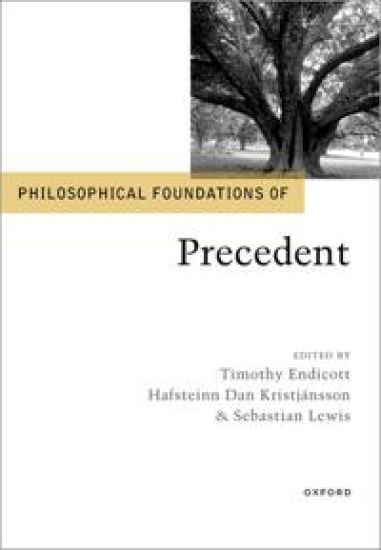
Philosophical Foundations of Precedent
Philosophical Foundations of Precedent offers a broad, deep, and diverse range of philosophical investigations of the role of precedent in law, adjudication, and morality. The forty chapters present the work of a large and inclusive group of authors which comprises of well-established leaders in the discipline and new voices in legal philosophy. The magnitude of the resulting project is extraordinary, presenting a diverse array of innovative and creative philosophical investigations of the practice of adhering to past decisions, in law and allied fields of practical reasoning. And by the same token, the contributions elucidate the reasons that courts and other decision-makers may have for departing from what has been done before. The phenomena under investigation include the law and practice of common law and civil jurisdictions around the world. In addition to its fundamental relevance to common law jurisdictions, this work will be of broad and significant interest to theoretically minded audiences in continental Europe, Latin America, and Asia because it involves an extensive study of practices of precedent in civil law systems as well as common law systems.
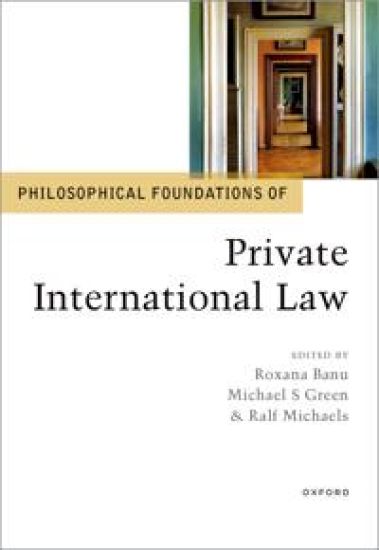
Philosophical Foundations of Private International Law
Private international law has long been understood as a doctrinal and technical body of law, without interesting theoretical foundations or implications. By systematically exploring the rich array of philosophical topics that are part of the fabric of private international law, Philosophical Foundations of Private International Law fills a significant and long-standing void in the legal and philosophical literature. The contributions to this volume are testimony to the significant potential for interaction between philosophy and private international law. Some aim to expand and rethink classical jurisprudential theories by focusing on law beyond the state and on the recognition of foreign law and judgments in domestic courts. Others bring legal and moral theories to bear on traditional debates in private international law, such as legal pluralism, transnational justice, the interpretation of foreign legal policies, and the boundaries of the legal system. Several engage with the history of both private international law and legal and political philosophy. They point to missed opportunities when philosophers ignored law's transnational dimensions, or when private international law scholars failed to position their theories within broader philosophical schools of thought. Some seek to complete past attempts to articulate the philosophical dimensions of private international law that were never carried through. Thought-provoking and topical, this volume displays the varied themes cutting through the disciplines of private international law and philosophy.
Philosophical Methodology

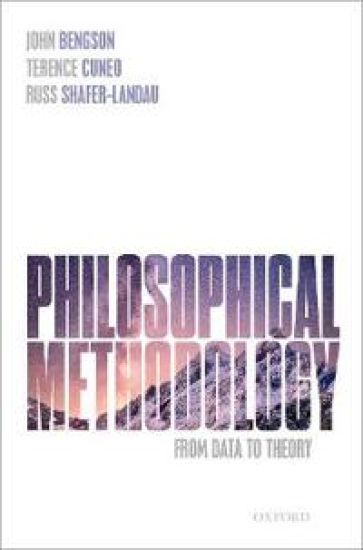
Philosophical Methodology

John Bengson; Terence Cuneo; Russ Shafer-Landau

Oxford University Press
2022
sidottu
Philosophical Methodology is a book addressed to the entire philosophical community. It develops a novel account of the structure and goals of inquiry, offers the first systematic discussion of philosophical data, and assesses extant philosophical methods. Introducing a new method for doing philosophy, it positions theorists to better understand their topics while also revealing how philosophy can continue to make progress in answering its foremost questions.
Philosophical Methodology

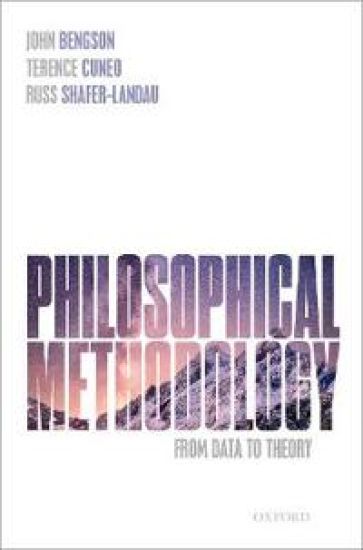
Philosophical Methodology

John Bengson; Terence Cuneo; Russ Shafer-Landau

Oxford University Press
2022
nidottu
Philosophical Methodology is a book addressed to the entire philosophical community. It develops a novel account of the structure and goals of inquiry, offers the first systematic discussion of philosophical data, and assesses extant philosophical methods. Introducing a new method for doing philosophy, it positions theorists to better understand their topics while also revealing how philosophy can continue to make progress in answering its foremost questions.
Philosophy of Devotion

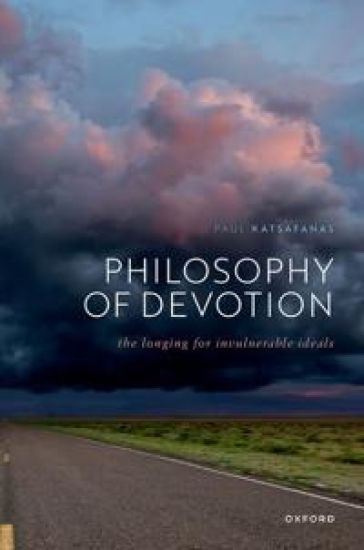
Philosophy of Devotion

Paul Katsafanas

Oxford University Press
2022
sidottu
Why do people persist in commitments that threaten their happiness, security, and comfort? Why do some of our most central, identity-defining commitments seem to resist the effects of reasoning and critical reflection? Drawing on real-life examples, empirical psychology, and philosophical reflection, Paul Katsafanas argues that these commitments involve an ethical stance called devotion, which plays a pervasive--but often hidden--role in human life. Devotion typically involves sacralizing certain values, goals, or relationships. To sacralize a value is to treat it as inviolable (trade-offs with ordinary values are forbidden), incontestable (even contemplating such trade-offs is prohibited), and dialectically invulnerable (no rational considerations can disrupt the agent's commitment to the value). Philosophy of Devotion offers a detailed philosophical account and defense of these features. Devotion and the sacralization of values can be reasonable; indeed, a life involving meaningful, sustained commitment depends on these stances. Without devotion, we risk an existential condition that Katsafanas describes as normative dissipation, in which all of our commitments become etiolated. Yet devotion can easily go wrong, deforming into the individual and group fanaticism that have become pervasive features of modern social life. Katsafanas provides an alternative to fanaticism, investigating the way in which we can express non-pathological forms of devotion. We can be devoted through affirmation and through what Katsafanas calls the deepening move, which treats the agent's central commitments as systematically inchoate. Each of these stances enables a wholehearted form of devotion that nevertheless preserves flexibility and openness, avoiding the dangers of fanaticism on the one hand and normative dissipation on the other. But this is inevitably a fragile and precarious achievement: affirmation can slide into a focus on rejecting what isn't affirmed, and the deepening move can ossify into rigidity. Only the perpetual quest to maintain a form of existential flexibility, which may require oscillation between affirmation and deepening, can stave off these dangers
Philosophical Perspectives on Psychedelic Psychiatry
A recent wave of research in psychiatry and neuroscience has re-examined the properties of “classic” psychedelic substances - also known as serotonergic hallucinogens - such as psilocybin, LSD, and DMT. Evidence to date suggests that psychedelics can be given safely in controlled conditions, at moderate to high doses, and may have potential as therapeutic agents in the treatment of various addictive and mood disorders. The main mechanism of action appears to be the induction of a dramatically altered state of consciousness, but the details of how psychedelic-assisted psychotherapy works are hotly debated, as are the relations between psychedelic experiences themselves and the neural changes induced by the drugs. Philosophical Perspectives on Psychedelic Psychiatry addresses the fascinating philosophical questions raised by the renewed psychiatric use of psychedelics, with chapters from leading philosophers of mind, science, and psychiatry centred around three main themes. Chapters in the “self and mind” section ask: what can we learn about the self and the mind from psychedelic science? Chapters in the “science and psychiatry” section address methodological, theoretical, and clinical questions concerning how psychedelics can best be studied scientifically and used therapeutically, and how they might work to relieve psychiatric suffering. Finally, chapters in the “ethics and spirituality” section address broader questions about the interpretation of psychedelic experience, its ethical implications, and its possible role(s) in the broader culture.
Philosophy of Life

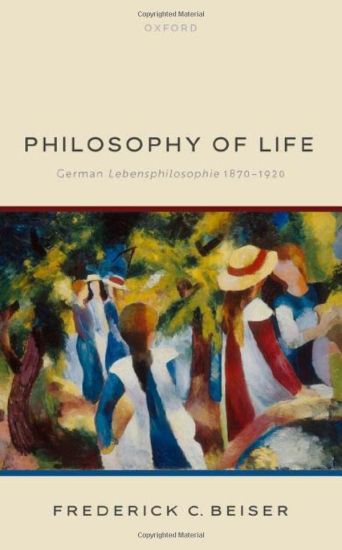
Philosophy of Life

Frederick C. Beiser

Oxford University Press
2023
sidottu
Philosophy of Life explores the intellectual movement called Lebensphilosophie, which flourished in Germany from 1870 until 1920. Author Frederick C. Beiser focuses on its most prominent members: Friedrich Nietzsche, Wilhelm Dilthey, and Georg Simmel. Lebensphilosophie appeared at a critical movement in Western culture; it was a response to several important cultural developments of the late 19th century: atheism, relativism, historicism and pessimism. The Lebensphilosophen believed that meaning of life had to be found in life itself and denied the relevance of any transcendent realm of meaning. To affirm the value of life, they reacted against Schopenhauer's pessimism; they proclaimed that the joys of life outweighed its sorrows, and that there is an infinite value in living life to its fullest. They developed a radical individualist ethic, which proclaimed the value of individual self-realization above all other goods. As part of this radical individualism, they disputed the existence of absolute moral values; and by insisting on the historicity of life, they affirmed the relativity of all values. This was the first intellectual movement in the Western tradition to develop an entirely secular and humanist conception of life. Many of its doctrines are familiar to students of Nietzsche; but readers will find that he was only one of an entire intellectual movement.
Philosophical Papers: Volume II

Philosophical Papers: Volume II

David Lewis

Oxford University Press Inc
1987
nidottu
This is the second volume of philosophical essays by one of the most innovative and influential philosophers now writing in English. Containing thirteen papers in all, the book includes both new essays and previously published papers, some of them with extensive new postscripts reflecting Lewis's current thinking. The papers in Volume II focus on causation and several other closely related topics, including counterfactual and indicative conditionals, the direction of time, subjective and objective probability, causation, explanation, perception, free will, and rational decision. Throughout, Lewis analyzes global features of the world in such a way as to show that they might turn out to supervene on the spatiotemporal arrangement of local qualities.
Philosophy, The Federalist, and the Constitution

Philosophy, The Federalist, and the Constitution

Morton White

Oxford University Press Inc
1989
nidottu
In 1787, Alexander Hamilton, John Jay, and James Madison wrote The Federalist to rally support for the ratification of the Constitution of the United States. In spite of the pragmatic intentions of the authors, they often implicitly expressed themselves in philosophical language, drawing from the major philosophers of their day, notably Locke and Hume. In this book, Morton White presents the first synoptic view of the major philosopical ideas in The Federalist. Using the tools of philosophy and intellectual history, he examines the theories and disciplines used in different degrees by the founding fathers in defence of the Constitution. 'Thoroughly researched and carefully argued; this is an important book.'The Library Journal
Philosophy, Politics, Autonomy

Philosophy, Politics, Autonomy

Castoriadis

Oxford University Press Inc
1991
nidottu
These ten essays by Castoriadis, one of Europe's foremost social and political thinkers, include his latest contributions to philosophy, politics, social thought, aesthetics, and the philosophy of science. The author examines the 'co-birth' of philosophy and politics to show how the Greeks' questioning of ideas and institutions gave rise to the 'project of autonomy.' The 'end of philosophy' proclaimed by Postmodernism, he warns, would mean the end of this project. That end is now hastened by the lethal expansion of technoscience, the waning of political and social conflict, and the resignation of intellectuals who blindly defend Western culture as it is or who merely 'deconstruct' it as it has been.
Philosophical Interpretations

Philosophical Interpretations

Robert J. Fogelin

Oxford University Press Inc
1992
sidottu
Robert Fogelin here collects fifteen of his essays, organized around the theme of interpreting philosophical texts. The book begins with an essay that lays down a set of principles governing the interpretation of difficult texts. Fogelin places particular emphasis on understanding the argumentative or dialectical role that passages play in the specific context in which they occur. The somewhat surprising result of taking this principle seriously is that certain traditional, well-worked texts are given a radical re-interpretation. Certain seemingly implausible positions are found to have more merit than has usually been attributed to them. Throughout the essays reprinted here, Fogelin argues that, when carefully read, the philosophical position under consideration has more merit than commonly believed. Included are essays dealing with texts from the works of Plato, Aquinas, Hume, Berkeley, Kant, Price, Hamilton, and Wittgenstein. With three exceptions, the selections were first published in major journals. Two appeared as part of collections, and one is new to this volume.
Philosophy after Objectivity

Philosophy after Objectivity

Paul K. Moser

Oxford University Press Inc
1993
sidottu
This book discusses a range of central philosophical disputes about knowledge, objectivity, meaning, physicalism, and practical rationality. Its lessons about reasons and explanation affect all areas of theoretical philosophy, and challenge common philosophical assumptions about objectivity, realism, and physicalism. The book explains how various perennial disputes in philosophy rest not on genuine disagreement, but on conceptual diversity.
Philosophy of Mathematics and Mathematical Practice in the Seventeenth Century
This book provides the first comprehensive account of the relationship between philosophy of mathematics and the mathematical practice of the seventeenth century - the most eventful period of mathematical development in history. Starting with the Renaissance debates on the certainty of mathematics, the author leads the readers through the foundational issues raised by the emergence of new mathematical techniques including the influence of the Aristotelian conception of science in Cavalieri and Guldin. In the process Mancosu draws a sophisticated picture of the subtle dependencies between technical developments and philosophical reflection in seventeenth century mathematics.
Philodemus and Poetry

Philodemus and Poetry

Oxford University Press Inc
1995
sidottu
Building on recent advances in the reconstruction of the charred Papyri of Philodemus excavated from the Villa of the Papyri at Herculaneum, this volume presents eleven new chapters in the history of literary criticism in antiquity. Philodemus of Gadara (c.110-40 BC) shares with his Roman contemporaries Lucretius and Horace the fact that all excelled in the production of poetry, while all three were (at some stage in their careers) adherents of Epicureanism. Designed to offer a critical survey of trends and developments in recent scholarship on Philodemus in particular, and Hellenistic literary theory in general, the essays treat the newly published and re-edited papyrus texts of Philodemus' treatises on poetry and the related subjects of rhetoric and music. In addition, the volume contains a complete translation of a new text of Philodemus' On Poems book 5. The essays evaluate the philosophical and historical importance of these Epicurean treatises and of Philodemus as a literary theorist, and document connections between Greek philosophy and Roman literary production in the first century BC. The recent papyrus discoveries of Ennius, Lucretius, and Posidippus make this volume especially topical. Philodemus was himself a poet of considerable repute. His Epigrams were noticed by Cicero and have been shown to have influenced the poetry of his younger contemporaries Catullus, Vergil, and Horace. As a literary critic, Philodemus embraced a formalism which denied both the moral utility of poems and the separability of content from poetic form. At the same time Philodemus, especially for the benefit of his wealthy patron Piso, sought to demonstrate the convergence of the Epicurean and the traditionally poetic, to show how Homer's poetry, for example, could be seen as providing moral and political paradigms and personal guidance for the potential ruler. How Philodemus attempted to reconcile this position with standard Epicurean views and his own rejection of the moral utility of poetry is a question explored by the essays in this volume.
Philosophy of Mathematics: Structure and Ontology

Philosophy of Mathematics: Structure and Ontology

Stewart Shapiro

Oxford University Press, USA
1997
sidottu
Do numbers, sets, and so forth, exist? What do mathematical statements mean? Are they literally true or false, or do they lack truth values altogether? Addressing questions that have attracted lively debate in recent years, Stewart Shapiro contends that standard realist and antirealist accounts of mathematics are both problematic. As Benacerraf first noted, we are confronted with the following powerful dilemma. The desired continuity between mathematical and, say, scientific language suggests realism, but realism in this context suggests seemingly intractable epistemic problems. As a way out of this dilemma, Shapiro articulates a structuralist approach. On this view, the subject matter of arithmetic, for example, is not a fixed domain of numbers independent of each other, but rather is the natural number structure, the pattern common to any system of objects that has an initial object and successor relation satisfying the induction principle. Using this framework, realism in mathematics can be preserved without troublesome epistemic consequences. Shapiro concludes by showing how a structuralist approach can be applied to wider philosophical questions such as the nature of an "object" and the Quinean nature of ontological commitment. Clear, compelling, and tautly argued, Shapiro's work, noteworthy both in its attempt to develop a full-length structuralist approach to mathematics and to trace its emergence in the history of mathematics, will be of deep interest to both philosophers and mathematicians.
The Epigrams of Philodemos

The Epigrams of Philodemos

Philodemus

Oxford University Press Inc
1997
sidottu
This edition collects all the epigrams attributed to Epicurean philosopher and poet Philodemos of Gadara (c.110-40 BC). In editing these epigrams, Sider has re-examined several manuscripts of the Greek Anthology. Thirty-eight epigrams (three only doubtfully Philodemean, and two spurious) are printed in the original Greek and in English translation, with full critical apparatus and commentary. Sider also includes the text of a recently edited papyrus containing fragments of many known and newly discovered epigrams by Philodemos. In addition to the usual issues involved in editing a Classical poet--i.e. the poet's life, his use of meter, the epigrammatic tradition, and the place of the epigrams in the Greek Anthology--Sider's introduction considers the relationship between Philodemos' philosophy and poetry. He explains how the epigrams fit into the literary views expressed in Philodemos' On Poems and how they clashed with the Epicurean stance against the writing of poetry.
Philosophical Perspectives on Music

Philosophical Perspectives on Music

Bowman

Oxford University Press Inc
1998
sidottu
An introduction to diverse philosophical perspectives on the nature and value of music, ranging from the ancient Greeks to idealism to phenomenology to contemporary socio-cultural critiques. Designed to introduce the serious music student with no philosophical background to the vitality of music philosophical discourse, it explores a broad range of music philosophical terrain, showing the philsophers' reasons for holding what can seem to the non-philosopher like extraordinarily bizarre notions, while at the same time pointing out the philosophical shortcomings of what musicians often take for common-sense musical truths.