Kirjojen hintavertailu. Mukana 11 474 017 kirjaa ja 12 kauppaa.

Kirjahaku

Etsi kirjoja tekijän nimen, kirjan nimen tai ISBN:n perusteella.

1000 tulosta hakusanalla Pierre Alexandre Georget

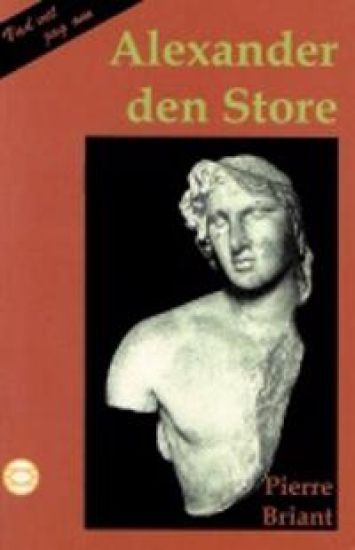
Alexander den store

Alexander den store

Pierre Briant

Alhambra Förlag AB
1999
pokkari
Pierre Briant räknas som en av världens ledande auktoriteter på Alexander den store och det akemenidiska riket. Han är en fransk iranist, historiker och professor i den akemenidernas historia och kulturhistoria och Alexanders rike vid Collège de France. Briant studierade historia vid Universitetet i Poitiers 1960–1965 och tog sin doktorsexamen 1972.
Darius in the Shadow of Alexander

Darius in the Shadow of Alexander

Pierre Briant

Harvard University Press
2015
sidottu
The last of Cyrus the Great’s dynastic inheritors and the legendary enemy of Alexander the Great, Darius III ruled over a Persian Empire that stretched from the Mediterranean to the Indus River. Yet, despite being the most powerful king of his time, Darius remains an obscure figure.As Pierre Briant explains in the first book ever devoted to the historical memory of Darius III, the little that is known of him comes primarily from Greek and Roman sources, which often present him in an unflattering light, as a decadent Oriental who lacked the masculine virtues of his Western adversaries. Influenced by the Alexander Romance as they are, even the medieval Persian sources are not free of harsh prejudices against the king Dara, whom they deemed deficient in the traditional kingly virtues. Ancient Classical accounts construct a man who is in every respect Alexander’s opposite—feeble-minded, militarily inept, addicted to pleasure, and vain. When Darius’s wife and children are captured by Alexander’s forces at the Battle of Issos, Darius is ready to ransom his entire kingdom to save them—a devoted husband and father, perhaps, but a weak king.While Darius seems doomed to be a footnote in the chronicle of Alexander’s conquests, in one respect it is Darius who has the last laugh. For after Darius’s defeat in 331 BCE, Alexander is described by historians as becoming ever more like his vanquished opponent: a Darius-like sybarite prone to unmanly excess.
Alexander I

Alexander I

Marie-Pierre Rey

Northern Illinois University Press
2012
sidottu
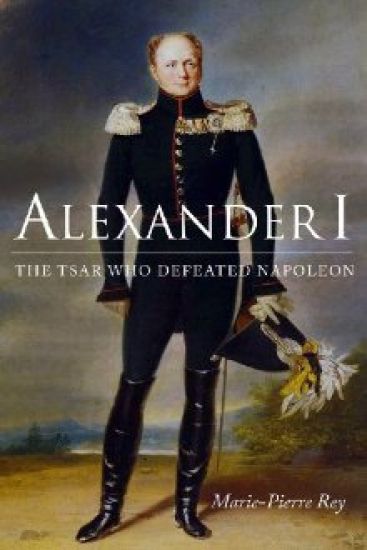
Alexander I was a ruler with high aspirations for the people of Russia. Cosseted as a young grand duke by Catherine the Great, he ascended to the throne in 1801 after the brutal assassination of his father. In this magisterial biography, Marie-Pierre Rey illuminates the complex forces that shaped Alexander's tumultuous reign and sheds brilliant new light on the handsome ruler known to his people as "the Sphinx." Despite an early and ambitious commitment to sweeping political reforms, Alexander saw his liberal aspirations overwhelmed by civil unrest in his own country and by costly confrontations with Napoleon, which culminated in the French invasion of Russia and the burning of Moscow in 1812. Eventually, Alexander turned back Napoleon's forces and entered Paris a victor two years later, but by then he had already grown weary of military glory. As the years passed, the tsar who defeated Napoleon would become increasingly preoccupied with his own spiritual salvation, an obsession that led him to pursue a rapprochement between the Orthodox and Roman churches. When in exile, Napoleon once remarked of his Russian rival: "He could go far. If I die here, he will be my true heir in Europe." It was not to be. Napoleon died on Saint Helena and Alexander succumbed to typhus four years later at the age of forty-eight. But in this richly nuanced portrait, Rey breathes new life into the tsar who stood at the center of the political chessboard of early nineteenth-century Europe, a key figure at the heart of diplomacy, war, and international intrigue during that region's most tumultuous years.
Alexander I

Alexander I

Marie-Pierre Rey

Northern Illinois University Press
2016
pokkari
Alexander I was a ruler with high aspirations for the people of Russia. Cosseted as a young grand duke by Catherine the Great, he ascended to the throne in 1801 after the brutal assassination of his father. In this magisterial biography, Marie-Pierre Rey illuminates the complex forces that shaped Alexander's tumultuous reign and sheds brilliant new light on the handsome ruler known to his people as "the Sphinx." Despite an early and ambitious commitment to sweeping political reforms, Alexander saw his liberal aspirations overwhelmed by civil unrest in his own country and by costly confrontations with Napoleon, which culminated in the French invasion of Russia and the burning of Moscow in 1812. Eventually, Alexander turned back Napoleon's forces and entered Paris a victor two years later, but by then he had already grown weary of military glory. As the years passed, the tsar who defeated Napoleon would become increasingly preoccupied with his own spiritual salvation, an obsession that led him to pursue a rapprochement between the Orthodox and Roman churches. When in exile, Napoleon once remarked of his Russian rival: "He could go far. If I die here, he will be my true heir in Europe." It was not to be. Napoleon died on Saint Helena and Alexander succumbed to typhus four years later at the age of forty-eight. But in this richly nuanced portrait, Rey breathes new life into the tsar who stood at the center of the political chessboard of early nineteenth-century Europe, a key figure at the heart of diplomacy, war, and international intrigue during that region's most tumultuous years.
From Cyrus to Alexander

From Cyrus to Alexander

Pierre Briant

Eisenbrauns
2002
sidottu
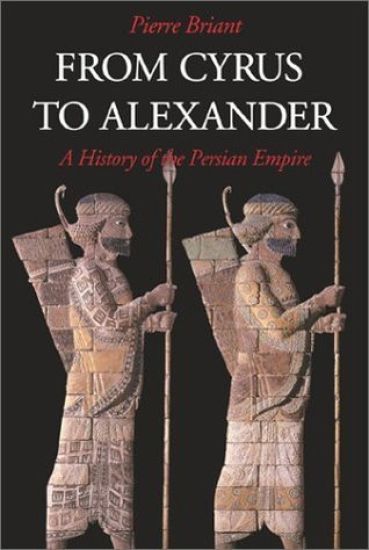
Around 550 B.C.E. the Persian people—who were previously practically unknown in the annals of history—emerged from their base in southern Iran (Fars) and engaged in a monumental adventure that, under the leadership of Cyrus the Great and his successors, culminated in the creation of an immense Empire that stretched from central Asia to Upper Egypt, from the Indus to the Danube. The Persian (or Achaemenid, named for its reigning dynasty) Empire assimilated an astonishing diversity of lands, peoples, languages, and cultures. This conquest of Near Eastern lands completely altered the history of the world: for the first time, a monolithic State as vast as the future Roman Empire arose, expanded, and matured in the course of more than two centuries (530–330) and endured until the death of Alexander the Great (323), who from a geopolitical perspective was “the last of the Achaemenids.” Even today, the remains of the Empire-the terraces, palaces, reliefs, paintings, and enameled bricks of Pasargadae, Persepolis, and Susa; the impressive royal tombs of Naqsh-i Rustam; the monumental statue of Darius the Great-serve to remind visitors of the power and unprecedented luxury of the Great Kings and their loyal courtiers (the “Faithful Ones”).Though long eclipsed and overshadowed by the towering prestige of the “ancient Orient” and “eternal Greece,” Achaemenid history has emerged into fresh light during the last two decades. Freed from the tattered rags of “Oriental decadence” and “Asiatic stagnation,” research has also benefited from a continually growing number of discoveries that have provided important new evidence-including texts, as well as archaeological, numismatic, and iconographic artifacts.The evidence that this book assembles is voluminous and diverse: the citations of ancient documents and of the archaeological evidence permit the reader to follow the author in his role as a historian who, across space and time, attempts to understand how such an Empire emerged, developed, and faded. Though firmly grounded in the evidence, the author’s discussions do not avoid persistent questions and regularly engages divergent interpretations and alternative hypotheses. This book is without precedent or equivalent, and also offers an exhaustive bibliography and thorough indexes.The French publication of this magisterial work in 1996 was acclaimed in newspapers and literary journals. Now Histoire de l’Empire Perse: De Cyrus a Alexandre is translated in its entirety in a revised edition, with the author himself reviewing the translation, correcting the original edition, and adding new documentation.Pierre Briant, Chaire Histoire et civilisation du monde achémenide et de l’empire d’Alexandre, Collège de France, is a specialist in the history of the Near East during the era of the Persian Empire and the conquests of Alexander. He is the author of numerous books.Peter T. Daniels, the translator, is an independent scholar, editor, and translator who studied at Cornell University and the University of Chicago. He lives and works in New York City.
From Cyrus to Alexander

From Cyrus to Alexander

Briant Pierre

EISENBRAUNS
2002
pokkari
Around 550 B.C.E. the Persian people—who were previously practically unknown in the annals of history—emerged from their base in southern Iran (Fars) and engaged in a monumental adventure that, under the leadership of Cyrus the Great and his successors, culminated in the creation of an immense Empire that stretched from central Asia to Upper Egypt, from the Indus to the Danube. The Persian (or Achaemenid, named for its reigning dynasty) Empire assimilated an astonishing diversity of lands, peoples, languages, and cultures. This conquest of Near Eastern lands completely altered the history of the world: for the first time, a monolithic State as vast as the future Roman Empire arose, expanded, and matured in the course of more than two centuries (530–330) and endured until the death of Alexander the Great (323), who from a geopolitical perspective was “the last of the Achaemenids.” Even today, the remains of the Empire-the terraces, palaces, reliefs, paintings, and enameled bricks of Pasargadae, Persepolis, and Susa; the impressive royal tombs of Naqsh-i Rustam; the monumental statue of Darius the Great-serve to remind visitors of the power and unprecedented luxury of the Great Kings and their loyal courtiers (the “Faithful Ones”).Though long eclipsed and overshadowed by the towering prestige of the “ancient Orient” and “eternal Greece,” Achaemenid history has emerged into fresh light during the last two decades. Freed from the tattered rags of “Oriental decadence” and “Asiatic stagnation,” research has also benefited from a continually growing number of discoveries that have provided important new evidence-including texts, as well as archaeological, numismatic, and iconographic artifacts.The evidence that this book assembles is voluminous and diverse: the citations of ancient documents and of the archaeological evidence permit the reader to follow the author in his role as a historian who, across space and time, attempts to understand how such an Empire emerged, developed, and faded. Though firmly grounded in the evidence, the author’s discussions do not avoid persistent questions and regularly engages divergent interpretations and alternative hypotheses. This book is without precedent or equivalent, and also offers an exhaustive bibliography and thorough indexes.The French publication of this magisterial work in 1996 was acclaimed in newspapers and literary journals. Now Histoire de l’Empire Perse: De Cyrus a Alexandre is translated in its entirety in a revised edition, with the author himself reviewing the translation, correcting the original edition, and adding new documentation.Pierre Briant, Chaire Histoire et civilisation du monde achémenide et de l’empire d’Alexandre, Collège de France, is a specialist in the history of the Near East during the era of the Persian Empire and the conquests of Alexander. He is the author of numerous books.Peter T. Daniels, the translator, is an independent scholar, editor, and translator who studied at Cornell University and the University of Chicago. He lives and works in New York City.
Die Wissenschaftssoziologie Pierre Bourdieus

Die Wissenschaftssoziologie Pierre Bourdieus

Alexander Lenger; Philipp Rhein

Springer vs
2018
nidottu
?Die Wissenschaftssoziologie Pierre Bourdieus steht im Zentrum seines soziologischen Gesamtwerkes. Die vorliegende Einführung stellt erstmalig Bourdieus wissenschaftssoziologisches Werk in systematischer Form dar und verdeutlicht den zentralen Mehrwert seiner Sozialtheorie für die moderne Wissenschaftsforschung. Es wird gezeigt, wie sich Bourdieus Wissenschaftstheorie und erkenntnistheoretische Kritik mit seiner soziologischen Analyse des wissenschaftlichen Feldes verbinden. Diese Synthese liefert die Begründung für die öffentliche und politische Intervention von Soziolog*innen und Intellektuellen.Der Inhalt• Bourdieus Erkenntnis- und Wissenschaftstheorie• Das wissenschaftliche Feld• Vom Gebrauch der Wissenschaft• Bourdieu und die moderne Wissenschaftssoziologie• Bourdieu in der WissenschaftsforschungDie Zielgruppen• Studierende und Lehrende der Soziologie, Philosophie, Kultur- und Sozialwissenschaften• Studierende und Lehrende der Wissenschaftssoziologie und Science and Technology Studies• Studierende und Lehrende der Wissenschafts- und HochschulforschungDie AutorenDr. Alexander Lenger vertritt seit März 2018 die Professur für Wirtschaftswissenschaften und Didaktik der Wirtschaftslehre an der Universität Siegen. Zuvor hat er von April 2016 bis März 2017 die Professur für Soziologie des Wissens am Karlsruher Institut für Technologie und von April bis August 2015 die Professur für Soziologie an der Universität Freiburg vertreten.Philipp Rhein ist Lehrbeauftragter am Institut für Soziologie an der Ludwig-Maximilians-Universität München und arbeitet am Institut für Sozialwissenschaftliche Forschung – ISF München.
Épître À M. Pieyre, Préfet Du Département Du Loiret

Épître À M. Pieyre, Préfet Du Département Du Loiret

Jean-César-Marie-Alexandre Chaudruc Crazannes

Hachette Livre - BNF
2017
pokkari
Epitre a M. Pieyre, prefet du departement du Loiret, par M. C.-A. Chaudruc, ...Date de l'edition originale: 1807Appartient a l'ensemble documentaire: Aquit1Appartient a l'ensemble documentaire: Centre1Ce livre est la reproduction fidele d'une oeuvre publiee avant 1920 et fait partie d'une collection de livres reimprimes a la demande editee par Hachette Livre, dans le cadre d'un partenariat avec la Bibliotheque nationale de France, offrant l'opportunite d'acceder a des ouvrages anciens et souvent rares issus des fonds patrimoniaux de la BnF.Les oeuvres faisant partie de cette collection ont ete numerisees par la BnF et sont presentes sur Gallica, sa bibliotheque numerique.En entreprenant de redonner vie a ces ouvrages au travers d'une collection de livres reimprimes a la demande, nous leur donnons la possibilite de rencontrer un public elargi et participons a la transmission de connaissances et de savoirs parfois difficilement accessibles.Nous avons cherche a concilier la reproduction fidele d'un livre ancien a partir de sa version numerisee avec le souci d'un confort de lecture optimal. Nous esperons que les ouvrages de cette nouvelle collection vous apporteront entiere satisfaction.Pour plus d'informations, rendez-vous sur www.hachettebnf.fr
Alexander Calder – Radical Inventor

Alexander Calder – Radical Inventor

Anne Grace; Elizabeth Hutton Turner; Carlson W. Bernard; Linda Dalrymple Henderson; Pascal Jacob; Abigail Mack; Vanja Malloy; Nagy Eleanora; Pierre Arnauld; Emily C. Reed; Taylor Alex J.; Raymond Claire

Five Continents Editions
2018
nidottu
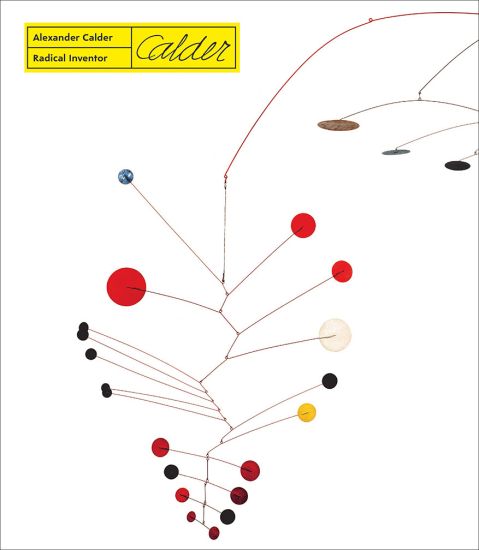
Alexander Calder (1898-1976) was a radical inventor: an artist who discarded convention and disrupted hierarchies, overturning the traditional basis of culture while revolutionising the way people perceive and interact with art. Calder's 'new line' was not simply an evolution of forms and styles. From the start, it was quite clear to all who witnessed him at work that - in his way of drawing attention and gaining notoriety - he was doing something radically new. This catalogue shows how Calder's work emerged from expectations of change in American popular culture. Calder, who was initially attracted by the structure and functions of the circus, looked for alternative models to triumph over respectability, public decorum, and the ambitions of industry. The catalogue, with twelve essays from major contributors, will examine how Calder, among the first college-trained artists, found techniques and inspiration in many disciplines and their development: technology, engineering, architecture, physics, and astronomy, among others. All these contributed to the development of his wire sculptures, mobiles, and stabiles. More than 100 works and comparative illustrations will guide the reader through this innovative and unique path.
Ecologies of Power

Ecologies of Power

Pierre Bélanger; Alexander Arroyo

MIT Press
2016
pokkari
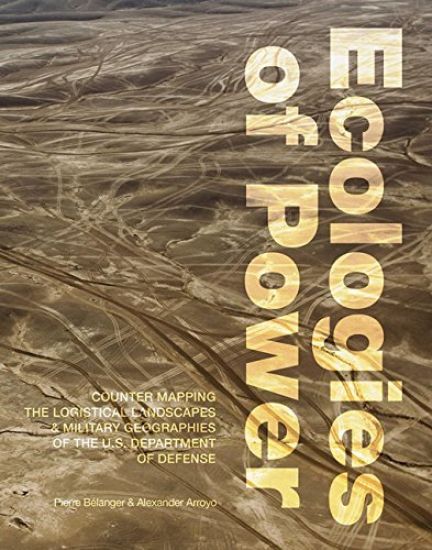
Countermapping the geospatial footprint of the U.S. Department of Defense to reveal the making, unmaking, and remaking of a vast military-logistical landscape.This book is not about war, nor is it a history of war. Avoiding the shock and awe of wartime images, it explores the contemporary spatial configurations of power camouflaged in the infrastructures, environments, and scales of military operations. Instead of wartime highs, this book starts with drawdown lows, when demobilization and decommissioning morph into realignment and prepositioning. It is in this transitional milieu that the full material magnitudes and geographic entanglements of contemporary militarism are laid bare. Through this perpetual cycle of build up and breakdown, the U.S. Department of Defense-the single largest developer, landowner, equipment contractor, and energy consumer in the world-has engineered a planetary assemblage of "operational environments" in which militarized, demilitarized, and non-militarized landscapes are increasingly inextricable. In a series of critical cartographic essays, Pierre Belanger and Alexander Arroyo trace this footprint far beyond the battlefield, countermapping the geographies of U.S. militarism across five of the most important and embattled operational environments: the ocean, the atmosphere, the highway, the city, and the desert. From the Indian Ocean atoll of Diego Garcia to the defense-contractor archipelago around Washington, D.C.; from the A01 Highway circling Afghanistan's high-altitude steppe to surveillance satellites pinging the planet from low-earth orbit; and from the vast cold chain conveying military perishables worldwide to the global constellation of military dumps, sinks, and scrapyards, the book unearths the logistical infrastructures and residual landscapes that render strategy spatial, militarism material, and power operational. In so doing, Belanger and Arroyo reveal unseen ecologies of power at work in the making and unmaking of environments-operational, built, and otherwise-to come.