Kirjojen hintavertailu. Mukana 11 988 638 kirjaa ja 12 kauppaa.

Kirjahaku

Etsi kirjoja tekijän nimen, kirjan nimen tai ISBN:n perusteella.

1000 tulosta hakusanalla Reid B. Locklin

An Inquiry Into the Human Mind, on the Principles of Common Sense. By Thomas Reid,
The 18th century was a wealth of knowledge, exploration and rapidly growing technology and expanding record-keeping made possible by advances in the printing press. In its determination to preserve the century of revolution, Gale initiated a revolution of its own: digitization of epic proportions to preserve these invaluable works in the largest archive of its kind. Now for the first time these high-quality digital copies of original 18th century manuscripts are available in print, making them highly accessible to libraries, undergraduate students, and independent scholars.The Age of Enlightenment profoundly enriched religious and philosophical understanding and continues to influence present-day thinking. Works collected here include masterpieces by David Hume, Immanuel Kant, and Jean-Jacques Rousseau, as well as religious sermons and moral debates on the issues of the day, such as the slave trade. The Age of Reason saw conflict between Protestantism and Catholicism transformed into one between faith and logic -- a debate that continues in the twenty-first century.++++The below data was compiled from various identification fields in the bibliographic record of this title. This data is provided as an additional tool in helping to insure edition identification: ++++British LibraryT110558Edinburgh: printed for A. Millar, London, and A. Kincaid & J. Bell, Edinburgh, 1764. xvi,541, 1]p.; 8
Essays on the Intellectual Powers of man. By Thomas Reid,
The 18th century was a wealth of knowledge, exploration and rapidly growing technology and expanding record-keeping made possible by advances in the printing press. In its determination to preserve the century of revolution, Gale initiated a revolution of its own: digitization of epic proportions to preserve these invaluable works in the largest archive of its kind. Now for the first time these high-quality digital copies of original 18th century manuscripts are available in print, making them highly accessible to libraries, undergraduate students, and independent scholars.Medical theory and practice of the 1700s developed rapidly, as is evidenced by the extensive collection, which includes descriptions of diseases, their conditions, and treatments. Books on science and technology, agriculture, military technology, natural philosophy, even cookbooks, are all contained here.++++The below data was compiled from various identification fields in the bibliographic record of this title. This data is provided as an additional tool in helping to insure edition identification: ++++British LibraryT109176With a final numbered leaf of advertisements for John Bell.Edinburgh: printed for John Bell, and G. G. J. & J. Robinson, London, 1785. xii,766,2p.; 4
An Inquiry Into the Human Mind, on the Principles of Common Sense. by Thomas Reid, ... the Fourth Edition Corrected
The 18th century was a wealth of knowledge, exploration and rapidly growing technology and expanding record-keeping made possible by advances in the printing press. In its determination to preserve the century of revolution, Gale initiated a revolution of its own: digitization of epic proportions to preserve these invaluable works in the largest archive of its kind. Now for the first time these high-quality digital copies of original 18th century manuscripts are available in print, making them highly accessible to libraries, undergraduate students, and independent scholars.The Age of Enlightenment profoundly enriched religious and philosophical understanding and continues to influence present-day thinking. Works collected here include masterpieces by David Hume, Immanuel Kant, and Jean-Jacques Rousseau, as well as religious sermons and moral debates on the issues of the day, such as the slave trade. The Age of Reason saw conflict between Protestantism and Catholicism transformed into one between faith and logic -- a debate that continues in the twenty-first century.++++The below data was compiled from various identification fields in the bibliographic record of this title. This data is provided as an additional tool in helping to insure edition identification: ++++British LibraryT109363London: printed for T. Cadell; and J. Bell and W. Creech, Edinburgh, 1785. xvi,488p.; 8
Essays on the Active Powers of man. By Thomas Reid,

Essays on the Active Powers of man. By Thomas Reid,

Thomas Reid

Gale Ecco, Print Editions
2018
sidottu
The 18th century was a wealth of knowledge, exploration and rapidly growing technology and expanding record-keeping made possible by advances in the printing press. In its determination to preserve the century of revolution, Gale initiated a revolution of its own: digitization of epic proportions to preserve these invaluable works in the largest archive of its kind. Now for the first time these high-quality digital copies of original 18th century manuscripts are available in print, making them highly accessible to libraries, undergraduate students, and independent scholars.Western literary study flows out of eighteenth-century works by Alexander Pope, Daniel Defoe, Henry Fielding, Frances Burney, Denis Diderot, Johann Gottfried Herder, Johann Wolfgang von Goethe, and others. Experience the birth of the modern novel, or compare the development of language using dictionaries and grammar discourses. ++++The below data was compiled from various identification fields in the bibliographic record of this title. This data is provided as an additional tool in helping to insure edition identification: ++++British LibraryT109117With a half-title and a final advertisement leaf.Edinburgh: printed for John Bell, and G. G. J. & J. Robinson, London, 1788. vii, 1],493, 3]p.; 4
An Inquiry Into the Human Mind, on the Principles of Common Sense. By Thomas Reid, D.D. ... The Third Edition
The 18th century was a wealth of knowledge, exploration and rapidly growing technology and expanding record-keeping made possible by advances in the printing press. In its determination to preserve the century of revolution, Gale initiated a revolution of its own: digitization of epic proportions to preserve these invaluable works in the largest archive of its kind. Now for the first time these high-quality digital copies of original 18th century manuscripts are available in print, making them highly accessible to libraries, undergraduate students, and independent scholars.The Age of Enlightenment profoundly enriched religious and philosophical understanding and continues to influence present-day thinking. Works collected here include masterpieces by David Hume, Immanuel Kant, and Jean-Jacques Rousseau, as well as religious sermons and moral debates on the issues of the day, such as the slave trade. The Age of Reason saw conflict between Protestantism and Catholicism transformed into one between faith and logic -- a debate that continues in the twenty-first century.++++The below data was compiled from various identification fields in the bibliographic record of this title. This data is provided as an additional tool in helping to insure edition identification: ++++British LibraryT199874Dublin: printed by R. Marchbank, for the company of booksellers, 1779. xii,316p.; 12
An Inquiry Into the Human Mind, on the Principles of Common Sense. by Thomas Reid, D.D.
The 18th century was a wealth of knowledge, exploration and rapidly growing technology and expanding record-keeping made possible by advances in the printing press. In its determination to preserve the century of revolution, Gale initiated a revolution of its own: digitization of epic proportions to preserve these invaluable works in the largest archive of its kind. Now for the first time these high-quality digital copies of original 18th century manuscripts are available in print, making them highly accessible to libraries, undergraduate students, and independent scholars.Delve into what it was like to live during the eighteenth century by reading the first-hand accounts of everyday people, including city dwellers and farmers, businessmen and bankers, artisans and merchants, artists and their patrons, politicians and their constituents. Original texts make the American, French, and Industrial revolutions vividly contemporary.++++The below data was compiled from various identification fields in the bibliographic record of this title. This data is provided as an additional tool in helping to insure edition identification: ++++British LibraryT188696Dublin: printed for Alexander Ewing, 1764. xii,316p.; 12
Essays on the Intellectual and Active Powers of man. By Thomas Reid, ... In Three Volumes. ... of 3; Volume 1
The 18th century was a wealth of knowledge, exploration and rapidly growing technology and expanding record-keeping made possible by advances in the printing press. In its determination to preserve the century of revolution, Gale initiated a revolution of its own: digitization of epic proportions to preserve these invaluable works in the largest archive of its kind. Now for the first time these high-quality digital copies of original 18th century manuscripts are available in print, making them highly accessible to libraries, undergraduate students, and independent scholars.The Age of Enlightenment profoundly enriched religious and philosophical understanding and continues to influence present-day thinking. Works collected here include masterpieces by David Hume, Immanuel Kant, and Jean-Jacques Rousseau, as well as religious sermons and moral debates on the issues of the day, such as the slave trade. The Age of Reason saw conflict between Protestantism and Catholicism transformed into one between faith and logic -- a debate that continues in the twenty-first century.++++The below data was compiled from various identification fields in the bibliographic record of this title. This data is provided as an additional tool in helping to insure edition identification: ++++Huntington LibraryN008392Dublin: printed for P. Byrne, and J. Milliken, 1790. 3v.; 8
Essays on the Intellectual and Active Powers of man. By Thomas Reid, ... In Three Volumes. ... of 3; Volume 2
The 18th century was a wealth of knowledge, exploration and rapidly growing technology and expanding record-keeping made possible by advances in the printing press. In its determination to preserve the century of revolution, Gale initiated a revolution of its own: digitization of epic proportions to preserve these invaluable works in the largest archive of its kind. Now for the first time these high-quality digital copies of original 18th century manuscripts are available in print, making them highly accessible to libraries, undergraduate students, and independent scholars.The Age of Enlightenment profoundly enriched religious and philosophical understanding and continues to influence present-day thinking. Works collected here include masterpieces by David Hume, Immanuel Kant, and Jean-Jacques Rousseau, as well as religious sermons and moral debates on the issues of the day, such as the slave trade. The Age of Reason saw conflict between Protestantism and Catholicism transformed into one between faith and logic -- a debate that continues in the twenty-first century.++++The below data was compiled from various identification fields in the bibliographic record of this title. This data is provided as an additional tool in helping to insure edition identification: ++++Huntington LibraryN008392Dublin: printed for P. Byrne, and J. Milliken, 1790. 3v.; 8
Essays on the Intellectual and Active Powers of man. By Thomas Reid, ... In Three Volumes. ... of 3; Volume 3
The 18th century was a wealth of knowledge, exploration and rapidly growing technology and expanding record-keeping made possible by advances in the printing press. In its determination to preserve the century of revolution, Gale initiated a revolution of its own: digitization of epic proportions to preserve these invaluable works in the largest archive of its kind. Now for the first time these high-quality digital copies of original 18th century manuscripts are available in print, making them highly accessible to libraries, undergraduate students, and independent scholars.The Age of Enlightenment profoundly enriched religious and philosophical understanding and continues to influence present-day thinking. Works collected here include masterpieces by David Hume, Immanuel Kant, and Jean-Jacques Rousseau, as well as religious sermons and moral debates on the issues of the day, such as the slave trade. The Age of Reason saw conflict between Protestantism and Catholicism transformed into one between faith and logic -- a debate that continues in the twenty-first century.++++The below data was compiled from various identification fields in the bibliographic record of this title. This data is provided as an additional tool in helping to insure edition identification: ++++Huntington LibraryN008392Dublin: printed for P. Byrne, and J. Milliken, 1790. 3v.; 8
An Essay on the Nature and Cure of the Phthisis Pulmonalis. The Second Edition Enlarged. To Which is Added an Appendix on the use and Effects of Frequent Vomits. By Thomas Reid,
The 18th century was a wealth of knowledge, exploration and rapidly growing technology and expanding record-keeping made possible by advances in the printing press. In its determination to preserve the century of revolution, Gale initiated a revolution of its own: digitization of epic proportions to preserve these invaluable works in the largest archive of its kind. Now for the first time these high-quality digital copies of original 18th century manuscripts are available in print, making them highly accessible to libraries, undergraduate students, and independent scholars.Medical theory and practice of the 1700s developed rapidly, as is evidenced by the extensive collection, which includes descriptions of diseases, their conditions, and treatments. Books on science and technology, agriculture, military technology, natural philosophy, even cookbooks, are all contained here.++++The below data was compiled from various identification fields in the bibliographic record of this title. This data is provided as an additional tool in helping to insure edition identification: ++++Countway Library of MedicineN001672With a half-title.London: printed for T. Cadel, 1785. xvi,359, 1]p.; 8
Formal Christians and Secession From Them Consider'd; Being a Sermon Preach'd on 2 Tim. 3. 5. at the Opening of a Synod at Belfast, January 6. 1718-19. Wherein the Form and Power of Godliness, are in Part Explain'd; ... By James Reid,
The 18th century was a wealth of knowledge, exploration and rapidly growing technology and expanding record-keeping made possible by advances in the printing press. In its determination to preserve the century of revolution, Gale initiated a revolution of its own: digitization of epic proportions to preserve these invaluable works in the largest archive of its kind. Now for the first time these high-quality digital copies of original 18th century manuscripts are available in print, making them highly accessible to libraries, undergraduate students, and independent scholars.The Age of Enlightenment profoundly enriched religious and philosophical understanding and continues to influence present-day thinking. Works collected here include masterpieces by David Hume, Immanuel Kant, and Jean-Jacques Rousseau, as well as religious sermons and moral debates on the issues of the day, such as the slave trade. The Age of Reason saw conflict between Protestantism and Catholicism transformed into one between faith and logic -- a debate that continues in the twenty-first century.++++The below data was compiled from various identification fields in the bibliographic record of this title. This data is provided as an additional tool in helping to insure edition identification: ++++National Library of ScotlandT183161Belfast: printed by Robert Gardner, and are to be sold at his shop, 1729. 36,122, 2]p.; 8
Memorial and Abstract of the Proof for Andrew Reid, Andrew Boyter, and Alexander Reid, Bailies of the Borough of Kilrenny; Alexander Paton, Treasurer; Alexander Wedderburn, Esq; William Alexander, Esq; James Edie, David Watson, Thomas Smart
The 18th century was a wealth of knowledge, exploration and rapidly growing technology and expanding record-keeping made possible by advances in the printing press. In its determination to preserve the century of revolution, Gale initiated a revolution of its own: digitization of epic proportions to preserve these invaluable works in the largest archive of its kind. Now for the first time these high-quality digital copies of original 18th century manuscripts are available in print, making them highly accessible to libraries, undergraduate students, and independent scholars.This collection reveals the history of English common law and Empire law in a vastly changing world of British expansion. Dominating the legal field is the Commentaries of the Law of England by Sir William Blackstone, which first appeared in 1765. Reference works such as almanacs and catalogues continue to educate us by revealing the day-to-day workings of society.++++The below data was compiled from various identification fields in the bibliographic record of this title. This data is provided as an additional tool in helping to insure edition identification: ++++National Library of ScotlandT173808Drop-head title. Dated at head: February 18. 1766. Edinburgh, 1766]. 46p.; 4
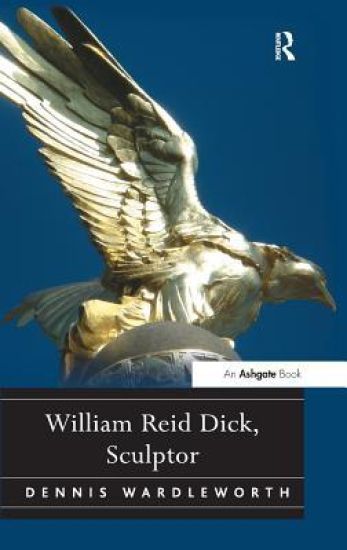
William Reid Dick, Sculptor

William Reid Dick, Sculptor

Dennis Wardleworth

Ashgate Publishing Limited
2013
sidottu
William Reid Dick (1878-1961) was one of a generation of British sculptors air-brushed out of art history by the Modernist critics of the late twentieth century. This long-overdue monograph adds to the recent revival of interest in this group of forgotten sculptors, by describing the life and work of arguably the leading figure of the group in unprecedented depth. The facts of Reid Dick's life and his most important works are presented against a backdrop of the historical, social and aesthetic changes taking place during his lifetime. Dennis Wardleworth elucidates why Reid Dick's reputation plummeted so quickly, and why his position in the history of British art deserves to be restored. This study draws upon a wealth of previously unpublished material, including over 2000 letters, and press cuttings and photographs in the Tate Archive, as well as letters and photographs held by Reid Dick's family. It traces the sculptor's story from his birth in the Gorbals in Glasgow, to his election to the Royal Academy and knighting by George V, to the decline of his career and his late-life connection with American millionaire and art collector Huntington Hartford. The first monograph on Reid Dick since 1945, the book also includes images of over 40 of his works and a listing of over 200 works identified by the author.
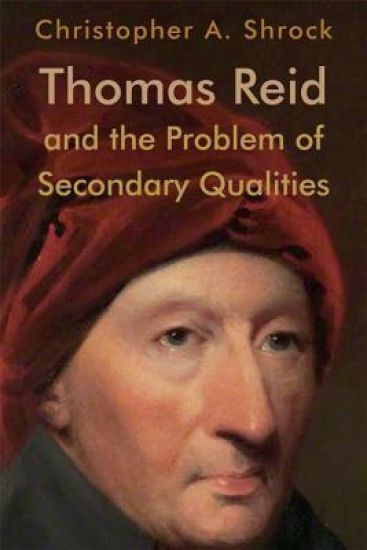
Thomas Reid and the Problem of Secondary Qualities

Thomas Reid and the Problem of Secondary Qualities

Christopher Shrock

Edinburgh University Press
2017
sidottu
Defends Reid's Common Sense philosophy against the claim that perception does not allow us to experience the physical world With a new reading of Thomas Reid on primary and secondary qualities, Christopher A. Shrock illuminates the Common Sense theory of perception. Shrock follow's Reid's lead in defending common sense philosophy against the problem of secondary qualities, which claims that our perceptions are only experiences in our brains, and don't let us know about the world around us. At the same time, Schrock maintains a healthy optimism about science and reason.