Kirjojen hintavertailu. Mukana 11 717 486 kirjaa ja 12 kauppaa.

Kirjahaku

Etsi kirjoja tekijän nimen, kirjan nimen tai ISBN:n perusteella.

1000 tulosta hakusanalla Richard J. Walter

German Disarmament After World War I

German Disarmament After World War I

Richard J. Shuster

Routledge
2006
sidottu
German Disarmament After World War I examines the Allied disarmament of Germany and the challenges that such an enormous task presented to international efforts in enforcing the Treaty of Versailles.In the twenty-first century, disarmament remains a critical issue for the International community. This new book focuses on three key areas and lessons of Allied disarmament operations from 1920-31: the role and experience of international arms inspectors working amidst an embittered German populace the ramifications of the divergent disarmament priorities of the leaders of the disarmament coalitionthe effectiveness of united Allied policies backed by sanctions. These major issues are examined within the overall context of the assessment of Allied disarmament operations in Germany. While some historians perceive German disarmament as a failure, this book argues that arms inspectors successfully destroyed Germany’s ability to pose a military threat to European security.This new study shows how the destructive legacy of war convinced the victorious nations, especially Britain and France, of the importance in minimizing German military strength. French post-war security concerns, however, were often faced with the unwillingness of Britain to enforce the totality of the military articles of the treaty. German obstruction also influenced Allied disarmament policies. German Disarmament After World War I examines the initial effectiveness of Allied disarmament efforts in Germany and explains how they ultimately disappeared through diverging conceptions of a post-war world.This book will be of great interest to all students of disarmament, the interwar period and of military history, modern European history and security studies.

The Routledge Concise History of Canadian Literature
The Routledge Concise History of Canadian Literature introduces the fiction, poetry and drama of Canada in its historical, political and cultural contexts. In this clear and structured volume, Richard Lane outlines: the history of Canadian literature from colonial times to the present key texts for Canadian First Peoples and the literature of Quebec the impact of English translation, and the Canadian immigrant experience critical themes such as landscape, ethnicity, orality, textuality, war and nationhood contemporary debate on the canon, feminism, postcoloniality, queer theory, and cultural and ethnic diversity the work of canonical and lesser-known writers from Catherine Parr Traill and Susanna Moodie to Robert Service, Maria Campbell and Douglas Coupland. Written in an engaging and accessible style and offering a glossary, maps and further reading sections, this guidebook is a crucial resource for students working in the field of Canadian Literature.
The Routledge Concise History of Canadian Literature
The Routledge Concise History of Canadian Literature introduces the fiction, poetry and drama of Canada in its historical, political and cultural contexts. In this clear and structured volume, Richard Lane outlines: the history of Canadian literature from colonial times to the present key texts for Canadian First Peoples and the literature of Quebec the impact of English translation, and the Canadian immigrant experience critical themes such as landscape, ethnicity, orality, textuality, war and nationhood contemporary debate on the canon, feminism, postcoloniality, queer theory, and cultural and ethnic diversity the work of canonical and lesser-known writers from Catherine Parr Traill and Susanna Moodie to Robert Service, Maria Campbell and Douglas Coupland. Written in an engaging and accessible style and offering a glossary, maps and further reading sections, this guidebook is a crucial resource for students working in the field of Canadian Literature.
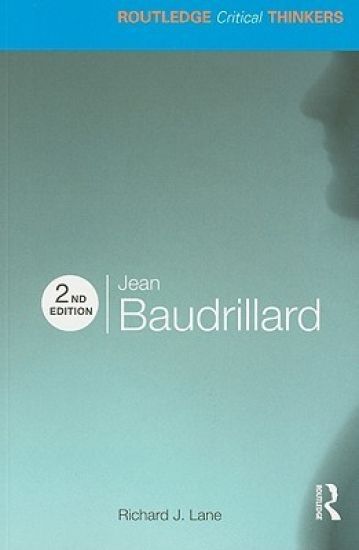
Jean Baudrillard

Jean Baudrillard

Richard J. Lane

Routledge
2008
sidottu
Jean Baudrillard is one of the most controversial theorists of our time, famous for his claim that the Gulf War never happened and for his provocative writing on terrorism, specifically 9/11. This new and fully updated second edition includes: an introduction to Baudrillard’s key works and theories such as simulation and hyperreality coverage of Baudrillard’s later work on the question of postmodernism a new chapter on Baudrillard and terrorism engagement with architecture and urbanism through the Utopie group a look at the most recent applications of Baudrillard’s ideas. Richard J. Lane offers a comprehensive introduction to this complex and fascinating theorist, also examining the impact that Baudrillard has had on literary studies, media and cultural studies, sociology, philosophy and postmodernism.
Jean Baudrillard

Jean Baudrillard

Richard J. Lane

Routledge
2008
nidottu
Jean Baudrillard is one of the most controversial theorists of our time, famous for his claim that the Gulf War never happened and for his provocative writing on terrorism, specifically 9/11. This new and fully updated second edition includes: an introduction to Baudrillard’s key works and theories such as simulation and hyperreality coverage of Baudrillard’s later work on the question of postmodernism a new chapter on Baudrillard and terrorism engagement with architecture and urbanism through the Utopie group a look at the most recent applications of Baudrillard’s ideas. Richard J. Lane offers a comprehensive introduction to this complex and fascinating theorist, also examining the impact that Baudrillard has had on literary studies, media and cultural studies, sociology, philosophy and postmodernism.
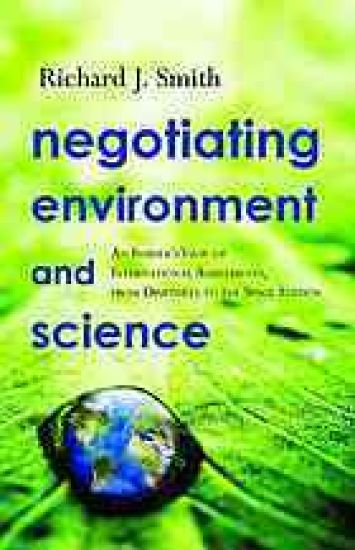
Negotiating Environment and Science

Negotiating Environment and Science

Richard J. Smith

Focal Press
2012
nidottu
In this thought-provoking new book, career U.S. State Department negotiator Richard J. Smith offers readers unprecedented access to the details about some of the most complex and politically charged international agreements of the late and immediate post Cold War era. During his nine years as Principal Deputy Assistant Secretary in the Bureau of Oceans and International Environmental and Scientific Affairs, Smith led U.S. negotiations on many significant international agreements. In Negotiating Environment and Science, Smith presents first-hand, in-depth accounts of eight of the most high-profile negotiations in which he was directly involved. The negotiations Smith covers are wide-ranging and include the London agreement to amend the Montreal Protocol on Substances that Deplete the Ozone Layer, the international space station agreement, the U.S.-Soviet (eventually, U.S.-Russian) agreement on scientific cooperation, the U.S.-Canada acid rain agreement, the negotiations in Sofia, Bulgaria that established a first link between human rights and the environment, and a contentious confrontation with Japan over driftnet fishing. Smith chronicles the development of these negotiations, the challenges that emerged (as much within the U.S. delegations as with the foreign partners), and the strategies that led to substantive treaties. Smith infuses his narrative with unique historical insight as well as astute observations that can guide U.S. strategies toward productive international agreements in the future. His book also highlights the shift in diplomatic focus over the past 25 years from arms control and other security-related agreements to international and trans-boundary agreements that address global environmental threats and promote cooperative approaches in science and technology. Written for an audience with a general interest in environmental issues as well as international relations, Negotiating Environment and Science will also be an important resource for historians, political scientists, and students in international law and diplomacy.
The History of the Study of Landforms: Volume 1 - Geomorphology Before Davis (Routledge Revivals)

The History of the Study of Landforms: Volume 1 - Geomorphology Before Davis (Routledge Revivals)

Richard J. Chorley; Antony J. Dunn; Robert P. Beckinsale

Routledge
2009
sidottu
This re-issue, first published in 1964, is the first of a seminal series analysing the development of the study of landforms, from both the geographical and geological point of view, with especial emphasis upon fluvial geomorphology. Volume 1 treats the subject up to the first important statement of the cycle of erosion by W. M. Davis in 1889, and attempts to identify the most significant currents of geomorphic thought, integrating them into the broader contemporary intellectual frameworks with which they were associated. As well as dealing with such key figures as Werner, De Saussure, Hutton, Playfair, Buckland, lyell, Agassiz, Ramsay, Dana, Peschel, Powell, Gilbert and Davis, attention is also given to many less important contributions by American, British and continental workers. A spirited biographical treatment, attractively set off by contemporary portraits, diagrams and sketches, will make this book of great interest to the historian of science, and indeed to the general reader, as well as to the student and scholar in geomorphology, hydrology and any other earth science.
The History of the Study of Landforms: Volume 1 - Geomorphology Before Davis (Routledge Revivals)

The History of the Study of Landforms: Volume 1 - Geomorphology Before Davis (Routledge Revivals)

Richard J. Chorley; Antony J. Dunn; Robert P. Beckinsale

Routledge
2009
nidottu
This re-issue, first published in 1964, is the first of a seminal series analysing the development of the study of landforms, from both the geographical and geological point of view, with especial emphasis upon fluvial geomorphology. Volume 1 treats the subject up to the first important statement of the cycle of erosion by W. M. Davis in 1889, and attempts to identify the most significant currents of geomorphic thought, integrating them into the broader contemporary intellectual frameworks with which they were associated. As well as dealing with such key figures as Werner, De Saussure, Hutton, Playfair, Buckland, lyell, Agassiz, Ramsay, Dana, Peschel, Powell, Gilbert and Davis, attention is also given to many less important contributions by American, British and continental workers. A spirited biographical treatment, attractively set off by contemporary portraits, diagrams and sketches, will make this book of great interest to the historian of science, and indeed to the general reader, as well as to the student and scholar in geomorphology, hydrology and any other earth science.
The Feminists

The Feminists

Richard J. Evans

Routledge
2012
sidottu
Originally published in 1977, this book brings together what is known about liberal feminist and socialist movements for the emancipation of women all over the world in the nineteenth and early twentieth centuries. It deals not only with Britain and the United States but also with Australia, New Zealand, France, Germany, Russia, Austria-Hungary and the Scandinavian countries. The chapters trace the origins, development, and eventual collapse of these movements in relation to the changing social formations and political structures of Europe, America and Australasia in the era of bourgeois liberalism. The first part of the book discusses the origins of feminist movements and advances a model or ‘ideal type’ description of their development. The second part then takes a number of case studies of individual feminist movements to illustrate the main varieties of organised feminism and the differences from country to country. The third part looks at socialist women’s movements and includes a study of the Socialist Women’s International. A final part touches on the reason for the eclipse of women’s emancipation movements in the half-century following the end of the First World War, before a general conclusion pulls together some of the arguments advanced in earlier chapters and attempts a comparison between these feminist movements of 1840-1920 and the Women’s Liberation Movement.
A Primer of Multivariate Statistics

A Primer of Multivariate Statistics

Richard J. Harris

Psychology Press Ltd
2013
nidottu
Drawing upon more than 30 years of experience in working with statistics, Dr. Richard J. Harris has updated A Primer of Multivariate Statistics to provide a model of balance between how-to and why. This classic text covers multivariate techniques with a taste of latent variable approaches. Throughout the book there is a focus on the importance of describing and testing one's interpretations of the emergent variables that are produced by multivariate analysis. This edition retains its conversational writing style while focusing on classical techniques. The book gives the reader a feel for why one should consider diving into more detailed treatments of computer-modeling and latent-variable techniques, such as non-recursive path analysis, confirmatory factor analysis, and hierarchical linear modeling. Throughout the book there is a focus on the importance of describing and testing one's interpretations of the emergent variables that are produced by multivariate analysis.
German Disarmament After World War I

German Disarmament After World War I

Richard J. Shuster

Routledge
2012
nidottu
German Disarmament After World War I examines the Allied disarmament of Germany and the challenges that such an enormous task presented to international efforts in enforcing the Treaty of Versailles.In the twenty-first century, disarmament remains a critical issue for the International community. This new book focuses on three key areas and lessons of Allied disarmament operations from 1920-31: the role and experience of international arms inspectors working amidst an embittered German populace the ramifications of the divergent disarmament priorities of the leaders of the disarmament coalitionthe effectiveness of united Allied policies backed by sanctions. These major issues are examined within the overall context of the assessment of Allied disarmament operations in Germany. While some historians perceive German disarmament as a failure, this book argues that arms inspectors successfully destroyed Germany’s ability to pose a military threat to European security.This new study shows how the destructive legacy of war convinced the victorious nations, especially Britain and France, of the importance in minimizing German military strength. French post-war security concerns, however, were often faced with the unwillingness of Britain to enforce the totality of the military articles of the treaty. German obstruction also influenced Allied disarmament policies. German Disarmament After World War I examines the initial effectiveness of Allied disarmament efforts in Germany and explains how they ultimately disappeared through diverging conceptions of a post-war world.This book will be of great interest to all students of disarmament, the interwar period and of military history, modern European history and security studies.

Experiencing Jazz, Second Edition
Experiencing Jazz, Second Edition, is an integrated textbook with online resources for jazz appreciation and history courses. Through readings, illustrations, timelines, listening guides, and a streaming audio library, it immerses the reader in a journey through the history of jazz, while placing the music within a larger cultural and historical context. Designed to introduce the novice to jazz, Experiencing Jazz describes the elements of music, and the characteristics and roles of different instruments. Prominent artists and styles from the roots of jazz to present day are relayed in a story-telling prose. This new edition features expanded coverage of women in jazz, the rise of jazz as a world music, the influence of Afro-Cuban and Latin jazz, and streaming audio. Features: Important musical trends are placed within a broad cultural, social, political, and economic contextMusic fundamentals are treated as integral to the understanding of jazz, and concepts are explained easily with graphic representations and audio examplesComprehensive treatment chronicles the roots of jazz in African music to present day Commonly overlooked styles, such as orchestral jazz, Cubop, and third-stream jazz are includedExpanded and up-to-date coverage of women in jazz The media-rich companion website presents a comprehensive streaming audio library of key jazz recordings by leading artists integrated with interactive listening guides. Illustrated musical concepts with web-based tutorials and audio interviews of prominent musicians acquaint new listeners to the sounds, styles, and figures of jazz. Course components The complete course comprises the textbook and Online Access to Music token, which are available to purchase separately. The textbook and Online Access to Music Token can also be purchased together in the Experiencing Jazz Book and Online Access to Music Pack. Book and Online Access to Music Pack: 978-0-415-65935-2 (Paperback and Online Access to Music) Book Only: 978-0-415-69960-0 (please note this does not include the Online Access to Music) Online Access to Music Token: 978-0-415-83735-4 (please note this does not include the textbook) eBook and Online Access to Music Pack: 978-0-203-37981-3 (available from the Taylor & Francis eBookstore) ebook: 978-0-203-37985-1 (please note this does not include the audio and is available from the Taylor & Francis eBookstore)
Mapping China and Managing the World

Mapping China and Managing the World

Richard J. Smith

Routledge
2012
sidottu
From the founding of the Qin dynasty in 221 BCE to the present, the Chinese have been preoccupied with the concept of order (zhi). This cultural preoccupation has found expression not only in China’s highly refined bureaucratic institutions and methods of social and economic organization but also in Chinese philosophy, religious and secular ritual, and a number of comprehensive systems for classifying every form of human achievement, as well as all natural and supernatural phenomena. Richard J. Smith’s Mapping China and Managing the World focuses on several crucial devices employed by the Chinese for understanding and ordering their vast and variegated world, which they saw as encompassing "all under Heaven." The book begins with discussions of how the ancient work known as the Yijing (Classic of Changes) and maps of "the world" became two prominent means by which the Chinese in imperial times (221 BCE to 1912) managed space and time. Smith goes on to show how ritual (li) served as a powerful tool for overcoming disorder, structuring Chinese society, and maintaining dynastic legitimacy. He then develops the idea that just as the Chinese classics and histories ordered the past, and ritual ordered the present, so divination ordered the future. The book concludes by emphasizing the enduring relevance of the Yijing in Chinese intellectual and cultural life as well as its place in the history of Sino-foreign interactions. This selection of essays by one of the foremost scholars of Chinese intellectual and cultural history will be welcomed by Chinese and East Asian historians, as well as those interested more broadly in the cultures of, and interactions between, China and East Asia.
Mapping China and Managing the World

Mapping China and Managing the World

Richard J. Smith

Routledge
2012
nidottu
From the founding of the Qin dynasty in 221 BCE to the present, the Chinese have been preoccupied with the concept of order (zhi). This cultural preoccupation has found expression not only in China’s highly refined bureaucratic institutions and methods of social and economic organization but also in Chinese philosophy, religious and secular ritual, and a number of comprehensive systems for classifying every form of human achievement, as well as all natural and supernatural phenomena. Richard J. Smith’s Mapping China and Managing the World focuses on several crucial devices employed by the Chinese for understanding and ordering their vast and variegated world, which they saw as encompassing "all under Heaven." The book begins with discussions of how the ancient work known as the Yijing (Classic of Changes) and maps of "the world" became two prominent means by which the Chinese in imperial times (221 BCE to 1912) managed space and time. Smith goes on to show how ritual (li) served as a powerful tool for overcoming disorder, structuring Chinese society, and maintaining dynastic legitimacy. He then develops the idea that just as the Chinese classics and histories ordered the past, and ritual ordered the present, so divination ordered the future. The book concludes by emphasizing the enduring relevance of the Yijing in Chinese intellectual and cultural life as well as its place in the history of Sino-foreign interactions. This selection of essays by one of the foremost scholars of Chinese intellectual and cultural history will be welcomed by Chinese and East Asian historians, as well as those interested more broadly in the cultures of, and interactions between, China and East Asia.
Experiencing Jazz

Experiencing Jazz

Richard J. Lawn

Routledge
2013
nidottu
This token provides access to the companion website and streaming audio anthology for Richard J. Lawn's Experiencing Jazz.Course componentsThe complete course comprises the textbook and Online Access to Music token, which are available to purchase separately. The textbook and Online Access to Music Token can also be purchased together in the Experiencing Jazz Book and Online Access to Music Pack.Book and Online Access to Music Pack: 978-0-415-65935-2 (Paperback and Online Access to Music)Book Only: 978-0-415-69960-0 (please note this does not include the Online Access to Music)Online Access to Music Token: 978-0-415-83735-4 (please note this does not include the textbook)eBook and Online Access to Music Pack: 978-0-203-37981-3 (available from the Taylor & Francis eBookstore)ebook: 978-0-203-37985-1 (please note this does not include the audio and is available from the Taylor & Francis eBookstore)
Official Portraits and Unofficial Counterportraits of At Risk Students
This book chronicles 5th and 6th grade writers - children of gang members, drug users, poor people, and non-documented and documented immigrants - in a rural school in the southwest US coming into their voices, cultivating those voices, and using those voices in a variety of venues, beginning with the classroom community and spreading outward. At the heart of this book is the cultivation of tension between official and unofficial portraits of these students. Official portraits are composed of demographic data, socioeconomic data, and test results. Unofficial counterportraits offer different views of children, schools, and communities. The big ideas of official and unofficial portraits are presented, then each chapter offers data (the children’s and teachers’ processes and products) and facets of the theoretical construct of counterportraits, as a response to official portraits. The counterportraits are built slowly in order to base them in evidence and to articulate their complexity.Many teachers and soon-to-be teachers facing the dilemmas and complexities of teaching in diverse classrooms have serious questions about how to honor students’ lives outside of school, making school more relevant. This book offers evidence to present to the public, legislators, and the press as a way of talking back to official portraits, demonstrating that officially failing schools are not really failing - evidence that is crucial for the survival of public schools.
Official Portraits and Unofficial Counterportraits of At Risk Students
This book chronicles 5th and 6th grade writers - children of gang members, drug users, poor people, and non-documented and documented immigrants - in a rural school in the southwest US coming into their voices, cultivating those voices, and using those voices in a variety of venues, beginning with the classroom community and spreading outward. At the heart of this book is the cultivation of tension between official and unofficial portraits of these students. Official portraits are composed of demographic data, socioeconomic data, and test results. Unofficial counterportraits offer different views of children, schools, and communities. The big ideas of official and unofficial portraits are presented, then each chapter offers data (the children’s and teachers’ processes and products) and facets of the theoretical construct of counterportraits, as a response to official portraits. The counterportraits are built slowly in order to base them in evidence and to articulate their complexity.Many teachers and soon-to-be teachers facing the dilemmas and complexities of teaching in diverse classrooms have serious questions about how to honor students’ lives outside of school, making school more relevant. This book offers evidence to present to the public, legislators, and the press as a way of talking back to official portraits, demonstrating that officially failing schools are not really failing - evidence that is crucial for the survival of public schools.
Homosexuality in the Life and Work of Joseph Conrad
This book analyzes the representations of homosexuality in Conrad’s fiction, beginning with Conrad’s life and letters to show that Conrad himself was, at least imaginatively, bisexual. Conrad’s recurrent bouts of neurasthenia, his difficult courtships, late marriage, and frequent expressions of misogyny can all be attributed to the fact that Conrad was emotionally, temperamentally, and, perhaps, even erotically more comfortable with men than women. Subsequent chapters trace Conrad’s fictional representations of homosexuality. Through his analysis, Ruppel reveals that homoeroticism is endemic to the adventure genre and how Conrad’s bachelor-narrators interest in younger men is homoerotic. Conrad scholars and those interested in homosexuality and constructions of masculinity should all be interested in this work.
Homosexuality in the Life and Work of Joseph Conrad
This book analyzes the representations of homosexuality in Conrad’s fiction, beginning with Conrad’s life and letters to show that Conrad himself was, at least imaginatively, bisexual. Conrad’s recurrent bouts of neurasthenia, his difficult courtships, late marriage, and frequent expressions of misogyny can all be attributed to the fact that Conrad was emotionally, temperamentally, and, perhaps, even erotically more comfortable with men than women. Subsequent chapters trace Conrad’s fictional representations of homosexuality. Through his analysis, Ruppel reveals that homoeroticism is endemic to the adventure genre and how Conrad’s bachelor-narrators interest in younger men is homoerotic. Conrad scholars and those interested in homosexuality and constructions of masculinity should all be interested in this work.
Food Additives Handbook

Food Additives Handbook

Richard J. Lewis

Van Nostrand Reinhold Inc.,U.S.
1990
sidottu
Provides data on some 1,350 food additives, including direct and indirect additives, packaging materials, pesticides, and selected animal drugs. Each additive is covered in a separate alphabetical entry which features physical properties, usage information, occupational restrictions, and toxicologic