Observera att förlaget som ger ut denna produkt baserar innehållet i sina produkter på fria källor som Wikipedia. Boken är med stor sannolikhet endast ett utdrag ur dessa informationskällor, alltså inte en vanlig bok i den bemärkelsen.
Observera att förlaget som ger ut denna produkt baserar innehållet i sina produkter på fria källor som Wikipedia. Boken är med stor sannolikhet endast ett utdrag ur dessa informationskällor, alltså inte en vanlig bok i den bemärkelsen.
Observera att förlaget som ger ut denna produkt baserar innehållet i sina produkter på fria källor som Wikipedia. Boken är med stor sannolikhet endast ett utdrag ur dessa informationskällor, alltså inte en vanlig bok i den bemärkelsen.
Mary Sidney Herbert, Countess of Pembroke, is the most important Elizabethan woman writer and patron outside the royal family. By astute use of the genres permitted to women, she supported the Protestant cause, introduced continental literary genres, expanded opportunities for later women writers, and influenced seventeenth-century lyric and drama by such writers as John Donne, George Herbert, Mary Wroth, and William Shakespeare. This scholarly edition in two volumes is the first to include all her extant works: Volume I prints her three original poems, the disputed `Dolefull Lay of Clorinda', her translations from Petrarch, Mornay, and Garnier, and all her known letters. Volume II contains her metrical paraphrases of Psalms 44-150. The edition also provides a biographical introduction, discussion of her sources and methods of composition, textual annotation, and a detailed commentary.
A scholarly edition of poems by Robert Sidney. The edition presents an authoritative text, together with an introduction, commentary notes, and scholarly apparatus.
Mary Sidney Herbert, Countess of Pembroke, is the most important Elizabethan woman writer and patron outside the royal family. By astute use of the genres permitted to women, she supported the Protestant cause, introduced continental literary genres, expanded opportunities for later women writers, and influenced seventeenth-century lyric and drama by such writers as John Donne, George Herbert, Mary Wroth, and William Shakespeare. This scholarly edition in two volumes is the first to include all her extant works: Volume I prints her three original poems, the disputed 'Dolefull Lay of Clorinda', her translations from Petrarch, Mornay, and Garnier, and all her known letters. Volume II contains her metrical paraphrases of Psalms 44-150. The edition also provides a biographical introduction, discussion of her sources and methods of composition, textual annotation, and a detailed commentary.
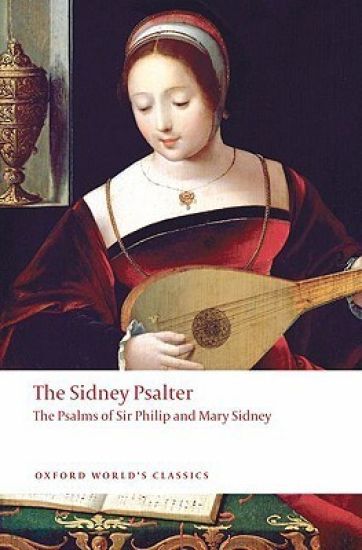
'the highest matter in the noblest form' John Donne's description of the Psalms celebrates not only the perfection of the biblical psalms but their translation into poetic form by the Sidneys, who turned them into some of the most accomplished lyric poems of the English Renaissance. Although it was not printed until the nineteenth century, the Sidney Psalter was widely read in manuscript and influenced poets from Donne and Herbert to Milton and beyond. It turned these well-known and well-loved Psalms into sophisticated verse, selecting or inventing a different stanza form for each one. This variety of forms matches the appeal of their content: there are Psalms of praise and blame, Psalms of cursing and lamentation, Psalms of joy and exaltation, Psalms that recount history, and Psalms that describe Creation or divine law. This is the first complete edition of the Psalter for over forty years. The Psalms are provided in an authoritative modernized text, with helpful glosses and notes illuminating points of interpretation, and an introduction setting the Psalms in their literary and cultural contexts. ABOUT THE SERIES: For over 100 years Oxford World's Classics has made available the widest range of literature from around the globe. Each affordable volume reflects Oxford's commitment to scholarship, providing the most accurate text plus a wealth of other valuable features, including expert introductions by leading authorities, helpful notes to clarify the text, up-to-date bibliographies for further study, and much more.
This authoritative edition was originally published in the acclaimed Oxford Authors series under the general editorship of Frank Kermode. It brings together a unique combination of Sidney's poetry and prose - all the major writing, complemented by letters and elegies - to give the essence of his work and thinking. Born in 1554, Sir Philip Sidney was hailed as the perfect Renaissance patron, soldier, lover, and courtier, but it was only after his untimely death at the age of 31 that his literary accomplishments were truly recognized. This collection ranges more widely through Sidney's works than any previous volume and includes substantial parts of both versions of the Arcadia, The Defence of Poesy and the whole of the sonnet sequence Astrophil and Stella. Supplementary texts, such as his letters and the numerous elegies which appeared after his death, help to illustrate the whole spectrum of his achievements, and the admiration he inspired in his contemporaries. ABOUT THE SERIES: For over 100 years Oxford World's Classics has made available the widest range of literature from around the globe. Each affordable volume reflects Oxford's commitment to scholarship, providing the most accurate text plus a wealth of other valuable features, including expert introductions by leading authorities, helpful notes to clarify the text, up-to-date bibliographies for further study, and much more.
George Sidney directed a number of popular Hollywood films, such as Anchors Aweigh, Show Boat, Kiss Me Kate, and Bye Bye Birdie. His revisions of traditional Hollywood product resulted in films that remain surprisingly modern, and his work continues to influence popular culture. But despite the popularity of his films, Sidney has been a largely unheralded figure in film history. This book is the first serious, full-length study of Sidney's life and work. A critical introduction to the volume explains how Sidney was given a minor place in film history, despite his many significant achievements. The book examines Sidney's canon in relation to the work of his contemporaries and reveals how he was both a Hollywood insider and an iconoclast who created mainstream films with strikingly modern sensibility. The detailed filmography provides thorough documentation for Sidney's many features, short subjects, screen tests, documentaries, and uncredited sequences in other directors' films. By drawing upon interviews with former coworkers, archival material, and rare stills and photographs, Monder reassesses Sidney's career.
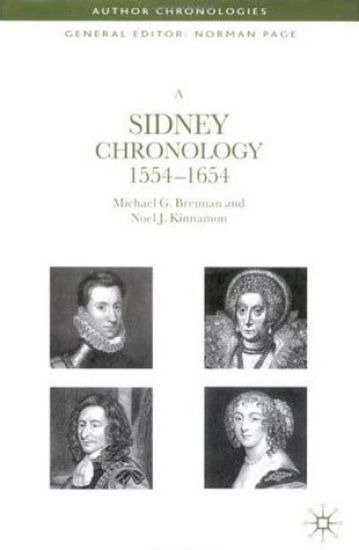
A Sidney Chronology: 1554-1654 offers a comprehensive chronological survey of the literary, political and personal history of the Sidney family of Penshurst Place, Kent. As royal servants, courtiers, diplomats, soldiers, writers and patrons of numerous other authors, the Sidneys occupied a central position in the development of Early-Modern English literature. Particular attention is paid to the lives and writings of Sir Philip Sidney; Mary Sidney Herbert, Countess of Pembroke; Robert Sidney, 1st Earl of Leicester; and Lady Mary Wroth.
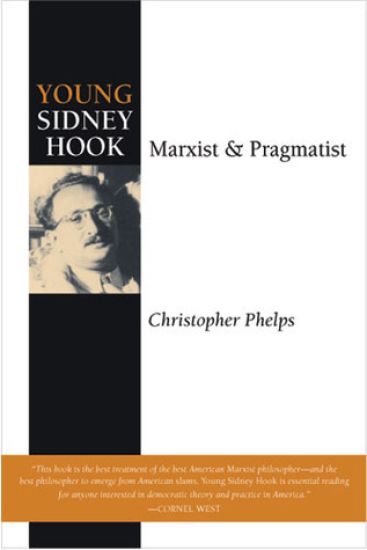
One of the most controversial figures in the history of American philosophy, Sidney Hook was "an intellectual street fighter" and "probably the greatest polemicist" of the twentieth century (Edward Shils). Widely known as a Cold War liberal and an intellectual progenitor of neoconservativism, Hook began life as a feisty radical. This now-classic intellectual biography reconstructs Hook's youthful project of fusing American pragmatism and Marxism to create a distinctive approach to philosophy and a politics of revolutionary democratic socialism, carefully charting his interaction with intellectuals such as John Dewey and Max Eastman and his relationship to the Socialist Party, the Communist Party, the American Workers Party, and other political currents. "This book is the best treatment of the best American Marxist philosopher-and the best philosopher to emerge from American slums. Young Sidney Hook is essential reading for anyone interested in democratic theory and practice in America." ---Cornel West "A very detailed, and fascinating account of Hook's formative years . . . [a] first-rate contribution to the history of American leftist intellectual life." ---Richard Rorty, Raritan "Fascinating . . . well researched and packed with information." ---Times Literary Supplement "Succeeds in establishing the young Hook as a dedicated revolutionary Marxist." ---Amos Perlmutter, Washington Times "A brilliant, lucid portrait of a scholar, adversarial by temperament, who turned his extraordinary powers of analysis and polemic successively against capitalism, Stalinism, and the New Left." ---Alan Wald, Monthly Review "The best study of Hook's thought. . . . Supersedes all earlier treatments." ---David A. Hollinger and Charles Capper, The American Intellectual Tradition "A major contribution to our understanding of Hook and the American Marxist tradition. . . . Extremely insightful." ---American Studies "Persuasive. . . . Discovers not just a brilliant interpreter of Marx and the Russian Revolution, but a remarkable advocate and practitioner of the Americanization of Marxism." ---In These Times "Phelps's effort to uncover, explore, and analyze Hook's forgotten leftism must be judged an unqualified success." ---Left History "Penetrating, closely argued, and lucid. . . . An important contribution to the history of American radicalism in the 1930s." ---Labor History One of the most controversial figures in the history of American philosophy, Sidney Hook was "an intellectual street fighter," who began his career as a brilliant Marxist thinker and "probably the greatest polemicist of [the 20th] century" (Edward Shils) before breaking with the Communist Party in the late 1930s. Turning in his later years to an allegiance with American conservatives including Richard Nixon and Ronald Reagan, Hook is now widely known as an intellectual father of the neoconservative movement.
This book completes the study of the life and political thought of Algernon Sidney (1623–1688), which began with Algernon Sidney and the English Republic, 1623–1677 (1988). In the process it offers a reinterpretation of the major political crisis of Charles II’s reign, and of its European and seventeenth-century contexts. Like its predecessor, the book spans the disciplines of intellectual and political history. Its twin focus is the last six years of Sidney’s life, which culminated in the famous public drama of his trial and execution for treason in 1683, and in his major political work, the Discourses Concerning Government, which was used as evidence against him at the trial. This intertwining of events and ideas calls for an examination of the relationship between the practical and intellectual aspects of the crisis of 1678–1683 in general.
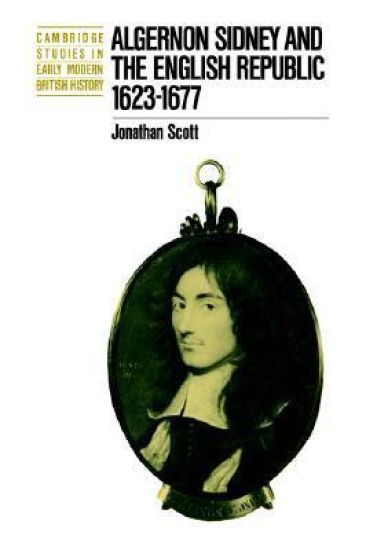
In the century following his execution for treason in 1683, Algernon Sidney became one of the most widely influential political writers - in both Europe and America - that England had ever produced. This is the first full-scale study of Sidney for more than a century, and the first ever study of his political thought. The book describes Sidney's republican political ideas and their later impact. It sets them in their ideological context, in relation both to their sources and to the ideas of contemporaries, including Milton, Harrington, Vane, and Locke. It then asks: how did this ideology develop, and why? The answer involves a series of investigations: of Sidney's family background; of the nature of his personal life and family relationships; and of his public political career. On this latter score we follow Sidney's progress from parliamentarian soldier in the English Civil War, to senior member and ambassador of the English Republic, to embittered exile after the Restoration in 1660.
The Webbs were a unique partnership. Their idea of 'the inevitability of gradualness' dominated the Fabian Society and Labour thinking for half a century, though their theory of political permeation also led them into close association with Liberal and Conservative politicians. They were scholars as well as propagandists, writing massive histories of trade unionism and local government, and the famous Minority Report of the Royal Commission on the Poor Law which paved the way for the welfare state. They were the founders of the London School of Economics and of the New Statesman. This crowded public life is reflected in the hundreds of letters they exchanged in their long lifetimes, as well as in their correspondence with many of the outstanding personalities of their day, including Herbert Asquith, Joseph Chamberlain, William Beveridge, E. M. Forster, R. B. Haldane, J. M. Keynes, Ramsay MacDonald, Alfred Marshall, Sydney Olivier, G. B. Shaw, Charlotte Shaw, Bertrand Russell, Herbert Samuel, Herbert Spencer, Graham Wallas, H. G. Wells and Leonard Woolf.
This book completes the study of the life and political thought of Algernon Sidney (1623–1688), which began with Algernon Sidney and the English Republic, 1623–1677 (1988). In the process it offers a reinterpretation of the major political crisis of Charles II's reign, and of its European and seventeenth-century contexts. Like its predecessor, the book spans the disciplines of intellectual and political history. Its twin focus is the last six years of Sidney's life, which culminated in the famous public drama of his trial and execution for treason in 1683, and in his major political work, the Discourses Concerning Government, which was used as evidence against him at the trial. This intertwining of events and ideas calls for an examination of the relationship between the practical and intellectual aspects of the crisis of 1678–1683 in general.