Kirjojen hintavertailu. Mukana 11 342 296 kirjaa ja 12 kauppaa.

Kirjahaku

Etsi kirjoja tekijän nimen, kirjan nimen tai ISBN:n perusteella.

1000 tulosta hakusanalla SWAMI RAM CHARRAN

Swami Dayanand and His Tragic Consequences

Swami Dayanand and His Tragic Consequences

Gurpreet Singh Sumra

Createspace Independent Publishing Platform
2014
nidottu
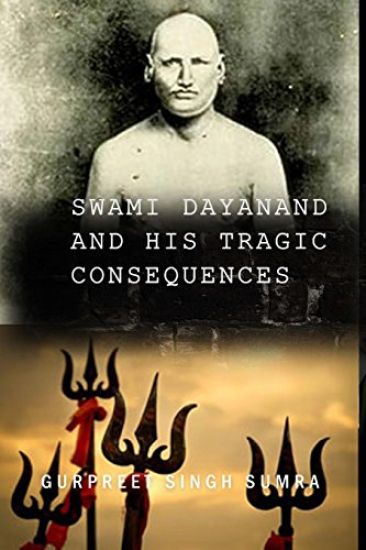
Swami Dayanand Saraswati (1824-1883), the founder of Arya Samaj and author of many works including Satyarth Prakash, that is known as his magnum opus is known for his call of back to Vedas. He was an aggressive proponent of Aryan and Vedic supremacy and founded a sect called "Arya Samaj" that literally means "Society of Nobles". He was the one who started "Shudhhi" or reconversion ceremonies to bring back Hindus who have converted to other religions. He gave a new interpretation to Vedas never heard before to suit his agenda of Vedic or Aryan supremacy. He was a polarizing figure and the legacy he left behind can be seen in today's Modis, Togadias, and Advanis. His hostility towards other religions can be gauged from the words he used to describe anything non-Vedic. He called Jesus a savage, Guru Nanak an ignorant hypocrite and Muhammad as pugnacious. However not much is known about his personal life and whatever information has been made available is contradictory. This book reveals the enigmatic Swami, his venomous teachings and his fancy interpretation of Vedas from the horse's own mouth.
Vedanta Philosophy: Lectures By The Swami Vivekananda On Raja Yoga
Vedanta Philosophy: Lectures By The Swami Vivekananda On Raja Yoga is a book that explores the ancient Indian philosophy of Vedanta and Raja Yoga as interpreted by Swami Vivekananda. The book consists of a series of lectures delivered by Vivekananda on the topic of Raja Yoga, which is a form of yoga that focuses on the mind and its control. In the book, Vivekananda explains the principles of Vedanta and Raja Yoga, including the nature of the mind, the importance of concentration and meditation, and the ultimate goal of self-realization. He also discusses various techniques and practices that can be used to achieve this goal, such as pranayama (breathing exercises), asanas (yoga postures), and dhyana (meditation).Throughout the book, Vivekananda emphasizes the importance of practical application and personal experience in understanding and implementing these teachings. He also draws on his own experiences and insights to illustrate the principles and practices of Raja Yoga.Overall, Vedanta Philosophy: Lectures By The Swami Vivekananda On Raja Yoga is a comprehensive and insightful guide to the philosophy and practice of Raja Yoga as interpreted by one of its most respected and influential teachers.This Is A New Release Of The Original 1899 Edition. Also Pantanjali's Yoga Aphorisms, With Commentaries, And Glossary Of Sanskrit Terms.This scarce antiquarian book is a facsimile reprint of the old original and may contain some imperfections such as library marks and notations. Because we believe this work is culturally important, we have made it available as part of our commitment for protecting, preserving, and promoting the world's literature in affordable, high quality, modern editions, that are true to their original work.
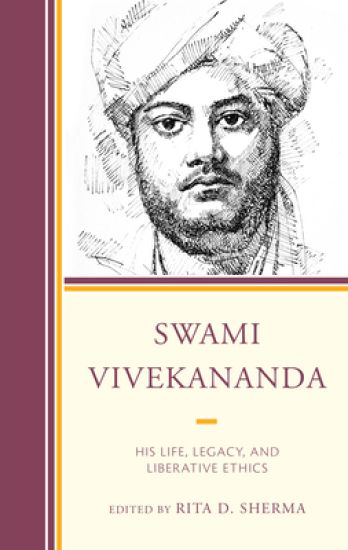
Swami Vivekananda

Swami Vivekananda

Lexington Books
2021
sidottu
With historical-critical analysis and dialogical even-handedness, the essays of this book re-assess the life and legacy of Swami Vivekananda, forged at a time of colonial suppression, from the vantage point of socially-engaged religion at a time of global dislocations and international inequities. Due to the complexity of Vivekananda as a historical figure on the cusp of late modernity with its vast transformations, few works offer a contemporary, multi-vocal, nuanced, academic examination of his liberative vision and legacy in the way that this volume does. It brings together North American, European, British, and Indian scholars associated with a broad array of humanistic disciplines towards critical-constructive, contextually-sensitive reflections on one of the most important thinkers and theologians of the modern era.
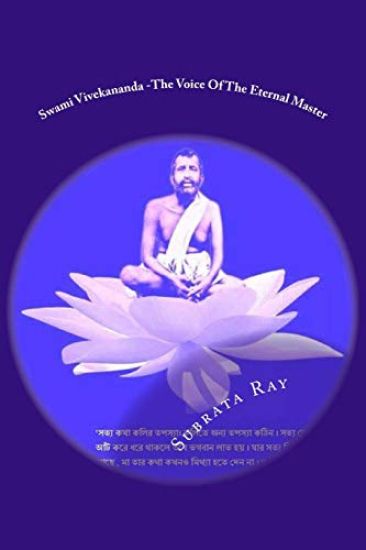
Swami Vivekananda -The Voice Of The Eternal Master: Swami Vivekananda

Swami Vivekananda -The Voice Of The Eternal Master: Swami Vivekananda

Subrata Ray

Createspace Independent Publishing Platform
2014
nidottu
Swami Vivekananda -The Voice Of The Eternal Master, -God Sri Ramakrishna, -leaves behind Him the skeleton of spiritual realization . His is the voice of awakening the humanity, and transcending them to their heavenly glory . Here in this book, poet Subrata Ray, -takes an attempt to record his own feelings that have come down to him in course of his life under the guidance of his spiritual Master Swami Bhutesha Nanda Ji Maharaj-the 12th President of Ramakrishna Math And Mission . These devotional lyrics and songs, the author believes, -would mirror the truest experiences of the aspirant of spirituality .For, here one may discover the revelation of the psychic unconscious buried deep in every individual .
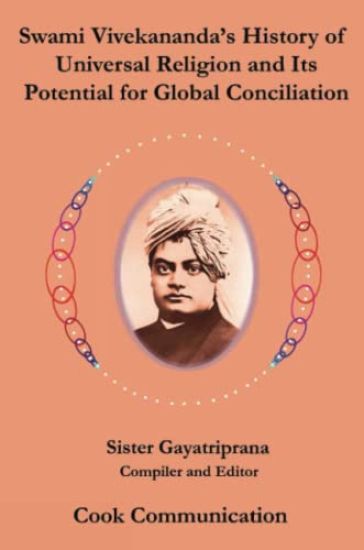
Swami Vivekananda's History of Universal Religion and its Potential for Global Reconciliation
In the words of Swami Vivekananda (1863-1902) this book is a history of Vedanta, a deeply subjective Indian spiritual tradition going back to prehistoric times. There God is experienced and known directly in the depths of the human soul. We learn of the social structures, philosophical schools and practices of self-transformation at its heart and how the tradition withstood a millennium of subjugation to Western Abrahamic religions with their extra-cosmic deity and deep distrust of Vedantic subjectivity. Vivekananda speaks from the level of vijnana that permits of integration of both Indian subjectivity and Western objectivism, opening a door to their conciliation with each other and indeed to any other of the global spiritual traditions. An artist, medical doctor and Vedantic nun, Gayatriprana seeks to integrate Western science and Vedanta, as in her doctoral thesis: Learning in Depth: A Case Study in Twin 5x5 Matrices of Consciousness: https: //jeanmacphail.academia.
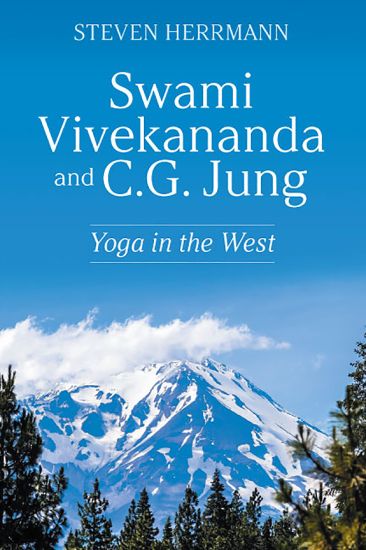
Swami Vivekananda and C.G. Jung

Swami Vivekananda and C.G. Jung

Steven Herrmann

Strategic Book Publishing
2022
pokkari
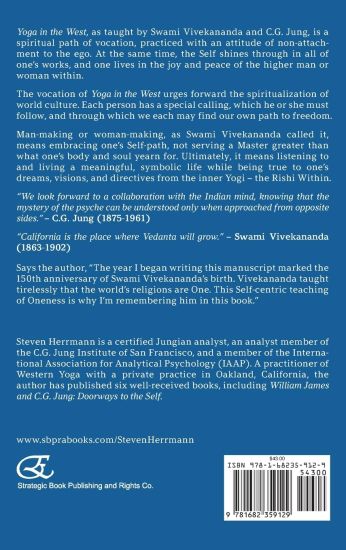
Yoga in the West, as taught by Swami Vivekananda and C.G. Jung, is a spiritual path of vocation, practiced with an attitude of non-attachment to the ego. At the same time, the Self shines through in all of one's works, and one lives in the joy and peace of the higher man or woman within.The vocation of Yoga in the West urges forward the spiritualization of world culture. Each person has a special calling, which he or she must follow, and through which we each may find our own path to freedom.Man-making or woman-making, as Swami Vivekananda called it, means embracing one's Self-path, not serving a Master greater than what one's body and soul yearn for. Ultimately, it means listening to and living a meaningful, symbolic life while being true to one's dreams, visions, and directives from the inner Yogi - the Rishi Within."We look forward to a collaboration with the Indian mind, knowing that the mystery of the psyche can be understood only when approached from opposite sides." - C.G. Jung (1875-1961)"California is the place where Vedanta will grow." - Swami Vivekananda (1863-1902)Says the author, "The year I began writing this manuscript marked the 150th anniversary of Swami Vivekananda's birth. Vivekananda taught tirelessly that the world's religions are One. This Self-centric teaching of Oneness is why I'm remembering him in this book."(About the Author)Steven Herrmann is a certified Jungian analyst, an analyst member of the C.G. Jung Institute of San Francisco, and a member of the International Association for Analytical Psychology (IAAP). A practitioner of Western Yoga with a private practice in Oakland, California, the author has published six well-received books, including William James and C.G. Jung: Doorways to the Self.
Swami Vivekananda and C.G. Jung

Swami Vivekananda and C.G. Jung

Steven Herrmann

Strategic Book Publishing
2023
sidottu
Yoga in the West, as taught by Swami Vivekananda and C.G. Jung, is a spiritual path of vocation, practiced with an attitude of non-attachment to the ego. At the same time, the Self shines through in all of one's works, and one lives in the joy and peace of the higher man or woman within.The vocation of Yoga in the West urges forward the spiritualization of world culture. Each person has a special calling, which he or she must follow, and through which we each may find our own path to freedom.Man-making or woman-making, as Swami Vivekananda called it, means embracing one's Self-path, not serving a Master greater than what one's body and soul yearn for. Ultimately, it means listening to and living a meaningful, symbolic life while being true to one's dreams, visions, and directives from the inner Yogi - the Rishi Within."We look forward to a collaboration with the Indian mind, knowing that the mystery of the psyche can be understood only when approached from opposite sides." - C.G. Jung (1875-1961)"California is the place where Vedanta will grow." - Swami Vivekananda (1863-1902)Says the author, "The year I began writing this manuscript marked the 150th anniversary of Swami Vivekananda's birth. Vivekananda taught tirelessly that the world's religions are One. This Self-centric teaching of Oneness is why I'm remembering him in this book."(About the Author)Steven Herrmann is a certified Jungian analyst, an analyst member of the C.G. Jung Institute of San Francisco, and a member of the International Association for Analytical Psychology (IAAP). A practitioner of Western Yoga with a private practice in Oakland, California, the author has published six well-received books, including William James and C.G. Jung: Doorways to the Self.
Swami in a Strange Land

Swami in a Strange Land

Joshua M. Greene

Insight Editions
2017
nidottu
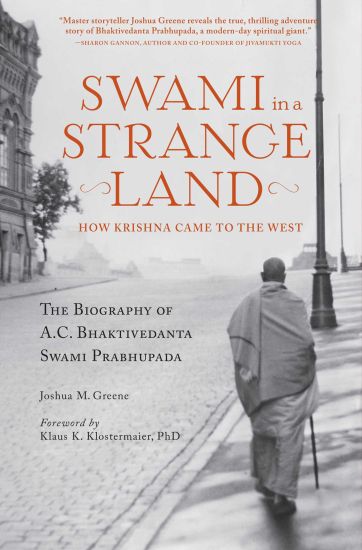
In 1965, a seventy-year-old man—soon to be known as Prabhupada—set sail from India to America with a few books in his bag, pennies in his pockets, and a message of love in his heart. He landed in New York at the peak of the revolutionary counterculture movement of the ’60s, and went on to spark a global spiritual renaissance that led to the creation of the International Society for Krishna Consciousness, which has changed millions of lives. Through the depiction of Prabhupada as both an enlightened luminary and a personable, funny, and conscientious individual, Swami in a Strange Land shows why cultural icons such as George Harrison and Allen Ginsberg incorporated Prabhupada’s teachings into their lives, and why millions more around the globe embarked upon the path of bhakti yoga in his footsteps. Carefully researched, skillfully crafted, and extraordinarily intimate, this narrative follows Prabhupada as he rises from an anonymous monk to a world-renowned spiritual leader. Set in locations as far ranging as remote Himalayan caves and the gilded corridors of Paris’s City Hall, Swami in a Strange Land traces the rise of Eastern spirituality in the West—and in particular, the rise of yoga culture and vegetarianism and the concepts of karma and reincarnation. A remarkable journey into the deepest dimensions of the human experience, Swami in a Strange Land shows how one man with a dream can change the world.