Kirjojen hintavertailu. Mukana 11 627 220 kirjaa ja 12 kauppaa.

Kirjahaku

Etsi kirjoja tekijän nimen, kirjan nimen tai ISBN:n perusteella.

1000 tulosta hakusanalla Samuel Coleridge

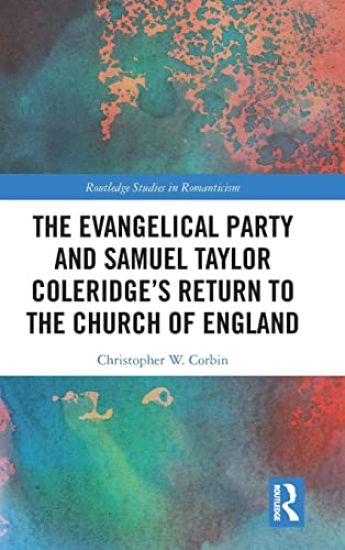
The Evangelical Party and Samuel Taylor Coleridge’s Return to the Church of England
It has long been accepted that when Samuel Taylor Coleridge rejected the Unitarianism of his youth and returned to the Church of England, he did so while accepting a general Christian orthodoxy. Christopher Corbin clarifies Coleridge’s religious identity and argues that while Coleridge’s Christian orthodoxy may have been sui generis, it was closely aligned with moderate Anglican Evangelicalism. Approaching religious identity as a kind of culture that includes distinct forms of language and networks of affiliation in addition to beliefs and practices, this book looks for the distinguishable movements present in Coleridge’s Britain to more precisely locate his religious identity than can be done by appeals to traditional denominational divisions. Coleridge’s search for unity led him to desire and synthesize the "warmth" of heart religion (symbolized as Methodism) with the "light" of rationalism (symbolized as Socinianism), and the evangelicalism in the Church of England, being the most chastened of the movement, offered a fitting place from which this union of warmth and light could emerge. His religious identity not only included many of the defining Anglican Evangelical beliefs, such as an emphasis on original sin and the New Birth, but he also shared common polemical opponents, appropriated evangelical literary genres, developed a spirituality centered on the common evangelical emphases of prayer and introspection, and joined Evangelicals in rejecting baptismal regeneration. When placed in a chronological context, Coleridge’s form of Christian orthodoxy developed in conversation with Anglican Evangelicals; moreover, this relationship with Anglican Evangelicalism likely helped facilitate his return to the Church of England. Corbin not only demonstrates the similarities between Coleridge’s relationship to a form of evangelicalism with which most people have little familiarity, but also offers greater insight into the complexities and tensions of religious identity in late eighteenth and early nineteenth century Britain as a whole.
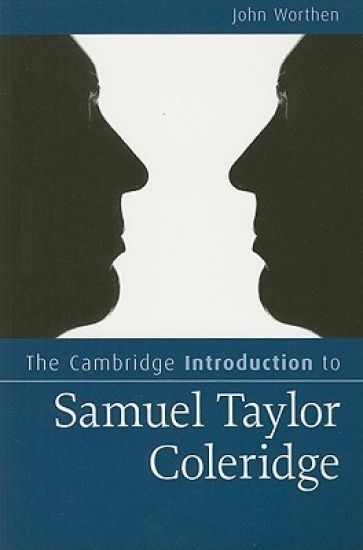
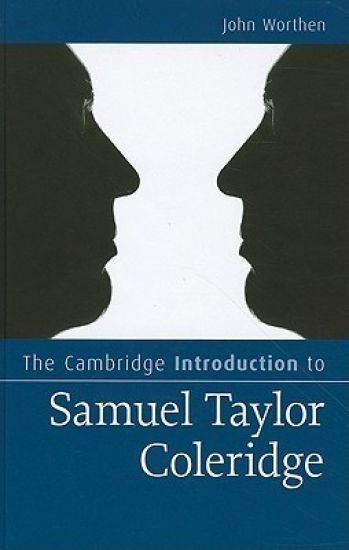
The Cambridge Introduction to Samuel Taylor Coleridge

The Cambridge Introduction to Samuel Taylor Coleridge

John Worthen

Cambridge University Press
2010
pokkari
Author of 'The Rime of the Ancient Mariner', 'Kubla Khan' and 'Christabel', and co-author with Wordsworth of Lyrical Ballads in 1798, Samuel Taylor Coleridge was one of the great writers and thinkers of the Romantic revolution. This innovative introduction discusses his interest in language and his extraordinary private notebooks, as well as his poems, his literary criticism and his biography. John Worthen presents a range of readings of Coleridge's work, along with biographical context and historical background. Discussion of Coleridge's notebooks alongside his poems illuminates this rich material and finds it a way into his creativity. Readers are invited to see Coleridge as an immensely self-aware, witty and charismatic writer who, although damaged by an opium habit, responded to and in his turn influenced the literary, political, religious and scientific thinking of his time.
The Cambridge Introduction to Samuel Taylor Coleridge

The Cambridge Introduction to Samuel Taylor Coleridge

John Worthen

Cambridge University Press
2010
sidottu
Author of 'The Rime of the Ancient Mariner', 'Kubla Khan' and 'Christabel', and co-author with Wordsworth of Lyrical Ballads in 1798, Samuel Taylor Coleridge was one of the great writers and thinkers of the Romantic revolution. This innovative introduction discusses his interest in language and his extraordinary private notebooks, as well as his poems, his literary criticism and his biography. John Worthen presents a range of readings of Coleridge's work, along with biographical context and historical background. Discussion of Coleridge's notebooks alongside his poems illuminates this rich material and finds it a way into his creativity. Readers are invited to see Coleridge as an immensely self-aware, witty and charismatic writer who, although damaged by an opium habit, responded to and in his turn influenced the literary, political, religious and scientific thinking of his time.
The Evangelical Party and Samuel Taylor Coleridge’s Return to the Church of England
It has long been accepted that when Samuel Taylor Coleridge rejected the Unitarianism of his youth and returned to the Church of England, he did so while accepting a general Christian orthodoxy. Christopher Corbin clarifies Coleridge’s religious identity and argues that while Coleridge’s Christian orthodoxy may have been sui generis, it was closely aligned with moderate Anglican Evangelicalism. Approaching religious identity as a kind of culture that includes distinct forms of language and networks of affiliation in addition to beliefs and practices, this book looks for the distinguishable movements present in Coleridge’s Britain to more precisely locate his religious identity than can be done by appeals to traditional denominational divisions. Coleridge’s search for unity led him to desire and synthesize the "warmth" of heart religion (symbolized as Methodism) with the "light" of rationalism (symbolized as Socinianism), and the evangelicalism in the Church of England, being the most chastened of the movement, offered a fitting place from which this union of warmth and light could emerge. His religious identity not only included many of the defining Anglican Evangelical beliefs, such as an emphasis on original sin and the New Birth, but he also shared common polemical opponents, appropriated evangelical literary genres, developed a spirituality centered on the common evangelical emphases of prayer and introspection, and joined Evangelicals in rejecting baptismal regeneration. When placed in a chronological context, Coleridge’s form of Christian orthodoxy developed in conversation with Anglican Evangelicals; moreover, this relationship with Anglican Evangelicalism likely helped facilitate his return to the Church of England. Corbin not only demonstrates the similarities between Coleridge’s relationship to a form of evangelicalism with which most people have little familiarity, but also offers greater insight into the complexities and tensions of religious identity in late eighteenth and early nineteenth century Britain as a whole.