Kirjojen hintavertailu. Mukana 11 699 587 kirjaa ja 12 kauppaa.

Kirjahaku

Etsi kirjoja tekijän nimen, kirjan nimen tai ISBN:n perusteella.

1000 tulosta hakusanalla Shani Stein-Ratzker

Communalism, Caste and Hindu Nationalism

Communalism, Caste and Hindu Nationalism

Ornit Shani

Cambridge University Press
2007
pokkari
Belligerent Hindu nationalism, accompanied by recurring communal violence between Hindus and Muslims, has become a compelling force in Indian politics over the last two decades. Ornit Shani's book examines the rise of Hindu nationalism, asking why distinct groups of Hindus, deeply divided by caste, mobilised on the basis of unitary Hindu nationalism, and why the Hindu nationalist rhetoric about the threat of the impoverished Muslim minority was so persuasive to the Hindu majority. Using evidence from communal violence in Gujarat, Shani argues that the growth of communalism was not simply a result of Hindu-Muslim antagonisms, but was driven by intensifying tensions among Hindus, nurtured by changes in the relations between castes and associated state policies. These, in turn, were frequently displaced onto Muslims, thus enabling caste conflicts to develop and deepen communal rivalries. The book offers a challenge to previous scholarship on the rise of communalism, which will be welcomed by students and professionals.
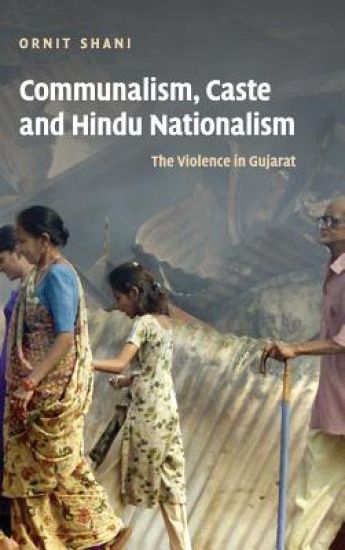
Communalism, Caste and Hindu Nationalism

Communalism, Caste and Hindu Nationalism

Ornit Shani

Cambridge University Press
2007
sidottu
Belligerent Hindu nationalism, accompanied by recurring communal violence between Hindus and Muslims, has become a compelling force in Indian politics over the last two decades. Ornit Shani's book examines the rise of Hindu nationalism, asking why distinct groups of Hindus, deeply divided by caste, mobilised on the basis of unitary Hindu nationalism, and why the Hindu nationalist rhetoric about the threat of the impoverished Muslim minority was so persuasive to the Hindu majority. Using evidence from communal violence in Gujarat, Shani argues that the growth of communalism was not simply a result of Hindu-Muslim antagonisms, but was driven by intensifying tensions among Hindus, nurtured by changes in the relations between castes and associated state policies. These, in turn, were frequently displaced onto Muslims, thus enabling caste conflicts to develop and deepen communal rivalries. The book offers a challenge to previous scholarship on the rise of communalism, which will be welcomed by students and professionals.

Indigenous Elites in Africa

Indigenous Elites in Africa

Serah Shani

Taylor Francis Ltd
2021
sidottu
This book investigates the formation, configuration and consolidation of elites amongst Kenya’s Maasai. The Maasai ethnic group is one of the world’s most anthropologized populations, but research tends to focus on what appears to be their dismal situation, analysing how their culture hinders or challenges modern ideas of economic and political development. This book instead focuses on the Maasai men and women who rise to the position of elites, overcoming the odds to take on positions as politicians, professors, CEOs, and high-end administrators. The twenty-first century has seen new opportunities for progression beyond the social reproduction of family wealth, with NGOs, missionaries, tourists and researchers providing new sources of global capital flows. The author, who is Maasai herself, demonstrates the diverse local, national, and global resources and opportunities which lead to social mobility and elite formation. The book also shows how female elites have been able to navigate a patriarchal society in their journey to attaining and maintaining elite status. This book will be of interest to researchers across the fields of anthropology, political science, international development, sociology, and African studies.
Indigenous Elites in Africa

Indigenous Elites in Africa

Serah Shani

TAYLOR FRANCIS LTD
2023
nidottu
This book investigates the formation, configuration and consolidation of elites amongst Kenya’s Maasai. The Maasai ethnic group is one of the world’s most anthropologized populations, but research tends to focus on what appears to be their dismal situation, analysing how their culture hinders or challenges modern ideas of economic and political development. This book instead focuses on the Maasai men and women who rise to the position of elites, overcoming the odds to take on positions as politicians, professors, CEOs, and high-end administrators. The twenty-first century has seen new opportunities for progression beyond the social reproduction of family wealth, with NGOs, missionaries, tourists and researchers providing new sources of global capital flows. The author, who is Maasai herself, demonstrates the diverse local, national, and global resources and opportunities which lead to social mobility and elite formation. The book also shows how female elites have been able to navigate a patriarchal society in their journey to attaining and maintaining elite status. This book will be of interest to researchers across the fields of anthropology, political science, international development, sociology, and African studies.
Life Skills Series - Meaning Attribution Or Keeping It Sunny
How do you teach your kid to deal with bullying? How do you guide your kid to frame any situation in a positive way? The 5th book in the Jade Life Skills Series - Meaning Attribution explains, in a simple and imaginative way, that we have the ability to CHOOSE how to react to external events and how to choose the better interpretation - the one that enables your kid both feel good with life events and take whatever needed action.Asaf Shani is an international consultant in the field of confrontational situations. Working with people - worldwide - in the last 20 years, help him gain insights about life skills in general and how to empower one's kids to acquire and use them. This extensive experience along with raising his own two kids (Jade and Andy what else...) are being presented in the Jade's life skills series in a way that kids aged 3 - 5, 7yrs old kids and even young adults can relate to. Yet, not surprisingly, many parents attest that the books have helped them to understand, and hence, better manage the situation in their life. After all, no one really teaches life skills at school...The book can very well fit 'I can read level 1' readers and will definitely fall into the 'children's books by age 3 - 5' category. We're being addressed by many readers with the question: does this book is a 'children's feelings books' or a 'feelings books for children' and, to that we answer with a smile: yep The somewhat strange thing is that most people accept their feelings as given - they miss out on the fact that they control whatever they feel, it's not a given thing - so by realizing the fundamental truth that we decide how life events makes us feel by deciding what would be the 'framing' we give it, a new spectrum of choice opens. Asaf Shani, a recognized world speaker and a father of 4, shares in this book his insights and knowledge.
How India Became Democratic

How India Became Democratic

Ornit Shani

Cambridge University Press
2017
sidottu
How India Became Democratic explores the greatest experiment in democratic human history. It tells the untold story of the preparation of the electoral roll on the basis of universal adult franchise in the world's largest democracy. Ornit Shani offers a new view of the institutionalisation of democracy in India, and of the way democracy captured the political imagination of its diverse peoples. Turning all adult Indians into voters against the backdrop of the partition of India and Pakistan, and in anticipation of the drawing up of a constitution, was a staggering task. Indians became voters before they were citizens - by the time the constitution came into force in 1950, the abstract notion of universal franchise and electoral democracy were already grounded. Drawing on rich archival materials, Shani shows how the Indian people were a driving force in the making of democratic citizenship as they struggled for their voting rights.
How India Became Democratic

How India Became Democratic

Ornit Shani

Cambridge University Press
2017
pokkari
How India Became Democratic explores the greatest experiment in democratic human history. It tells the untold story of the preparation of the electoral roll on the basis of universal adult franchise in the world's largest democracy. Ornit Shani offers a new view of the institutionalisation of democracy in India, and of the way democracy captured the political imagination of its diverse peoples. Turning all adult Indians into voters against the backdrop of the partition of India and Pakistan, and in anticipation of the drawing up of a constitution, was a staggering task. Indians became voters before they were citizens - by the time the constitution came into force in 1950, the abstract notion of universal franchise and electoral democracy were already grounded. Drawing on rich archival materials, Shani shows how the Indian people were a driving force in the making of democratic citizenship as they struggled for their voting rights.
Radiation Dosimetry Instrumentation and Methods (2001)
Radiation dosimetry has made great progress in the last decade, mainly because radiation therapy is much more widely used. Since the first edition, many new developments have been made in the basic methods for dosimetry, i.e. ionization chambers, TLD, chemical dosimeters, and photographic films. Radiation Dosimetry: Instrumentation and Methods, Second Edition brings to the reader these latest developments. Written at a high level for medical physicists, engineers, and advanced dosimetrists, it concentrates only on evolvement during the last decade, relying on the first edition to provide the basics.
Radiation Dosimetry Instrumentation and Methods (2001)
Radiation dosimetry has made great progress in the last decade, mainly because radiation therapy is much more widely used. Since the first edition, many new developments have been made in the basic methods for dosimetry, i.e. ionization chambers, TLD, chemical dosimeters, and photographic films. Radiation Dosimetry: Instrumentation and Methods, Second Edition brings to the reader these latest developments. Written at a high level for medical physicists, engineers, and advanced dosimetrists, it concentrates only on evolvement during the last decade, relying on the first edition to provide the basics. This is an excellent complement to the first edition.
Protecting Human Security in a Post 9/11 World

Protecting Human Security in a Post 9/11 World

Giorgio Shani; Makoto Sato

Palgrave Macmillan
2007
nidottu
Written by leading authorities from Asia, Africa, Europe, and North and South America, this groundbreaking volume offers the first truly global and critical perspective on human security in the post 9/11 world. The collection offers unique interpretations on mainstream discourses on human security.
African Immigrant Families in the United States
Sub-Saharan African immigrants are emerging as the new model minority in the United States, excelling in education and social mobility. In African Immigrant Families in the United States: Transnational Lives and Schooling, Serah Shani examines the socioeconomic and cultural mechanisms behind their high levels of success. Shani explores the dynamics of Ghanaian transnational immigrants’ lives and portrays a complex relationship between class, context, beliefs, and cultural practices. This book is recommended for scholars of anthropology, sociology, education, and African studies.
Life Skills Series - Mental Flexibility OR Move The Picture
In this book, Jade learns about mental flexibility - about the vitally important skill of letting go of one's mental images (better known as 'expectations') in order to enjoy what is.The skill of mental flexibility will not only help one skip many unnecessary conflicts but it will also facilitate a much higher level of happiness and creativity.Happiness, creativity (along with responsibility, proactivity, and many more qualities) are the outcomes of being able to be here and now - being present. Learning to let go of one's expectations yields a higher level of presence with all the great things mentioned above that it brings with it.Asaf Shani is an international consultant in the field of confrontational situations. Working with people - worldwide - in the last 20 years, help him gain insights about life skills in general and how to empower one's kids to acquire and use them. This extensive experience along with raising his own two kids (Jade and Andy what else...) are being presented in the Jade's life skills series in a way that kids aged 3 - 5, 7yrs old kids and even young adults can relate to. Yet, not surprisingly, many parents attest that the books have helped them to understand, and hence, better manage the situation in their life. After all, no one really teaches life skills at school...The book can very well fit 'I can read level 1' readers and will definitely fall into the 'children's books by age 3 - 5' category. We're being addressed by many readers with the question: does this book is a 'children's feelings books' or a 'feelings books for children' and, to that we answer with a smile: yep The somewhat strange thing is that most people accept their feelings as given - they miss out on the fact that they control whatever they feel, it's not a given thing - so by realizing the fundamental truth that we decide how life events makes us feel by deciding what would be the 'framing' we give it, a new spectrum of choice opens.
Life Skills Series - Problem Solving or Don't Push

Life Skills Series - Problem Solving or Don't Push

Asaf Shani

Independently Published
2019
nidottu
How do you tackle a 'no'? How do you team up with a friend to mutually find a satisfying solution? In this book - the 10th of the Jade Life Skills Series - Jade learns how to create a door in a wall of refusal. For most people, a 'NO' is more or less the end of the line... we try to convince, we get upset yet, for most people, NO is a wall they are unable to pass. Well, in this book, Jade learns that a NO is the starting point to a process that can yield consent without the need to coerce, struggle or get upset.Inspired by the story of Jerry the fox and his quest for grapes, Dad teaches Jade the 4 steps to resolving any problem and facilitating collaboration.As the rest of the Jade Life Skills Series, also this book takes 'deep' ideas and deliver them in a 'kid's friendly way'. Asaf Shani is an international consultant in the field of confrontational situations. Working with people - worldwide - in the last 20 years, help him gain insights about life skills in general and how to empower one's kids to acquire and use them. This extensive experience along with raising his own two kids (Jade and Andy what else...) are being presented in the Jade's life skills series in a way that kids aged 3 - 5, 7yrs old kids and even young adults can relate to. Yet, not surprisingly, many parents attest that the books have helped them to understand, and hence, better manage the situation in their life. After all, no one really teaches life skills at school...The book can very well fit 'I can read level 1' readers and will definitely fall into the 'children's books by age 3 - 5' category. We're being addressed by many readers with the question: does this book is a 'children's feelings books' or a 'feelings books for children' and, to that we answer with a smile: yep
Life Skills Series - Learning to Claim Or Being a Dolphin
"Wish and you will be granted". How do you teach your kid to follow this fundamental truth in her life in order to be able to manifest whatever she sees fit? How do you cultivate a feeling of worthiness in order to enable your kid to live a fulfilled life?The 11th book in the Jade Life Skills Series - Learning to Claim Or Being a Dolphin - deals exactly with these questions. Join Mom, Jade and Andy in order to understand what it means to act like a dolphin (as opposed to a shark or a salmon) - from a place of self-worthiness and claim what you are.See how Jade starts with a struggle calling out loud her wishes and undergo a process that helps her find the place within her that takes out the dolphin in her.In this book, the 11th in the successful Jade Life Skills Series, Jade learns how to communicate what she wants. Mom teaches her, through the images of a shark, a salmon, and a dolphin how to claim from an inner place of self-worthiness, and then how to take control over her life as a dolphin.Asaf Shani is an international consultant in the field of confrontational situations. Working with people - worldwide - in the last 20 years, help him gain insights about life skills in general and how to empower one's kids to acquire and use them. This extensive experience along with raising his own two kids (Jade and Andy what else...) are being presented in the Jade's life skills series in a way that kids aged 3 - 5, 7yrs old kids and even young adults can relate to. Yet, not surprisingly, many parents attest that the books have helped them to understand, and hence, better manage the situation in their life. After all, no one really teaches life skills at school...The book can very well fit 'I can read level 1' readers and will definitely fall into the 'children's books by age 3 - 5' category. We're being addressed by many readers with the question: does this book is a 'children's feelings books' or a 'feelings books for children' and, to that we answer with a smile: yep The somewhat strange thing is that most people accept their feelings as given - they miss out on the fact that they control whatever they feel, it's not a given thing - so by realizing the fundamental truth that we decide how life events makes us feel by deciding what would be the 'framing' we give it, a new spectrum of choice opens.
Learning Gratitude or Quieting the Rough Sea

Learning Gratitude or Quieting the Rough Sea

Asaf Shani

Independently Published
2018
nidottu
Research has shown a clear correlation between being grateful and being happy. Gratitude is more than positive thinking as it helps reconcile the inner conflict and by that bring peace of mind, happiness and creativity. In the 8th book of the successful Jade Life Skill Series, the skill of Gratitude is described in a fun way - using simple illustrations - enabling kids to start practicing Gratitude. Read about Jade being envy at her brother Andy when he gets a serving of ice cream and she doesn't, through the experiment Jade is doing with her Mom using a flashlight till the story of Kito, the young sailor, who tries to save a wounded dolphin and learns that 'as within so without'.
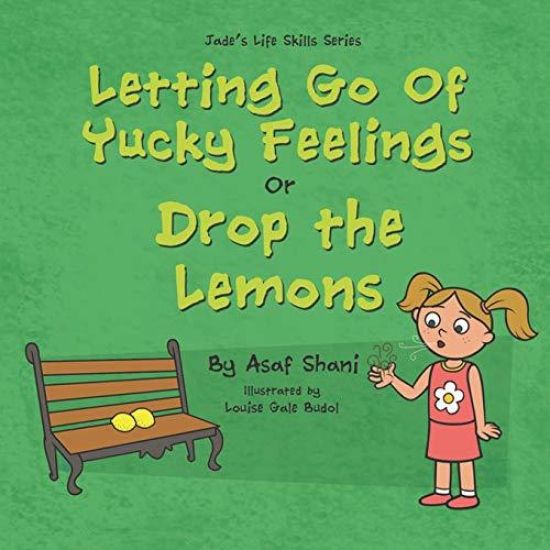
Letting go of Yucky Feelings or Drop the Lemons

Letting go of Yucky Feelings or Drop the Lemons

Asaf Shani

Independently Published
2018
nidottu
Life Skills for Children - the book 'Letting Go of Yucky Feeling OR Drop the Lemons' is the third book in the Jade's Life Skills series. The title speaks for itself - learning how to self-help oneself by letting go of sadness, anger and any other yucky feeling. Asaf Shani, father of 4, is an international speaker in the field of conflicts and negotiations that in the last 17 years acquired substantial 'hands-on' knowledge about life skills in general and their implementation with children in particular. Thousands of parents would wide, along with his own 4 kids at home, will attest to the effectiveness of the ideas and tools he presents in the Jade Life Skills for Kids series.
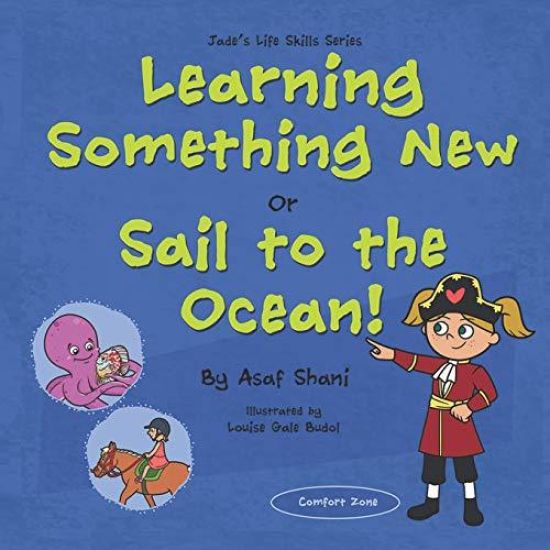
Life Skills Series - Learning Something New or Sail to the Ocean!
letting go of the familiar and allowing oneself to learn something new can be quite a challenge. In this book - Learning Something New OR Sail to the Ocean, the 9th book in the Jade Life Skills Series, Dad teaches Jade about the skill of learning new things. He takes both Jade and Andy to experience new things and teach them about 'comfort zone' and how one feels when leaving it.By experiencing new situations, places, and flavors along with telling the kids the story of Disco the fish and his heroic learning quest, Jade and Andy learn the vitally important new skill.
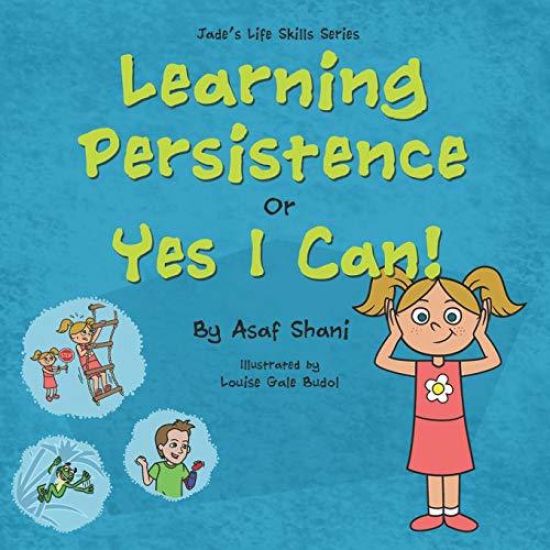
Learning Persistence or Yes I Can!

Learning Persistence or Yes I Can!

Asaf Shani

Independently Published
2018
nidottu
One of the key ingredients of success, of more importantly, a feeling of success, is persistence. In this book, the 7th in the Jade Life Skills Series, Jade learns about the inner Jade that she, and not the external obstacle, is the reason she fails. With Mom and her little brother Andy, she meets Nick a kid who was born with no left hand. Nick shows her how her ability expends way beyond she might think as long as she quietens the little Jade inside her head and keep on going.