

Kirjahaku
Etsi kirjoja tekijän nimen, kirjan nimen tai ISBN:n perusteella.
1000 tulosta hakusanalla Spender









This sequel to The Circuit completes the telling of the young life of Francisco Jimnez, a young Mexican immigrant who worked, struggled, and sacrificed with his large family to stay alive and stay together in their new homeland. Simultaneous.





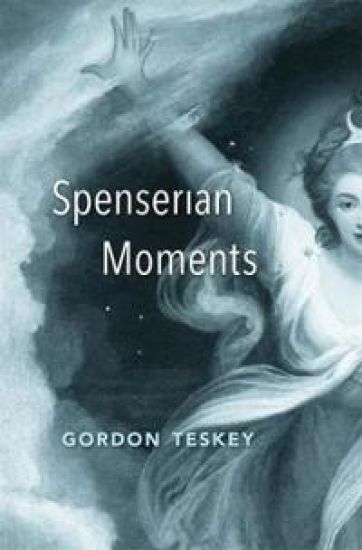
From the distinguished literary scholar Gordon Teskey comes an essay collection that restores Spenser to his rightful prominence in Renaissance studies, opening up the epic of The Faerie Queene as a grand, improvisatory project on human nature, and arguing—controversially—that it is Spenser, not Milton, who is the more important and relevant poet for the modern world.There is more adventure in The Faerie Queene than in any other major English poem. But the epic of Arthurian knights, ladies, and dragons in Faerie Land, beloved by C. S. Lewis, is often regarded as quaint and obscure, and few critics have analyzed the poem as an experiment in open thinking. In this remarkable collection, the renowned literary scholar Gordon Teskey examines the masterwork with care and imagination, explaining the theory of allegory—now and in Edmund Spenser’s Elizabethan age—and illuminating the poem’s improvisatory moments as it embarks upon fairy tale, myth, and enchantment.Milton, often considered the greatest English poet after Shakespeare, called Spenser his “original.” But Teskey argues that while Milton’s rigid ideology in Paradise Lost has failed the test of time, Spenser’s allegory invites engagement on contemporary terms ranging from power, gender, violence, and virtue ethics, to mobility, the posthuman, and the future of the planet. The Faerie Queene was unfinished when Spenser died in his forties. It is the brilliant work of a poet of youthful energy and philosophical vision who opens up new questions instead of answering old ones. The epic’s grand finale, “The Mutabilitie Cantos,” delivers a vision of human life as dizzyingly turbulent and constantly changing, leaving a future open to everything.
Isabel MacCaffrey contends that, in allegory, the mind makes a model of itself, and she shows that The Faerie Queene, mirroring as it does the mind's structure, is both a treatise on and an example of the central role that imagination plays in human life. Viewing the poem as a model of Spenser's universe, the author investigates the poet's theory of knowledge and the role of imagination in the construction of cosmic models. She begins with a survey of theories of the imagination and the creation of fictions, establishing a context in which allegorical images may be understood throughout the European allegorical tradition to which The Faerie Queene belongs. Isabel MacCaffrey's new readings show that insofar as Spenser's poem concerns modes of knowledge, it offers the reader an anatomy of its own composition, an analysis of imagination in its varied relations to the world. Originally published in 1976. The Princeton Legacy Library uses the latest print-on-demand technology to again make available previously out-of-print books from the distinguished backlist of Princeton University Press. These editions preserve the original texts of these important books while presenting them in durable paperback and hardcover editions. The goal of the Princeton Legacy Library is to vastly increase access to the rich scholarly heritage found in the thousands of books published by Princeton University Press since its founding in 1905.

Focusing, framing, scanning--the language of film--and Gombrich's studies in the psychology of perception are used by John Bender to isolate pictorial effects and devices in literature. The theory that he proposes, grounded in his analysis of Spenser, "the painter of poets," discriminates between the descriptive and the pictorial in poetry. Originally published in 1972. The Princeton Legacy Library uses the latest print-on-demand technology to again make available previously out-of-print books from the distinguished backlist of Princeton University Press. These editions preserve the original texts of these important books while presenting them in durable paperback and hardcover editions. The goal of the Princeton Legacy Library is to vastly increase access to the rich scholarly heritage found in the thousands of books published by Princeton University Press since its founding in 1905.

Spenser's Allegory of Justice in Book Five of the Fairie Queen
T. K. Dunseath
Princeton University Press
2015
pokkari
"The importance of Dunseath's study is that it proposes an original interpretation of the allegory of The Faerie Queene, Book V, and a fresh theory of its poetic function...It brings new material into play, and offers a sensible, integrated reading of many of the poem's most important passages, so that it may well prove a pace-setter for this kind of Spenserian study."--Alastair Fowler, Brasenose College, Oxford. Originally published in 1968. The Princeton Legacy Library uses the latest print-on-demand technology to again make available previously out-of-print books from the distinguished backlist of Princeton University Press. These editions preserve the original texts of these important books while presenting them in durable paperback and hardcover editions. The goal of the Princeton Legacy Library is to vastly increase access to the rich scholarly heritage found in the thousands of books published by Princeton University Press since its founding in 1905.
Although it has been recognized that Edmund Spenser's poetry owes a debt to the work of the French poets of the Pleiade, particularly to Joachim du Bellay and Pierre de Ronsard, there has been no critical analysis of this relationship. Mr. Satterthwaite compares the work of the three poets, showing the relation between the English movement to write quantitative verse and the French experiments in vers mesures. He discusses the attitudes of the poets to their Muses and to contemporary literature, their ideas of time and mutability, their moral (or amoral) views of literature and of life their religious orientation, and their use of the Platonic and neo-Platonic theories that were a part of the inherited culture of the Renaissance. Originally published in 1960. The Princeton Legacy Library uses the latest print-on-demand technology to again make available previously out-of-print books from the distinguished backlist of Princeton University Press. These editions preserve the original texts of these important books while presenting them in durable paperback and hardcover editions. The goal of the Princeton Legacy Library is to vastly increase access to the rich scholarly heritage found in the thousands of books published by Princeton University Press since its founding in 1905.