A set of Objective Type Questions are given in the last pages of the chapters for the convenience of students preparing for the examinations. -A Summary of important formulae and working rules for solving problems is given at the end of the each chapter.
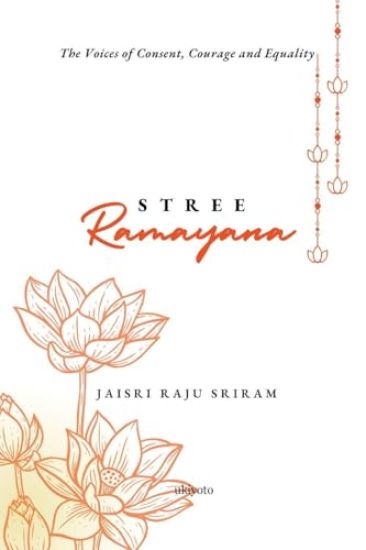
'Stree Ramayana looks at the epic through the still, patient gaze of its women-those who carried love, duty, pain, and dignity in ways rarely spoken of. Their stories do not shout; they breathe. In the silences of Sita, the restraint of Mandodari, the fire of Shurpanakha, the loneliness of Urmila, and the grace of Ahalya and Tara, a different Ramayana unfolds-one woven with unfiltered strength, unclaimed choices, and unacknowledged truth. This book offers a doorway into that unseen world-a space where courage looks like endurance, where consent is an inner whisper, where sacrifice is not glorified but understood, and where dignity survives even in the harshest trials. It invites the reader to pause, listen, and meet these women as they are: flawed, fierce, tender, misunderstood, and profoundly human.
The book discusses various necropsy procedures for wild animals both for the disease investigation and forensic usage. The list of various wildlife crimes, the role of each member of wildlife crime team investigation in general and the role of pathologist in particular, (the forensic veterinary pathology)and the salient features of methodology of crime investigation is given. Information on the mistakes and omissions in forensic necropsy, negative necropsy, common errors committed by pathologist while performing forensic necropsy, postmortem appearances of common pathological conditions and estimation of age of some of the domestic animals and their foetuses is given for guidance. Various types of wounds, and the types of firearms and their terminology are also given for easy understanding about the wounds and fire arms. Note: T&F does not sell or distribute the Hardback in India, Pakistan, Nepal, Bhutan, Bangladesh and Sri Lanka.
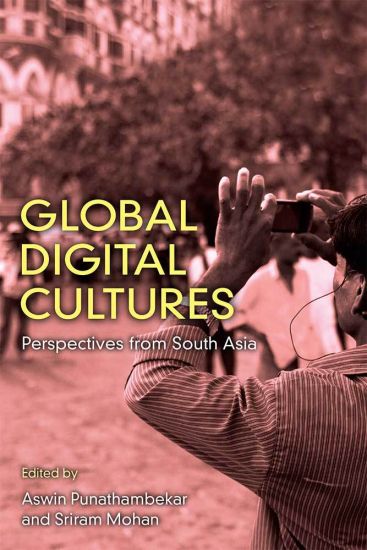
Digital media histories are part of a global network, and South Asia is a key nexus in shaping the trajectory of digital media in the twenty-first century. Digital platforms like Facebook, WhatsApp, and others are deeply embedded in the daily lives of millions of people around the world, shaping how people engage with others as kin, as citizens, and as consumers. Moving away from Anglo-American and strictly national frameworks, the essays in this book explore the intersections of local, national, regional, and global forces that shape contemporary digital culture(s) in regions like South Asia: the rise of digital and mobile media technologies, the ongoing transformation of established media industries, and emergent forms of digital media practice and use that are reconfiguring sociocultural, political, and economic terrains across the Indian subcontinent. From massive state-driven digital identity projects and YouTube censorship to Tinder and dating culture, from Twitter and primetime television to Facebook and political rumors, Global Digital Cultures focuses on enduring concerns of representation, identity, and power while grappling with algorithmic curation and data-driven processes of production, circulation, and consumption.
Micro-finance is one of the fastest growing development strategies, in many ways it is already outgrowing development with several micro-finance institutions becoming banks. But it is becoming clear that the provision of credit for enterprise development is not on its own leading to development. Beyond Micro-Credit sets out how Indian Micro-Finance Initiatives are combining micro-finance with a wide range of development goals, these include not only poverty alleviation through providing savings, credit and insurance services but also promoting livelihoods, empowering women, building people's organizations and changing institutions. It illustrates each of these from actual microfinance practice and explores the organizational challenges of combining such development goals with financial service provision. It includes detailed analysis of "self-help groups"; comparisons with microfinance practice in Bangladesh and contemporary methods of assessing performance and impact.
This book introduces students of the Japanese economy to a broad range of critical contemporary Marxian analyses by Japanese economists. Each of the five essays - on economic policy, agriculture, big business, labour relations, and foreign trade and investment - is written by a specialist in the field. The introduction places the essays in the wider context of contrasting theories of Japanese economic development. While such writings constitute an important part of the economic literature in Japan, virtually none of the great body of Marxian writing on Japanese capitalism has heretofore been available in English.
This book introduces students of the Japanese economy to a broad range of critical contemporary Marxian analyses by Japanese economists. Each of the five essays - on economic policy, agriculture, big business, labour relations, and foreign trade and investment - is written by a specialist in the field. The introduction places the essays in the wider context of contrasting theories of Japanese economic development. While such writings constitute an important part of the economic literature in Japan, virtually none of the great body of Marxian writing on Japanese capitalism has heretofore been available in English.
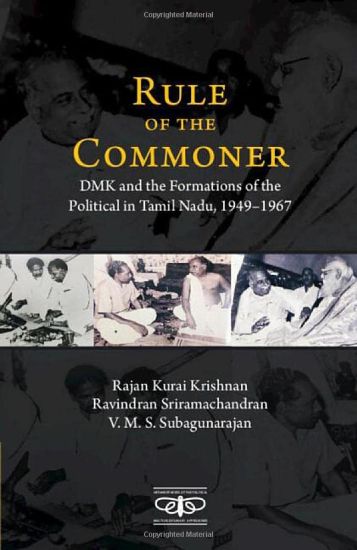
The Dravida Munnetra Kazhagam (DMK) has been singular in heralding and establishing a firm regional polity among the Indian states after the Indian Union was inaugurated as a republic. Academic scholarship has often treated the DMK as a Tamil nationalist or ethno-nationalist formation without conceptual clarity or critical insight. Rule of the Commoner demonstrates with persuasive evidence that the DMK appealed to a federalist and not nationalist imagination. The DMK's combining of the non-Brahmin Dravidian identity and allegiance to Tamil language led to a counter hegemonic formation of the plebes and left populism. Drawing on Ernesto Laclau, the book argues that the DMK achieved the construction of a people as Dravidian-Tamil, with Tamil being the empty signifier of the social whole, Brahmin vs. non-Brahmin divide functioning as the internal frontier leading to the formations of the political. It elaborates the conceptual scheme under the three rubrics of Ideation, Imagination and Mobilization.
A critical study of incentives commonly used to induce non-state armed groups to engage in peace negotiations. Offers a closer analysis of these incentives, which offer such groups a place or a stake in governance, suggesting that not only are they frequently ineffective, but that they can have unintended and dangerous side effects.
A critical study of incentives commonly used to induce non-state armed groups to engage in peace negotiations. Offers a closer analysis of these incentives, which offer such groups a place or a stake in governance, suggesting that not only are they frequently ineffective, but that they can have unintended and dangerous side effects.
When men of knowledge impart this knowledge, I do not mean they will convince your reason. I mean they will awaken in you the faith that it is so. - Sri Krishna, Bhagavadgita BACKGROUND The use of computers has led to significant productivity increases in the en gineering industry. Most ofthe computer-aided engineering applications were . restricted to algorithmic computations, such as finite element programs and circuit analysis programs. However, a number ofproblems encountered in en gineering are not amenable to purely algorithmic solutions. These problems are often ill-structured; the term ill-structured problems is used here to de note problems that do not have a clearly defined algorithmic solution. An experienced engineer deals with these ill-structured problems using his/her judgment and experience. The knowledge-based systems (KBS) technology, which emerged out of research in artificial intelligence (AI), offers a method ologyto solve these ill-structuredengineering problems. The emergenceofthe KBS technology can be viewed as the knowledge revolution: other important events that led to increased productivity are the industrial revolution (17th century); the invention of the transistor and associated developments (first half of the 20th century); and the world-wide web (towards the end of the 20th century). Kurzweil, in a lecture at M. LT on December 3, 1987, linked the progress of automation to two industrial revolutions: the first industrial PREFACE xxxii revolution leveraged our physical capabilities, whereas the second industrial revolution - the knowledge revolution - is expected leverage oUr mental ca pabilities.
Teaching core principles of life to kids is an important exercise for the parents. Making such exercise fun for the kids will help them remember and practice their learnings. Being the parents ourselves, as we thought of effective ways, we concluded that the best way to make it fun is to build short-stories with the backdrop of the African Savannah, that is precisely what we accomplished with this book. The stories are simple, interesting, intriguing and fun.To help children gain general knowledge, we incorporated authentic Masai names and geographically accurate location descriptions. We also included a "Do you know?" section for each story that explains several relevant interesting facts about the animals, locations or people from the stories.We believe to have achieved a great mix of presenting fun stories along with various real-life facts to make the reading worth the time and effort of our little readers and their loving parents (or guardians).The book will be a great purchase for your own children or for gifting it to other family members or friends. Sneak-peek into the book: This book contains 5 short-stories or tales that revolve around several wild animals living in the Ngorongoro crater and a Masai family that lives in a village on the rim of the crater.In one story, you will learn the risk of being jealous of your own family when the little lion cub, Chipo, gets encircled by the evil crocodiles. In another story, the kind monkey, Akili, helps his trapped bee friend. If a gentle hippo is saved by a honey-badger with quick and witty thinking in one story, then the animals group together to escape the hunter in the next one. Feel the fun? Please purchase the book to enjoy these stories. We promise that the book will be your great companion.This is our first book and we are open for any constructive feedback and support. We promise to improve as we publish more such books over time. We also promise to donate 50 cents to a leading children's hospital for every purchased unit.
Refugee Resettlement in the U.S. examines the multifaceted aspects of refugee resettlement, delving into the historical, political, and social dimensions that shape this humanitarian endeavor. Covering the complex history of resettlement policies to current challenges faced by refugees and host societies, the book provides a detailed exploration of the efforts to integrate refugees across different national landscapes. Featuring seven chapters, the book scrutinizes policies from the United Nations level down to state implementations, offering insights on immigration and naturalization processes, and comparing approaches to integration in the United States and other countries through case studies and current research. Additional chapters address the evolution of public opinion toward refugees, the interplay between federalism and state policies, solutions to integration obstacles, and the factors influencing such policies and perceptions, including media framing and political discourse. Providing students with a foundation in refugee policy analysis, an appreciation of the profound challenges faced by displaced populations, and an understanding of integration frameworks, Refugee Resettlement in the U.S. is an ideal resource for courses and programs in political science, sociology, and international relations.
Build end-to-end AI solutions with IBM Cloud Pak for Data to operationalize AI on a secure platform based on cloud-native reliability, cost-effective multitenancy, and efficient resource managementKey FeaturesExplore data virtualization by accessing data in real time without moving itUnify the data and AI experience with the integrated end-to-end platformExplore the AI life cycle and learn to build, experiment, and operationalize trusted AI at scaleBook DescriptionCloud Pak for Data is IBM's modern data and AI platform that includes strategic offerings from its data and AI portfolio delivered in a cloud-native fashion with the flexibility of deployment on any cloud. The platform offers a unique approach to addressing modern challenges with an integrated mix of proprietary, open-source, and third-party services.You'll begin by getting to grips with key concepts in modern data management and artificial intelligence (AI), reviewing real-life use cases, and developing an appreciation of the AI Ladder principle. Once you've gotten to grips with the basics, you will explore how Cloud Pak for Data helps in the elegant implementation of the AI Ladder practice to collect, organize, analyze, and infuse data and trustworthy AI across your business. As you advance, you'll discover the capabilities of the platform and extension services, including how they are packaged and priced. With the help of examples present throughout the book, you will gain a deep understanding of the platform, from its rich capabilities and technical architecture to its ecosystem and key go-to-market aspects.By the end of this IBM book, you'll be able to apply IBM Cloud Pak for Data's prescriptive practices and leverage its capabilities to build a trusted data foundation and accelerate AI adoption in your enterprise.What you will learnUnderstand the importance of digital transformations and the role of data and AI platformsGet to grips with data architecture and its relevance in driving AI adoption using IBM's AI LadderUnderstand Cloud Pak for Data, its value proposition, capabilities, and unique differentiatorsDelve into the pricing, packaging, key use cases, and competitors of Cloud Pak for DataUse the Cloud Pak for Data ecosystem with premium IBM and third-party servicesDiscover IBM's vibrant ecosystem of proprietary, open-source, and third-party offerings from over 35 ISVsWho this book is forThis book is for data scientists, data stewards, developers, and data-focused business executives interested in learning about IBM's Cloud Pak for Data. Knowledge of technical concepts related to data science and familiarity with data analytics and AI initiatives at various levels of maturity are required to make the most of this book.