In a world filled with chaos and confusion about our self-worth, lack of confidence and naivete towards life, we need a true standard of value for which to frame our lives by. We need to pull from the wisdom of the past that guided our ancestors to become people of great value, shaping our society by fighting for freedom, and the courage to take responsibility for our lives. Original Value is a powerful textbook that elucidates life's big purpose and why we desire growth and progression. It goes deep into the science of our identity and how to create a life that delivers value and happiness.
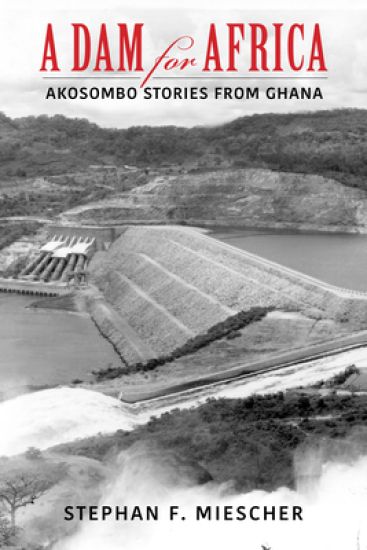
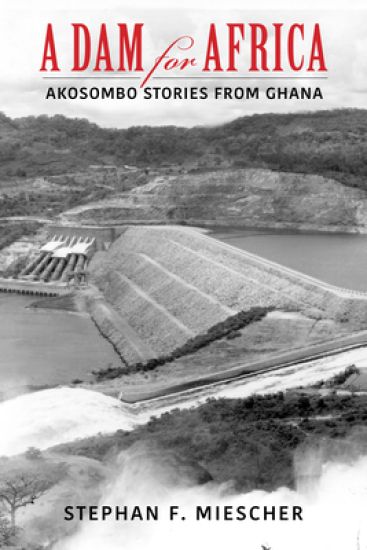
Since its construction in the early 1960s, the hydroelectric Akosombo Dam across the Volta River has exemplified the possibilities and challenges of development in Ghana. Drawing upon a wealth of sources, A Dam for Africa investigates contrasting stories about how this dam has transformed a West African nation, while providing a model for other African countries. The massive Akosombo Dam is the keystone of the Volta River Project that includes a large manmade lake 250 miles long, the VALCO aluminum smelter, new cities and towns, a deep-sea harbor, and an electrical grid. On the local level, Akosombo has meant access to electricity for people in urban and industrial areas across southern Ghana. For others, Akosombo inflicted tremendous social and environmental costs. The dam altered the ecology of the Lower Volta, displaced 80,000 people in the Volta Basin, and affected the livelihoods of hundreds of thousands of Ghanaians. In A Dam for Africa, Stephan Miescher explores four intersecting narratives: Ghanaian debates and aspirations about modernization in the context of decolonization and Cold War; international efforts of the US aluminum industry to benefit from Akosombo through cheap electricity for their VALCO smelter; local stories of upheaval and devastation in resettlement towns; and a nation-wide quest toward electrification and energy justice during times of economic crises, droughts, and climate change.
By featuring the life histories of eight senior men, Making Men in Ghana explores the changing meaning of becoming a man in modern Africa. Stephan F. Miescher concentrates on the ideals and expectations that formed around men who were prominent in their communities when Ghana became an independent nation. Miescher shows how they negotiated complex social and economic transformations and how they dealt with their mounting obligations and responsibilities as leaders in their kinship groups, churches, and schools. Not only were notions about men and masculinity shaped by community standards, but they were strongly influenced by imported standards that came from missionaries and other colonial officials. As he recounts the life histories of these men, Miescher reveals that the passage to manhood—and a position of power, seniority, authority, and leadership—was not always welcome or easy. As an important foil for studies on women and femininity, this groundbreaking book not only explores masculinity and ideals of male behavior, but offers a fresh perspective on African men in a century of change.
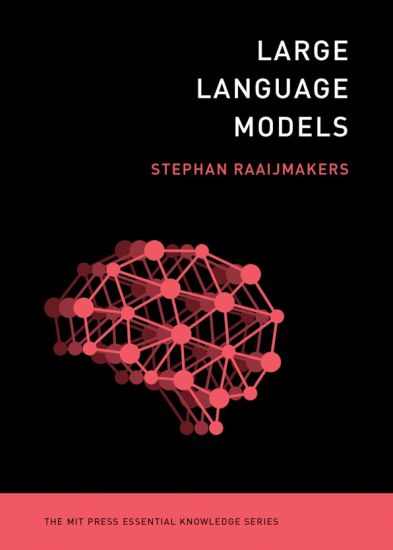
An in-depth history of Large Language Models and what their ubiquity, disruption, and creativity mean from a wider sociopolitical perspective. In November 2022, ChatGPT swept the globe with a mixed frenzy of excitement and anxiety. Was this a step closer to reaching singularity or just another marvel in machine learning? Author Stephan Raaijmakers provides a comprehensive introduction to Large Language Models (LLMs), describing what exactly they are capable of from a technical and creative standpoint. This concise volume covers everything from the architecture of LLM neural networks to the limitations of LLMs to how our governments can regulate this technology. In explaining how exactly LLMs learn from data sets, Raaijmakers defangs the more sensational arguments we may be familiar with. Instead, he offers a more grounded approach to how this groundbreaking and increasingly ubiquitous form of artificial intelligence will shape our society for years to come.
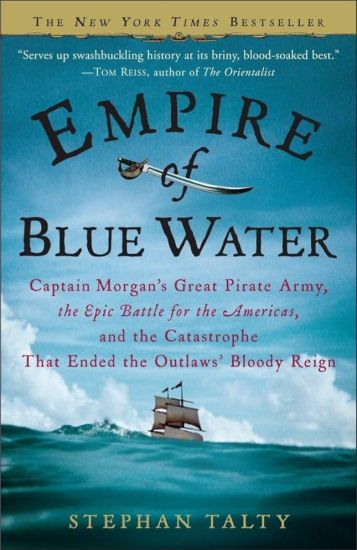
A May 2007 Book Sense Pick "Talty's vigorous history of seventeenth-century pirates of the Caribbean will sate even fickle Jack Sparrow fans. . . . A pleasure to read from bow to stern." --Entertainment Weekly The passion and violence of the age of exploration and empire come to vivid life in this story of the legendary pirate who took on the greatest military power on earth with a ragtag bunch of renegades. Awash with bloody battles, political intrigues, natural disaster, and a cast of characters more compelling, bizarre, and memorable than any found in a Hollywood swashbuckler, Empire of Blue Water brilliantly re-creates the life and times of Henry Morgan and the real pirates of the Caribbean.
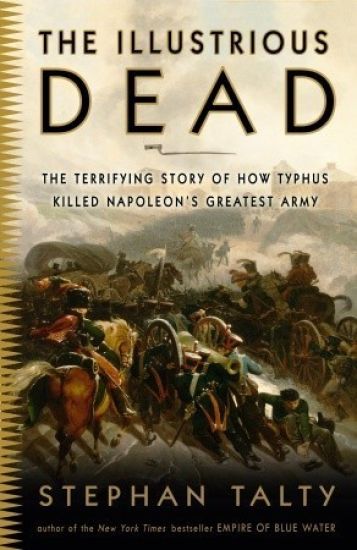
"Gripping . . . a compelling story of personal hubris and humbling defeat."--Jack Weatherford, author of the New York Times bestseller Genghis Khan and the Making of theModern World In a masterful dual narrative that pits the heights of human ambition and achievement against the supremacy of nature, New York Times bestselling author Stephan Talty tells the story of a mighty ruler and a tiny microbe, antagonists whose struggle would shape the modern world. In the spring of 1812, Napoleon Bonaparte was at the height of his powers. Forty-five million called him emperor, and he commanded a nation that was the richest, most cultured, and advanced on earth. No army could stand against his impeccably trained, brilliantly led forces, and his continued sweep across Europe seemed inevitable. Early that year, bolstered by his successes, Napoleon turned his attentions toward Moscow, helming the largest invasion in human history. Surely, Tsar Alexander's outnumbered troops would crumble against this mighty force. But another powerful and ancient enemy awaited Napoleon's men in the Russian steppes. Virulent and swift, this microscopic foe would bring the emperor to his knees. Even as the Russians retreated before him in disarray, Napoleon found his army disappearing, his frantic doctors powerless to explain what had struck down a hundred thousand soldiers. The emperor's vaunted military brilliance suddenly seemed useless, and when the Russians put their own occupied capital to the torch, the campaign became a desperate race through the frozen landscape as troops continued to die by the thousands. Through it all, with tragic heroism, Napoleon's disease-ravaged, freezing, starving men somehow rallied, again and again, to cries of "Vive l'Empereur " Yet Talty's sweeping tale takes us far beyond the doomed heroics and bloody clashes of the battlefield. The Illustrious Dead delves deep into the origins of the pathogen that finally ended the mighty emperor's dreams of world conquest and exposes this "war plague's" hidden role throughout history. A tale of two unstoppable forces meeting on the road to Moscow in an epic clash of killer microbe and peerless army, The Illustrious Dead is a historical whodunit in which a million lives hang in the balance.
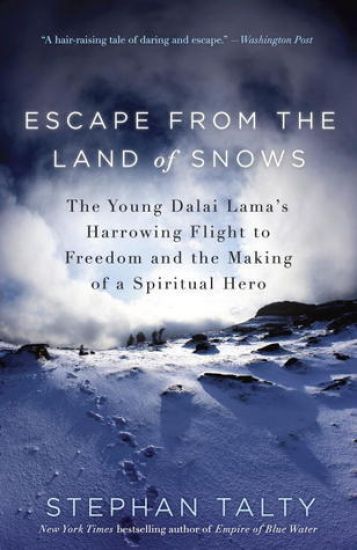
On the evening of March 17, 1959, as the people of Tibet braced for a violent power grab by Chinese occupiers--one that would forever wipe out any vestige of national sovereignty--the twenty-four-year-old Dalai Lama, Tibet's political and spiritual leader, contemplated the impossible. The task before him was immense: to slip past a cordon of crack Chinese troops ringing his summer palace and, with an escort of 300, journey across the highest terrain in the world and over treacherous Himalayan passes to freedom--one step ahead of pursuing Chinese soldiers. Mao Zedung, China's ruthless Communist dictator, had pinned his hopes for total Tibetan submission on controlling the impressionable Dalai Lama. So beloved was the young ruler--so identified with his country's essence--that for him to escape might mean perpetual resistance from a population unwilling to tolerate an increasingly brutal occupation. The Dalai Lama's minders sent word to the Tibetan rebels and CIA-trained guerrillas who waited on the route: His Holiness must escape--at all costs.In many ways, the 14th Dalai Lama, Tenzin Gyatso, was unprepared for the epic journey awaiting him. Twenty-two years earlier, government search parties, guided by prophecies and omens, had arrived at the boy's humble peasant home and subjected the two-year-old to a series of tests. After being declared the reincarnation of Tibet's previous ruler, the boy was brought to Lhasa to learn the secrets of Buddhism and the ways of ultimate power. Forced in the ensuing two decades to cope with aching loneliness and often stifling ritual--and compelled to suppress his mischievous personality--Gyatso eventually proved himself a capable leader. But no previous Dalai Lama had ever taken on a million Communist Chinese soldiers bent on stamping out Tibetan freedom. To keep his country's dream of independence alive by means of a government in exile, the young ruler would not only have to brave battalions of enemy soldiers and the whiteout conditions waiting on the slopes of the Himalayas' highest peaks, he'd have to overcome a different type of blindness: the na vet intrinsic to his sheltered palace life and his position as leader of a people who considered violence deeply taboo. His mind made up, the young Dalai Lama set off on his audacious journey to India while behind him a Chinese army rolled over Lhasa, its advance hunter patrols in fierce pursuit of the man they most coveted. The 14th's escape was an act of daring and defiance that represented Tibet's last hope, and so the world watched, transfixed, as the gentle monk's journey unfolded. Emotionally powerful and irresistibly page-turning, Escape from the Land of Snows is simultaneously a portrait of the inhabitants of a spiritual nation forced to take up arms in defense of their ideals, and the saga of an initially childlike ruler who at first wore his monk's robes uncomfortably but was ultimately transformed by his escape into the towering figure the world knows today--a charismatic champion of free thinking and universal compassion.
David Leveraux is an Apprentice Flavour Chemist at one of the world's leading production houses. While testing Sweetness #9, he notices that the artificial sweetener causes unsettling side-effects in laboratory rats and monkeys. But with his career amd family at risk, David keeps his suspicions to himself.Year later, Sweetness #9 is America's most popular sweetner - and David's family is changing. His wife is gaining weight, his daughter is depressed, and his son has stopped using verbs. Is Sweetness #9 to blame, along with David's failure to stop it? Or are these just symptoms of the American condition?An exciting literary debut, SWEETNESS #9 is a darkly comic, wildly imaginative investigation of whether what we eat makes us who we are.
Ideal for any on-call professional, resident, or medical student, this popular reference covers the common problems you'll encounter while on call in the hospital. On Call Neurology, 4th Edition, by Drs. Randolph S. Marshall and Stephan A. Mayer, fits perfectly in your pocket, ready to provide key information in time-sensitive, challenging situations. You'll gain speed, skill, and knowledge with every call - from diagnosing a difficult or life-threatening situation to prescribing the right medication. Features a logical, highly templated format so you can locate key information quickly. Provides updated content and references, keeping you on the cutting edge of current, evidence-based information. Includes the latest information on headache, demyelinating diseases, infections of the central nervous system, dementia, and more. Highlights critical information, reducing the likelihood of error. Provides an updated On Call Formulary covering the most common neurologic medications. Delivers consistent, easy-to-follow coverage of the most common on-call problems and approaches, including what to do from the initial phone call, questions you should ask to assess the urgency of each situation, "Elevator Thoughts," how to immediately identify major threats to life, what to do at the bedside, and how to avoid common mistakes for every call. Enhanced eBook version included with purchase. Your enhanced eBook allows you to access all of the text, figures, and references from the book on a variety of devices. Provides updated content and references, as well as an up-to-date drug formulary, keeping you on the cutting edge of current, evidence-based information. Includes the latest information on headache, demyelinating diseases, infections of the central nervous system, dementia, and more. NEW! Expert ConsultT eBook version included with purchase. This enhanced eBook experience allows you to search all of the text, figures, and references from the book on a variety of devices.
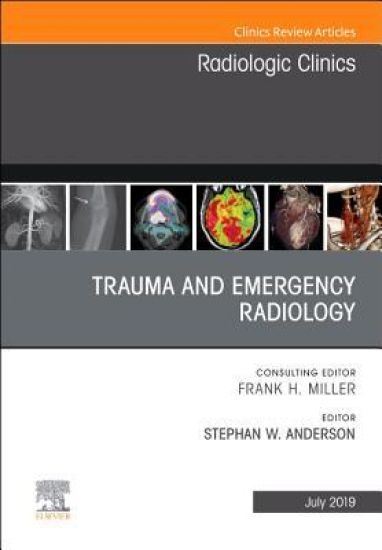
This issue of Radiologic Clinics of North America focuses on Trauma and Emergency Radiology and is edited by Dr. Stephan W. Anderson. Articles will include: Stroke imaging; Imaging of bowel obstruction and ischemia; Abdominopelvic emergencies: Application of MRI; Damage control laparotomy; Imaging of blunt bowel and mesenteric injury; Imaging of soft tissue neck trauma: larynx, esophagus, and vessels; Imaging of cardiac trauma; Imaging of spine trauma; Imaging of brain trauma; Imaging of cardiovascular thoracic emergencies: Acute aortic syndrome, coronary computed tomoangiography, and pulmonary embolism; Easily missed extremity fractures in children; and more!
From the author of A Captain's Duty, the New York Times best-selling account of Captain Phillips, comes the untold story of the most important rescue mission not just of the Vietnam War, but the entire Cold War. One American aviator, who knew our most important secrets, crashed behind enemy lines and risked capture by both the North Vietnamese and the Soviets. One Navy SEAL and his Vietnamese partner had to sneak past them all to save him.At the height of the Vietnam War, few American airmen are more valuable than Lieutenant Colonel Gene Hambleton. His memory is filled with highly classified information that the Soviets and North Vietnamese badly want. When Hambleton is shot down in the midst of North Vietnam's Easter Offensive, US forces place the entire war on hold to save a single man hiding among 30,000 enemy troops and tanks. Airborne rescue missions fail, killing eleven Americans. Finally, Navy SEAL Thomas Norris and his Vietnamese guide, Nguyen Van Kiet, volunteer to go after him on foot. Gliding past hundreds of enemy soldiers, it takes them days to reach Hambleton, who, guided toward his rescuers via improvised radio code, is barely alive, deeply malnourished, and hallucinating after eleven days on the run. In this deeply researched, untold story, award-winning author Stephan Talty describes the extraordinary mission that led Hambleton to safety. Drawing from dozens of interviews and access to unpublished papers, Saving Bravo is the riveting story of one of the greatest rescue missions in the history of the Special Forces.
Inspiration for the hit new podcast "Hunting the Butcher" The untold story of an Israeli spy's epic journey to bring the notorious Butcher of Latvia to justice--a case that altered the fates of all ex-Nazis. Before World War II, Herbert Cukurs was a famous figure in his small Latvian city, the "Charles Lindbergh of his country". But he was soon better known as the Butcher of Latvia, a man who murdered some thirty thousand Jews. By 1965, a statute of limitations on Nazi war crimes threatened to expire, potentially absolving ex-Nazis like Cukurs of their crimes. Jacob Medad, the misfit Mossad agent who had previously kidnapped Adolf Eichmann, knew if Cukurs was not captured soon, he may never be brought to justice. In a thrilling undercover operation, Medad traveled to Cukurs' new home in Brazil in an elaborate disguise, befriended him, and earned his trust, while negotiations to extend Nazi innocence neared a boiling point.
"Impressively researched and written with storytelling verve. ... Talty delves the deepest into the history and twisted personality of David Koresh." --Wall Street JournalThe first comprehensive account of David Koresh's life, his road to Waco, and the rise of government mistrust in America, from a master of narrative nonfictionNo other event in the last fifty years is shrouded in myth like the 1993 siege of the Branch Davidians in Waco, Texas. Today, we remember this moment for the 76 people, including 20 children, who died in the fire; for its inspiration of the Oklahoma City bombing; and for the wave of anti-government militarism that followed. What we understand far less is what motivated the Davidians' enigmatic leader, David Koresh.Drawing on first-time, exclusive interviews with Koresh's family and survivors of the siege, bestselling author Stephan Talty paints a psychological portrait of this infamous icon of the 1990s. Born Vernon Howell into the hyper-masculine world of central Texas in the 1960s, Koresh experienced a childhood riven with abuse and isolation. He found a new version of himself in the halls of his local church, and love in the fundamentalist sect of the Branch Davidians. Later, with a new name and professed prophetic powers, Koresh ushered in a new era for the Davidians that prized his own sexual conquest as much as his followers' faith. As one survivor has said, "What better way for a worthless child to feel worth than to become God?"In his signature immersive storytelling, Talty reveals how Koresh's fixation on holy war, which would deliver the Davidians to their reward and confirm himself as Christ, collided with his paranoid obsession with firearms to destructive effect. Their deadly, 51-day standoff with the embattled FBI and ATF, he shows, embodied an anti-government ethic that continues to resonate today.Now, thirty years after that unforgettable moment, Koresh presents the tragedy at Waco--and the government mistrust it inspired--in its fullest context yet.
"This book addresses how health apps, in-home measurement devices, telemedicine, data mining, and artificial intelligence and smart medical algorithms are all enabled by the transition to a digital health infrastructure…..it provides a comprehensive background with which to understand what is happening in healthcare informatics and why."—C. William Hanson, III, MD, Chief Medical Information Officer and Vice President, University of Pennsylvania Health System. "This book is dedicated to the frontline healthcare workers, who through their courage and honor to their profession, helped maintain a reliable service to the population at large, during a chaotic time. These individuals withstood fear and engaged massive uncertainty and risk to perform their duties of providing care to those in need at a time of crisis. May the world never forget the COVID-19 pandemic and the courage of our healthcare workers".—Stephan P. Kudyba, AuthorHealthcare Informatics: Evolving Strategies in the Digital Era focuses on the services, technologies, and processes that are evolving in the healthcare industry. It begins with an introduction to the factors that are driving the digital age as it relates to the healthcare sector and then covers strategic topics such as risk management, project management, and knowledge management that are essential for successful digital initiatives. It delves into facets of the digital economy and how healthcare is adapting to the geographic, demographic, and physical needs of the population and highlights the emergence and importance of apps and telehealth. It also provides a high-level approach to managing pandemics by applying the various elements of the digital ecosystem. The book covers such technologies as: Computerized physician order entry (CPOE)Clinical Information SystemsAlerting systems and medical sensorsElectronic healthcare records (EHRs)Mobile healthcare and telehealth. AppsBusiness Intelligence and Decision Support AnalyticsDigital outreach to the populationArtificial IntelligenceThe book then closes the loop on the efficiency enhancing process with a focus on utilizing analytics for problem solving for a variety of healthcare processes including the pharmaceutical sector. Finally, the book ends with current and futuristic views on evolving applications of AI throughout the industry.
The Global Perspective of Urban Labor in Mexico City, 1910–1929 examines the global entanglement of the Mexican labor movement during the Mexican Revolution. It describes how global influences made their entry into labor culture through the cinema, the theater, and labor festivals as well as into the development of consumption patterns and advertisement. It further shows how the young labor movement constituted its discourse and invented its tradition at meetings and in the columns of newspapers.The local conditions constitute the framework for the examination of Mexican labor’s perspectives on and engagement with contemporary events of global significance. Thereby, this book demonstrates how workers turned to the global context in search of guidance and role models, embracing global developments and narratives. It also reveals the differentiations from this context in order to create a unique local identity.This approach allows new perspectives on the role of a neglected revolutionary actor and on the influence of global developments in a revolution that has been predominantly interpreted from a national point of view. It shows the way global ideas were brought to life in the framework of revolutionary Mexico City – providing new insights into the grand-narratives of Globalization and Revolution.
A Survey of Modern English covers a wide selection of aspects of the modern English language. Fully revised and updated, the major focus of the third edition lies in Standard American and British English individually and in comparison with each other. Over and beyond that, this volume treats other Englishes around the world, especially those of the southern hemisphere countries of Australia, New Zealand, and South Africa as well as numerous varieties spoken in southern, eastern and western Africa, south and southeast Asia, and the Pacific. The main areas of investigation and interest include: pronunciation, grammar, and vocabulary; multiple facets of English dialects and sociolects with an emphasis on gender and ethnicity; questions of pragmatics as well as a longer look at English-related pidgin and creole varieties.This authoritative guide is a comprehensive, scholarly, and systematic review of modern English. In one volume, the book presents a description of both the linguistic structure of present-day English and its geographical, social, gender, and ethnic variations. This is complemented with an updated general bibliography and with exercises at the end of each chapter and their suggested solutions at the end of the volume, all intended to provide students and other interested readers with helpful resources.
There is an ongoing data explosion transpiring that will make previous creations, collections, and storage of data look trivial. Big Data, Mining, and Analytics: Components of Strategic Decision Making ties together big data, data mining, and analytics to explain how readers can leverage them to extract valuable insights from their data. Facilitating a clear understanding of big data, it supplies authoritative insights from expert contributors into leveraging data resources, including big data, to improve decision making. Illustrating basic approaches of business intelligence to the more complex methods of data and text mining, the book guides readers through the process of extracting valuable knowledge from the varieties of data currently being generated in the brick and mortar and internet environments. It considers the broad spectrum of analytics approaches for decision making, including dashboards, OLAP cubes, data mining, and text mining.Includes a foreword by Thomas H. Davenport, Distinguished Professor, Babson College; Fellow, MIT Center for Digital Business; and Co-Founder, International Institute for AnalyticsIntroduces text mining and the transforming of unstructured data into useful informationExamines real time wireless medical data acquisition for today’s healthcare and data mining challengesPresents the contributions of big data experts from academia and industry, including SASHighlights the most exciting emerging technologies for big dataFilled with examples that illustrate the value of analytics throughout, the book outlines a conceptual framework for data modeling that can help you immediately improve your own analytics and decision-making processes. It also provides in-depth coverage of analyzing unstructured data with text mining methods.