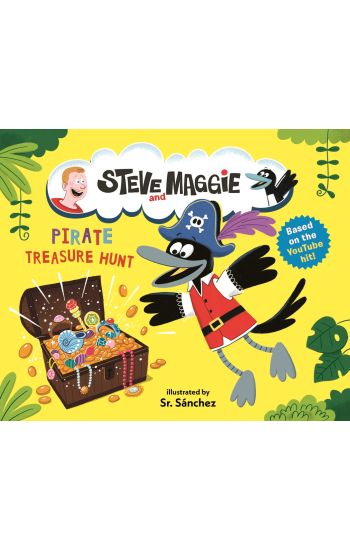
Ahoy there, mateys Climb aboard for a pirate adventure starring YouTube sensations Steve and Maggie--perfect for toddlers and preschoolers. It's time for a pirate treasure hunt Follow Steve and Maggie as they search for clues, solve riddles, and find their way to a pirate-themed party with a very special prize. Based on the hit YouTube series, this funny, engaging, and vibrantly illustrated picture book is sure have little fans rapt while offering plenty to learn and discover along the way.
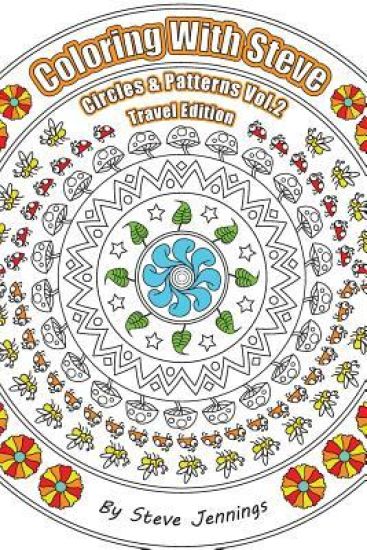
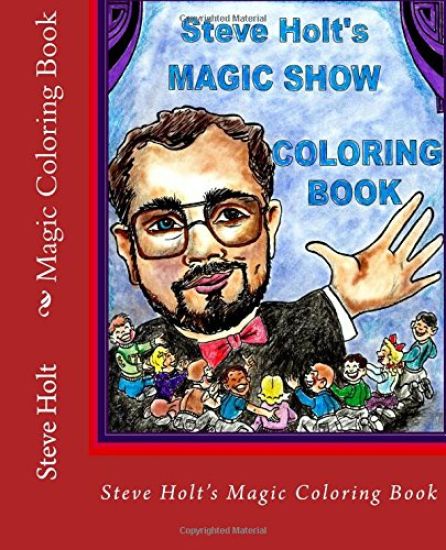
33 Cool Designs for your Coloring enjoyment Circle Designs, Different Patterns, Little Creatures, and morePlus bonus designs at back of bookDesigned for adults, both young and old Kids will love the designs too Preferred medium is colored pencils
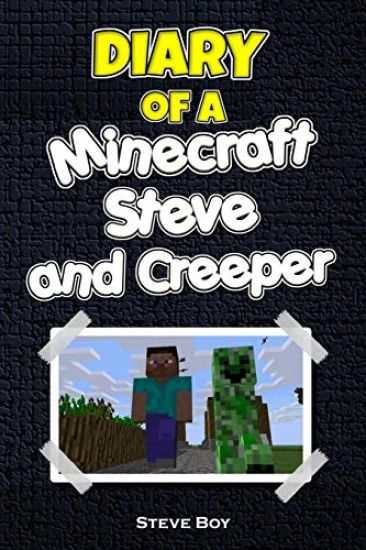
Diary of a Minecraft Steve & CreeperTo all my fans, readers and followers This book is part of the same, best-selling Full Picture series by Steve Boy that was previously published as "Diary of a Minecraft Steve & Creeper" by "Steve Boy". Your favorite unofficial Minecraft series is now available as "Createspace.com & Kindle Store".
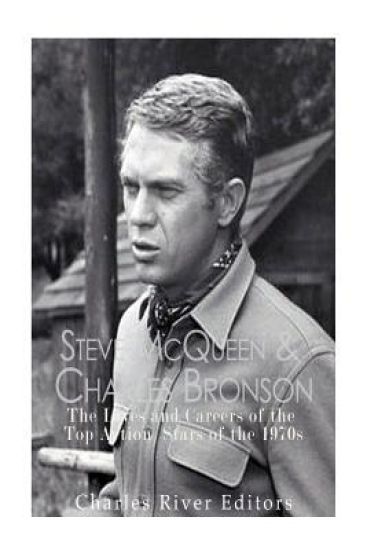
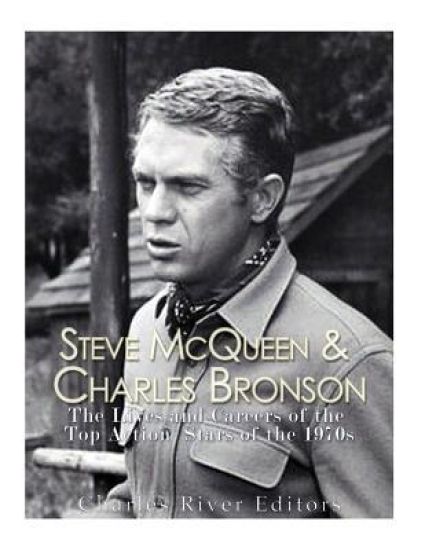
*Includes pictures*Includes the actors' quotes about their lives and careers*Includes a bibliography for further reading In the 1960s and 1970s, no actor personified cool, calm and collected like Steve McQueen, whose suave anti-hero protagonists made men jealous and women swoon. As actor Donald Logue puts it in The Tao of Steve, "Steve is the prototypical cool American male. He's the guy on his horse, the guy alone. He has his own code of honor, his own code of ethics, his own rules of living. He never, ever tries to impress the women, but he always gets the girl." And indeed, that was the case not only in movies like The Thomas Crown Affair, Bullitt, The Getaway, and Papillon, but also in real life. Actress Ali MacGraw, who later became one of his wives, described his effect on women: "I remember seeing him across the swimming pool and my knees were knocking. He radiated such macho energy. Men wanted to be like him. Uptight society ladies and biker molls wanted to be with him."Unlike many actors who become this type of heartthrob, McQueen seemed to have the bona fides. Growing up rough and tough in the Midwest, McQueen was sent to a juvenile facility California because he didn't get along with his stepfather, and after that there he became a Marine. Like Jim Dean before him, McQueen also loved to race, and before he became an actor, he was actually making a living winning races in New York. As he once put it, "Racing is life. Anything before or after is just waiting."However, McQueen was destined to become "The King of Cool" on screen, and after a few quick stints in acting jobs in the early 1950s, he began to look at it as an actual occupation. He once noted, "I really don't like to act. At the beginning, back in '51, I had to force myself to stick with it. I was real uncomfortable, real uncomfortable." Eventually, McQueen was comfortable enough to simply act natural and thus exude the tough confidence that made him an idol. That kind of performance translated well on the old TV Westerns, and a few of those, Tales of Wells Fargo and Trackdown, catapulted McQueen to the conscience of Hollywood. From there, it would only take a few years and a few movie appearances for McQueen to become a huge box office draw. By the time Charles Bronson emerged from a series of miniscule, uncredited roles in the mid-1950s, the singing cowboy was two generations gone, save vestiges in television serials, such as Roy Rogers and Dale Evans. The dancing romantic lead of the Gene Kelly and Fred Astaire variety would soon exhaust itself as a genre in an age increasingly bent on realism and a more severe form of escape. Bronson possessed none of the gifts common to the heroes of the previous era. Light-heartedness did not become him, and by all accounts, he was neither a singer nor dancer. He could not offer the heft of Gary Cooper or John Wayne, although he shared a reserved quality with the former. He did not possess the pristine good looks of Gregory Peck. In fact, one good-natured description making the rounds in Bronson's heyday likened him to "A Clark Gable who has been left out in the sun too long." To accompany the rough-hewn appearance of Bronson's new class of hero, the typical script gave his remarkably enduring persona, little to say in terms of dialogue that would reveal his inner thoughts. With minimal text, even those he attempts to help are unsure of his intentions, and few clues are offered by which the viewer can come to know his mind. As the grotesqueness of his characters' violent acts increased, so did the heinous deeds of the criminals he fought, upping the ante to an eager public in search of a simple cure for its social ills. In a career of almost eighty films and a total body of work totaling 160 appearances including television, Bronson pushed the envelope of what graphic action the studios were willing to offer, and what the censors would accept.
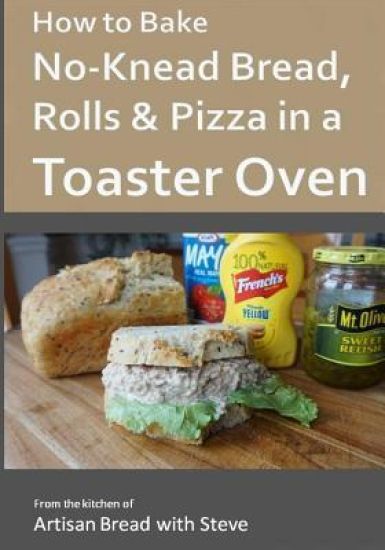
No oven... no problem... you can bake no-knead bread in a toaster oven. Baking bread, rolls and pizza in a toaster oven is ideal for those with limited kitchens and those of you who don't want to turn the oven on because it heats the house in the summer.This is the ideal bread cookbook for the newbie... the first timer... the future baker... the young and the old... because I will show you how to make no-knead yeast bread in a glass bowl with a spoon, without dusting the counter with flour or touching the dough with your hands. It's called "hands-free" technique. It uses the principles of a bread machine... without the bread machine.These techniques are a fresh approach to making no-knead bread... you'll love the results.Thanks - Steve
No oven... no problem... you can bake no-knead bread in a toaster oven. Baking bread, rolls and pizza in a toaster oven is ideal for those with limited kitchens and those of you who don't want to turn the oven on because it heats the house in the summer.This is the ideal bread cookbook for the newbie... the first timer... the future baker... the young and the old... because I will show you how to make no-knead yeast bread in a glass bowl with a spoon, without dusting the counter with flour or touching the dough with your hands. It's called "hands-free" technique. It uses the principles of a bread machine... without the bread machine.These techniques are a fresh approach to making no-knead bread... you'll love the results.Thanks - Steve
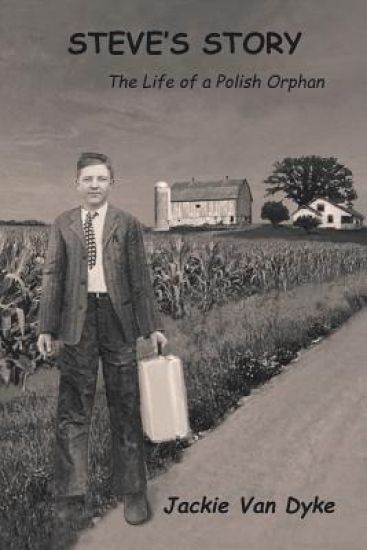
A young woman and a young man left their villages in Poland in 1907 and joined the throng of immigrants pouring into the Untied States at that time. They met in Philadelphia and married soon after. Within fifteen years, hard times and a houseful of seven children led to a family breakdown, bootlegging, and arrests, which culminated with the children being placed in an orphanage.This is the story of how one of those children, Steve, longed to find his family and home, as he imagined it could be. He ran away from foster care and eventually reconnected with his family. Steve survived four and a half dark years while serving in the army in WWII before he was finally free to marry his sweetheart. After an adventurous life, raising five children, and overcoming heartbreaking circumstances, Steve, at eighty, made a trip to Poland to discover his Polish family and true Polish roots.
A young woman and a young man left their villages in Poland in 1907 and joined the throng of immigrants pouring into the Untied States at that time. They met in Philadelphia and married soon after. Within fifteen years, hard times and a houseful of seven children led to a family breakdown, bootlegging, and arrests, which culminated with the children being placed in an orphanage.This is the story of how one of those children, Steve, longed to find his family and home, as he imagined it could be. He ran away from foster care and eventually reconnected with his family. Steve survived four and a half dark years while serving in the army in WWII before he was finally free to marry his sweetheart. After an adventurous life, raising five children, and overcoming heartbreaking circumstances, Steve, at eighty, made a trip to Poland to discover his Polish family and true Polish roots.
*Includes pictures*Includes the actors' quotes about their lives and careers*Includes a bibliography for further reading In the 1960s and 1970s, no actor personified cool, calm and collected like Steve McQueen, whose suave anti-hero protagonists made men jealous and women swoon. As actor Donald Logue puts it in The Tao of Steve, "Steve is the prototypical cool American male. He's the guy on his horse, the guy alone. He has his own code of honor, his own code of ethics, his own rules of living. He never, ever tries to impress the women, but he always gets the girl." And indeed, that was the case not only in movies like The Thomas Crown Affair, Bullitt, The Getaway, and Papillon, but also in real life. Actress Ali MacGraw, who later became one of his wives, described his effect on women: "I remember seeing him across the swimming pool and my knees were knocking. He radiated such macho energy. Men wanted to be like him. Uptight society ladies and biker molls wanted to be with him."Unlike many actors who become this type of heartthrob, McQueen seemed to have the bona fides. Growing up rough and tough in the Midwest, McQueen was sent to a juvenile facility California because he didn't get along with his stepfather, and after that there he became a Marine. Like Jim Dean before him, McQueen also loved to race, and before he became an actor, he was actually making a living winning races in New York. As he once put it, "Racing is life. Anything before or after is just waiting."However, McQueen was destined to become "The King of Cool" on screen, and after a few quick stints in acting jobs in the early 1950s, he began to look at it as an actual occupation. He once noted, "I really don't like to act. At the beginning, back in '51, I had to force myself to stick with it. I was real uncomfortable, real uncomfortable." Eventually, McQueen was comfortable enough to simply act natural and thus exude the tough confidence that made him an idol. That kind of performance translated well on the old TV Westerns, and a few of those, Tales of Wells Fargo and Trackdown, catapulted McQueen to the conscience of Hollywood. From there, it would only take a few years and a few movie appearances for McQueen to become a huge box office draw. By the time Charles Bronson emerged from a series of miniscule, uncredited roles in the mid-1950s, the singing cowboy was two generations gone, save vestiges in television serials, such as Roy Rogers and Dale Evans. The dancing romantic lead of the Gene Kelly and Fred Astaire variety would soon exhaust itself as a genre in an age increasingly bent on realism and a more severe form of escape. Bronson possessed none of the gifts common to the heroes of the previous era. Light-heartedness did not become him, and by all accounts, he was neither a singer nor dancer. He could not offer the heft of Gary Cooper or John Wayne, although he shared a reserved quality with the former. He did not possess the pristine good looks of Gregory Peck. In fact, one good-natured description making the rounds in Bronson's heyday likened him to "A Clark Gable who has been left out in the sun too long." To accompany the rough-hewn appearance of Bronson's new class of hero, the typical script gave his remarkably enduring persona, little to say in terms of dialogue that would reveal his inner thoughts. With minimal text, even those he attempts to help are unsure of his intentions, and few clues are offered by which the viewer can come to know his mind. As the grotesqueness of his characters' violent acts increased, so did the heinous deeds of the criminals he fought, upping the ante to an eager public in search of a simple cure for its social ills. In a career of almost eighty films and a total body of work totaling 160 appearances including television, Bronson pushed the envelope of what graphic action the studios were willing to offer, and what the censors would accept.
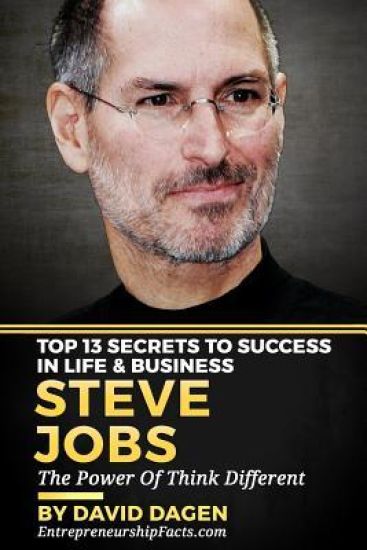
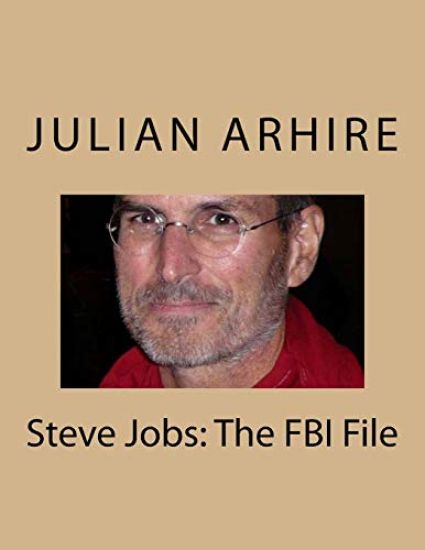
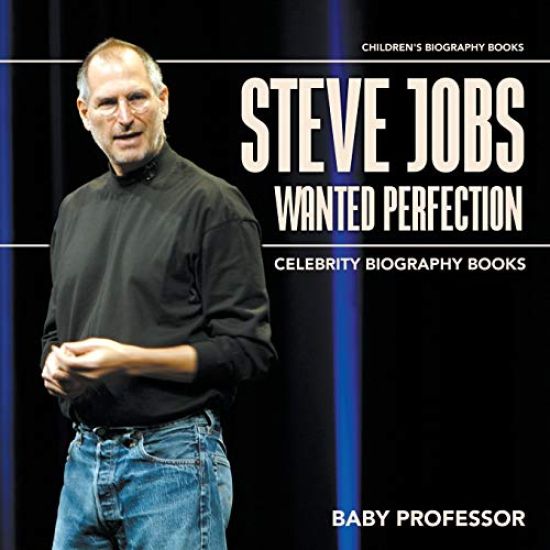
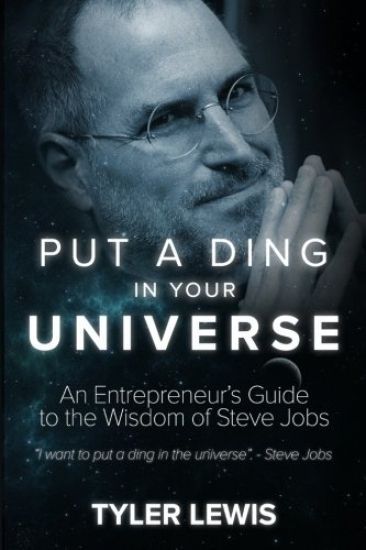
Steve Jobs. The co-founder of Apple. Macintosh computers, iMacs, iPods, iPhones, iPads, iTunes, even Toy Story and Finding Nemo. What an amazing legacy. What an amazing leader. In business. And in life. Steve Jobs definitely put a ding in his universe.Don't you? Don't you want to put a ding in YOUR universe? In your life? Deep down, don't we all desire that? I certainly do.In Put a Ding in Your Universe, I will walk with you through Steve Jobs's "Top Ten Rules for Success". This is not another retelling of the life story of Steve Jobs. This book is a compilation of the wisdom of one of the most successful and innovative business leaders of our generation. Why Steve Jobs? I've been asked that question. The economy was not doing well and I was let go from my job. That was the first time I realized that I was not in control of my life. I was going with the flow and waiting for life to make the decisions for me. With Steve Jobs, it really was serendipity. I came across a 1994 video clip of Steve Jobs in which he said in part: "... when you grow up you tend to get told that the world is the way it is and your life is just to live your life inside the world, try not to bash into the walls too much, try to have a nice family life, have fun, save a little money... That's a very limited life. Life can be much broader once you discover one simple fact, and that is that everything around you that you call life was made up by people that were no smarter than you. And you can change it, you can influence it, you can build your own things that other people can use."As I reflected on those words, my life changed. It really did change. The clip is bookmarked on my browser. I still watch it every day to motivate myself. It was the first step in really beginning to direct my own life rather than letting life direct me. I realized I had never tried to shape my life, I was just waiting for life to shape me. And that is Rule #1: Don't live a limited life. And that video clip is in this book.If you are an entrepreneur, or a prospective entrepreneur, and aren't we all at heart, the words of Steve Jobs will inspire you to move your ideas and your dreams to that next level. Just like they did me. Even if you are not in business, you, your career and your life will benefit from studying these "Top Ten Rules for Success". Ideas such as: Have passion. Don't sell crap. Build a great team. Be proud of your products. Stay hungry. Stay foolish. These concepts, these mantras, these values, even rules, they are as relevant today, in 2017, as they were when Steve Jobs first spoke or wrote of them. In Put a Ding in Your Universe, I bring together a significant number of Steve Jobs's talks, interviews and articles spanning a time frame of more than 20 years. Every single major presentation is here. All linked in one place. Read Steve Jobs's original words. Watch the videos of him speaking and sharing his rules for success in business. This book is simple and easy to understand. Nothing is complicated, difficult or technical. Let Steve Jobs inspire you. Encourage you. Mentor you. Guide you in how you yourself can put a ding in YOUR universe.