Kirjojen hintavertailu. Mukana 11 342 296 kirjaa ja 12 kauppaa.

Kirjahaku

Etsi kirjoja tekijän nimen, kirjan nimen tai ISBN:n perusteella.

1000 tulosta hakusanalla Steven Awalt

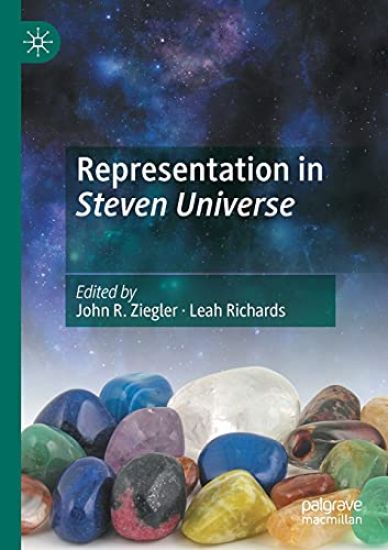
Representation in Steven Universe

Representation in Steven Universe

Springer Nature Switzerland AG
2021
nidottu
This book assembles ten scholarly examinations of the politics of representation in the groundbreaking animated children’s television series Steven Universe. These analyses address a range of representational sites and subjects, including queerness, race, fandom, colonialism, and the environment, and provide an accessible foundation for further scholarship. The introduction contextualizes Steven Universe in the children’s science-fiction and anime traditions and discusses the series’ crucial mechanic of fusion. Subsequent chapters probe the fandom’s expressions of queer identity, approach the series’ queer force through the political potential of the animated body, consider the unequal privilege of different female characters, and trace the influence of anime director Kunihiko Ikuhara. Further chapters argue that Ronaldo allows satire of multiple media forms, focus on Onion as a surrealist trickster, and contemplate cross-species hybridity and consent. The final chapters concentrate on background art in connection with ecological and geological narratives, adopt a decolonial perspective on the Gems’ legacy, and interrogate how the tension between personal and cultural narratives constantly recreates memory.
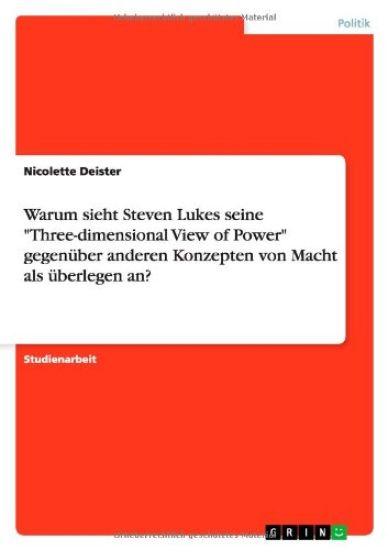
Warum sieht Steven Lukes seine "Three-dimensional View of Power" gegenüber anderen Konzepten von Macht als überlegen an?
Studienarbeit aus dem Jahr 2010 im Fachbereich Politik - Internationale Politik - Allgemeines und Theorien, Johannes Gutenberg-Universit t Mainz, Sprache: Deutsch, Abstract: Zum Ph nomen "Macht" gibt es viele unterschiedliche Vorstellungen; was Macht eigentlich ist, wie jemand Macht bekommt, ber seine Mitmenschen aus bt und sich an der Macht h lt. Um das zu verstehen, sind verschiedene Theorien entwickelt worden. Im Folgenden wird zuerst gekl rt, was eine Definition berhaupt leisten kann. Dann werden drei der bekanntesten Theorien von Macht vorgestellt: "Concept of Power" nach Robert Dahl, "Two Faces of Power" von Peter Bachrach und Morton S. Baratz und Steven Lukes' "Three-dimensional View of Power." Lukes reagiert mit seiner Theorie auf die erst genannten Konzepte und versucht zu erkl ren, was seine Vorg nger au er Acht gelassen haben, und eine L sung f r das vernachl ssigte Problem zu entwickeln. Die vorliegende Arbeit untersucht, inwieweit ihm das gelingt und warum Lukes seine Arbeit als den anderen berlegen ansieht. Abschlie end wird versucht, aufzuzeigen, worin die St rken von Lukes' Theorie liegen und welche Aspekte auch von ihm ungekl rt bleiben.
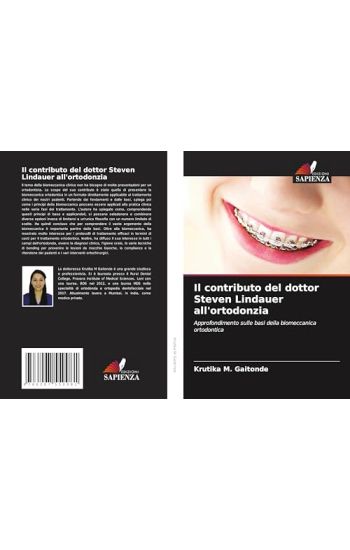
Il contributo del dottor Steven Lindauer all'ortodonzia
Il tema della biomeccanica clinica non ha bisogno di molte presentazioni per un ortodontista. Lo scopo del suo contributo stato quello di presentare la biomeccanica ortodontica in un formato direttamente applicabile al trattamento clinico dei nostri pazienti. Partendo dai fondamenti e dalle basi, spiega poi come i principi della biomeccanica possano essere applicati alla pratica clinica nelle varie fasi del trattamento. L'autore ha spiegato come, comprendendo questi principi di base e applicandoli, si possano selezionare e combinare diverse opzioni invece di limitarsi a un'unica filosofia con un numero limitato di scelte. Ha quindi concluso che per comprendere il vasto argomento della biomeccanica importante partire dalle basi. Oltre alla biomeccanica, ha mostrato molto interesse per i protocolli di trattamento efficaci in termini di costi per il trattamento ortodontico. Inoltre, ha diffuso il suo interesse in tutti i campi dell'ortodonzia, ovvero la diagnosi clinica, l'igiene orale, le varie tecniche di bonding per prevenire le lesioni da macchie bianche, la compliance e la ritenzione dei pazienti e i vari interventi ortochirurgici.
Les contributions du Dr Steven Lindauer à l'orthodontie

Les contributions du Dr Steven Lindauer à l'orthodontie

Krutika M Gaitonde

Editions Notre Savoir
2024
pokkari
Le sujet de la biom canique clinique n'a gu re besoin d'introduction pour un orthodontiste. L'objectif de sa contribution tait de pr senter la biom canique orthodontique sous une forme directement applicable au traitement clinique de nos patients. En commen ant par les principes fondamentaux, il explique ensuite comment les principes de la biom canique peuvent tre appliqu s la pratique clinique diff rents stades du traitement. L'auteur a expliqu comment, en comprenant ces principes de base et en les appliquant, diff rentes options peuvent tre s lectionn es et combin es au lieu de se limiter une seule philosophie avec un nombre limit de choix. Il en conclut que pour comprendre le vaste sujet de la biom canique, il est important de commencer par les bases. Outre la biom canique, il s'est beaucoup int ress aux protocoles de traitement rentables en termes de finances pour le traitement orthodontique. Il s'est galement int ress tous les domaines de l'orthodontie, savoir le diagnostic clinique, l'hygi ne bucco-dentaire, les diff rentes techniques de collage pour pr venir les l sions des points blancs, l'observance et la r tention des patients et les diff rentes interventions ortho-chirurgicales.
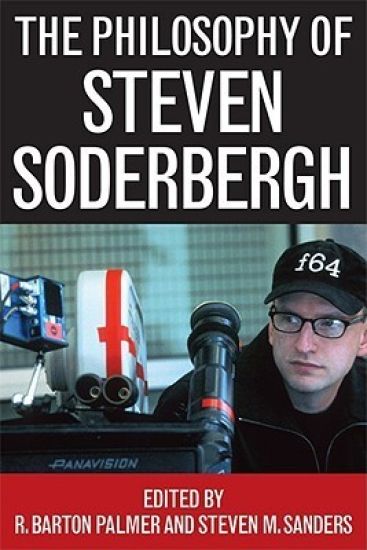
The Philosophy of Steven Soderbergh

The Philosophy of Steven Soderbergh

The University Press of Kentucky
2011
sidottu
Widely regarded as a turning point in American independent cinema, Steven Soderbergh's sex, lies, and videotape (1989) launched the career of its twenty-six-year-old director, whose debut film was nominated for an Academy Award and went on to win the Cannes Film Festival's top award, the Palme d'Or. The Philosophy of Steven Soderbergh breaks new ground by investigating salient philosophical themes through the unique story lines and innovative approaches to filmmaking that distinguish this celebrated artist. Editors R. Barton Palmer and Steven M. Sanders have brought together leading scholars in philosophy and film studies for the first systematic analysis of Soderbergh's entire body of work, offering the first in-depth exploration of the philosophical ideas that form the basis of the work of one of the most commercially successful and consistently inventive filmmakers of our time.
Conversation with Church Historian: Elder Steven Snow
Elder Steven Snow has served as a General Authority for nearly two decades, and as Church Historian for the past 7 years. Rick Bennett of Gospel Tangents sat down with Elder Snow to discuss his time serving as Church Historian. What stories in Church history did Elder Snow find inspiring? Were there stories that troubled him? What was his role in bringing forth the Gospel Topics essays? Does the Church hide documents from the public? Check out our conversation....
The Innocence and Guilt of Steven Avery

The Innocence and Guilt of Steven Avery

The O.J. Simpson Murders 40/40 Hindsight Sam Dennis McDonough

Lulu.com
2016
nidottu
The Innocence AND Guilt of Steven Avery is for people looking for the truth in this controversial brutal sex crime. It is also for Netflix viewers who have heard only sound-bites and have seen only 10 hours of the subjective, biased Making a Murderer movie. Chapter 1 tells about Avery's wrongful conviction for a crime in which he was completely innocent. Instead of watching Making a Murderer, people seeking the truth in this case should spend 10 hours finding the facts and the real evidence by reading the easily available transcripts and court records about this case. Then decide who killed Teresa Halbach.
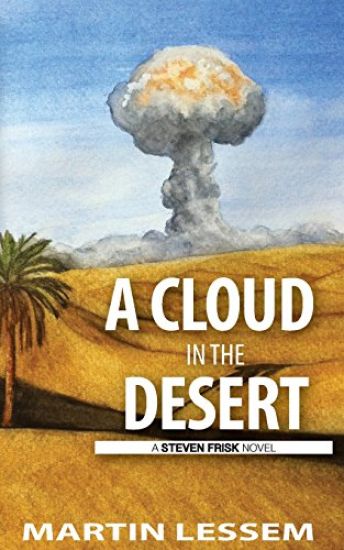
A Cloud in the Desert: A Steven Frisk Novel

A Cloud in the Desert: A Steven Frisk Novel

Martin Lessem

Createspace Independent Publishing Platform
2014
nidottu
The tiniest spark can send Afghanistan and Pakistan to war. Steven Frisk's job is to make sure that doesn't happen. Ali Hassan Ashwari is doing everything in his power to ensure it does. A CLOUD IN THE DESERT is an Espionage/Action novel. The story follows Steven Frisk, a CIA Operations Officer, as he sets about to prevent what started as a border skirmish from escalating into a full scale war. Behind the scenes, a corporate conglomerate is manipulating the events to help boost their profits through sales to both sides. Will Steven be able to unravel the web of deception that has been laid out before him in time to prevent a nuclear war? Will his former prot g succeed in thwarting him as he tries to set the world back to neutral? Set in contemporary times, A CLOUD IN THE DESERT poses the "what if" questions associated with America's involvement with both Afghanistan and Pakistan.
Children in the Films of Steven Spielberg
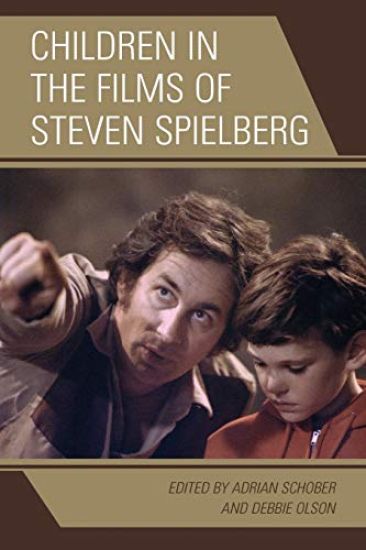
To say that children matter in Steven Spielberg's films is an understatement. Think of the possessed Stevie in Something Evil (TV), Baby Langston in The Sugarland Express, the alien-abducted Barry in Close Encounters, Elliott and his unearthly alter-ego in E.T, the war-damaged Jim in Empire of the Sun, the little girl in the red coat in Schindler’s List, the mecha child in A.I., the kidnapped boy in Minority Report, and the eponymous boy hero of The Adventures of Tintin. (There are many other instances across his oeuvre). Contradicting his reputation as a purveyor of ‘popcorn’ entertainment, Spielberg’s vision of children/childhood is complex. Discerning critics have begun to note its darker underpinnings, increasingly fraught with tensions, conflicts and anxieties. But, while childhood is Spielberg’s principal source of inspiration, the topic has never been the focus of a dedicated collection of essays. The essays in Children in the Films of Steven Spielberg therefore seek to address childhood in the full spectrum of Spielberg’s cinema. Fittingly, the scholars represented here draw on a range of theoretical frameworks and disciplines—cinema studies, literary studies, audience reception, critical race theory, psychoanalysis, sociology, and more. This is an important book for not only scholars but teachers and students of Spielberg's work, and for any serious fan of the director and his career.
Children in the Films of Steven Spielberg
To say that children matter in Steven Spielberg's films is an understatement. Think of the possessed Stevie in Something Evil (TV), Baby Langston in The Sugarland Express, the alien-abducted Barry in Close Encounters, Elliott and his unearthly alter-ego in E.T, the war-damaged Jim in Empire of the Sun, the little girl in the red coat in Schindler’s List, the mecha child in A.I., the kidnapped boy in Minority Report, and the eponymous boy hero of The Adventures of Tintin. (There are many other instances across his oeuvre). Contradicting his reputation as a purveyor of ‘popcorn’ entertainment, Spielberg’s vision of children/childhood is complex. Discerning critics have begun to note its darker underpinnings, increasingly fraught with tensions, conflicts and anxieties. But, while childhood is Spielberg’s principal source of inspiration, the topic has never been the focus of a dedicated collection of essays. The essays in Children in the Films of Steven Spielberg therefore seek to address childhood in the full spectrum of Spielberg’s cinema. Fittingly, the scholars represented here draw on a range of theoretical frameworks and disciplines—cinema studies, literary studies, audience reception, critical race theory, psychoanalysis, sociology, and more. This is an important book for not only scholars but teachers and students of Spielberg's work, and for any serious fan of the director and his career.