A Healthy Body - A Text Book on Anatomy, Physiology, Hygiene, Alcohol, and Narcotics is an unchanged, high-quality reprint of the original edition of 1891. Hansebooks is editor of the literature on different topic areas such as research and science, travel and expeditions, cooking and nutrition, medicine, and other genres. As a publisher we focus on the preservation of historical literature. Many works of historical writers and scientists are available today as antiques only. Hansebooks newly publishes these books and contributes to the preservation of literature which has become rare and historical knowledge for the future.
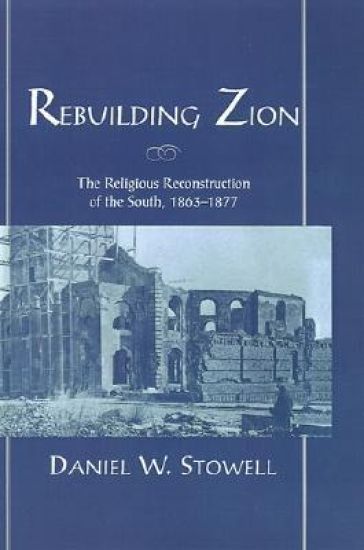
During the American Civil War and its aftermath, Southern evangelicals remained convinced that their cause was both Christian and just. This position became more entrenched as Northern evangelicals entered the South after the war, aiming to save freedmen. Author Daniel Stowell plots the conflict that resulted from these competing visions of the religious reconstruction of the South. By demonstrating how the Southern vision eventually came to predominate, he shows how the Southern Churches became one of the principal bulwarks in the creation of the myth of the "Lost Cause," Southern honour, and curious moral righteousness of the South's treatment of both slave and freedman.
Both the North and the South viewed the Civil War in Christian terms. Each side believed that its fight was just, that God favored its cause. Rebuilding Zion is the first study to explore simultaneously the reaction of southern white evangelicals, northern white evangelicals, and Christian freedpeople to Confederate defeat. As white southerners struggled to assure themselves that the collapse of the Confederacy was not an indication of God's stern judgment, white northerners and freedpeople were certain that it was. Author Daniel W. Stowell tells the story of the religious reconstruction of the South following the war, a bitter contest between southern and northern evangelicals, at the heart of which was the fate of the freedpeople's souls and the southern effort to maintain a sense of sectional identity. Central to the southern churches' vision of the Civil War was the idea that God had not abandoned the South; defeat was a Father's stern chastisement. Secession and slavery had not been sinful; rather, it was the radicalism of the northern denominations that threatened the purity of the Gospel. Northern evangelicals, armed with a vastly different vision of the meaning of the war and their call to Christian duty, entered the post-war South intending to save white southerner and ex-slave alike. The freedpeople, however, drew their own providential meaning from the war and its outcome. The goal for blacks in the postwar period was to establish churches for themselves separate from the control of their former masters. Stowell plots the conflicts that resulted from these competing visions of the religious reconstruction of the South. By demonstrating how the southern vision eventually came to predominate over, but not eradicate, the northern and freedpeople's visions for the religious life of the South, he shows how the southern churches became one of the principal bulwarks of the New South, a region marked by intense piety and intense racism throughout the twentieth century.
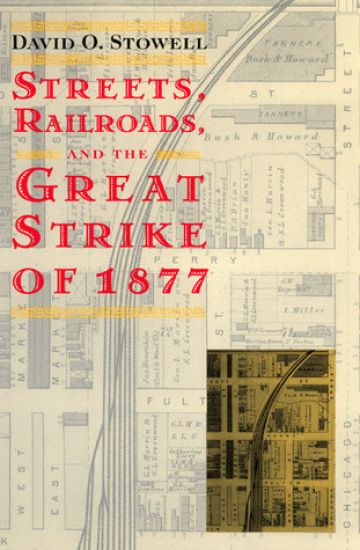
For one week in late July of 1877, America shook with anger and fear as a variety of urban residents, mostly working class, attacked railroad property in dozens of towns and cities. The Great Strike of 1877 was one of the largest and most violent urban uprisings in American history. Whereas most historians treat the event solely as a massive labor strike that targeted the railroads, David O. Stowell examines America's predicament more broadly to uncover the roots of this rebellion. He studies the urban origins of the Strike in three upstate New York cities--Buffalo, Albany, and Syracuse. He finds that locomotives rumbled through crowded urban spaces, sending panicked horses and their wagons careening through streets. Hundreds of people were killed and injured with appalling regularity. The trains also disrupted street traffic and obstructed certain forms of commerce. For these reasons, Stowell argues, The Great Strike was not simply an uprising fueled by disgruntled workers. Rather, it was a grave reflection of one of the most direct and damaging ways many people experienced the Industrial Revolution.
For one week in late July of 1877, America shook with anger and fear as a variety of urban residents, mostly working class, attacked railroad property in dozens of towns and cities. The Great Strike of 1877 was one of the largest and most violent urban uprisings in American history.Whereas most historians treat the event solely as a massive labor strike that targeted the railroads, David O. Stowell examines America's predicament more broadly to uncover the roots of this rebellion. He studies the urban origins of the Strike in three upstate New York cities—Buffalo, Albany, and Syracuse. He finds that locomotives rumbled through crowded urban spaces, sending panicked horses and their wagons careening through streets. Hundreds of people were killed and injured with appalling regularity. The trains also disrupted street traffic and obstructed certain forms of commerce. For these reasons, Stowell argues, The Great Strike was not simply an uprising fueled by disgruntled workers. Rather, it was a grave reflection of one of the most direct and damaging ways many people experienced the Industrial Revolution."Through meticulously crafted case studies . . . the author advances the thesis that the strike had urban roots, that in substantial part it represented a community uprising. . . .A particular strength of the book is Stowell's description of the horrendous accidents, the toll in human life, and the continual disruption of craft, business, and ordinary movement engendered by building railroads into the heart of cities."—Charles N. Glaab, American Historical Review
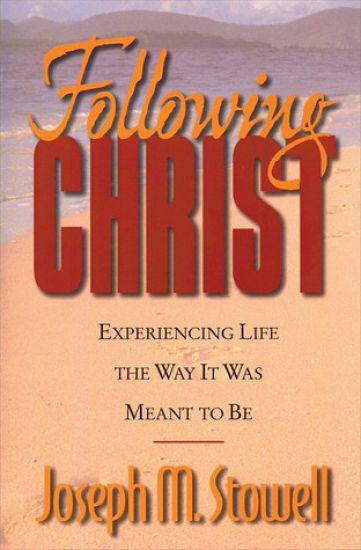
Do you want your life to count for Christ? Would you like to make a real impact for God's kingdom in this world? You can and you don't have to be a great leader for it to happen. Just a good follower.In Following Christ, Joseph Stowell shows why Christ's command to "Follow me" isn't merely the starting point of Christianity. It's the very heartbeat of vibrant, effective faith. And it's not just for a few gifted leaders, but for all believers."Christianity is a relationship, an adventure, a passionate pursuit of Christ," says Stowell. "Followers escape the drudgery of a system of rituals and regulations, and revel in the discovery of the ever-interesting Christ." Stowell shows you what happens when an ordinary man or woman pursues not the trappings of Christianity, but Christ himself. You'll discover:What a "non-negotiated" follower looks likeWhy God does his best work through followersWhy self-directed living is a recipe for emptinessWhat makes Christ so worth followingHow Christ transforms our characterWhat it means to pick up your crossWhy a close walk with Jesus is the key to effective livingThis inspiring book cuts through the side-issues of Christianity to reveal its true, compelling object: Jesus Christ. As his fully devoted follower, you'll discover a dynamic and refreshing way of living one that will sustain you through life's valleys and provide breathtaking spiritual vistas from its peaks.It's Christianity the way God intended it, marked by simplicity. Vigorous faith. Purpose and direction. Soul-winning impact on those around you. And above all, a joyous, growing closeness with Christ.
The book of Revelation is full of imagery that challenges even the finest Bible scholars. Its symbols and prophecies can be difficult to grasp, but they hold rich meaning for us today. Studying Revelation will give you confidence, courage and an assurance that God is in control. In the end, he will reign eternally and Christians will know the joy of his presence forever. As you see the glory of his kingdom and the joyous worship of those he has redeemed, your own commitment to him will deepen.
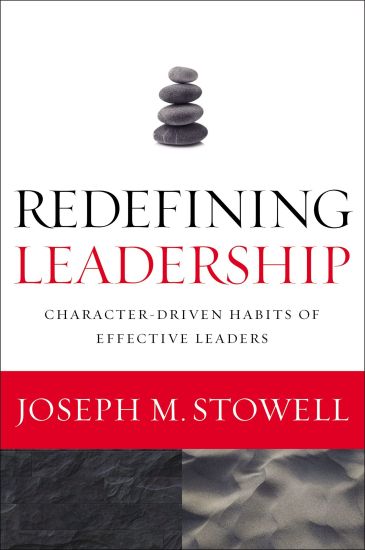
Is successful leadership measured simply by the outcomes a leader achieves, or is there another—more essential—yardstick for measuring success? In Redefining Leadership, author, pastor, and college president Joe Stowell shows us that the best leaders are driven by Christ-formed character, and that truly successful leadership is not defined by the standards of this world but by the counterintuitive practices and perspectives of the Kingdom of Christ.With compelling personal stories and insights from the Bible, he highlights the contrast between these two radically different leadership styles and demonstrates that the teaching and example of King Jesus, the world's most unlikely leader, is the only model of leadership that leads to maximum results, results that will have an eternal impact.
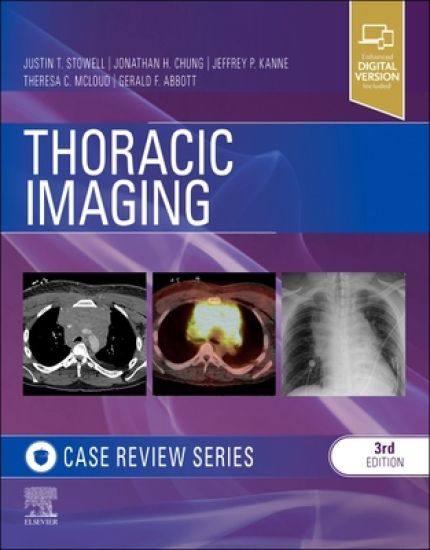
Master the critical imaging content you need to know with this thoroughly updated title in the popular Case Review series. Thoracic Imaging offers a highly illustrated, case-based preparation for board review to help residents and recertifying radiologists succeed on exams, demonstrate a clinical understanding of thoracic imaging, and improve imaging accuracy and interpretation. Cases include both common and difficult-to-diagnose disorders spanning the range of diseases impacting the thorax, including sarcoidosis, lymphoma, traumatic aortic injury, small airway disease, idiopathic interstitial pneumonias, developmental lung disease, and lung cancer. Presents more than 145 high-yield case studies organized by level of difficulty, helping you build your knowledge and confidence in stages. All cases have been refreshed and rewritten to capture the latest clinical implications and diagnostic pearls on thoracic conditions that you will be tested on. Includes multiple-choice questions, answers, and rationales that mimic the format of certification exams. Uses short, easily digestible chapters covering the full range of thoracic imaging for efficient, effective learning and exam preparation. Features hundreds of high-quality, full-color images (many new to this edition) representing a wide range of clinical situations encountered in thoracic imaging. Images include chest radiographs, CT, PET-CT, and MRI to help you expand your visual identification and diagnostic skills. Clearly see and interpret 400 high-quality, state-of-the-art images representing a wide range of clinical situations encountered in thoracic imaging. Get fresh perspectives from 200 updated or new cases reflecting the most recent changes in thoracic imaging, including PET-CT, emerging pulmonary infections, smoking-related lung diseases, Fleischner guidelines for management of incidentally detected lung nodules, and ground glass and part-solid lung nodules. Spend less time searching and more time learning with easy-to-navigate chapters focused on visual identification and diagnosis, and reorganized by degree of case difficulty.
Investment Banks, Hedge Funds, and Private Equity, Fourth Edition provides a real-world view of this fast-evolving field, reviewing and analyzing recent innovations and developments. This reference captures the actual work of bankers and professional investors, providing readers with templates for real transactions and insight on how investment banks, hedge funds, and private equity firms provide services to each other while creating opportunities for corporations and investors to raise capital, invest, hedge, finance, acquire, divest, and risk manage. For each type of institution, the business model, organizational structure, products, challenges, regulatory issues, and profit-making opportunities are explained. In addition, specific transactions are analyzed to make clear how advisory services, financings, investments, and trades produce profits or losses, and which types of risks are most commonly taken by each type of institution. Importantly, the linkage of investment banks, hedge funds, and private equity to corporations, governments, and individuals is described, enabling the reader to more clearly understand how these organizations impact them and how their products and services can be best utilized.
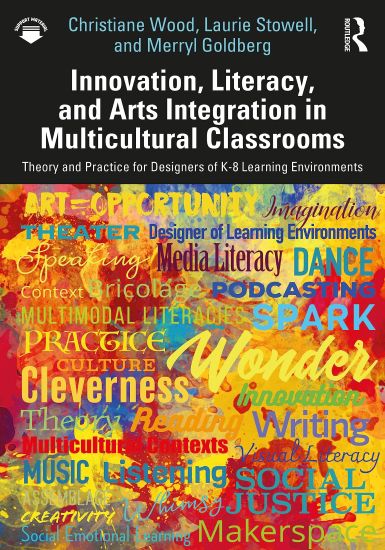
This textbook offers a foundation for how literacy and arts integration interconnect to advance innovation, accessibility, and equitable classroom learning contexts for K-8 students.Balancing research-backed theory and classroom practice, this book helps readers understand the multiple perspectives, frameworks, and models necessary in the design of learning environments for diverse learners, including sociocultural theories of literacy, new and digital literacies, multiliteracies, culturally responsive pedagogy, critical pedagogy, and art. Written by an author team with decades of experience in teaching literacy, writing, and arts integration across a variety of learning environments, each chapter includes a basis of conceptual framing and research backed by functional case studies and practical classroom practices, as well as discussion questions.Written as a text for foundational literacy, arts integration, and education courses, Innovation, Literacy, and Arts Integration in Multicultural Classrooms offers an engaging, practical resource for both pre-service and in-service elementary and middle grade teachers and teacher educators.
This textbook offers a foundation for how literacy and arts integration interconnect to advance innovation, accessibility, and equitable classroom learning contexts for K-8 students.Balancing research-backed theory and classroom practice, this book helps readers understand the multiple perspectives, frameworks, and models necessary in the design of learning environments for diverse learners, including sociocultural theories of literacy, new and digital literacies, multiliteracies, culturally responsive pedagogy, critical pedagogy, and art. Written by an author team with decades of experience in teaching literacy, writing, and arts integration across a variety of learning environments, each chapter includes a basis of conceptual framing and research backed by functional case studies and practical classroom practices, as well as discussion questions.Written as a text for foundational literacy, arts integration, and education courses, Innovation, Literacy, and Arts Integration in Multicultural Classrooms offers an engaging, practical resource for both pre-service and in-service elementary and middle grade teachers and teacher educators.