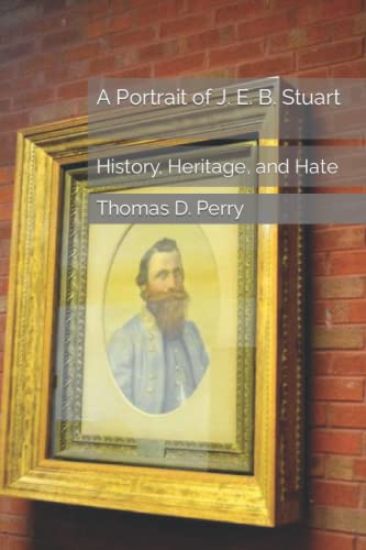
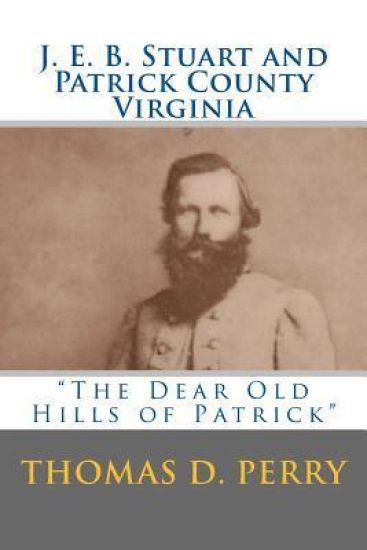
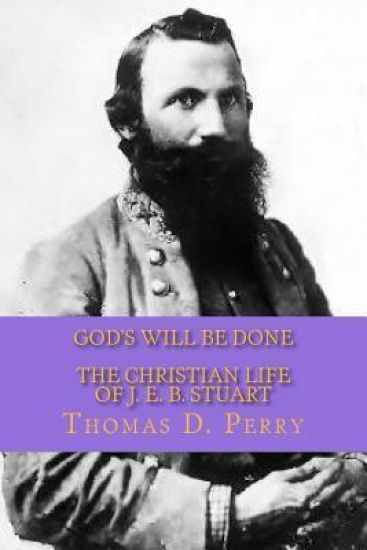
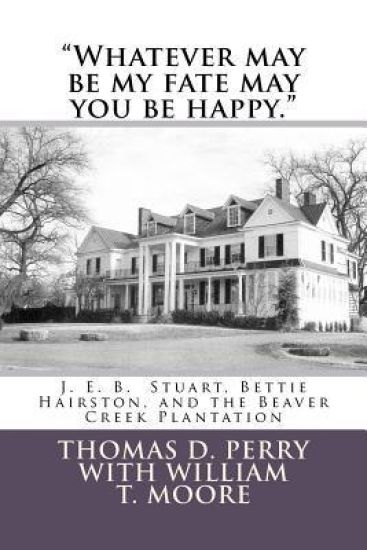
Historian Thomas D. "Tom" Perry tells the story of James Ewell Brown "Jeb" Stuart, both from Patrick County, Virginia, and the controversy in 2015 when the portrait of Stuart was taken down from the Patrick County Courthouse. The ensuing controversy brought media attention and a discussion of the history relating to Confederate History and the Civil War. The portrait eventually found its way to the Wall of Honor in the Patrick County Administration Building in Stuart, Virginia. This book continues with the controversies surrounding J. E. B. Stuart High School in Fairfax, Virginia, and the controversy surrounding J. E. B. Stuart's statue on Monument Avenue in Richmond. This book is a portrait of the man who was James Ewell Brown "Jeb" Stuart and the modern times that reflect on the history he embodies.
The life and campaigns of Major-General J.E.B. Stuart, - Commander of the cavalry of the Army of Northern Virginia is an unchanged, high-quality reprint of the original edition of 1885. Hansebooks is editor of the literature on different topic areas such as research and science, travel and expeditions, cooking and nutrition, medicine, and other genres. As a publisher we focus on the preservation of historical literature. Many works of historical writers and scientists are available today as antiques only. Hansebooks newly publishes these books and contributes to the preservation of literature which has become rare and historical knowledge for the future.
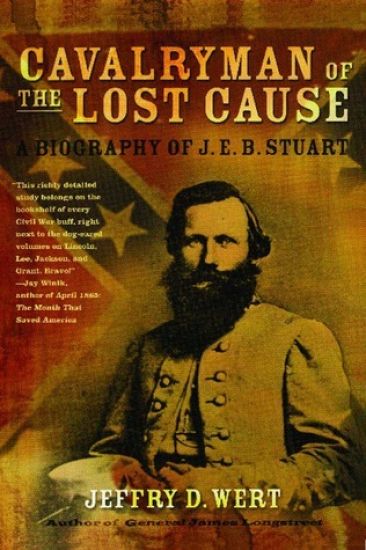
Now in paperback, this major biography of J.E.B. Stuart--the first in two decades--uses newly available documents to draw the fullest, most accurate portrait of the legendary Confederate cavalry commander ever published.- Major figure of American history: James Ewell Brown Stuart was the South's most successful and most colorful cavalry commander during the Civil War. Like many who die young (Stuart was thirty-one when he succumbed to combat wounds), he has been romanticized and popular- ized. One of the best-known figures of the Civil War, J.E.B. Stuart is almost as important a figure in the Confederate pantheon as Robert E. Lee and Stonewall Jackson. - Most comprehensive biography to date: Cavalryman of the Lost Cause is based on manuscripts and unpublished letters as well as the latest Civil War scholarship. Stuart's childhood and family are scrutinized, as is his service in Kansas and on the frontier before the Civil War. The research in this biography makes it the authoritative work.
Historian Thomas D. "Tom" Perry tells the story of Civil War General James Ewell Brown "Jeb" Stuart's ancestors who fought in the American Revolution. Alexander Stuart fought at the Battle of Guilford Courthouse with Nathaniel Greene. William Letcher lost his life at the hands of Tories on the Laurel Hill Farm in Ararat, Patrick County, Virginia, where over fifty years later J. E. B. Stuart was born. The Laurel Hill Farm known as Stuart's Birthplace is part of a 75 acre park preserving the history of the family that has fought in almost every war this country has participated.
*Includes pictures *Includes accounts of the fighting and wounding of Stuart *Includes online resources and a bibliography for further reading *Includes a table of contents "He told me he never expected to live through the war, and that if we were conquered, that he did not want to live." - Major Andrew R. Venable, Stuart's aide Alongside Robert E. Lee, no one epitomized the chivalry and heroism celebrated by the Lost Cause more than J.E.B. Stuart, the most famous cavalry officer of the Civil War. Stuart was equal parts great and grandiose while leading the cavalry for the Confederacy in Lee's Army of Northern Virginia. Stuart was a throwback to the past, colorfully dressing with capes, sashes, and an ostrich plumed hat, while sporting cologne and a heavy beard, but he was also brilliant in conducting reconnaissance, and he proved capable of leading both cavalry and infantry at battles like Chancellorsville. As the eyes and ears of Robert E. Lee's army, none were better, despite the fact that he was only in his late 20s and early 30s during the Civil War, far younger than most men of senior rank. In early May of 1864, Union cavalry commander Philip Sheridan organized a massive raid against Confederate supply and railroad lines near Richmond. On May 9, the largest cavalry force ever assembled in the Eastern Theater, over 10,000 horsemen and 32 artillery pieces, arched southeast intending to slip behind Lee's army and head toward Richmond. By doing so, they could harass supply lines, cut up railroad tracks behind Lee's army, and at least feint towards Richmond in a way that would bring about a confrontation. This would give Sheridan the chance to seek his biggest objective: eliminate Stuart's cavalry. Moving aggressively, Sheridan crossed the North Anna River and seized Beaver Dam Station on the Virginia Central Railroad. Anticipating their arrival, Stuart and his cavalrymen had already destroyed most of the critical military supplies, so Sheridan's men destroyed railroad cars, ripped out telegraph lines, and rescued hundreds of Union prisoners of war who had been captured at the Battle of the Wilderness days earlier. Around noon on May 11, 1864, the two forces met at Yellow Tavern, an abandoned inn six miles north of Richmond, Virginia. Not only did the Union outnumber the Confederates, it had superior firepower because many of the horsemen were armed with newly-developed rapid-firing Spencer carbine rifles. Despite the disadvantages, however, the Confederates proved resilient for several hours as both sides conducted charges and countercharges, but during one of them, Stuart came into view of some retreating Union soldiers of George Custer's 5th Michigan cavalry. One of them, a 48 year old sharpshooter named John A. Huff, found himself only about 20 yards away from the vaunted and easily recognizable Stuart. Huff turned and shot Stuart with his .44-caliber pistol, sending a bullet slicing through his stomach and exiting his back, just right of his spine. In excruciating pain, an ambulance took Stuart to the home of his brother-in-law Dr. Charles Brewer, in Richmond, to await his wife's arrival, but before his wife could even reach him, Stuart died the following day at 7:38 p.m. In his final moments, Stuart ordered his sword and spurs be given to his son, and his last words were "I am resigned; God's will be done." He was just 31. The Battle of Yellow Tavern: The History of the Civil War Battle that Ended J.E.B. Stuart's Life comprehensively covers the events leading up to the battle, the fighting itself, and the aftermath of the battle. Accounts of the battle by important participants are also included, along with maps of the battle and pictures of important people, places, and events. You will learn about the Battle of Yellow Tavern like you never have before.
When Confederate Major General J.E.B. Stuart said "North Carolina has done nobly in this army," he had one of his own men to thank: Brigadier General James Byron Gordon. A protege of Stuart, Gordon was the consummate nineteenth-century landowner, politician, and businessman. Despite a lack of military training, he rose rapidly through the ranks and, as the commander of all North Carolina cavalrymen in the Army of Northern Virginia, he helped bring unparalleled success to Stuart's famed Confederate cavalry. This updated biography, originally published in 1996, chronicles Gordon's early life and military career and, through his men, takes a fresh look at the vaunted Army of Northern Virginia--its battles, controversies, and troops. This second edition includes additional source material that has come to light and a roster of Gordon's 1st North Carolina Cavalry.
First published in 1976, this volume offers a significant new interpretation of Mill's political thought, Mill's ambivalent attitude to democracy is carefully examined. The implications for modern democracy of Mill's views on consensus and leadership, bureaucracy and participation, equality and liberty emerge from a deep understanding of Mill's place in 19th century ideas.
First published in 1976, this volume offers a significant new interpretation of Mill's political thought, Mill's ambivalent attitude to democracy is carefully examined. The implications for modern democracy of Mill's views on consensus and leadership, bureaucracy and participation, equality and liberty emerge from a deep understanding of Mill's place in 19th century ideas.
Being a detective is tough, especially if you are only twelve years old and a bit small for your age. But quitting is not an option for Stuart as he and his smart tablet solves his neighborhood's mysteries, all while dealing with house rules, bullies, and vegetables.Join Stuart in this first of a series of mysteries as he finds out that pets are vanishing in his neighborhood and no one has a clue why. As the only detective interested in solving this case, Stuart is determined to discover the truth. With the help of his smart tablet, he sets out to discover the clues that lead him on an exciting journey to find the missing pets.
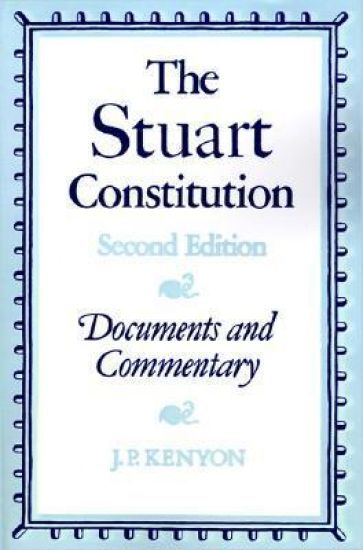
Published in 1966, The Stuart Constitution at once established itself as the standard documentary textbook for courses in English seventeenth-century history in schools (A-level), polytechnics, and universities, and one which at the same time offered an individual revisionist outlook on many of the problems involved. For the second edition Professor Kenyon has entirely rewritten his commentary to take account of the latest research in this field; he has thoroughly revised the structure of the book, and he has also strengthened the documentation in several important areas, notably the Interregnum, 1649–1660. The book is divided into four parts, the first three of which are devoted to the periods 1603–1640, 1640–1660 and 1660–1688 respectively. The fourth part deals with some of the general issues of government, at both central and local level, throughout the seventeenth century. One hundred and forty-six documents are included in all, and to aid the student reader speling and punctuation have been modernised. This volume forms a companion to the second edition of Professor Elton's The Tudor Constitution, and is likewise available in both hard and paper covers.
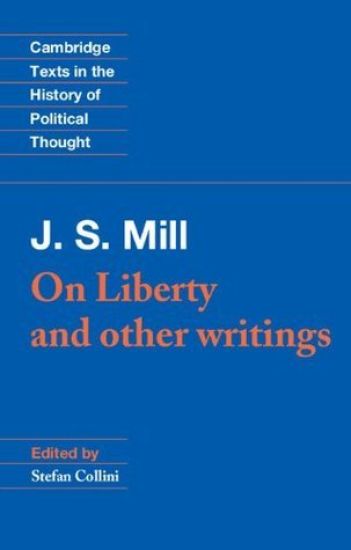
On Liberty has become celebrated as the most powerful defence of the freedom of the individual, and is now widely regarded as the most important theoretical foundation for Liberalism as a political creed. The Subjection of Women is a powerful indictment of the political, social, and economic position of women. This edition brings together these two classic texts, plus Mill’s posthumous Chapters on Socialism, his somewhat neglected examination of the strengths and weaknesses of various forms of socialism. The editor’s substantial introduction places these three works in the context both of Mill’s life and of nineteenth-century intellectual and political history. There is also a chronology of Mill’s life, a bibliographical guide, and a biographical appendix of names cited in the texts.
This book is the sequel to Medieval Lincoln. The author, Dr Hill, had an intimate knowledge of the city (of which he was a former mayor) and made a lifelong study of the records and sources which form the basis of his survey. An introductory chapter gives a description of the isolated Lincolnshire countryside during the period. The remainder of the book is on, a broadly chronological plan, recording the religious, political, economic and social affairs of the city, the lives of its peoples under the Tudors and Stuarts and its fortunes during the Civil War. There are appendices dealing with some particular aspects of the period, four maps and a number of fine illustrations.