This volume, a comprehensive review of forty years of public opinion data, shows Americans do not support initiating use of nuclear weapons to defend allies in Western Europe, but they strongly support NATO, internationalist policies, and the defense of Western Europe. Since the advent of standardized public opinion polling in the mid-1930s, a large academic literature has been produced on public attitudes and American foreign policy.
Japan joined the League of Nations in 1920 as a charter member and one of four permanent members of the League Council. Until conflict arose between Japan and the organization over the 1931 Manchurian Incident, the League was a centerpiece of Japan's policy to maintain accommodation with the Western powers. The picture of Japan as a positive contributor to international comity, however, is not the conventional view of the country in the early and mid-twentieth century. Rather, this period is usually depicted in Japan and abroad as a history of incremental imperialism and intensifying militarism, culminating in war in China and the Pacific. Even the empire's interface with the League of Nations is typically addressed only at nodes of confrontation: the 1919 debates over racial equality as the Covenant was drafted and the 1931-1933 League challenge to Japan's seizure of northeast China. This volume fills in the space before, between, and after these nodes and gives the League relationship the legitimate place it deserves in Japanese international history of the 1920s and 1930s. It also argues that the Japanese cooperative international stance in the decades since the Pacific War bears noteworthy continuity with the mainstream international accommodationism of the League years. Thomas Burkman sheds new light on the meaning and content of internationalism in an era typically seen as a showcase for diplomatic autonomy and isolation. Well into the 1930s, the vestiges of international accommodationism among diplomats and intellectuals are clearly evident. The League project ushered those it affected into world citizenship and inspired them to build bridges across boundaries and cultures. Burkman's cogent analysis of Japan's international role is enhanced and enlivened by his descriptions of the personalities and initiatives of Makino Nobuaki, Ishii Kikujiro, Nitobe Inazo, Matsuoka Yosuke, and others in their Geneva roles.
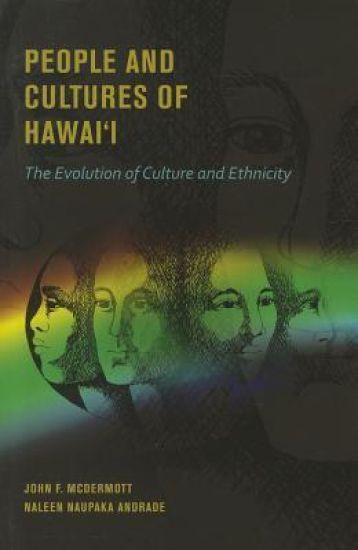
This is a significant update to the highly influential text People and Cultures of Hawaii: A Psychocultural Profile. Since its publication in 1980, the immigrant groups it discusses in depth have matured and new ones have been added to the mix. The present work tracks the course of these changes over the past twenty years, constructing a historical understanding of each group as it evolved from race to ethnicity to culture.Individual chapters begin with an overview of one of fifteen groups. Following the development of its unique ethnocultural identity, distinctive character traits such as temperament and emotional expression are explored—as well as ethnic stereotypes. Also discussed are modifications to the group’s ethnocultural identity over time and generational change—which traits may have changed over generations and which are more hardwired or enduring. An important feature of each chapter is the focus on the group’s family social structure, generational and gender roles, power distribution, and central values and life goals. Readers will also find a description of the group’s own internal social class structure, social and political strategies, and occupational and educational patterns. Finally, contributors consider how a particular ethnic group has blended into Hawai‘i’s culturally sensitive society.People and Cultures of Hawai‘i: The Evolution of Culture and Ethnicity will, like its predecessor, fill an important niche in understanding the history of different ethnic groups in Hawai‘i.
Over the last 50 or 60 years, there has appeared a directional shift in the medical and social culture of the United States. We see it in the news programs every night, sometimes several times a night. Often there are generic reasons given for these changes such as "poverty and hopelessness." But could there be other reasons? Could the medical profession be playing an important role in the violence and destructiveness of this cultural shift? Has there been any critical self-examination by the medical profession which usually demands evidence-based conclusions to be assessed? Or are there some questions that are too difficult for individuals to investigate, not because it's impossible to investigate them, but because it can be painful and because the attitudes of a collective group of colleagues may be preventing these questions from being asked. It is as if we have BLINDERS on! This book makes an attempt to address some new questions that have rarely been asked but should be. This book, with a full-color interior, takes an objective look at data that has been produced by mostly government-based statistical gathering systems, some published in peer-reviewed medical journals and even some in news reports.
Our schools and healthcare institutions have abandoned the Hippocratic Oath and the Declaration of Geneva and replaced it with a policy of lethalism …This is a direct result of the Court's acceptance and promotion of archaic scientific reasoning (Roe v. Wade) that, at best, would be considered pre-medieval and clearly out of touch with scientific reality. Fallout includes the expansion into fetal experimentation, human cloning, embryonic stem cell research, infanticide, and even physician-assisted suicide programs. The respect for life ethic has slowly been removed as the Supreme Court has so strongly supported the "lethalism becomes a way of life" ethic. Especially interesting is the lack of support for any positive solutions to these issues. The recognition is that life at all stages in the womb is precious and able to make extraordinary contributions to our ability to love and to be loved, to bring about peace and to be at peace, to extract love in ways that only a very young and precious life is able to extract, and to express love in ways that can be boundlessly meaningful. As we move to reestablish the human right to live, we must also move beyond lethalism and install positive, life-affirming and meaningful solutions to real human problems. God bless us all as we move in this direction!
Delve into the pages of this thought-provoking book as the author uncovers the hidden world within a mother's womb. Despite recent statements by a prominent politician dismissing the authenticity of ultrasound and Doppler technology, the author, with decades of experience as the Medical Director of a reproductive ultrasound center, attests to their remarkable capabilities. These advancements offer us a window into the life of the preborn child, revealing the extraordinary and real nature of their existence. The book poses a crucial question: Have you ever witnessed the devastating consequences of procedures like grinding, decapitation, dismemberment, or burning that are inflicted upon the unborn child? While such distressing images may be unfamiliar to most, the author argues that the abortion debate in the United States, exemplified by recent elections, reflects a cultural disconnect from the reality of these procedures. By debunking empty slogans like "My body... My choice!" the author aims to expose the true nature of what unfolds during an abortion. Moreover, the author challenges us to reconsider the role of women as protectors and providers of nourishment for their unborn children. Denial and disregard for this responsibility often stem from societal pressures or personal reasons. Men, too, frequently evade their supportive responsibilities, particularly when facing pregnancies with unwed mothers. Unveiling a disheartening transformation from a "Culture of Life" to a "Culture of Death," the book sheds light on the prevailing anti-child sentiments in society. The book raises another pressing query: Have you truly seen the aftermath of an abortion? Many find the graphic and unsettling images unfamiliar and discomforting, especially those outside the medical field. Yet, over the past four decades, a deliberate effort has been made to dehumanize the life growing within the womb, preventing the public from grasping its true identity. This tragic reality serves as the focal point of the book, aiming to educate readers about the genuine nature of the baby in utero, its growth, and its impact on the entire human life spectrum, from conception to natural death. Politicians and mass media have purposefully concealed the reality and authenticity of this new life, shielding the public from witnessing the violent and distressing images of its destruction. This book seeks to reclaim the stolen identity by dispelling misconceptions and empowering readers with knowledge, enabling them to appreciate the extraordinary events that shape each of our lives.
Including new drugs for weight loss, heart failure, anxiety, and postpartum depression. OZEMPIC | WEGOVY | ENTRESTRO | AND MORE! Hale's Medications & Mothers' Milk is the ultimate resource for safe medication practices during breastfeeding. This meticulously updated edition offers the most current, evidence-based information available, maintaining its reputation as the definitive standard for medication safety in lactation. Written by world-renowned clinical pharmacologists, the detailed manual helps lactation consultants, pharmacists, and healthcare providers who work with women and children weigh the relative risks associated with commonly used medications, drawing from the latest evidence-based studies. Structured for quick and efficient use, this guide features Dr. Thomas W. Hale's renowned Lactation Risk Categories (LRC), which provide essential insight, listing safe medication alternatives that can be used now or in the future. The manual is intuitively organized to highlight key points, offer practical tips, and present easy-to-understand diagrams, common abbreviations, and concise information for evaluating infant health. This indispensable resource helps healthcare professionals to ensure the safety and well-being of both mother and infant. Embrace the peace of mind that comes with having reliable, expert-vetted knowledge at your fingertips. To ensure you always have the most current information, consider our online or mobile app subscription! Visit halesmeds.com to get started today. New to the 2025-2026 Edition: 66 new drugs 10 drugs with FDA updates 575 updated medications (formerly medications updated with new information) 84 existing drugs with updated LRCs Key Features: Delivers current, evidence-based information on 1,300 drugs, diseases, vaccines, and syndromes in alphabetical order Provides critical updates on weight loss drugs such as Wegovy and Ozempic, heart failure drugs such as Entresto, medications for anxiety, postpartum depression, and much more Incorporates updates to Dr. Hale's world-renowned Lactation Risk Categories (LRC) Discusses adult concerns, adult dose, pediatric concerns, infant monitoring, and drug alternatives
Written by many of the world's leading lactation experts, the Textbook of Human Lactation incorporates evidence-based scientific knowledge to address key topics of importance in breastfeeding such as Anatomy and Biochemistry, Immunobiology, Breastfeeding Management in Infant and Mother, Maternal and Infant Nutrition, and Medications and Breastfeeding. Specific and detailed information is provided on the following: Complete description of the anatomy and physiology of the lactating breast Detailed explanation of the immunobiology of human milk Description of difficult syndromes and conditions in the infant and breastfeeding mother, and how to overcome these challenges Thorough discussion of the of the emotional and physiological component of breastfeeding, especially as it relates to mother/infant co-sleeping Detailed description of the nutritional competition and components of human milk Explanation of the science of drug transport into human milk, and the use of medications in breastfeeding mothers Discusses breastfeeding in the context of important topics such as infertility, polycystic ovary syndrome (PCOS), vitamin D, birth spacing, and family planning Subscribe to https://www.halesmeds.com/ and experience all the benefits of using Hale's Medications and Mothers Milk online and on mobile devices! Go to https://www.halesmeds.com/ to learn more and subscribe today!
The worldwide gold standard for lactation support professionals Developed by world leaders in lactational pharmacology, this essential reference contains the most current, complete, and evidence-based information available on the transmission of maternal drugs into human milk. It thoroughly addresses one of the most commonly asked questions by breastfeeding mothers—which drugs are safe, and which are hazardous for the infant? The new twentieth edition adds 72 new drugs, updates 356 medications with new data, and adds new information to 927 drugs. The resource relies upon the most current evidence-based studies to evaluate the relative risk of commonly used drugs including Dr. Hale's highly renowned Lactation Risk Categories (LRC). Considered indispensable by hundreds of clinicians worldwide, the book lists safe alternatives for drugs one is currently taking or might need to take in the future. For ease of access to information, it includes key points and savvy tips in information boxes, common abbreviations, illustrative diagrams, concise information on evaluating the infant, and more. New to the 2023 Edition: 72 new drugs 356 medications updated with new data 3 drugs with FDA updates 927 medications updated with new information 74 existing drugs with updated LRC NEW TABLES on monoclonal antibodies and migraines New information on Cannabis. Key Features: Delivers current, evidence-based information on over 1300 drugs, diseases, vaccines, syndromes Incorporates recent updates to Dr. Hale's world-renowned LRC Includes key points and savvy tips about breastfeeding and medications for quick reference Lists common abbreviations and drugs in easily-accessible alphabetical order Discusses adult concerns, adult dose, pediatric concerns, infant monitoring, and alternatives Includes succinct information on evaluation of the infant
The Jemez Mountains are a quintessential New Mexico landscape. For centuries, Pueblo, Spanish, and Anglo cultures have mixed and melded here. Many ancient villages are scattered across the mesas and in the canyons below the Valles Caldera—the crater of a giant, slumbering volcano. Rocks and trees of this landscape tell stories of past eruptions, lava flows, droughts, floods, forest fires, and hot springs damming a river. People tell stories of conquistadores, pueblos, and priests, of battles for land and water, of farming and sheep herding, and of raiders, rustlers, forest rangers, and hippies.This book recounts some of these fascinating stories in forty brief chapters, with more than a hundred photographs, maps, and drawings. Matched photographs of the same views taken up to 150 years apart attest to striking change and apparent stasis. Major alterations have occurred in some places over the past two centuries due to human activity, and increasing climate change threatens further transformation.For those new to the Jemez Mountains, these stories and images will provide an introduction to the cultural and natural history of the area. Residents and longtime aficionados of the Jemez will find both familiar and surprising stories and will gain a renewed sense of the magnificence of this place.
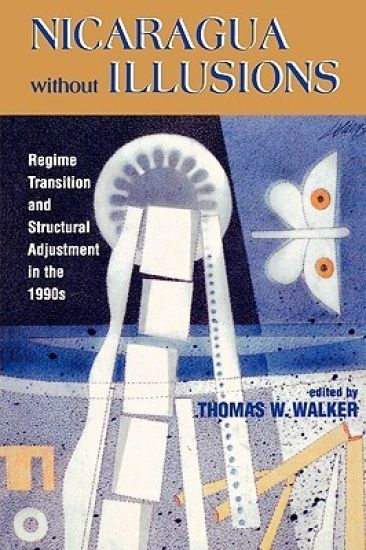
Focusing on Nicaragua after the 1990 Sandinista electoral defeat, this book is a comprehensive, multidisciplinary study of one of the most unusual cases of regime transition in the late 20th century. It shows the similarities and differences between Nicaragua's regime and those of other countries.
Dean Rusk compared his position as secretary of state in the 1960s to a soldier in a foxhole, defending America against the communist alliance. Author Thomas W. Zeiler writes that the foxhole really represented the universalist ideals Rusk cherished, beliefs that were overrun by the Cold War, by the realism of the two presidents he served, and ultimately by the Vietnam War. With an eye closely on Rusk's liberal internationalism, Dean Rusk uses the secretary of state as a foil to explain to students the accomplishments of United States leadership in the world and the pitfalls the nation encountered due to the tensions between realpolitik and liberal ideology. Through the career of Rusk, the book reflects on the uses and abuses of predominant power in diplomacy, and interprets well-known events and issues in the comparative framework of idealism and realism. In explaining Rusk's policies and decisions, it also analyzes the evolving uses and interpretations of Wilsonianism, the major ideology shaping twentieth-century American diplomacy. Dean Rusk follows the course of the Cold War, the defining international conflict of the last 50 years.
Unconditional Defeat-the second book in a Pacific War trilogy that is part of SR Books' Total War series-examines the concluding stages of World War II in Asia and the Pacific, from November 1943 until September 1945. Thomas W. Zeiler argues that this 'war without mercy' could only come to one conclusion: the complete, unconditional defeat of Japan by a mobilized, overwhelming, vengeful United States. Zeiler describes these final 22 months of the Pacific War as a story of contrasts. While the U.S. launched a methodical, smothering attack with all the means at its disposal, Japan fought a fierce yet hopeless defense with diminishing supplies. By November 1943, Japan lacked the necessities not just for victory, as in the earlier phases of the war, but for adequate defense. The Japanese had no options. The strategic planning rested with the Americans. Zeiler's gripping and thorough overview discusses other contrasts between the two foes. The Americans planned multiple advances in the Pacific Ocean and on the Asian mainland. They used a massive number of troops, devised and adopted new amphibious techniques, and deployed the new nuclear category of weapons. The Japanese stubbornly but desperately clung to their territory, often with the basest of defenses. By August 1945, the United States' forces at sea, on land, and in the air had brought Japan near complete defeat. In addition, the Japanese Empire was diplomatically isolated. Japanese politics was in turmoil, the government faced rebellion, and the Emperor stood on the brink of extinction. Wracked by the destruction of the homeland from the air and blockade by sea, Japanese society veered near chaos and the people peered into the abyss of an uncertain future. In the meantime, America's military had experienced such horrors at the hands of Japan that the U.S. made the difficult decision to unleash the atomic bomb. Despite the stark differences between the U.S. and Japan, argues Zeiler, there was one aspect of the war that both sides held in common: basic savagery. Those who were in combat witnessed the sheer hell of war. The human disaster is a tragic yet essential element to this story, and Zeiler recounts the brutality and suffering experienced by those who fought and lived through the conflict.
Unconditional Defeat-the second book in a Pacific War trilogy that is part of SR Books' Total War series-examines the concluding stages of World War II in Asia and the Pacific, from November 1943 until September 1945. Thomas W. Zeiler argues that this "war without mercy" could only come to one conclusion: the complete, unconditional defeat of Japan by a mobilized, overwhelming, vengeful United States. Zeiler describes these final 22 months of the Pacific War as a story of contrasts. While the U.S. launched a methodical, smothering attack with all the means at its disposal, Japan fought a fierce yet hopeless defense with diminishing supplies. By November 1943, Japan lacked the necessities not just for victory, as in the earlier phases of the war, but for adequate defense. The Japanese had no options. The strategic planning rested with the Americans. Zeiler's gripping and thorough overview discusses other contrasts between the two foes. The Americans planned multiple advances in the Pacific Ocean and on the Asian mainland. They used a massive number of troops, devised and adopted new amphibious techniques, and deployed the new nuclear category of weapons. The Japanese stubbornly but desperately clung to their territory, often with the basest of defenses. By August 1945, the United States' forces at sea, on land, and in the air had brought Japan near complete defeat. In addition, the Japanese Empire was diplomatically isolated. Japanese politics was in turmoil, the government faced rebellion, and the Emperor stood on the brink of extinction. Wracked by the destruction of the homeland from the air and blockade by sea, Japanese society veered near chaos and the people peered into the abyss of an uncertain future. In the meantime, America's military had experienced such horrors at the hands of Japan that the U.S. made the difficult decision to unleash the atomic bomb. Despite the stark differences between the U.S. and Japan, argues Zeiler, there was one aspect of the war that both sides held i
As Congress contemplates major revisions to America's health care system, two leading health economists warn that significant differences among state Medicaid programs will hinder national health care reform. Thomas W. Grannemann and Mark V. Pauly argue that Medicaid will need to be reformed as an early step in any serious health care reform effort. While states such as Mississippi and Nevada spend as little as $5,000 per poor person annually, New York and Alaska annually spend more than $15,000 per Medicaid patient. Large differences remain even after correcting for cost-of-living and medical-price differences. This imbalance among states creates an uneven and unstable foundation for any national program to address the needs of uninsured Americans. The authors offer principles for reform designed to encourage equity, efficiency, and accountability in all publicly funded health care programs. They suggest changes in provider payment methods and federal/state financing designed to promote interstate equity, equality of payment across settings, claims-based accountability, provider network control, and value-based cost containment. Such reform will require upfront changes in Medicaid to improve access to high-value health care for low-income persons (particularly those in low-Medicaid-benefit states) and to help slow the rate of growth in medical costs. These changes will level the playing field for state programs and provide a crucial foundation for further national reform.
In this truly interdisciplinary study that reflects the author's work in philosophy, political science, law, and policy studies, Thomas W. Simon argues that democratic theory must address the social injustices inflicted upon disadvantaged groups. By shifting theoretical sights from justice to injustice, Simon recasts the nature of democracy and provides a new perspective on social problems. He examines the causes and effects of injustice, victims' responses to injustice, and historical theories of disadvantage, revealing that those theories have important repercussions for contemporary policy debates. Finally, Simon considers which institutions and practices come within the grasp of democracy and discusses the concept of a 'Negative Utopia,' or a future without injustice.
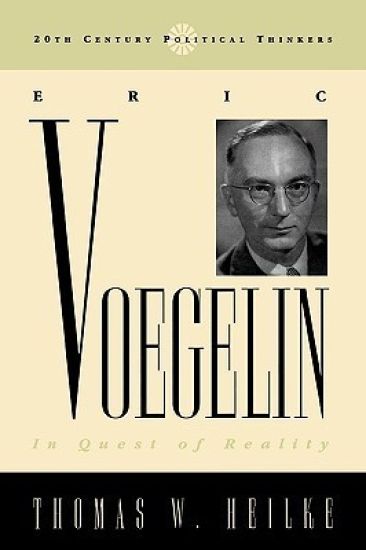
During his distinguished academic career, Eric Voegelin was described as the most important philosopher of history and consciousness since Toynbee; a political theorist of exceptional scope and erudition; a theologian with profound insights into the nature of religious experience. Similarly, Voegelin has been interpreted by his critics using virtually every ideological label available: fascist, communist, liberal, conservative, existentialist, fideist, socialist, reactionary, Jew, Catholic, and Protestant. Regardless of such efforts to characterize his writings using such neat categories, Voegelin has been celebrated by intellectuals of all stripes for the fresh new light he has cast on the modern predicament. Widely recognized political theorist Thomas Heilke contends that while some of these appellations may have elements of truth, none of these labels are ultimately capable of properly representing the essence of Voegelin's work. With startling new insights into the theoretical foundations of Voegelin's writings, Heilke's gripping analysis and compelling conclusions demonstrate how his subject was primarily a philosopher in quest of reality, and why no ideological category can grasp the core of such an intellectual journey. This book will be of interest to political theorists, theologians, philosophers, and intellectual historians.
This fascinating book contains more than 150 significant landmarks of the United States of America. It includes places of military history and conflict, recreation grounds and public spaces, and skyscrapers built using groundbreaking design and construction techniques. An historical overview of every landmark details the reason for its existence, methods of construction anddevelopment, important architectural considerations, and associations with culturally important events or people. Here is the perfect reference for students of American social history and architecture, as well as those keen to travel and see the best of what each state has to offer.
This volume brings together a series of studies by Professor Blomquist on the evolution of banking in Lucca from the 12th and 13th centuries. They describe how the leading bankers operated, how they invested, and how they pursued their family interests. In particular, they trace the transformation of money changers, or campsores, into deposit and transfer bankers, who deployed their capital in trading ventures as well as in banking. Moreover, the author shows how Lucchese merchant-bankers expanded their operations from Italy, first to the fairs of Champagne and ultimately to all of Europe's major commercial centres. Special attention is given to the use of the exchange contract, or cambium, as an instrument of credit and of transfer. Problems of coinage and foreign exchange are also treated extensively, including the origins of the Tuscan grossi and the Lucchese gold groat. The collection concludes with a study of the cloth trade and another concerning the first consuls in Lucca.