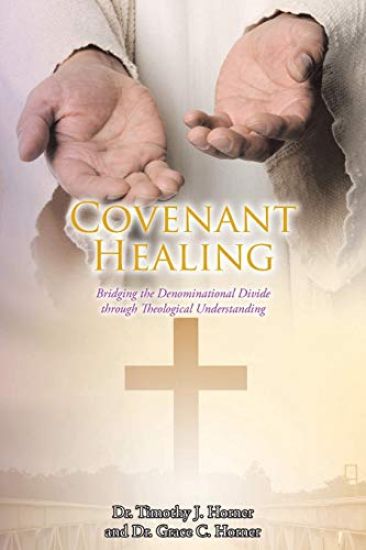
A call to action: God calls us to unite, but the enemy's tactic is continuous strife. Whose mold are you looking to fit into? If all Christians believe that we are made in God's image, why do we ostracize, shame, persecute, and otherwise hurt our fellow brothers and sisters? Are we not called to do His will? Are we not all God's children? The Apostle Paul tells us in Galatians that, "There is no Jew or Greek, slave or free, male or female; for you are all one in Christ Jesus" (Galatians 3:8). Faithful followers of Jesus Christ are all joined together as one in the body of Christ. Every believer has an interconnection that shares in one Holy Spirit and worships one Lord (see Ephesians 4:3-6).Evil has a way of inserting itself even into our most sacred spaces, seeking to destroy the belief in all that is good and ultimately dividing the Christian church. This can take the form of disparagement between Christians of different denominations and various forms of slander that sadly take place between clergy. Join us as we walk in unison through God's Word, the facts, church history, doctrines, and the belief similarities to call upon the unification of the body of Christ.
A call to action: God calls us to unite, but the enemy's tactic is continuous strife. Whose mold are you looking to fit into? If all Christians believe that we are made in God's image, why do we ostracize, shame, persecute, and otherwise hurt our fellow brothers and sisters? Are we not called to do His will? Are we not all God's children? The Apostle Paul tells us in Galatians that, "There is no Jew or Greek, slave or free, male or female; for you are all one in Christ Jesus" (Galatians 3:8). Faithful followers of Jesus Christ are all joined together as one in the body of Christ. Every believer has an interconnection that shares in one Holy Spirit and worships one Lord (see Ephesians 4:3-6).Evil has a way of inserting itself even into our most sacred spaces, seeking to destroy the belief in all that is good and ultimately dividing the Christian church. This can take the form of disparagement between Christians of different denominations and various forms of slander that sadly take place between clergy. Join us as we walk in unison through God's Word, the facts, church history, doctrines, and the belief similarities to call upon the unification of the body of Christ.
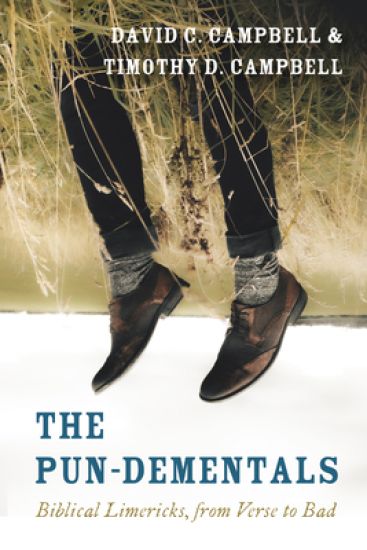
This book contains limericks galore, Packed with puns, but also much more: Academic lights And helpful insights May be seen as o'er pages you pore. Is the Bible (gasp ) boring? This set of limericks may change your mind, or at least supply you with enough puns to keep your students awake all semester and enough rhymes to jog their memories before the exam. Or perhaps you want to get onto (or removed from) the church sign committee. Looking at familiar (or less familiar) biblical passages and events in church history from a different angle may even provide new insights--especially if the viewing angle is slightly askew. And, as Proverbs 17:22 says, "A merry heart doeth good like a medicine," so buckle your seatbelt for a ride on the Romans road less taken.
This book contains limericks galore, Packed with puns, but also much more: Academic lights And helpful insights May be seen as o'er pages you pore. Is the Bible (gasp ) boring? This set of limericks may change your mind, or at least supply you with enough puns to keep your students awake all semester and enough rhymes to jog their memories before the exam. Or perhaps you want to get onto (or removed from) the church sign committee. Looking at familiar (or less familiar) biblical passages and events in church history from a different angle may even provide new insights--especially if the viewing angle is slightly askew. And, as Proverbs 17:22 says, "A merry heart doeth good like a medicine," so buckle your seatbelt for a ride on the Romans road less taken.
In 1989, The National Museum of the American Indian Act (NMAIA) was successfully passed after a long and intense struggle. One year later, the Native American Graves Protection and Repatriation Act (NAGPRA) followed. These federal repatriation statutes—arguably some of the most important laws in the history of anthropology, museology, and American Indian rights—enabled Native Americans to reclaim human remains, funerary objects, sacred objects, and objects of cultural patrimony. Twenty years later, the controversy instigated by the creation of NMAIA and NAGPRA continues to simmer. In the Smaller Scope of Conscience is a thoughtful and detailed study of the ins and outs of the four-year process behind these laws. It is a singular contribution to the history of these issues, with the potential to help mediate the on-going debate by encouraging all sides to retrace the steps of the legislators responsible for the acts.Few works are as detailed as McKeown's account, which looks into bills that came prior to NMAIA and NAGPRA and combs the legislative history for relevant reports and correspondence. Testimonies, documents, and interviews from the primary players of this legislative process are cited to offer insights into the drafting and political processes that shaped NMAIA and NAGPRA. Above all else, this landmark work distinguishes itself from earlier legislative histories with the quality of its analysis. Invested and yet even handed in his narrative, McKeown ensures that this journey through history—through the strategies and struggles of different actors to effect change through federal legislation—is not only accurate but eminently intriguing.
In this work on Luke 16, Christ's narrative concerning the Rich Man and Lazarus, Cruso is taken up with explaining and exhorting the reader of the nature of hell-torments and heaven's felicity. Besides their usefulness in awakening those that remain lost, these doctrines are eminently profitable to the most sound and established believers. Such exhortations serve to foster a more abundant cause of thankfulness to God for the unspeakable gift of Jesus Christ, and of rejoicing and triumph in him as their Deliverer from such a horrid state. Both heaven and hell are set before the reader, showing the portion of the happy beggar and the portion of the miserable rich man. He presses the reader to consider, which of the two will you choose to follow? By an unfeigned faith in Christ and by the genuine fruits of that faith in a holy life, everyone that has heard and learned of the Father comes to Christ and is governed by him (John 6:45). It was Cruso's desire in having this work published that it might be presented to all, that everyone might uprightly say, "I am not only almost, but altogether, persuaded to be in reality, as well as in name, a Christian, and as such, henceforth, to live and die unto the Lord "
Adoption of Bluetooth wireless technology has become ubiquitous in the last few years. One of the biggest steps forward is the standardization of Java APIs for Bluetooth wireless technology (JABWT). The latest updates to this standard is explained in detail in this book. The JABWT standard, defined by the JSR-82 Java Specification Request, supports rapid development of Bluetooth applications that are portable, secure, and highly-usable. Wireless device manufacturers have responded overwhelmingly to the JABWT specification by implementing JABWT applications in mobile phones and other personal wireless communications products. Bluetooth Application Programming Essentials: Programming with the Java APIs explains in detail how to write Bluetooth applications using the Java APIs to exploit the power of both technologies. Written by the specification lead for JSR-82 and two other key participants in developing the standards of JABWT, this book provides the authoritative explanations and concrete examples needed to get started right away.This book provides embedded Java developers with to-the-point information on the APIs in the specification with detailed programmatic examples of the APIs in use. A NEW chapter on the Push Registry definition (a new feature in the 1.1 version of JSR-82) has been added. Finally, the new Essentials version of the book will update the remaining chapters to reflect changes in the latest Bluetooth spec (2.1) and the industry as a whole.
Henry Lee's Crime Scene Handbook outlines proven methods to help you collect and process physical evidence correctly, analyze it thoroughly, and understand its relevance to the case involved. It evaluates the newest chemical and instrumental techniques, and covers new areas such as forensic analysis of computers and advanced shooting scene reconstruction methods. This "must-have" guide is enhanced with dozens of color photographs, logic trees, check lists, worksheets, case studies, lists of suppliers, and more. Henry Lee has consulted on thousands of criminal cases around the world and is highly sought after to help solve difficult cases. Now he and his co-authors share more than 50 years of combined experience in this systematic approach to crime scene processing. It provides the information you need for initial training, to take with you in the field, and to refer to again and again during the course of each investigation. KEY FEATURES:* Presents a unique, systematic approach to crime scene processing * Covers in detail how to manage a crime scene, collect information, search for, collect, and preserve physical evidence, conduct field tests, and reconstruct a sequence of events * Describes how to use the latest chemical and instrumental techniques for each kind of crime scene * Outlines common problems and provides clear recommendations for overcoming them * Includes logic trees, checklists, and worksheets that help investigators evaluate the evidence in specific types of crimes
Making Technology Work in Schools is an easy-to-use guide for transforming your school into a learner-centered, tech-rich environment. School systems are increasingly adopting ambitious new educational technologies, but how do you make sure they are yielding effective teaching and learning experiences? The authors’ proven, intuitive practices speak directly to academic coaches, school technology leads, district technology directors, and teachers on special assignment who are responsible for introducing new tools and programs. After reading this book, you will be able to better prepare the educators you serve to empower their learners, whether digitally savvy or not, to be engaged, collaborative, and better prepared for college and careers.
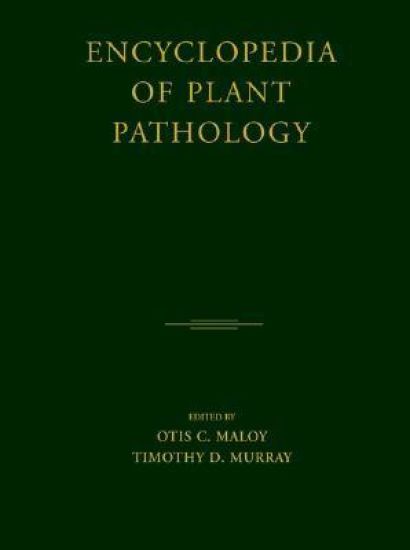
This is the first truly comprehensive A-Z reference work on the subject, having approximately 2,000 pages in a practical two-volume format. The full-length entries provide detail that glossaries and dictionaries cannot. Over 900 individual entries provide thorough coverage, and a number of biographical entries are included on important plant pathologists and plant scientists.
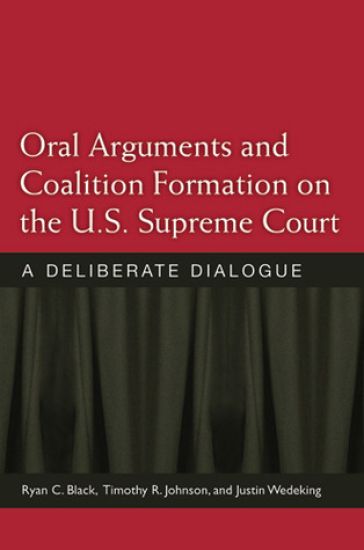
The U.S. Supreme Court, with its controlled, highly institutionalized decision-making practices, provides an ideal environment for studying coalition formation. The process begins during the oral argument stage, which provides the justices with their first opportunity to hear one another's attitudes and concerns specific to a case. This information gathering allows them eventually to form a coalition.In order to uncover the workings of this process, the authors analyze oral argument transcripts from every case decided from 1998 through 2007 as well as the complete collection of notes kept during oral arguments by Justice Lewis F. Powell and Justice Harry A. Blackmun. Both justices clearly monitored their fellow justices' participation in the discussion and used their observations to craft opinions their colleagues would be likely to support. This study represents a major step forward in the understanding of coalition formation, which is a crucial aspect of many areas of political debate and decision making.
The U.S. Supreme Court, with its controlled, highly institutionalized decision-making practices, provides an ideal environment for studying coalition formation. The process begins during the oral argument stage, which provides the justices with their first opportunity to hear one another's attitudes and concerns specific to a case. This information gathering allows them eventually to form a coalition.In order to uncover the workings of this process, the authors analyze oral argument transcripts from every case decided from 1998 through 2007 as well as the complete collection of notes kept during oral arguments by Justice Lewis F. Powell and Justice Harry A. Blackmun. Both justices clearly monitored their fellow justices' participation in the discussion and used their observations to craft opinions their colleagues would be likely to support. This study represents a major step forward in the understanding of coalition formation, which is a crucial aspect of many areas of political debate and decision making.
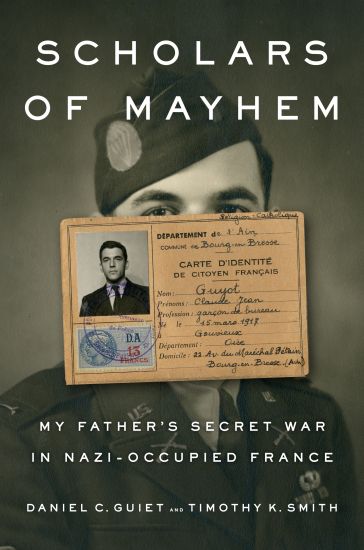
The astonishing untold story of the author's father, the lone American on a 4-person SOE commando team dropped behind German lines in France, whose epic feats of irregular warfare proved vital in keeping Nazi tanks away from Normandy after D-Day. When Daniel Guiet was a child and his family moved country, as they frequently did, his father had one possession, a tin bread box, that always made the trip. Daniel was admonished never to touch the box, but one day he couldn't resist. What he found astonished him: a .45 automatic and five full clips; three slim knives; a length of wire with a wooden handle at each end; thin pieces of paper with random numbers on them; several passports with his father's photograph, each bearing a different name; and a large silk square with eight flags, with a message underneath each flag in the language corresponding to it. The one in English read: "I am an American. Help me. You will be well paid." Eventually Jean Claude Guiet revealed to his family that he had been in the CIA, but it was only at the very end of his life that he spoke of the mission during World War II that marked the beginning of his career in clandestine service. It is one of the last great untold stories of the war, and Daniel Guiet and his collaborator, the writer Tim Smith, have spent several years bringing it to life. Jean Claude was an American citizen but a child of France, and fluent in the language; he was also extremely bright. The American military was on the lookout for native French speakers to be seconded to a secret British special operations commando operation, dropping saboteurs behind German lines in France to coordinate aid to the French Resistance and lead missions wreaking havoc on Germany's military efforts across the entire country. Jean Claude was recruited, and his life was changed forever. Though the human cost was terrible, the mission succeeded beyond the Allies' wildest dreams.Scholars of Mayhem tells the story of Jean Claude and the other three agents in his "circuit," codenamed Salesman, a unit of Britain's Special Operations Executive, the secret service ordered by Churchill to "Set Europe ablaze." Parachuted into France the day after D-Day, the Salesman team organized, armed, and commanded a ghostly army of 10,000 French Resistance fighters. National pride has kept the story of SOE in France obscure, but of this there is no doubt: While the Resistance had plenty of heart, it was SOE that gave it teeth and claws. Scholars of Mayhem adds brilliantly to that picture, and further underscores what a close-run thing the success of the Allied breakout from the Normandy landings actually was.
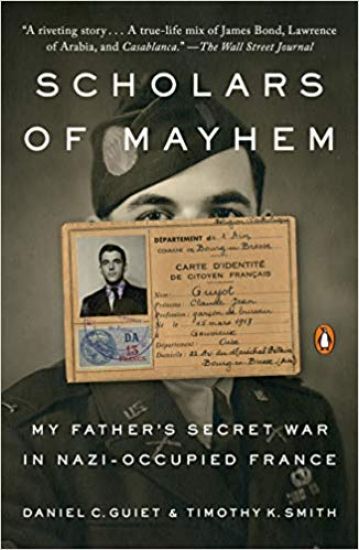
"Riveting...A true-life mix of James Bond, Lawrence of Arabia and 'Casablanca.'" -The Wall Street Journal The astonishing untold story of the author's father, the lone American on a four-person team of Allied secret agents dropped into Nazi-occupied France, whose epic feats of irregular warfare proved vital in keeping German tanks away from Normandy after D-Day. When Daniel Guiet was a child and his family moved country, as they frequently did, his father had one possession, a tin bread box, that always made the trip. Daniel was admonished never to touch the box, but one day he couldn't resist. What he found astonished him: a .45 automatic and five full clips; three slim knives; a length of wire with a wooden handle at each end; thin pieces of paper with random numbers on them; several passports with his father's photograph, each bearing a different name; and silk squares imprinted with different countries' flags, bearing messages in unfamiliar alphabets. The messages, he discovered much later, were variations on a theme: I am an American. Take me to the nearest Allied military office. You will be paid. Eventually Jean Claude Guiet revealed to his family that he had been in the CIA, but it was only at the very end of his life that he spoke of the mission during World War II that marked the beginning of his career in clandestine service. It is one of the last great untold stories of the war, and Daniel Guiet and his collaborator, the writer Tim Smith, have spent several years bringing it to life. Jean Claude was an American citizen but a child of France, and fluent in the language; he was also extremely bright. The American military was on the lookout for native French speakers to be seconded to a secret British special operations commando operation, dropping clandestine agents behind German lines in France to coordinate aid to the French Resistance and lead missions wreaking havoc on Germany's military efforts across the entire country. Jean Claude was recruited, and his life was changed forever. Though the human cost was terrible, the mission succeeded beyond the Allies' wildest dreams. Scholars of Mayhem tells the story of Jean Claude and the other three agents in his "circuit," codenamed Salesman, a unit of Britain's Special Operations Executive, the secret service ordered by Churchill to "Set Europe ablaze." Parachuted into France the day after D-Day, the Salesman team organized, armed, and commanded an underground army of 10,000 French Resistance fighters. National pride has kept the story of SOE in France obscure, but of this there is no doubt: While the Resistance had plenty of heart, it was SOE that gave it teeth and claws. Scholars of Mayhem adds brilliantly to that picture, and further underscores what a close-run thing the success of the Allied breakout from the Normandy landings actually was.
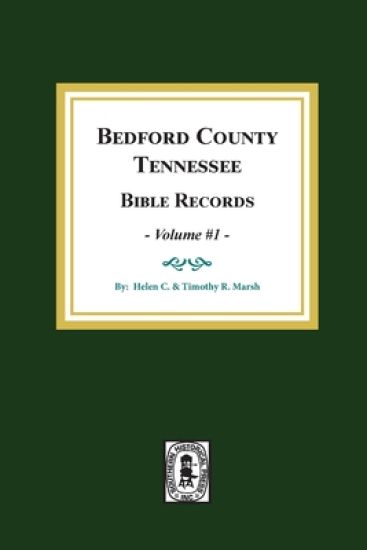
By: Helen C. & Timothy R. Marsh, Pub. 1977, reprinted 2020, 220 pages, Index, soft cover, ISBN #0-89308-470-0.Bedford County was formed in 1807 out of Rutherford County. And in turn, the lower half of Bedford County was cut off to form Lincoln county in 1809. This volume has never been reprinted since its original debut in 1977. It has been Out-of-Print for over 20 years. Bedford County was formed in 1807 out of Rutherford County. Bible records are another unique source of research material that can help one bridge that gap in the family line that may be lacking in other legal records.
By: Helen C. & Timothy R. Marsh, Pub. 1985, reprinted 2020, 166 pages, Index, soft cover, ISBN #0-89308-570-7.Bedford County was formed in 1807 out of Rutherford County. And in turn, the lower half of Bedford County was cut off to form Lincoln county in 1809. This volume has never been reprinted since its original debut in 1985. It has been Out-of-Print for over 20 years. Bedford County was formed in 1807 out of Rutherford County. Bible records are another unique source of research material that can help one bridge that gap in the family line that may be lacking in other legal records.