This is the first truly comprehensive A-Z reference work on the subject, having approximately 2,000 pages in a practical two-volume format. The full-length entries provide detail that glossaries and dictionaries cannot. Over 900 individual entries provide thorough coverage, and a number of biographical entries are included on important plant pathologists and plant scientists.
The Essentials of Instructional Design, Fifth Edition introduces the fundamental elements of instructional design (ID) to students who are new to ID. The key procedures within the ID process—learner analysis, task analysis, needs analysis, developing goals and objectives, organizing instruction, developing instructional activities, assessing learner achievement, and evaluating the success of the ID—are comprehensively covered and enriched with descriptions and examples of how these procedures are accomplished using the best-known models. This revised fifth edition features firsthand testimonials from ID professionals; new content on accessibility, innovation, virtual environments, digital video, feedback, and rubrics; thoroughly updated references and definitions; and more.Unlike most other ID books, The Essentials of Instructional Design provides an overview of the principles and practice of ID without placing emphasis on any one model. Perspectives from a variety of contexts and sectors exemplify how professional organizations put the numerous ID processes into effective practice. Offering a variety of possible approaches for each step in the ID process and clearly explaining the strengths and challenges associated with each, the book will prepare students with the information they need to make informed decisions as they design and develop instruction.
The Essentials of Instructional Design, Fifth Edition introduces the fundamental elements of instructional design (ID) to students who are new to ID. The key procedures within the ID process—learner analysis, task analysis, needs analysis, developing goals and objectives, organizing instruction, developing instructional activities, assessing learner achievement, and evaluating the success of the ID—are comprehensively covered and enriched with descriptions and examples of how these procedures are accomplished using the best-known models. This revised fifth edition features firsthand testimonials from ID professionals; new content on accessibility, innovation, virtual environments, digital video, feedback, and rubrics; thoroughly updated references and definitions; and more.Unlike most other ID books, The Essentials of Instructional Design provides an overview of the principles and practice of ID without placing emphasis on any one model. Perspectives from a variety of contexts and sectors exemplify how professional organizations put the numerous ID processes into effective practice. Offering a variety of possible approaches for each step in the ID process and clearly explaining the strengths and challenges associated with each, the book will prepare students with the information they need to make informed decisions as they design and develop instruction.
Motor Control and Learning, Sixth Edition With Web Resource, focuses on observable movement behavior, the many factors that influence quality of movement, and how movement skills are acquired. The text examines the motivational, cognitive, biomechanical, and neurological processes of complex motor behaviors that allow human movement to progress from unrefined and clumsy to masterfully smooth and agile. This updated sixth edition builds upon the foundational work of Richard Schmidt and Timothy Lee in previous editions. The three new authors—each a distinguished scholar—offer a range and depth of knowledge that includes current directions in the field. The extensively revised content reflects the latest research and new directions in motor control and learning. Additional new features of the sixth edition include the following: • A web resource that includes narratives and learning activities from Motor Control in Everyday Actions that correspond with the chapters in the book, giving students additional opportunities to analyze how research in motor learning and control can be expanded and applied in everyday settings • An instructor guide that offers sample answers for the learning experiences found in the student web resource • New content on sleep and movement memory, the role of vision, illusions and reaching, the OPTIMAL theory of motor learning, the neuroscience of learning, and more Motor Control and Learning begins with a brief introduction to the field and an introduction to important concepts and research methods. Part II thoroughly covers motor control with topics such as closed-loop perspective, the role of the central nervous system for movement control, speed and accuracy, and coordination. Part III deals with motor learning, exploring the effects of attentional focus, the structure of practice sessions, the role of feedback, theoretical views of motor learning, and the retention and transfer of skills. Throughout the book, art and practical examples are included to elucidate complex topics. Sidebars with historical examples, classic research, and examples of real-world applications highlight the importance of motor control and learning research and bring attention to influential research studies and pioneers. End-of-chapter summaries and student assignments reinforce important concepts and terms and provide review opportunities. For instructors, an image bank complements the new instructor guide; it is available to course adopters at www.HumanKinetics.com/MotorControlAndLearning. The updated research, new features, and highly respected authors of Motor Control and Learning, Sixth Edition With Web Study Guide, provide a solid foundation for both students and practitioners who study and work in fields that encompass movement behavior.
Motor Learning and Performance: From Principles to Application, Sixth Edition With Web Study Guide, enables students to appreciate high-level skilled activity and understand how such incredible performances occur. Written in a style that is accessible even to students with little or no knowledge of physiology, psychology, statistical methods, or other basic sciences, this text constructs a conceptual model of factors that influence motor performance, outlines how motor skills are acquired and retained with practice, and shows students how to apply the concepts to a variety of real-world settings. The sixth edition of Motor Learning and Performance has been carefully revised to incorporate the most important research findings in the field, and it is supplemented with practice situations to facilitate a stronger link between research-based principles and practical applications. Other highlights include the following: A web study guide offers updated principles-to-application exercises and additional interactive activities for each chapter, ensuring that students will be able to transfer core content from the book to various applied settings.Extensive updates and new material related to the performance of complex movements expand the theoretical focus to a more in-depth analysis of dynamical systems and the constraints-led approach to learning.Narratives from Motor Control in Everyday Actions that appear in the web study guide tie each book chapter to concrete examples of how motor behavior is applicable to real life.Photo caption activities pose questions to students to encourage critical thinking, and answers to those questions are provided to instructors in the instructor guide. As the text investigates the principles of human performance, pedagogical aids such as learning objectives, key terms, and Check Your Understanding questions help students stay on track with learning in each chapter. Focus on Research and Focus on Application sidebars deliver more detailed research information and make connections to real-world applications in areas such as teaching, coaching, and therapy. The sixth edition of Motor Learning and Performance: From Principles to Application goes beyond simply presenting research—it challenges students to grasp the fundamental concepts of motor performance and learning and then go a step further by applying the concepts. Incorporating familiar scenarios brings the material to life for students, leading to better retention and greater interest in practical application of motor performance and learning in their everyday lives and future careers.
Motor Learning and Performance: From Principles to Application, Sixth Edition With Web Study Guide, enables students to appreciate high-level skilled activity and understand how such incredible performances occur. Written in a style that is accessible even to students with little or no knowledge of physiology, psychology, statistical methods, or other basic sciences, this text constructs a conceptual model of factors that influence motor performance, outlines how motor skills are acquired and retained with practice, and shows students how to apply the concepts to a variety of real-world settings. The sixth edition of Motor Learning and Performance has been carefully revised to incorporate the most important research findings in the field, and it is supplemented with practice situations to facilitate a stronger link between research-based principles and practical applications. Other highlights include the following: A web study guide offers updated principles-to-application exercises and additional interactive activities for each chapter, ensuring that students will be able to transfer core content from the book to various applied settings. Extensive updates and new material related to the performance of complex movements expand the theoretical focus to a more in-depth analysis of dynamical systems and the constraints-led approach to learning. Narratives from Motor Control in Everyday Actions that appear in the web study guide tie each book chapter to concrete examples of how motor behavior is applicable to real life. Photo caption activities pose questions to students to encourage critical thinking, and answers to those questions are provided to instructors in the instructor guide. As the text investigates the principles of human performance, pedagogical aids such as learning objectives, key terms, and Check Your Understanding questions help students stay on track with learning in each chapter. Focus on Research and Focus on Application sidebars deliver more detailed research information and make connections to real-world applications in areas such as teaching, coaching, and therapy. The sixth edition of Motor Learning and Performance: From Principles to Application goes beyond simply presenting research—it challenges students to grasp the fundamental concepts of motor performance and learning and then go a step further by applying the concepts. Incorporating familiar scenarios brings the material to life for students, leading to better retention and greater interest in practical application of motor performance and learning in their everyday lives and future careers.
Robert M. Hayden; Aykan Erdemir; Tugba Tanyeri-Erdemir; Timothy D. Walker; Devika Rangachari; Manuel Aguilar-Moreno; Enrique López-Hurtado; Milica Bakic-Hayden
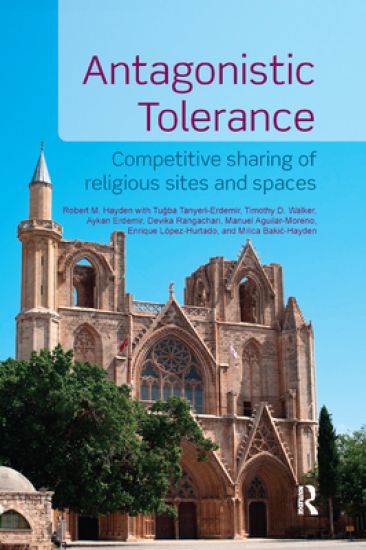
Antagonistic Tolerance examines patterns of coexistence and conflict amongst members of different religious communities, using multidisciplinary research to analyze groups who have peacefully intermingled for generations, and who may have developed aspects of syncretism in their religious practices, and yet have turned violently on each other. Such communities define themselves as separate peoples, with different and often competing interests, yet their interaction is usually peaceable provided the dominance of one group is clear. The key indicator of dominance is control over central religious sites, which may be tacitly shared for long periods, but later contested and even converted as dominance changes. By focusing on these shared and contested sites, this volume allows for a wider understanding of relations between these communities. Using a range of ethnographic, historical and archaeological data from the Balkans, India, Mexico, Peru, Portugal and Turkey, Antagonistic Tolerance develops a comparative model of the competitive sharing and transformation of religious sites. These studies are not considered as isolated cases, but are instead woven into a unified analytical framework which explains how long-term peaceful interactions between religious communities can turn conflictual and even result in ethnic cleansing.
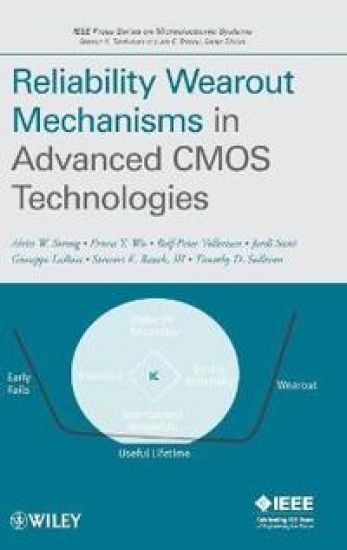
This invaluable resource tells the complete story of failure mechanisms—from basic concepts to the tools necessary to conduct reliability tests and analyze the results. Both a text and a reference work for this important area of semiconductor technology, it assumes no reliability education or experience. It also offers the first reference book with all relevant physics, equations, and step-by-step procedures for CMOS technology reliability in one place. Practical appendices provide basic experimental procedures that include experiment design, performing stressing in the laboratory, data analysis, reliability projections, and interpreting projections.
Robert M. Hayden; Aykan Erdemir; Tugba Tanyeri-Erdemir; Timothy D. Walker; Devika Rangachari; Manuel Aguilar-Moreno; Enrique López-Hurtado; Milica Bakic-Hayden
Antagonistic Tolerance examines patterns of coexistence and conflict amongst members of different religious communities, using multidisciplinary research to analyze groups who have peacefully intermingled for generations, and who may have developed aspects of syncretism in their religious practices, and yet have turned violently on each other. Such communities define themselves as separate peoples, with different and often competing interests, yet their interaction is usually peaceable provided the dominance of one group is clear. The key indicator of dominance is control over central religious sites, which may be tacitly shared for long periods, but later contested and even converted as dominance changes. By focusing on these shared and contested sites, this volume allows for a wider understanding of relations between these communities. Using a range of ethnographic, historical and archaeological data from the Balkans, India, Mexico, Peru, Portugal and Turkey, Antagonistic Tolerance develops a comparative model of the competitive sharing and transformation of religious sites. These studies are not considered as isolated cases, but are instead woven into a unified analytical framework which explains how long-term peaceful interactions between religious communities can turn conflictual and even result in ethnic cleansing.
Strengthening Governance Globally is the fifth volume in the series 'Patterns of Potential Human Progress'. Each volume considers one key aspect of how development unfolds globally and how better to move it in desired directions. This volume identifies the provision of security, the building of government capacity, and the broadening of inclusion of governance on which high-income countries have traditionally made long historical transitions. In contrast, many developing countries today struggle with all three governance transition dimensions simultaneously. Strengthening Governance Globally uses the growing empirical database on governance variables to understand historical change.
Strengthening Governance Globally is the fifth volume in the series 'Patterns of Potential Human Progress'. Each volume considers one key aspect of how development unfolds globally and how better to move it in desired directions. This volume identifies the provision of security, the building of government capacity, and the broadening of inclusion of governance on which high-income countries have traditionally made long historical transitions. In contrast, many developing countries today struggle with all three governance transition dimensions simultaneously. Strengthening Governance Globally uses the growing empirical database on governance variables to understand historical change.
From the home of the Paulo Freire Democratic Project and non-profit community organization Padres Unidos, the Chapman University Padres Unidos Partnership presents this truly unique coffee table textbook, Let’s Chat: Cultivating Community University Dialogue – A Coffee Table Textbook on Partnerships. The volume presents a collection of community stories, concepts and analyses that highlight the journey of border crossings between two co-existing neighbors: a non-profit community organization and a university. Stories from community residents and faculty members represent how they disrupted the barriers that typically divide us by reconceptualizing how universities and communities can work together to reshape the intellectual landscape and reconfigure power differentials.Written with and by the community, this book represents a break-away genre that privileges the “voices of the people” (Freire), accompanied by academic voices, in a format that is accessible, aesthetic and attractive to both community and university audiences. Cafecitos punctuate each chapter to elicit dialogue, reflection and action towards defining and developing community university partnerships.This book will be useful to:academics interested in partnerships, public pedagogy, and community-based researchstudents involved in community engagement/service learningcommunity organizationsimmigrant families who reveal their wisdom in stories about self, others, and community building within the Chapman University Padres Unidos partnershipLet’s Chat presents valuable content in a new and unique format that makes it perfect for classroom teaching in a variety of undergraduate and graduate courses.
From the home of the Paulo Freire Democratic Project and non-profit community organization Padres Unidos, the Chapman University Padres Unidos Partnership presents this truly unique coffee table textbook, Let’s Chat: Cultivating Community University Dialogue – A Coffee Table Textbook on Partnerships. The volume presents a collection of community stories, concepts and analyses that highlight the journey of border crossings between two co-existing neighbors: a non-profit community organization and a university. Stories from community residents and faculty members represent how they disrupted the barriers that typically divide us by reconceptualizing how universities and communities can work together to reshape the intellectual landscape and reconfigure power differentials.Written with and by the community, this book represents a break-away genre that privileges the “voices of the people” (Freire), accompanied by academic voices, in a format that is accessible, aesthetic and attractive to both community and university audiences. Cafecitos punctuate each chapter to elicit dialogue, reflection and action towards defining and developing community university partnerships.This book will be useful to:academics interested in partnerships, public pedagogy, and community-based researchstudents involved in community engagement/service learningcommunity organizationsimmigrant families who reveal their wisdom in stories about self, others, and community building within the Chapman University Padres Unidos partnershipLet’s Chat presents valuable content in a new and unique format that makes it perfect for classroom teaching in a variety of undergraduate and graduate courses.
Radical Roots: How One Professor Transformed a University tells the story of Joel Torstenson, a sociology professor at Augsburg University in Minneapolis, Minnesota. In the 1960s, Torstenson challenged his university to embrace its urban setting and to design its curricular, co-curricular, and community engagement programs to advance its mission of "Education for service." The compelling story of Torstenson's legacy at Augsburg over the past 60 years offers lessons for colleges and universities across the country committed to democratic engagement in their work at the intersections of mission and place.Augsburg University's saga as an urban settlement has not always been embraced by the university. Though location and place are central to the university's identity, it is not sufficient to explain the integrative power of the university's character. For that purpose, it is critical that place be understood through the lens of Augsburg's academic mission and work. This integrated view of place and mission required a new way of imagining the university's core work of educating students.The purpose of this book is two-fold. The first is to document and celebrate the legacy of Professor Joel Torstenson, and to understand the impact of this legacy's inception, evolution, and current manifestations and impact at Augsburg and in the wider world. Professor Torstenson cared deeply about the public purpose of higher education, and Torstenson's model for what this public purpose might look like prompted massive transformation in Augsburg University's trajectory. The resulting experiments in education and commitment to the city flowered into a legacy that has spurred Augsburg University to create an innovative model for 21st Century education. This model has impacted everything from student learning and community life, to teaching and curricular structure, to the public mission of the institution and its presence in the city and world. Torstenson's creative--and even radical--work in the 1960s and '70s has been carried through the decades by continued innovation in teaching and learning based in experiential education, and a commitment to place and community building. This legacy has simultaneously advanced the public purpose and mission of the University.Secondly, this book shares what are some of the lessons learned from fifty years of innovation following Torstenson's vision, with the hope that these lessons might serve the broader community of colleges, universities, faculty, staff, and students engaged in similar pursuits. Augsburg's innovative experiential education, place-based community engagement, and public and anchor institution work has been and will continue to be a model for other institutions. We believe that Torstenson's legacy, and the lessons learned through the years of its evolution, has lessons to teach and models to follow for our sibling institutions across the United States.The volume includes discussion prompts and questions after each section. There is also a companion website (www.augsburg.edu/radicalroots) that includes additional resources related to the volume's themes.Perfect for course such as: Higher Education and Democracy in the United States; Principles of Experiential Education; Place Matters: Higher Education and Community Engagement; Universities as Anchor Institutions in their Communities; Introduction to Citizen Professionalism: Leading in the 21st Century; Public Work, Social Responsibility, and Vocation in a World of Extremes; Accompaniment: Developing Democratic Skills and Fostering Healing with Communities; Curricular Innovations in Higher Education; and Principles of Higher Education Pedagogy
Mihaly Csikszentmihalyi; Martin E.P. Seligman; Jørgen Lyhne; Ruut Veenhoven; Martin Führ; Daniel Kahnemann; Timothy D. Wilson; Daniel T. Gilbert; Hans Henrik Knoop; Barbara L. Fredrickson
Hvordan kan positiv psykologi bruges pædagogisk? Hvordan kan positiv psykologi skabe optimale læringsmiljøer? Positiv psykologi sætter fokus på glæde, trivsel, lykke og det gode liv.Antologien præsenterer den positive psykologis bagvedliggende teori og de deraf følgende pædagogiske implikationer i forhold til optimale læringsmiljøer, ledelse, undervisning, læring og arbejdsliv. Antologien henvender sig primært til lærere, pædagoger, psykologer, ledere og studerende.
Linda Darling-Hammond; Brigid Barron; P. David Pearson; Alan H. Schoenfeld; Elizabeth K. Stage; Timothy D. Zimmerman; Gina N. Cervetti; Jennifer L. Tilson; Milton Chen
In Powerful Learning, Linda Darling-Hammond and an impressive list of co-authors offer a clear, comprehensive, and engaging exploration of the most effective classroom practices. They review, in practical terms, teaching strategies that generate meaningful K–2 student understanding, and occur both within the classroom walls and beyond. The book includes rich stories, as well as online videos of innovative classrooms and schools, that show how students who are taught well are able to think critically, employ flexible problem-solving, and apply learned skills and knowledge to new situations.
This easy to read book written by Dr. Tim Weir,host of the "Loving Life TV Show, best selling author and practicing chiropractor. It has been updated with the latest research on Fibromyalgia. This dreaded disease has plagued millions, and now he gives common sense solutions to some severe problems. Give this book to someone that you know suffers from muscle aches, headaches, depression. This book will give them hope for the future!