Galax, a small Virginia town at the foot of the Blue Ridge Mountains, was one of the first places that Henry H. Brownstein, Timothy M. Mulcahy, and Johannes Huessy visited for their study of the social dynamics of methamphetamine markets—and what they found changed everything. They had begun by thinking of methamphetamine markets as primarily small-scale mom-and-pop businesses operated by individual cooks who served local users—generally stymied by ever more strenuous laws. But what they found was a thriving and complex transnational industry. And this reality was repeated in towns and cities across America, where the methamphetamine market was creating jobs and serving as a focus for daily lives and social experience. The Methamphetamine Industry in America describes the reality that the methamphetamine industry is a social phenomenon connecting local, national, and international communities and markets. The book details the results of a groundbreaking three-stage study, part of a joint initiative of the National Institute on Drug Abuse and the National Institute of Justice, in which police agencies across the United States were surveyed and their responses used to identify likely areas of study. The authors then visited these areas to observe and interview local participants, from users and dealers to law enforcement officers and clinical treatment workers.Through the eyes and words of these participants, the book tells the story of the evolution of methamphetamine markets in the United States over the past several years, given changes in public policies and practices and changing public opinion about methamphetamine. The authors look closely at how the markets are part of a larger industry, how they are socially organized, and how they operate. They also consider the relationships among the people involved and those around them, and the national, regional, and local culture of the markets. Their work demonstrates the importance of understanding the business of methamphetamine—and by extension other drugs in society—through a lens that focuses on social behavior, social relationships, and the cultural elements that shape the organization and operation of this illicit but effective industry.

In a robust and engaging manner, David Bohr offers us a thorough review and timely reanalysis of the Catholic diocesan priesthood. Biblical, historical, and sacramental voices dialogue with the relevant documents of the Second Vatican Council, other papal pronouncements, and the perspectives of some of the major commentators on the state of the Catholic priesthood today. Clergy and laity alike will find in BohrG??s models of priestly ministry and the topics of consecration, mission, and celibacy a flash point reigniting the discussion of the past, present, and future of the Catholic diocesan priesthood.
With today’s electrical and electronics systems requiring increased levels of performance and reliability, the design of robust EMI filters plays a critical role in EMC compliance. Using a mix of practical methods and theoretical analysis, EMI Filter Design, Third Edition presents both a hands-on and academic approach to the design of EMI filters and the selection of components values. The design approaches covered include matrix methods using table data and the use of Fourier analysis, Laplace transforms, and transfer function realization of LC structures. This edition has been fully revised and updated with additional topics and more streamlined content.New to the Third Edition Analysis techniques necessary for passive filter realizationMatrix method and transfer function analysis approaches for LC filter structure design A more hands-on look at EMI filters and the overall design processThrough this bestselling book’s proven design methodology and practical application of formal techniques, readers learn how to develop simple filter solutions. The authors examine the causes of common- and differential-mode noise and methods of elimination, the source and load impedances for various types of input power interfaces, and the load impedance aspect of EMI filter design. After covering EMI filter structures, topologies, and components, they provide insight into the sizing of components and protection from voltage transients, discuss issues that compromise filter performance, and present a goal for a filter design objective. The text also includes a matrix method for filter design, explains the transfer function method of LC structures and their equivalent polynomials, and gives a circuit design example and analysis techniques. The final chapter presents packaging solutions of EMI filters.
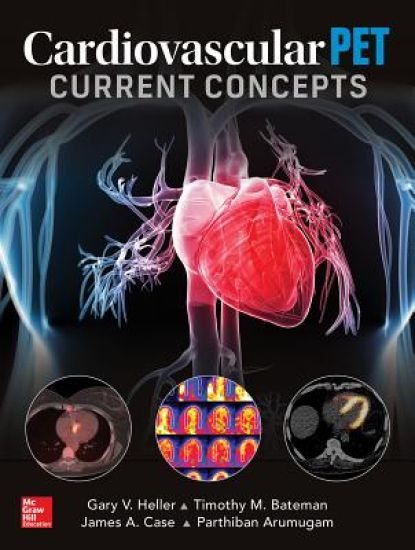
Publisher's Note: Products purchased from Third Party sellers are not guaranteed by the publisher for quality, authenticity, or access to any online entitlements included with the product.An expertly written state-of-the-art review of every aspect of cardiovascular PET imagingFilling a void in the medical literature, this much needed resource clearly and succinctly reviews the current knowledge and practical aspects of cardiovascular PET. With coverage that spans everything from instrumentation to clinical procedures to the future directions of cardiac PET, the intent and focus of this book is to provide readers with the most current, reliable, and clinically relevant data in one concise, focused resource. Essential for anyone preparing for the board exam in nuclear medicine, Cardiovascular PET: Current Concepts is organized into six sections:• Current Concepts of Cardiovascular PET Imaging: The New Paradigm• Clinical Overview of Contemporary Myocardial Perfusion Imaging with Cardiac PET• Quantitative Myocardial Blood Flow Assessment• Technical Developments in Cardiovascular PET• Myocardial Viability Assessment: The Current Rule of Cardiac PET• Current Status of Assessment of Cardiovascular Inflammation and Infection ImagingEach chapter concludes with an informative “Editor’s Perspective” in which one of the editors places the material discussed in the chapter into real-world clinical perspective. If you would like a better understanding of cardiovascular PET, or want to incorporate it into your own clinical practice, this book is required reading.
With today’s electrical and electronics systems requiring increased levels of performance and reliability, the design of robust EMI filters plays a critical role in EMC compliance. Using a mix of practical methods and theoretical analysis, EMI Filter Design, Third Edition presents both a hands-on and academic approach to the design of EMI filters and the selection of components values. The design approaches covered include matrix methods using table data and the use of Fourier analysis, Laplace transforms, and transfer function realization of LC structures. This edition has been fully revised and updated with additional topics and more streamlined content.New to the Third Edition Analysis techniques necessary for passive filter realizationMatrix method and transfer function analysis approaches for LC filter structure design A more hands-on look at EMI filters and the overall design processThrough this bestselling book’s proven design methodology and practical application of formal techniques, readers learn how to develop simple filter solutions. The authors examine the causes of common- and differential-mode noise and methods of elimination, the source and load impedances for various types of input power interfaces, and the load impedance aspect of EMI filter design. After covering EMI filter structures, topologies, and components, they provide insight into the sizing of components and protection from voltage transients, discuss issues that compromise filter performance, and present a goal for a filter design objective. The text also includes a matrix method for filter design, explains the transfer function method of LC structures and their equivalent polynomials, and gives a circuit design example and analysis techniques. The final chapter presents packaging solutions of EMI filters.
You use GitHub all day long as a developer. Now learn how to use GitHub as a power user. Learn the ins and outs of the GitHub API using many of the most popular programming languages. Supercharge your development with command line shortcuts. Each chapter digs deep into an important technology from the GitHub ecosystem with examples to accelerate your usage of those features and programmatically automate your developer tools. Along the way, align yourself with the famed GitHub culture to streamline your developer workflow.
In the Beginning: A Look at our World Through the Lens of Environmental Science and Christian Theology is a book that presents creation myths from ancient cultures around the world. It then examines the first creation story in the book of Exodus and goes into detail explaining how the Old Testament was written. Then the book follows the seven-day creation day by day to explain what was created and why. Finally, the authors tackle the issues of climate change and the destruction of the environment we human beings were charged to protect. The book can be used in small groups or simply read for one's own edification. The combination of mythological, biblical and scientific information should inspire and challenge all who read it.Christopher Farabaugh was born in Pittsburgh, Pennsylvania and lived in that area until his family moved to Virginia Beach, Virginia. He enjoyed academics, music and musical theater. Chris obtained a BS in Biology from The College of William and Mary, and an MS and PhD in Environmental Science and Public Policy from George Mason University. Chris works in the drug development industry in which he initially focused in genetic toxicology; he is currently serving in managerial and leadership roles in that industry. In his free time, Chris enjoys bird watching and spending time with his family. Timothy Farabaugh was born in Greensburg, Pennsylvania and graduated form Penn-Trafford High School located nearby. Along with his academic life, Tim was a class officer, a member of the chorus, and a drummer in the band. Tim obtained a bachelors degree from Alderson-Broaddus College in Secondary Education and a Masters of Divinity and a Masters of Arts in Christian Education from the Methodist Theological School in Ohio. Upon graduation, Tim served as the pastor of three churches in the Western Pennsylvania area before beginning a twenty-eight-year career in long-term care administration. Tim has authored five previous books.
Prayer is a major biblical topic. The Bible teaches readers the nature, purposes, intentions, and practical applications of prayer in diverse circumstances and situations. The Bible presents different expressions of prayer, major examples of prayers, presuppositions of prayer, various types of prayer, God's diverse answers to different prayers in different circumstances, and nonverbal gestures about prayer. This book attempts to deal with difficult issues such as imprecation or curse prayers, address controversial biblical passages and concepts such as Ps 51 or Rom 8:26-27, and emphasize important similar connections between different biblical texts such as 1 Sam 2:1-10; Ps 113:5-9; Luke 1:46-55; 2 Sam 7:18-29; or 1 Chr 17:16-27.
Solving problems with deep neural networks typically relies on massive amounts of labeled training data to achieve high performance. While in many situations huge volumes of unlabeled data can be and often are generated and available, the cost of acquiring data labels remains high. Transfer learning (TL), and in particular domain adaptation (DA), has emerged as an effective solution to overcome the burden of annotation, exploiting the unlabeled data available from the target domain together with labeled data or pre-trained models from similar, yet different source domains. The aim of this book is to provide an overview of such DA/TL methods applied to computer vision, a field whose popularity has increased significantly in the last few years. We set the stage by revisiting the theoretical background and some of the historical shallow methods before discussing and comparing different domain adaptation strategies that exploit deep architectures for visual recognition. We introduce the space of self-training-based methods that draw inspiration from the related fields of deep semi-supervised and self-supervised learning in solving the deep domain adaptation. Going beyond the classic domain adaptation problem, we then explore the rich space of problem settings that arise when applying domain adaptation in practice such as partial or open-set DA, where source and target data categories do not fully overlap, continuous DA where the target data comes as a stream, and so on. We next consider the least restrictive setting of domain generalization (DG), as an extreme case where neither labeled nor unlabeled target data are available during training. Finally, we close by considering the emerging area of learning-to-learn and how it can be applied to further improve existing approaches to cross domain learning problems such as DA and DG.
A reimagining of Devotions upon Emergent Occasions as an original treatment of human life shaped by innovations in seventeenth-century science and medicine. In 1624, poet and preacher John Donne published Devotions upon Emergent Occasions, a book that recorded his near-death experience during a deadly epidemic in London. Four hundred years later, in the aftermath of our own pandemic, Harvey and Harrison show how Devotions crystalizes the power, beauty, and enduring strangeness of Donne’s thinking. Arguing that Donne saw human life in light of emergent ideas in the study of nature (physics) and the study of the body (physick), John Donne’s Physics reveals Devotions as a culminating achievement, a radically new literary form that uses poetic techniques to depict Donne’s encounter with death in a world transformed by new discoveries and knowledge systems.
In this timely book, Lee Tavis and Timothy Tavis contend that the values dimension of the actions of multinational firms is becoming increasingly important, given the worldwide integration of economies and peoples. The digital revolution has broadened the reach of globalization and created an informed society that demands higher standards of behavior from the business enterprise; at the same time, multinational corporations have gained power often comparable to that of the nation state, and global society is in need of widely accepted, enduring social and ethical standards. Tavis and Tavis argue that multinational firms must embrace an ethically pro-active stance in their own long-term interests. A strategy of supporting universal human rights, often in partnership with NGOs, offers the greatest potential for success. Values-Based Multinational Management provides an agenda for practical action, with special reference to the United Nations Universal Declaration of Human Rights and the United Nations Global Compact. It informs and addresses the values concerns of multinational business managers. It presents its examples and analyses in a clear and concise manner and will be of use both to practitioners in the business community and students and scholars of business ethics.
One of the world's most respected religion journalists profiles New York's Archbishop Timothy Dolan, one of the country's--and possibly the world's--most important Catholic leaders through lengthy exclusive interviews. Unique among the current leadership of the Catholic Church, Archbishop Dolan shares his insightful perspective in this series of conversations on the present and future of Catholicism. In these pages Dolan shares a perspective which is typically not part of the information an average person would know through today's media. This omission often leaves outsiders with a terribly flawed grasp of what's actually happening in the Church. Legitimate stories on, for example, abuse and Church authority can't be dissolved by reactive conspiracy theories about how the media is out to get the Catholic Church. That said, if these scandals are all there is to the Catholic Church, why would anyone bother being Catholic? It may not be surprising that there are an estimated 22 million ex-Catholics out there, yet it is revealing that even more people have chosen to remain with the Church. Tens of millions of Americans, and hundreds of millions more around the world, still turn to the Church for inspiration, for its sacramental life, for its experience of community and service. In every diocese in America you can find parishes that are flourishing. The faith represented there is not an exaggerated religious frenzy that feeds an uncritical view of the Church. Catholics are nothing if not sober realists about the humanity of their institutions and leaders. They see the Church not as a debating society or a multinational enterprise, but a family--with all the flaws and dysfunction, but also all the joy and life, of families everywhere. This is why Archbishop Dolan is such an important part of the Church's emerging landscape. In A People of Hope Dolan is seen at his best, capturing an upbeat, hopeful, affirming Catholicism that's the untold story about the Church today. As readers spend time with Dolan here, they may find that his love for people and zest for friendship is what's truly fundamental about the man, not a PR device calculated to conceal some other agenda. Dolan can and does draw lines in the sand when he believes that core matters of Catholic identity are at stake. He's well aware that we live in a deeply secular world in the West, in which powerful pressures, both subtle and overt, seek to blur the counter-cultural message of Catholicism on many fronts. One key to Dolan's character, however, is that changing hearts, not knocking heads, is always his first instinct. John Allen draws out a picture of future trends by exploring where Dolan wants to lead, and how will a Church that increasingly bears his imprint look and feel? To understand this, what's really necessary is to get inside his head and then let him speak for himself. To that end Allen frames questions in a way that allows Dolan to expand on the topic himself as much as possible. The result is a book more "with" Dolan than a book "about" him, which is indeed the best way to understand the man. At the end, one can agree or disagree with Dolan's outlook, but one may at least be better equipped to understand why thoughtful modern women and men might still believe there's something worth considering in the Catholic message. Whatever the future may have in store for Dolan--staying in New York until he dies, being called to Rome to work in a senior Vatican post, or something else entirely--he will be a force in the Catholic Church both nationally and internationally for some time to come, and it's well worth trying to discern what that might mean.
Originally published in 1974 this book examines the problems confronting the London public transport system in the 1970s. After a brief historical introduction the book then pays particular attention to planning, capital investment, co-ordination, the relationship between transport and housing, the competition between road and rail and the grants paid by central government. There are 15 case studies of significant topics ranging from station car parks to bus lanes, new tube trains to facilities for pedestrians. Although the focus is on London, many of the issues are common to other UK cities and across the world.
Throughout the early years of the 20th century, Virginia was viewed as a Republican state. Citizens in the Commonwealth had not voted for a Democratic presidential candidate since 1964. In 2000, the GOP had just won the governor’s race, held both U.S. Senate seats, and had majorities in both the House of Delegates and the State Senate. By 2020, all of that had been reversed. During that period, Democrats won four of five governors contests, elected two US senators, and voted for Democratic presidential candidates in every year since 2008. In 2019, the House of Delegates, where Republicans maintained a 68-32 supermajority in 2011, flipped to Democratic control. With it, the state became a Democratic trifecta, where the party controlled all of the state’s levers of power. Bellwether tells the story of how this happened from someone who was “in the room at the time.” David Toscano began his service in the House in 2006 and became the Democratic Leader of the body in 2011. He examines the special nature of Virginia politics, the demographic changes that underpin much of its shifting political fortunes, and the policies and personalities at the center of the state’s dynamics for the last two decades.
The Basics of Spiritual Warfare from the Leading Author in the CategoryWhat is spiritual warfare? Who should engage in it and how? How can I protect myself and the ones I love from Satan's attacks?In The Essential Guide to Spiritual Warfare, Neil Anderson and Timothy Warner describe the battle between the kingdom of God and the kingdom of darkness, a battle for the minds and hearts of us all. Learn about the importance of having a biblical worldview and how to prepare for the battle you are called to fight. Every step of the way is grounded in the truth of God's Word about who God is and who you are in Christ. This battle plan for victory is perfect for those new to the idea of spiritual warfare as well as those who want a basic primer to refresh themselves on the topic.