Kirjojen hintavertailu. Mukana 11 518 949 kirjaa ja 12 kauppaa.

Kirjahaku

Etsi kirjoja tekijän nimen, kirjan nimen tai ISBN:n perusteella.

1000 tulosta hakusanalla Vector Hasting

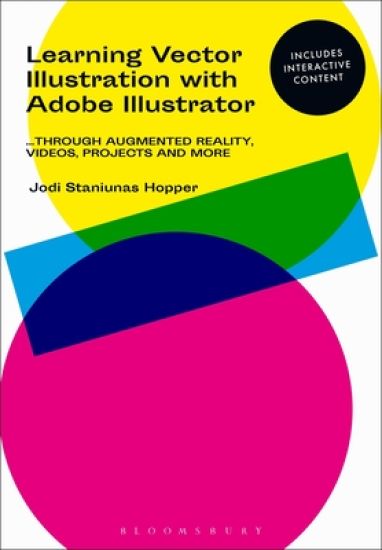
Learning Vector Illustration with Adobe Illustrator

Learning Vector Illustration with Adobe Illustrator

Jodi Staniunas Hopper

Bloomsbury Visual Arts
2021
nidottu
When you begin using vector illustration software it can be confusing and frustrating to even work out how to make a mark on the page - but this new hybrid approach to learning integrates tutorial videos and step-by-step projects to help you becoming confident in no time. Starting with first principles, this book introduces you to all the important tools and processes – from the basics of Bezier curves to applying meshes – so you can quickly and efficiently create your own designs. As you learn each skill there are projects for you to try out, and by the end of the book you’ll build up to a major design project to put all your new abilities into practice.
Support Vector Machines and Their Application in Chemistry and Biotechnology

Support Vector Machines and Their Application in Chemistry and Biotechnology

Yizeng Liang; Qing-Song Xu; Hong-Dong Li; Dong-Sheng Cao

CRC Press Inc
2011
sidottu
Support vector machines (SVMs) are used in a range of applications, including drug design, food quality control, metabolic fingerprint analysis, and microarray data-based cancer classification. While most mathematicians are well-versed in the distinctive features and empirical performance of SVMs, many chemists and biologists are not as familiar with what they are and how they work. Presenting a clear bridge between theory and application, Support Vector Machines and Their Application in Chemistry and Biotechnology provides a thorough description of the mechanism of SVMs from the point of view of chemists and biologists, enabling them to solve difficult problems with the help of these powerful tools.Topics discussed include: Background and key elements of support vector machines and applications in chemistry and biotechnologyElements and algorithms of support vector classification (SVC) and support vector regression (SVR) machines, along with discussion of simulated datasetsThe kernel function for solving nonlinear problems by using a simple linear transformation methodEnsemble learning of support vector machinesApplications of support vector machines to near-infrared dataSupport vector machines and quantitative structure-activity/property relationship (QSAR/QSPR)Quality control of traditional Chinese medicine by means of the chromatography fingerprint techniqueThe use of support vector machines in exploring the biological data produced in OMICS studyBeneficial for chemical data analysis and the modeling of complex physic-chemical and biological systems, support vector machines show promise in a myriad of areas. This book enables non-mathematicians to understand the potential of SVMs and utilize them in a host of applications.
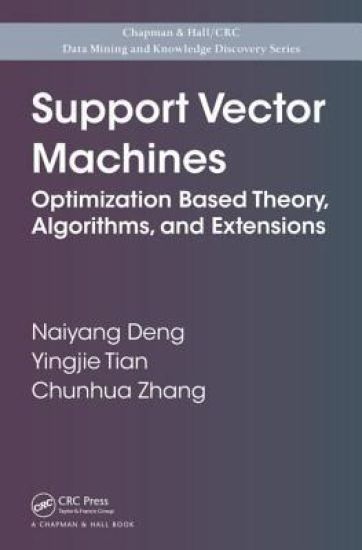
Support Vector Machines

Support Vector Machines

Naiyang Deng; Yingjie Tian; Chunhua Zhang

Taylor Francis Inc
2012
sidottu
Support Vector Machines: Optimization Based Theory, Algorithms, and Extensions presents an accessible treatment of the two main components of support vector machines (SVMs)—classification problems and regression problems. The book emphasizes the close connection between optimization theory and SVMs since optimization is one of the pillars on which SVMs are built.The authors share insight on many of their research achievements. They give a precise interpretation of statistical leaning theory for C-support vector classification. They also discuss regularized twin SVMs for binary classification problems, SVMs for solving multi-classification problems based on ordinal regression, SVMs for semi-supervised problems, and SVMs for problems with perturbations.To improve readability, concepts, methods, and results are introduced graphically and with clear explanations. For important concepts and algorithms, such as the Crammer-Singer SVM for multi-class classification problems, the text provides geometric interpretations that are not depicted in current literature. Enabling a sound understanding of SVMs, this book gives beginners as well as more experienced researchers and engineers the tools to solve real-world problems using SVMs.
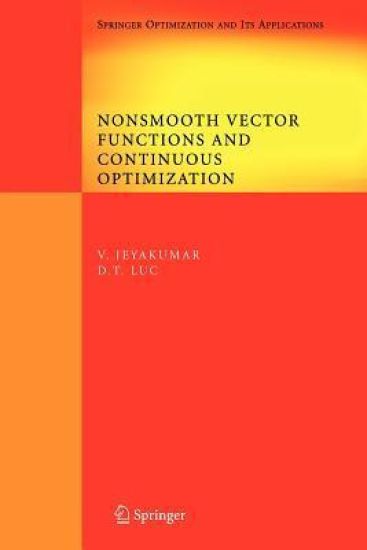
Nonsmooth Vector Functions and Continuous Optimization

Nonsmooth Vector Functions and Continuous Optimization

V. Jeyakumar; Dinh The Luc

Springer-Verlag New York Inc.
2010
nidottu
A recent significant innovation in mathematical sciences has been the progressive use of nonsmooth calculus, an extension of the differential calculus, as a key tool of modern analysis in many areas of mathematics, operations research, and engineering. Focusing on the study of nonsmooth vector functions, this book presents a comprehensive account of the calculus of generalized Jacobian matrices and their applications to continuous nonsmooth optimization problems and variational inequalities in finite dimensions. The treatment is motivated by a desire to expose an elementary approach to nonsmooth calculus by using a set of matrices to replace the nonexistent Jacobian matrix of a continuous vector function. Such a set of matrices forms a new generalized Jacobian, called pseudo-Jacobian. A direct extension of the classical derivative that follows simple rules of calculus, the pseudo-Jacobian provides an axiomatic approach to nonsmooth calculus, a flexible tool for handling nonsmooth continuous optimization problems. Illustrated by numerous examples of known generalized derivatives, the work may serve as a valuable reference for graduate students, researchers, and applied mathematicians who wish to use nonsmooth techniques and continuous optimization to model and solve problems in mathematical programming, operations research, and engineering. Readers require only a modest background in undergraduate mathematical analysis to follow the material with minimal effort.
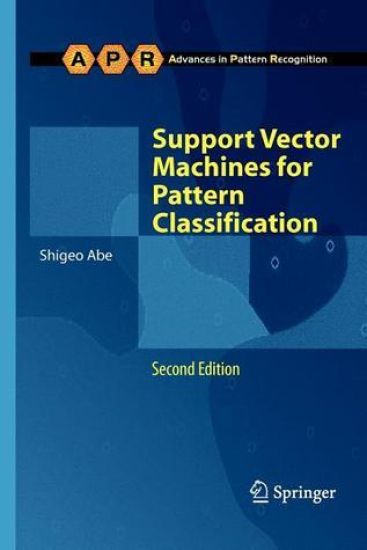
Support Vector Machines for Pattern Classification
A guide on the use of SVMs in pattern classification, including a rigorous performance comparison of classifiers and regressors. The book presents architectures for multiclass classification and function approximation problems, as well as evaluation criteria for classifiers and regressors. Features: Clarifies the characteristics of two-class SVMs; Discusses kernel methods for improving the generalization ability of neural networks and fuzzy systems; Contains ample illustrations and examples; Includes performance evaluation using publicly available data sets; Examines Mahalanobis kernels, empirical feature space, and the effect of model selection by cross-validation; Covers sparse SVMs, learning using privileged information, semi-supervised learning, multiple classifier systems, and multiple kernel learning; Explores incremental training based batch training and active-set training methods, and decomposition techniques for linear programming SVMs; Discusses variable selection for support vector regressors.
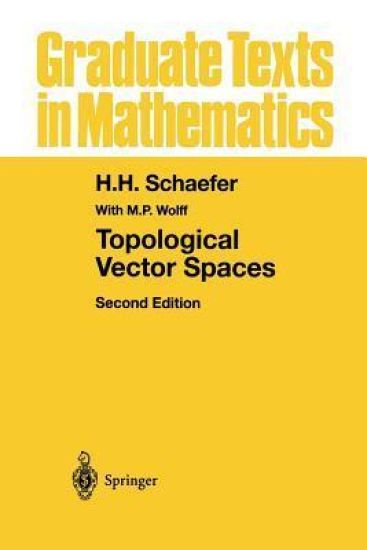
Topological Vector Spaces

Topological Vector Spaces

H.H. Schaefer

Springer-Verlag New York Inc.
2012
nidottu
The present book is intended to be a systematic text on topological vector spaces and presupposes familiarity with the elements of general topology and linear algebra. The author has found it unnecessary to rederive these results, since they are equally basic for many other areas of mathematics, and every beginning graduate student is likely to have made their acquaintance. Simi­ larly, the elementary facts on Hilbert and Banach spaces are widely known and are not discussed in detail in this book, which is :plainly addressed to those readers who have attained and wish to get beyond the introductory level. The book has its origin in courses given by the author at Washington State University, the University of Michigan, and the University of Ttibingen in the years 1958-1963. At that time there existed no reasonably ccmplete text on topological vector spaces in English, and there seemed to be a genuine need for a book on this subject. This situation changed in 1963 with the appearance of the book by Kelley, Namioka et al. [1] which, through its many elegant proofs, has had some influence on the final draft of this manuscript. Yet the two books appear to be sufficiently different in spirit and subject matter to justify the publication of this manuscript; in particular, the present book includes a discussion of topological tensor products, nuclear spaces, ordered topological vector spaces, and an appendix on positive operators.
Parallel-Vector Equation Solvers for Finite Element Engineering Applications
Despite the ample number of articles on parallel-vector computational algorithms published over the last 20 years, there is a lack of texts in the field customized for senior undergraduate and graduate engineering research. Parallel-Vector Equation Solvers for Finite Element Engineering Applications aims to fill this gap, detailing both the theoretical development and important implementations of equation-solution algorithms. The mathematical background necessary to understand their inception balances well with descriptions of their practical uses. Illustrated with a number of state-of-the-art FORTRAN codes developed as examples for the book, Dr. Nguyen's text is a perfect choice for instructors and researchers alike.
Topological Vector Spaces II

Topological Vector Spaces II

Gottfried Köthe

Springer-Verlag New York Inc.
2013
nidottu
In the preface to Volume One I promised a second volume which would contain the theory of linear mappings and special classes of spaces im­ portant in analysis. It took me nearly twenty years to fulfill this promise, at least to some extent. To the six chapters of Volume One I added two new chapters, one on linear mappings and duality (Chapter Seven), the second on spaces of linear mappings (Chapter Eight). A glance at the Contents and the short introductions to the two new chapters will give a fair impression of the material included in this volume. I regret that I had to give up my intention to write a third chapter on nuclear spaces. It seemed impossible to include the recent deep results in this field without creating a great further delay. A substantial part of this book grew out of lectures I held at the Mathematics Department of the University of Maryland· during the academic years 1963-1964, 1967-1968, and 1971-1972. I would like to express my gratitude to my colleagues J. BRACE, S. GOLDBERG, J. HORVATH, and G. MALTESE for many stimulating and helpful discussions during these years. I am particularly indebted to H. JARCHOW (Ziirich) and D. KEIM (Frankfurt) for many suggestions and corrections. Both have read the whole manuscript. N. ADASCH (Frankfurt), V. EBERHARDT (Miinchen), H. MEISE (Diisseldorf), and R. HOLLSTEIN (Paderborn) helped with important observations.
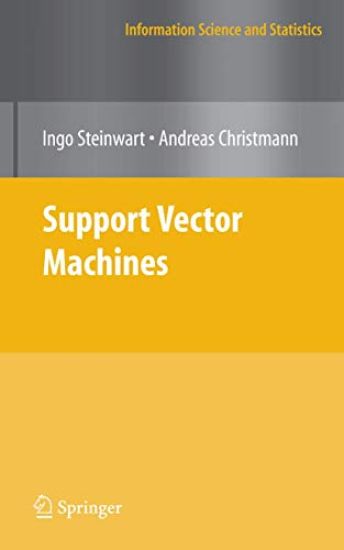
Support Vector Machines

Support Vector Machines

Ingo Steinwart; Andreas Christmann

Springer-Verlag New York Inc.
2014
nidottu
Every mathematical discipline goes through three periods of development: the naive, the formal, and the critical. David Hilbert The goal of this book is to explain the principles that made support vector machines (SVMs) a successful modeling and prediction tool for a variety of applications. We try to achieve this by presenting the basic ideas of SVMs together with the latest developments and current research questions in a uni?ed style. In a nutshell, we identify at least three reasons for the success of SVMs: their ability to learn well with only a very small number of free parameters, their robustness against several types of model violations and outliers, and last but not least their computational e?ciency compared with several other methods. Although there are several roots and precursors of SVMs, these methods gained particular momentum during the last 15 years since Vapnik (1995, 1998) published his well-known textbooks on statistical learning theory with aspecialemphasisonsupportvectormachines. Sincethen,the?eldofmachine learninghaswitnessedintenseactivityinthestudyofSVMs,whichhasspread moreandmoretootherdisciplinessuchasstatisticsandmathematics. Thusit seems fair to say that several communities are currently working on support vector machines and on related kernel-based methods. Although there are many interactions between these communities, we think that there is still roomforadditionalfruitfulinteractionandwouldbegladifthistextbookwere found helpful in stimulating further research. Many of the results presented in this book have previously been scattered in the journal literature or are still under review. As a consequence, these results have been accessible only to a relativelysmallnumberofspecialists,sometimesprobablyonlytopeoplefrom one community but not the others.
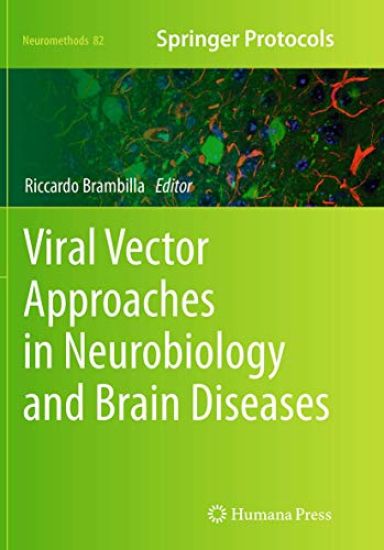
Viral Vector Approaches in Neurobiology and Brain Diseases
Aiming toward improvement in the safety, efficiency, and specificity of viral vectors for neurobiological research and clinical applications, Viral Vector Approaches in Neurobiology and Brain Diseases covers key aspects related to the use of viral vectors in neuroscience, with a major emphasis on basic mechanisms of synaptic plasticity, learning, and memory, as well as molecular neuropharmacology and experimental animal models of brain disorders. The volume begins by delving into features of the viral vectors currently available in neuroscience and their production methods, and it then continues onward to examples of successful applications of viral vector technology to psychiatric and memory research, current applications of viral vector technology in the context of neurological disorders, as well as various cutting-edge applications of viral vector technology to neuroscience, including optogenetics. Written for the Neuromethods series, the chapters of this book contain the kind of detailed description and implementation advice that promotes successful, repeatable results. Practical and up to date, Viral Vector Approaches in Neurobiology and Brain Diseases will be useful not only to neurobiologists wishing to routinely use viral vectors in the laboratory but also to experienced scientists needing detailed new protocols for a variety of experimental applications.
Blood Vector: We never understood the warning

Blood Vector: We never understood the warning

Robert Kiesling

Createspace Independent Publishing Platform
2017
nidottu
Quick summary: an investigation into a paranormal event happening around the world uncovers an otherworldly threat to humankind...Expanded: Three People. One Chance. On the verge of losing her sanity from visions of otherworldly creatures destroying mankind, journalist Khloe Marks discovers that those who share her rare blood type also have the nightmares. Her search for the connection between them leads to a disgraced lawyer, locked away in a mental institution for his belief that a young girl is a key to stopping the imminent destruction of mankind. Together, they must solve an ancient mystery to save humanity-even if it costs them their own lives. If they fail: In Memory of Man
Topological Vector Spaces

Topological Vector Spaces

Lawrence Narici; Edward Beckenstein

Chapman Hall/CRC
2010
sidottu
With many new concrete examples and historical notes, Topological Vector Spaces, Second Edition provides one of the most thorough and up-to-date treatments of the Hahn–Banach theorem. This edition explores the theorem’s connection with the axiom of choice, discusses the uniqueness of Hahn–Banach extensions, and includes an entirely new chapter on vector-valued Hahn–Banach theorems. It also considers different approaches to the Banach–Stone theorem as well as variations of the theorem.The book covers locally convex spaces; barreled, bornological, and webbed spaces; and reflexivity. It traces the development of various theorems from their earliest beginnings to present day, providing historical notes to place the results in context. The authors also chronicle the lives of key mathematicians, including Stefan Banach and Eduard Helly. Suitable for both beginners and experienced researchers, this book contains an abundance of examples, exercises of varying levels of difficulty with many hints, and an extensive bibliography and index.
From Vector Spaces to Function Spaces

From Vector Spaces to Function Spaces

Yutaka Yamamoto

Society for Industrial Applied Mathematics,U.S.
2012
sidottu
Provides a treatment of analytical methods of applied mathematics. It starts with a review of the basics of vector spaces and brings the reader to an advanced discussion of applied mathematics, including the latest applications to systems and control theory. The text is designed to be accessible to those not familiar with the material and useful to working scientists, engineers, and mathematics students. The author provides the motivations of definitions and the ideas underlying proofs but does not sacrifice mathematical rigour. From Vector Spaces to Function Spaces presents an easily-accessible discussion of analytical methods of applied mathematics from vector spaces to distributions, Fourier analysis, and Hardy spaces with applications to system theory; an introduction to modern functional analytic methods to better familiarize readers with basic methods and mathematical thinking; and an understandable yet penetrating treatment of such modern methods and topics as function spaces and distributions, Fourier and Laplace analyses, and Hardy spaces.
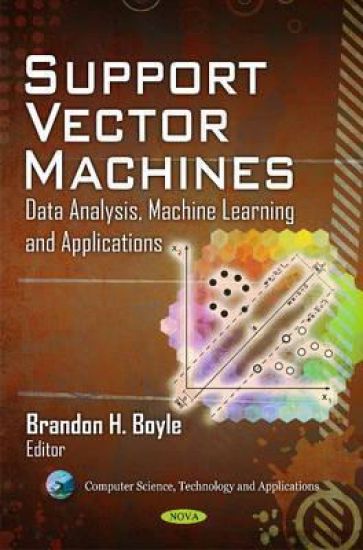
Support Vector Machines

Support Vector Machines

Nova Science Publishers Inc
2012
sidottu
This book presents topical research in the study of support vector machines. Topics discussed include the support vector machine in medical imaging; monthly air pollution modeling using support vector machine techniques in Spain; support vector machines for image interpolation schemes in image zooming and color array interpolation; using SVM for the prediction of the ultimate capacity of driven piles in cohesionless soils; SVM in medical classification tasks and pattern recognition for machine fault diagnosis using support vector machines.