Kirjojen hintavertailu. Mukana 12 016 292 kirjaa ja 12 kauppaa.

Kirjahaku

Etsi kirjoja tekijän nimen, kirjan nimen tai ISBN:n perusteella.

248 tulosta hakusanalla Vrin

Psykiatrisk sygepleje

Psykiatrisk sygepleje

Niels Buus; Lene Lauge Berring; Lisbeth Hybholt; Barbara Askham; Esben Sandvik Tønder; Karina Stjernegaard; Jesper Bak; Rose-Marie Bank; Phil Barker; Emil Boulund; Poppy Buchanan-Barker; Janni Carlsen; Josefine Winther Davy; Cynthia Delgado; Søren Dixen; Louise Dvinge; Vrinda Edan; Rochelle Einboden; Annette Erlangsen; Henrik Gonge; Katherine Gill; Mari Holen; Jacob Hvidhjelm; Thomas Iversen; Anja Kammacher; Heidi Lindtoft Kammersgaard; Bengt Karlsson; Hamilton Kennedy; Rachael Laidler; Niels Laurs Pedersen; Michael Marcussen

Gyldendal
2020
sidottu
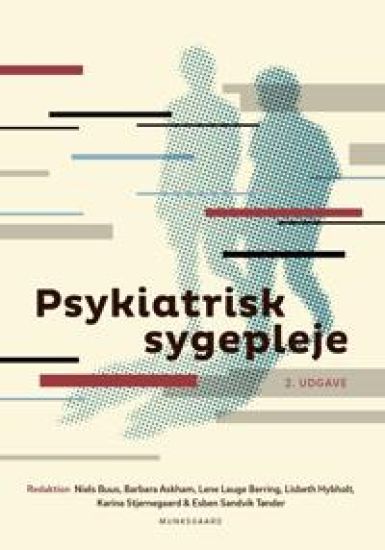
Dette er 2. udgave af den bredt anerkendte og populære lærebog. Som noget nyt i 2. udgave har alle interessenter deltaget i tilblivelsen af bogen. Det gælder psykiatribrugere, sygeplejerskestuderende, sygeplejersker, undervisere og forskere, som sammen er blevet enige om bogens overordnede indhold og struktur, ligesom bogens kapitler er blevet skrevet og redigeret i fællesskab. Bogen beskriver væsentlige emner inden for psykiatrisk sygepleje, og den indeholder grundige introduktioner til de praksisser, vi forventer sygeplejersker skal kende og mestre. Det gælder f.eks. deeskalering og psykisk førstehjælp, men også mere specialiserede emner som f.eks. miljøterapi og psykosocial sundhedspædagogik. Bogen rummer også introduktioner til de vigtigste teorier og modeller inden for psykiatrisk sygepleje, f.eks. peerstøtte, The Tidal Model og Åben Dialog. Psykiatrisk sygepleje er skrevet til alle sygeplejersker, der arbejder med mennesker med psykiske lidelser. Det er en uundværlig grundbog for sygeplejerskestuderende i grunduddannelsen, både i teoretisk og klinisk sammenhæng, og den er oplagt på specialuddannelsen i psykiatrisk sygepleje. Bogen er også yderst relevant for erfarne klinikere og sygeplejersker, som har brug for opdateret viden og indblik i nye tendenser som f.eks. traumebevidst tilgang og resonans.
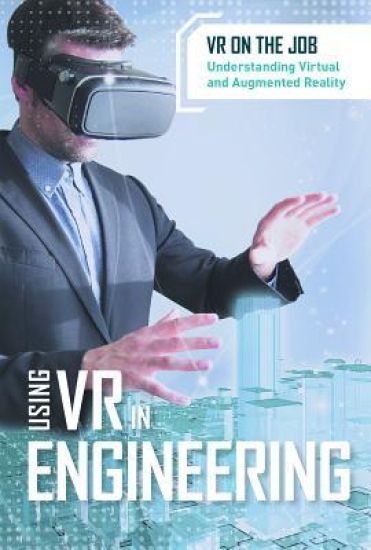
Using VR in Engineering

Using VR in Engineering

Sara Chuirazzi

Cavendish Square Publishing
2019
nidottu
In the 1960s, electrical engineer and computer scientist Ivan Sutherland's work at the University of Utah resulted in a head-mounted 3D computer display. It was one of the earliest virtual reality-associated technologies. The tech has since progressed to offer everything from headsets to smart glasses to fully immersive virtual reality experiences, all of which aid engineers in efficiently modeling prototypes, streamlining design technology, and approaching other initiatives with increased ease and capability. Readers will learn about the history of virtual and augmented reality in engineering, related career paths, and the development and expansion of practical applications in recent years.
Einsatz von Virtual Reality (VR) in der Produktentwicklung (Band 1)
Studienarbeit aus dem Jahr 2008 im Fachbereich Wirtschaftsingenieurwesen, Note: 1,7, Universit t Duisburg-Essen (Institut f r Product Engineering (IPE)), Veranstaltung: Lehrstuhl f r Produktentwicklung und Produktionstechnologien, Sprache: Deutsch, Anmerkungen: Diese Arbeit ist die erste seiner Art, die sich detailiert mit der Analyse des Nutzens von VR-Technologien in der Produktentwicklung befasst., Abstract: Um die Virtual Reality (VR) - Technologie insbesondere in KMU einzuf hren, muss deren Nutzen begr ndet sein. Zurzeit stehen den Unternehmen jedoch keine geeigneten Mittel zur Verf gung, um den Nutzen von VR im Rahmen einer Produktentwicklung zu messen.Im ersten Teil der Arbeit wird daher untersucht werden, inwieweit der Einsatz von VR einen Beitrag zur Unterst tzung des Produktentwicklungsprozesses leisten kann.Im zweiten Teil der Arbeit wird das aufgedeckte Nutzenpotential und Nutzenbewertungsverfahren aufgezeigt und darauf aufbauend Anforderungen an eine Nutzenanalyse formuliert werden.Ziel dieser Arbeit war es, auf der Grundlage der formulierten Anforderungen ein allgemeines Vorgehensmodell zur Konzeption einer VR-Nutzenanalyse aufzustellen.In einem Ausblick werden zum Ende der Arbeit offene bzw. weitergehende Fragestellungen f r m gliche nachfolgende Arbeiten festgehalten.
Einsatz von Virtual Reality (VR) in der Produktentwicklung (Band 2)
Masterarbeit aus dem Jahr 2009 im Fachbereich Wirtschaftsingenieurwesen, Note: 1,0, Universit t Duisburg-Essen (Institut f r Product Engineering (IPE)), Veranstaltung: Lehrstuhl f r Produktentwicklung und Produktionstechnologien, Sprache: Deutsch, Anmerkungen: Diese Arbeit ist die erste seiner Art, die sich detailiert mit der Analyse des Nutzens von VR-Technologien in der Produktentwicklung befasst., Abstract: Um die Virtual Reality (VR) - Technologie insbesondere in kleinen und mittelst ndischen Unternehmen (KMU) einzuf hren, muss deren Nutzen begr ndet sein. Zurzeit stehen den Unternehmen jedoch keine geeigneten Mittel zur Verf gung, um den Nutzen von VR im Rahmen einer Produktentwicklung zu bewerten und zu kontrollieren.Das Ziel dieser Arbeit war es daher, eine Methodik zu entwickeln, die es dem Anwender von Virtual Reality erlaubt, das Einsatzpotential dieser Technologie im Unternehmen zu beurteilen.Auf dieser Basis kann dann eine Entscheidung f r oder gegen den Einsatz von Virtual Reality getroffen werden. Liegt eine Entscheidung f r den Einsatz von Virtual Reality vor, wird der Anwender mit Hilfe dieser Methodik zus tzlich bei der Planung des Einsatzes hinsichtlich Zeitpunkt und Ort unterst tzt.Au erdem wird der Anwender in die Lage versetzt, den Einsatz von Virtual Reality noch w hrend der Produktentwicklung zu kontrollieren und f r Folgeanwendungen zu optimieren.
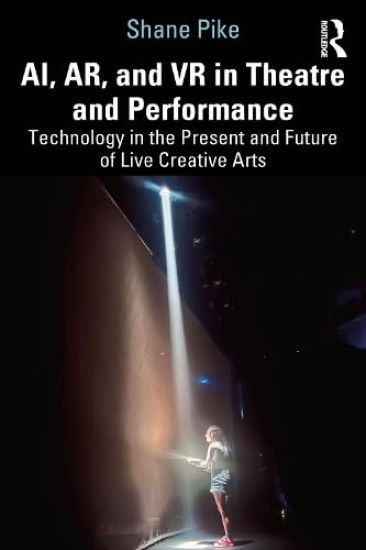
AI, AR, and VR in Theatre and Performance

AI, AR, and VR in Theatre and Performance

Shane Pike

TAYLOR FRANCIS LTD
2025
nidottu
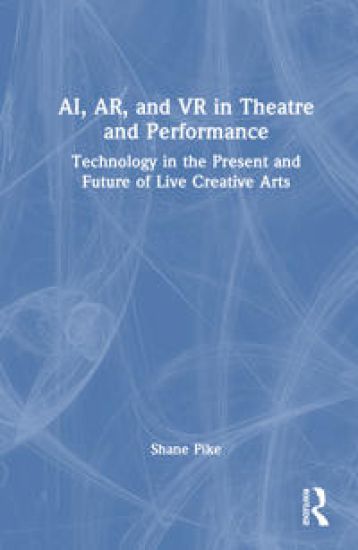
AI, AR, and VR in Theatre and Performance investigates the cutting-edge application of evolving digital technologies within the creative industries, with a focus on theatre and the dramatic arts.Grounded in a practice-based approach, this book explores the experiences of creatives, producers, and IT-specialist content creators employing artificial intelligence (AI), augmented reality (AR), and virtual reality (VR) technologies. A series of international case studies are presented, demonstrating current techno-infused practices as well as potential futures for these technologies within the broadest of creative contexts. Framed by a rigorous ethnodramatic methodological approach, the book examines the practical applications of contemporary digital technologies in theatre and other live performance settings and provides a scaffolding framework for readers toadopt in their own practice. It also proposes groundbreaking ideas for the classification of how AI may be used in current and future artistic practices, the ‘three Cs of AI,’ and introduces the concept of Communal Augmented Reality – Live (CARL) as the most likely form to advance the incorporation of emerging technologies onto the live stage. The works of Belgium’s VR immersive experiences company CREW, Singapore-based film and visual artist Ho Tzu Nyen, and the Tamil language theatre company AGAM Theatre Lab are detailed alongside the world-first application of AR holographic technology in Australia, before unpacking the pioneering advancements in algorithmic and AI theatre of America’s Annie Dorsen.With a practice-based, artist-led perspective and contributions from technologists, this book offers a comprehensive and accessible resource that will appeal to a diverse audience of artists, academics, students, practitioners, creative engineers/content creators, animators, and theorists with an interest in the relationship between digital technologies and live performance.
AI, AR, and VR in Theatre and Performance

AI, AR, and VR in Theatre and Performance

Shane Pike

TAYLOR FRANCIS LTD
2025
sidottu
AI, AR, and VR in Theatre and Performance investigates the cutting-edge application of evolving digital technologies within the creative industries, with a focus on theatre and the dramatic arts.Grounded in a practice-based approach, this book explores the experiences of creatives, producers, and IT-specialist content creators employing artificial intelligence (AI), augmented reality (AR), and virtual reality (VR) technologies. A series of international case studies are presented, demonstrating current techno-infused practices as well as potential futures for these technologies within the broadest of creative contexts. Framed by a rigorous ethnodramatic methodological approach, the book examines the practical applications of contemporary digital technologies in theatre and other live performance settings and provides a scaffolding framework for readers toadopt in their own practice. It also proposes groundbreaking ideas for the classification of how AI may be used in current and future artistic practices, the ‘three Cs of AI,’ and introduces the concept of Communal Augmented Reality – Live (CARL) as the most likely form to advance the incorporation of emerging technologies onto the live stage. The works of Belgium’s VR immersive experiences company CREW, Singapore-based film and visual artist Ho Tzu Nyen, and the Tamil language theatre company AGAM Theatre Lab are detailed alongside the world-first application of AR holographic technology in Australia, before unpacking the pioneering advancements in algorithmic and AI theatre of America’s Annie Dorsen.With a practice-based, artist-led perspective and contributions from technologists, this book offers a comprehensive and accessible resource that will appeal to a diverse audience of artists, academics, students, practitioners, creative engineers/content creators, animators, and theorists with an interest in the relationship between digital technologies and live performance.