Kirjojen hintavertailu. Mukana 12 083 983 kirjaa ja 12 kauppaa.

Kirjahaku

Etsi kirjoja tekijän nimen, kirjan nimen tai ISBN:n perusteella.

1000 tulosta hakusanalla W Timbrell Pierce

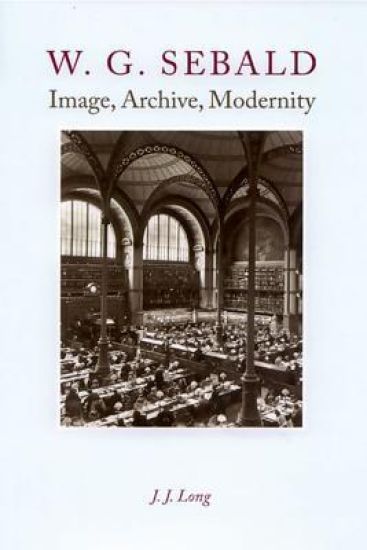
W. G. Sebald - Image, Archive, Modernity

W. G. Sebald - Image, Archive, Modernity

J. J. Long

Edinburgh University Press
2007
sidottu
W. G. Sebald is widely acknowledged as one of the most significant writers to have emerged onto the global literary scene in recent decades, and is frequently mentioned in the same breath as Nabokov, Kafka, Borges, Calvino, Proust, and Primo Levi. W. G. Sebald - Image, Archive, Modernity offers a unique and original reading of Sebald's dazzling oeuvre, arguing that his work is concerned first and foremost with the problem of modernity. It focuses in particular on the numerous archival institutions and processes that lie at the very heart of modernity and are repeatedly thematised throughout Sebald's work. Adopting a broad definition of the archive to encompass a wide range of material practices, the book analyses the function of photography, museums, libraries, and other systems of knowledge to which Sebald's texts obsessively return. Following Foucault, such systems are seen as central to the exercise of power and the constitution of subjectivity in modernity. By undertaking a differentiated analysis that is attuned to the formal complexities of Sebald's texts, this book shows that Sebald's engagement with structures of power-knowledge is characterised by a melancholy struggle to assert autonomous selfhood in the face of the institutional and discursive determinants of subjectivity. Features * Original interdisciplinary approach * Written by an acknowledged Sebald specialist * Focus on modernity which expands the parameters of our understanding of Sebald * Fully up-to-date, taking account of all of the most recent research
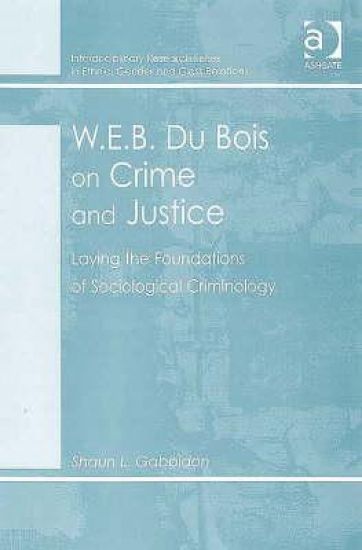
W.E.B. Du Bois on Crime and Justice

W.E.B. Du Bois on Crime and Justice

Shaun L. Gabbidon

Ashgate Publishing Limited
2007
sidottu
This is the first book to discern the contribution of Du Bois' work to criminology and criminal justice through a comprehensive review of his papers, articles and books. Beginning with reflections from his childhood, the author traces Du Bois' ideas on crime and justice throughout his life. This includes a unique analysis of Du Bois' experience as an object of the criminal justice system, a review of his FBI file, his 1951 trial and his pioneering social scientific research program at Atlanta University. The book illustrates the depth of Du Bois' interest in the field and reveals how he was a pioneer in key areas of criminology and criminal justice. The book contains five appendices which include four original papers written by Du Bois as well as maps from The Philadelphia Negro.
W.J.M. Rankine, 1820–1872

W.J.M. Rankine, 1820–1872

Ben Marsden

Ashgate Publishing Limited
2023
sidottu
William John Macquorn Rankine (1820-1872) is a major figure in the history of nineteenth-century science and engineering. As well as being a successful railway and hydraulic engineer, he was largely responsible for the establishment of 'engineering science' as the core of a new academic discipline separate from that of practical engineering. Beginning with his birth in Edinburgh in 1820 this book - the first full length biography of Rankine - traces his Scottish schooling, his engineering apprenticeship in Ireland, his early years as railway and hydraulic engineer in the 1840s, his emergence as a distinctive scientific voice in the 1850s, and his career as a university professor in Glasgow. It places his idiosyncratic formulation of thermodynamics in the context of Scottish common sense philosophy and the exigencies of heat engineering; and examines his role as the engineers' advocate of the new science of energy, and of a science of 'energetics', during the 1850s and 1860s. Through his role as a man of science and as an engineer, the book demonstrates how he laboured with local captains of Scottish industry in the business of power-engineering and shipbuilding, helping foster the philosophical reform of commerce and industry that was to underpin Britain's empire.
W.E.B. Du Bois

W.E.B. Du Bois

Ashgate Publishing Limited
2010
sidottu
Housed in one handy volume for the first time are several of the seminal essays on W.E.B. Du Bois's contributions to sociology and critical social theory: from Du Bois as inventor of sociology of race, to Du Bois as the first sociologist of American religion; from Du Bois as a pioneer of urban and rural sociology, to Du Bois as innovator of sociology of gender and culture; and, finally, from Du Bois as groundbreaking sociologist of education and critical criminologist, to Du Bois as dialectical critic of the disciplinary decadence of sociology and the American academy. What this volume offers that is wholly innovative and distinctive is that it brings together the watershed work of classical and contemporary, male and female, black and white, national and international sociologists and social theorists with the express intent of creating critical inventories and thoroughly interrogating what has been included, and what has been excluded, when we come to W.E.B. Du Bois's contributions to the discipline of sociology. Unlike any other anthologies on Du Bois, this volume offers an excellent overview of the critical commentary on arguably one of the most imaginative and innovative, perceptive and prolific founders of the discipline of sociology. It will therefore be of interest to scholars and students not just in sociology, but also Africana studies, American studies, cultural studies, ethnic studies, gender studies and postcolonial studies, as well as "traditional" disciplines, such as, history, philosophy, political science, economics, education, and religion.
W.A. Mackintosh

W.A. Mackintosh

Hugh Grant

McGill-Queen's University Press
2015
sidottu
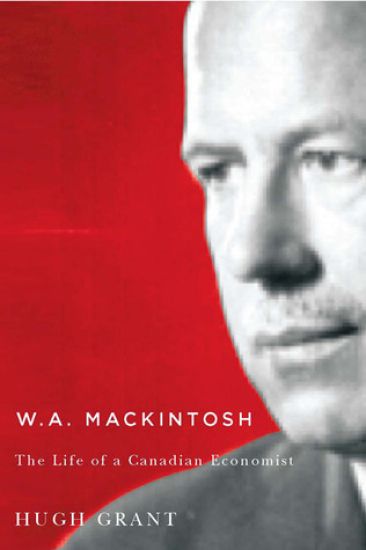
W.A. Mackintosh (1895-1970) was an exemplary public intellectual and a modest person of rare abilities. In the first biography of this influential economist, Hugh Grant addresses how Mackintosh's commitment to public service and to the principles of reason and tolerance shaped his contribution to economic scholarship, government policy, and university governance. In the 1920s and '30s, Mackintosh emerged as the country's leading economist. His most notable contribution was his "co-discovery" with Harold Innis of the staple thesis of Canadian economic development, which informed research in the field for a generation. During the Second World War Mackintosh joined the Department of Finance, where he played a central role in the successful management of the wartime economy and in Canada's adoption of Keynesian economic policy. As the author of the federal government's 1945 White Paper, Mackintosh laid out the broad strokes of Canada's adherence to Keynesianism in the post-war period. After his return to Queen's, Mackintosh would become the university's fifteenth principal and guide the institution as it prepared for the transformation of Canadian universities. This definitive biography of a remarkable man who had a profound influence on the development of modern Canada restores the record on his important contributions to Canadian economic thought and national and international finance.
W.A. Mackintosh

W.A. Mackintosh

Hugh Grant

McGill-Queen's University Press
2017
nidottu
W.A. Mackintosh (1895-1970) was an exemplary public intellectual and a modest person of rare abilities. In the first biography of this influential economist, Hugh Grant addresses how Mackintosh's commitment to public service and to the principles of reason and tolerance shaped his contribution to economic scholarship, government policy, and university governance. In the 1920s and '30s, Mackintosh emerged as the country's leading economist. His most notable contribution was his "co-discovery" with Harold Innis of the staple thesis of Canadian economic development, which informed research in the field for a generation. During the Second World War Mackintosh joined the Department of Finance, where he played a central role in the successful management of the wartime economy and in Canada's adoption of Keynesian economic policy. As the author of the federal government's 1945 White Paper, Mackintosh laid out the broad strokes of Canada's adherence to Keynesianism in the post-war period. After his return to Queen's, Mackintosh would become the university's fifteenth principal and guide the institution as it prepared for the transformation of Canadian universities. This definitive biography of a remarkable man who had a profound influence on the development of modern Canada restores the record on his important contributions to Canadian economic thought and national and international finance.
W.R. Trivett, Appalachian Pictureman

W.R. Trivett, Appalachian Pictureman

Ralph E. Lentz II

McFarland Co Inc
2000
nidottu
W.R. Trivett (1884–1966), a farmer born in Watauga County, North Carolina, was also a self-taught professional photographer who left behind an invaluable collection of more than 400 glass plate negatives taken between 1907 and the late 1940s in the Beech Mountain community of neighboring Avery County. Along with the photographs (105 are reproduced herein), a collection of Trivett’s personal papers survive, revealing very enlightening information about his life in the mountains. This work—the fourth in McFarland’s continuing series of Contributions to Southern Appalachian Studies—carefully examines Trivett’s life and photographs, comparing his work to that of contemporary outside photographers who often produced stereotypical images of mountain people. Through Trivett’s images we can, by contrast, see the everyday reality for most people in rural Appalachia.
W.H. AUDEN ENCYCLOPEDIA

W.H. AUDEN ENCYCLOPEDIA

McFarland Co Inc
2011
nidottu
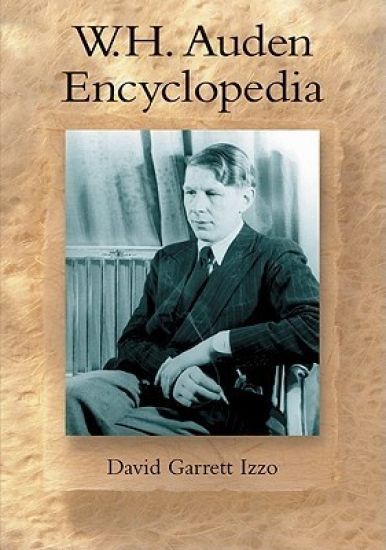
W.H. Auden's life and work were perhaps best explained and condensed in the words of Edward Mendelson, Auden's literary executor, when he remarked, '[Auden] grew up in a household in which the scientific inquiries of his father maintained an uneasy truce with the ritualized religion of his mother'. Indeed, science and religion were dominant themes in Auden's life and work, which for him were oftentimes one and the same. Auden was hailed as the new T.S. Eliot and as the 'coming' man, greatly influencing the future generations of angry young men with his thoughts on science, religion, and the relationship between the two. This book is an exhaustive reference to W.H. Auden. Those new to Auden and his writing will find the work a comprehensive introduction, while Auden scholars will appreciate the quick access it offers to the details of all his poems, plays, libretti, and other pieces of writing. It also includes entries on the people who were closest and most important to Auden, including fellow writers Christopher Isherwood, Stephen Spender, C. Day Lewis, Edward Upward, and T.S. Eliot, as well as significant events in his life, such as his arrival in America, his vision of agape, and his search in science and religion for answers to the deep questions of life and existence.
W.H.K. Pollock

W.H.K. Pollock

Olimpiu G. Urcan; John S. Hilbert

McFarland Co Inc
2017
sidottu
During his first years in America, William Henry Krause Pollock participated in some of the most important American chess events of the 19th century. Pollock played matches against strong players like Charles Moehle, John L. McCutcheon, Jackson W. Showalter and Eugene Delmar. This biography analyzes in great detail Pollock's chess play, as well as his career and life in England, Ireland and America. His American years unveil even more about the American chess landscape during the first half of 1890s, one of the most interesting periods in American chess history. Offered here are an unprecedented collection of annotated games played by Pollock (around 500), historical photographs and line drawings. Sources include historical chess journals and magazines with chess columns from America, the United Kingdom and Canada.
W.C. Fields--An Annotated Guide

W.C. Fields--An Annotated Guide

David T. Rocks

McFarland Co Inc
2014
pokkari
A documented chronology traces Fields' work in all media. The bibliographies cover 16 typescripts and more than 525 books and periodicals, with full annotations describing the work and setting it in context. Studio, date of release, length, director and cast credits are listed in the filmography. The discography includes all albums on which Fields appeared. Also detailed are the 17 cigarette cards that featured Fields.
W.W.J.D.

W.W.J.D.

Diane M King

CSS Publishing Company
1999
pokkari
W.W.J.D. (What Would Jesus Do?) is a youth drama that addresses the struggles young people face when they attempt to deal with peer pressure while being true to their faith. Young people and adults who see this play will walk away determined to be a little less angry... more patient... more kind... more loving and certainly more forgiving. Even doubters will realize that by letting Jesus Christ be their role model many of their most difficult relationships will become more harmonious. Young people and adults who see this play will walk away determined to be a little less angry... more patient... more kind... more loving, and certainly more forgiving. Even the doubters will realize that by letting Jesus Christ be their role model many of their most difficult relationships will become more harmonious. "I was truly impressed by the story and the timeliness of the play It would make an impact on junior and senior high school students in an assembly." Pat DeVoss, Director of Religious Education St. Gertrude Parish Cincinnati, Ohio Diane King's W.W.J.D. drama for youth seeks to inculcate spiritual and Godly truth. It gives each of us, as Christians, something to ponder and consider deeply. Rev. Daniel R. Haberkost Prince of Peace Lutheran Church Medina, Ohio The message of the drama W.W.J.D. is certain to be taken home by the audience. Rev. Donald Hesterman Divinity Lutheran Church Parma Heights, Ohio Young people will easily relate to Stacy (the main character) as she discovers her own relationship with God. As Stacy searches for answers to her questions throughout the play, perhaps some of their own questions may be answered, for there is probably a little bit of Stacy in all of us. Diane M. King has taught high school English, performing arts, and journalism, and has directed over 25 drama productions. A graduate of Ohio State University, she has been a frequent performer in community theater productions and choirs. Diane and her husband Jack are the parents of two sons, and are members of St. John's Evangelical Lutheran Church in Grove City, Ohio.
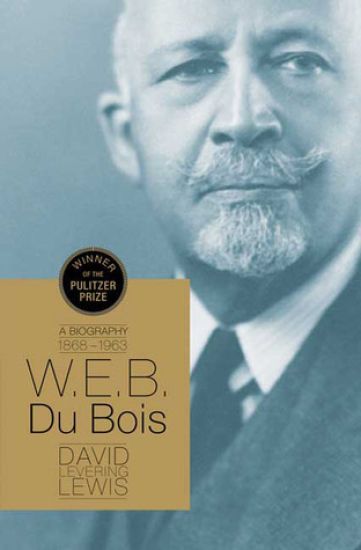
W. E. B. Du Bois

W. E. B. Du Bois

David L. Lewis

Henry Holt Company Inc
2009
pokkari
William Edward Burghardt Du Bois - the premier architect of the civil rights movement in America - was a towering and controversial personality, a fiercely proud individual blessed with the language of the poet and the impatience of the agitator. Now, David Levering Lewis has carved one volume out of his superlative two-volume biography of this monumental figure that set the standard for historical scholarship on this era. In his magisterial prose, Lewis chronicles Du Bois' long and storied career, detailing his monumental contributions the US character that echo still today.
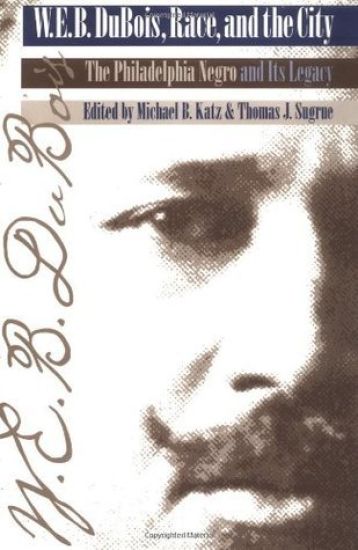
W. E. B. Du Bois, Race, and the City

W. E. B. Du Bois, Race, and the City

University of Pennsylvania Press
1998
pokkari
In 1896 W. E. B. Du Bois began research that resulted three years later in the publication of his great classic of urban sociology and history, The Philadelphia Negro. Today, a group of the nation's leading historians and sociologists celebrate the centenary of his project through a reappraisal of his book. Motivated by Du Bois's deeply humane vision of racial equality, the contributors draw on ethnography, intellectual and social history, and statistical analysis to situate Du Bois and his pioneering study in the intellectual milieu of the late nineteenth century, consider his contributions to the subsequent social scientific and historical studies of the city, and assess the contemporary meaning of his work. Together these essays show that The Philadelphia Negro remains as vital and relevant a book at the end of the twentieth century as it was at the start. Contributors include Elijah Anderson, Mia Bay, V. P. Franklin, Robert Gregg, Thomas C. Holt, Tera W. Hunter, Jacqueline Jones, Antonio McDaniel, and Carl Husemoller Nightingale.
W. E. B. Du Bois, American Prophet

W. E. B. Du Bois, American Prophet

Edward J. Blum

University of Pennsylvania Press
2009
pokkari
Pioneering historian, sociologist, editor, novelist, poet, and organizer, W. E. B. Du Bois was one of the foremost African American intellectuals of the twentieth century. While Du Bois is remembered for his monumental contributions to scholarship and civil rights activism, the spiritual aspects of his work have been misunderstood, even negated. W. E. B. Du Bois, American Prophet, the first religious biography of this leader, illuminates the spirituality that is essential to understanding his efforts and achievements in the political and intellectual world. Often labeled an atheist, Du Bois was in fact deeply and creatively involved with religion. Historian Edward J. Blum reveals how spirituality was central to Du Bois's approach to Marxism, pan-Africanism, and nuclear disarmament, his support for black churches, and his reckoning of the spiritual wage of white supremacy. His writings, teachings, and prayers served as articles of faith for fellow activists of his day, from student book club members to Langston Hughes. A blend of history, sociology, literary criticism, and religious reflection in the model of Du Bois's best work, W. E. B. Du Bois, American Prophet recasts the life of this great visionary and intellectual for a new generation of scholars and activists. Honorable Mention, 2007 Gustavus Myers Center Outstanding Book Awards
W. E. B. Du Bois

W. E. B. Du Bois

Elliott M. Rudwick

University of Pennsylvania Press
1968
sidottu
This book is a volume in the Penn Press Anniversary Collection. To mark its 125th anniversary in 2015, the University of Pennsylvania Press rereleased more than 1,100 titles from Penn Press's distinguished backlist from 1899-1999 that had fallen out of print. Spanning an entire century, the Anniversary Collection offers peer-reviewed scholarship in a wide range of subject areas.
W. C. Handy

W. C. Handy

David Robertson

The University of Alabama Press
2011
nidottu
David Robertson charts W. C. Handy's rise from a rural-Alabama childhood in the last decades of the nineteenth century to his emergence as one of the most celebrated songwriters of the twentieth century. The child of former slaves, Handy was first inspired by spirituals and folk songs, and his passion for music pushed him to leave home as a teenager, despite opposition from his preacher father. Handy soon found his way to St. Louis, where he spent a winter sleeping on cobblestone docks before lucking into a job with an Indiana brass band. It was in a minstrel show, playing to racially mixed audiences across the country, that he got his first real exposure as a professional musician, but it was in Memphis, where he settled in 1905, that he hit his full stride as a composer. At once a testament to the power of song and a chronicle of race and black music in America, W. C. Handy's life story is in many ways the story of the birth of our country's indigenous culture - and a riveting must read for anyone interested in the history of American music.