Based on the real life of the seventeenth century French dramatist of the same name, "Cyrano de Bergerac" is Edmond Rostand's classic romantic play. Cyrano, a cadet in the French Army, is a talented duelist, poet, and musician, however, he has extreme self-doubt in matters of love due to the large size of his nose. Cyrano is conflicted by his inability to summon the confidence to tell the woman that he adores, Roxane, how he truly feels. He writes her a letter expressing his love with the intent of giving it to her during a rendezvous, however, when he learns that Roxane is in love with another, a handsome new cadet, Christian de Neuvillette, he withholds his admission. Christian lacks the intellect and wit to woo Roxane and enlists the help of Cyrano who, despite being against his own self-interest, agrees. First performed in 1897, "Cyrano de Bergerac", is one of the most popular plays in the French language, which brilliantly dramatizes the idea that beauty is only skin deep and that true love is about more than just physical attractiveness. This edition is printed on premium acid-free paper, follows the translation of Gladys Thomas and Mary F. Guillemard, and includes an introduction by W. P. Trent.
eorge Washington Cable (October 12, 1844 - January 31, 1925) was an American novelist notable for the realism of his portrayals of Creole life in his native New Orleans, Louisiana. He has been called "the most important southern artist working in the late 19th century, as well as the first modern southern writer." In his treatment of racism, mixed-race families and miscegenation, his fiction has been thought to anticipate that of William Faulkner. He also wrote articles critical of contemporary society. Due to hostility against him after two 1885 essays encouraging racial equality and opposing Jim Crow, Cable moved with his family to Northampton, Massachusetts. He lived there for the next thirty years, then moved to Florida.Cable was born in 1844 in New Orleans, Louisiana, the son of George W. Cable
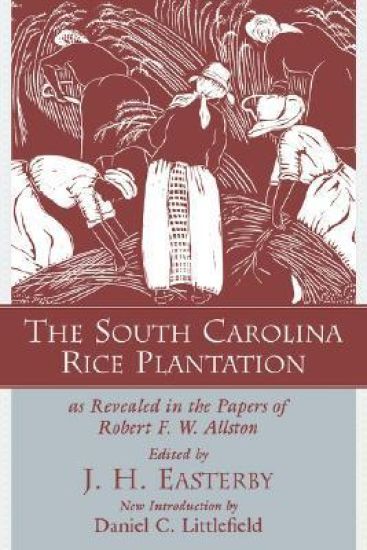
The reissue of The South Carolina Rice Plantation as Revealed in the Papers of Robert F. W. Allston makes available for a new generation of readers a firsthand look at one of South Carolina's most influential antebellum dynasties and the institutions of slavery and plantation agriculture upon which it was built. Often cited by historians, Robert F. W. Allston's letters, speeches, receipts, and ledger entries chronicle both the heyday of the rice industry and its precipitate crash during the Civil War. As Daniel C. Littlefield underscores in his introduction to the new edition, these papers are significant not only because of Allston's position at the apex of planter society but also because his views represented those of the rice planter elite. Allston (1801-1864) owned or managed seven plantations along the Pee Dee and Waccamaw rivers, including Chicora Wood, Rose Bank, and Brookgreen, now known as Brookgreen Gardens. A Jeffersonian republican, he served in the South Carolina General Assembly from 1832 until he was elected governor in 1856. After his death in 1864, his daughter Elizabeth Allston Pringle continued the family's rice-growing activities and achieved personal renown as a columnist for the New York Times and author of A Woman Rice Planter. The collection includes letters between Allston and his wife and children, correspondence with politicians, fiscal documents from the operation of his plantations, records related to the sale and care of slaves, and political speeches.
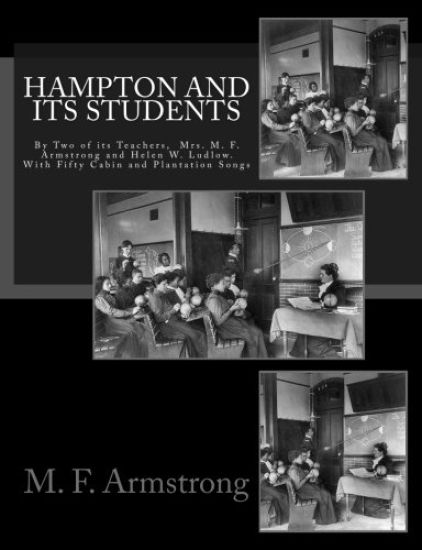
LARGE PRINT EDITION: AMONG all the States of the Union, not one has a history more interesting than Virginia, for her annals are full of strangely poetic incident, from the world-famous idyll of Pocahontas to the tragic stories still fresh in our own memories; and from the fertile seaboard to the rich mountain valleys of her western border, there is scarcely a field or village that has not its tale to tell. More than one great name, "familiar in our mouths as household words," belongs in the catalogue of Virginia's children; and although to-day her greatness is a thing of the past and the future, yet that future promises such certainty as is more than guaranteed by her natural advantages and the brave and willing temper of her people. In the history of this State, there arose, long years ago, an unnatural relation between two races, which furnished a problem, dealt with by statesmen, philanthropists, and fanatics, and finally solved by God himself, in his own time, and his own way; and it is with an outgrowth of that problem and its solution that this little book has to do. The introduction of negroes into the country as slaves was made at a time when only a few minds, here and there, had any true conception of the rights of individuals, or could put a fair interpretation upon that higher law which makes us our brothers' keepers; and the virgin soil and relaxing climate of the South made slavery so temptingly easy and profitable as to insure its continuance until a Power stronger than humanity interfered to bring it to an end. In no part of the United States can the history of negro slavery, from its origin to its extinction, be more clearly traced than in Virginia; and as that State was chosen as the scene of bitterest struggle, so it seems likely to attain the earliest and highest development, for within its borders are now being fairly tested the possibilities of, the African race, and the results to them and the whites of the new relations of freedom. It is not too much to say that throughout the history of slavery in Virginia, there runs a strain of poetic justice, which is absolutely dramatic, robbing facts of their dryness and interweaving the prosaic details of life with the elements of tragedy. Nowhere has there been greater prosperity, nowhere has there been greater suffering, and many a page might be filled with the record of the changes which a century has wrought, of the old things that have passed away, and the new hopes that are blossoming for the future; and in writing this brief story of an experiment which is just now being tried upon Virginian soil, there will be an earnest attempt to offer such testimony of the capacity of a hitherto enslaved race, and of the intelligent and generous action of their whilom owners, as shall not be altogether valueless.
A Review of Rev. F.W. Macdonald's Life of Wm. Morley Punshon is an unchanged, high-quality reprint of the original edition of 1888. Hansebooks is editor of the literature on different topic areas such as research and science, travel and expeditions, cooking and nutrition, medicine, and other genres. As a publisher we focus on the preservation of historical literature. Many works of historical writers and scientists are available today as antiques only. Hansebooks newly publishes these books and contributes to the preservation of literature which has become rare and historical knowledge for the future.
Selbstbewusstsein ist sp testens seit Descartes ein zentraler Aspekt zur Analyse des menschlichen Selbstverst ndnisses. Umgangssprachlich wird der Begriff Selbstbewusstsein zur Beschreibung einer Person verwendet, die ein besonders sicheres und couragiertes Auftreten beweist. Im philosophischen Sinne dagegen wird eine Person als selbstbewusst charakterisiert, wenn sie ihre eigenen mentalen Zust nde kennt und sich ihrer bewusst ist. Diese mentalen Zust nde umspannen alle geistigen, psychischen Ph nomene, Ereignisse oder Prozesse einer Person. Dazu geh ren Empfindungen oder Wahrnehmungen wie zum Beispiel eines Schmerzes oder einer Rotwahrnehmung, Gef hle wie Trauer oder Freude, aber auch Einstellungen (W nsche, berzeugungen, Hoffnungen, Bef rchtungen usw.).Die vorliegende Arbeit untersucht die Frage, was ist Selbstbewusstsein, vergleichend in den Werken Schellings und Pauens. Hierbei geht es vor allem darum, Unterschiede sowie m glicherweise Gemeinsamkeiten hervorzuheben. Der am 27. Januar 1775 in der w rttembergischen Stadt Leonberg geborene Schelling befasste sich fr h mit naturwissenschaftlichen Problemen und suchte Antworten auf die Frage, wie der Mensch als ideelles Wesen mit der Natur in Einklang gebracht werden kann. Ein hnliches Anliegen steht gegenw rtig dem philosophischen Interesse Pauens voran, der mit den Bedenken aufr umt, dass die Forschungsergebnisse der Neurowissenschaften langfristig betrachtet unser Selbstverst ndnis als bewusster, selbstbewusster und freier Person umsto en Wie aber kann der Konflikt zwischen Natur und Mensch aufgel st werden? Welches Verst ndnis von Selbstbewusstsein ist dem zugrunde zu legen? Es wird sich zeigen, dass sowohl Schelling als auch Pauen hierauf einen mehr oder minder gleichen Erkl rungsansatz bevorzugen und Selbstbewusstsein als einen ontogenetischen Prozess sowie als Leistung des Verstandes interpretieren.