Kirjojen hintavertailu. Mukana 11 342 296 kirjaa ja 12 kauppaa.

Kirjahaku

Etsi kirjoja tekijän nimen, kirjan nimen tai ISBN:n perusteella.

1000 tulosta hakusanalla Wauter Mannaert

Water Hydraulics Control Technology

Water Hydraulics Control Technology

Erik Trostmann

CRC Press
2019
nidottu
This work introduces the principles of water hydraulics technology and its benefits and limitations, and clarifies the essential differences between water and oil hydraulics. It discusses basic components and systems, including hydraulic power generators (pumps), hydraulic control components or modulators (valves), hydraulic transmission lines (tubes, hoses and fittings) and hydraulic actuators (single- or double-acting cylinders and rotary motors). A listing of water hydraulics components/systems manufacturers is provided.
Water City

Water City

Matthew Bradbury

Routledge
2020
sidottu
Water City offers practical solutions to some of the environmental challenges facing 21st-century cities as a result of climate change. The dense compact nature of the contemporary city makes it difficult to generate urban resilience to the effects of climate change, particularly coastal and pluvial flooding. This book describes a design-led remediation methodology that draws on catchment planning and GIS mapping and analysis to redefine the city as a series of hydrological and ecological systems. Six case studies test the presented methodology, two greenfield and four brownfield sites based in the UK, USA, New Zealand and China. Each case study is illustrated with GIS maps and perspectives. Specific solutions to the environmental problems that will be intensified by climate change are presented. Water City describes adaptation strategies to help practitioners in the urban landscape tackle these issues and make our cities better places to live. This practical guide is a key read for professionals and stakeholders in landscape architecture, urban design, planning and all those interested in how climate change will affect the future of our cities.
Water City

Water City

Matthew Bradbury

Routledge
2020
nidottu
Water City offers practical solutions to some of the environmental challenges facing 21st-century cities as a result of climate change. The dense compact nature of the contemporary city makes it difficult to generate urban resilience to the effects of climate change, particularly coastal and pluvial flooding. This book describes a design-led remediation methodology that draws on catchment planning and GIS mapping and analysis to redefine the city as a series of hydrological and ecological systems. Six case studies test the presented methodology, two greenfield and four brownfield sites based in the UK, USA, New Zealand and China. Each case study is illustrated with GIS maps and perspectives. Specific solutions to the environmental problems that will be intensified by climate change are presented. Water City describes adaptation strategies to help practitioners in the urban landscape tackle these issues and make our cities better places to live. This practical guide is a key read for professionals and stakeholders in landscape architecture, urban design, planning and all those interested in how climate change will affect the future of our cities.
Water Environment Modeling

Water Environment Modeling

Clark C.K. Liu; Pengzhi Lin; Hong Xiao

CRC Press
2021
nidottu
Water Environment Modeling covers the formulations and applications of mathematical models that simulate water flow and chemical transport in rivers, lakes, groundwater, estuaries, coastal, and ocean waters. These models are used to evaluate the response of water environment to human interventions and serve as useful analytical tools for water pollution control and resource management. Simple and comprehensive modeling techniques and their practical applications are presented with examples and exercises, most of which are derived from actual case studies. In general, simple models can be solved analytically and comprehensive models require numerical solutions. While simple models are usually adopted for preliminary assessment of a particular water environment, comprehensive models are used to provide detailed spatial and temporal variations of pollutants in complex environments. The system-based models in the forms of integral equations are introduced as an alternative modeling approach. This textbook is ideal for advanced undergraduate students and graduate students in civil and environmental engineering and related academic fields. It is also suitable as a reference book for practicing engineers and scientists.Authors:Clark C.K. Liu is Emeritus Professor of the Department of Civil and Environmental Engineering at University of Hawaii and former Environmental Engineering Director of US National Science Foundation. Pengzhi Lin is Professor of State Key Laboratory of Hydraulics and Mountain River Engineering at Sichuan University. He is the author of Numerical Modeling of Water Waves (CRC Press, 2008).Hong Xiao is Professor and Vice Director of Hydroinformatics Institute of the State Key Laboratory of Hydraulics and Mountain River Engineering at Sichuan University.
Water Environment Modeling

Water Environment Modeling

Clark C.K. Liu; Pengzhi Lin; Hong Xiao

CRC Press
2021
sidottu
Water Environment Modeling covers the formulations and applications of mathematical models that simulate water flow and chemical transport in rivers, lakes, groundwater, estuaries, coastal, and ocean waters. These models are used to evaluate the response of water environment to human interventions and serve as useful analytical tools for water pollution control and resource management. Simple and comprehensive modeling techniques and their practical applications are presented with examples and exercises, most of which are derived from actual case studies. In general, simple models can be solved analytically and comprehensive models require numerical solutions. While simple models are usually adopted for preliminary assessment of a particular water environment, comprehensive models are used to provide detailed spatial and temporal variations of pollutants in complex environments. The system-based models in the forms of integral equations are introduced as an alternative modeling approach. This textbook is ideal for advanced undergraduate students and graduate students in civil and environmental engineering and related academic fields. It is also suitable as a reference book for practicing engineers and scientists.Authors:Clark C.K. Liu is Emeritus Professor of the Department of Civil and Environmental Engineering at University of Hawaii and former Environmental Engineering Director of US National Science Foundation. Pengzhi Lin is Professor of State Key Laboratory of Hydraulics and Mountain River Engineering at Sichuan University. He is the author of Numerical Modeling of Water Waves (CRC Press, 2008).Hong Xiao is Professor and Vice Director of Hydroinformatics Institute of the State Key Laboratory of Hydraulics and Mountain River Engineering at Sichuan University.
Water: Economics, Management and Demand
This book forms the proceedings of the 18th European conference on irrigation and drainage. Water is not a free commodity, and demand is becoming more and more intense for its allocation. This book focuses on the role of irrigation and drainage in the debate on water, and will be used by planners, designers and policy makers internationally.
Water Policy

Water Policy

CRC Press
2019
nidottu
This book examines some of the successes and failures of actual implementation of modern water policy options in the light of the principles and concepts which have emerged from the Rio Earth Summit, the Dublin Statement and other international consensus. The book attempts to share real practical experience at all levels: local, regional, national and international, emphasising the co-operation between different professions and sectors that must take place to ensure adequate supplies of fresh water in future.
Water Pollution and Fish Physiology
This book provides a concise synthesis of how toxic chemical pollutants affect physiological processes in teleost fish. This Second Edition of the well-received Water Pollution and Fish Physiology has been completely updated, and chapters have been added on immunology and acid toxicity. The emphasis, as in the first edition, is on understanding mechanisms of sublethal effects on fish and their responses to these environmental stressors. The first chapter covers the basic principles involved in understanding how fish respond, in general, to environmental alterations. Each subsequent chapter is devoted to a particular organ system or physiological function and begins with a short overview of normal physiology of that system/function. This is followed by a review of how various toxic chemicals may alter normal conditions in fish. Chapters covering environmental hypoxia, behavior, cellular enzymes, and acid toxicity are also included. The book closes with a discussion on the practical application of physiological and biochemical measurements of fish in water pollution control in research and regulatory settings.
Water Quality Modeling

Water Quality Modeling

Wu-Seng Lung

CRC Press
2019
nidottu
This volume to discussing the various aspects of estuarine water quality modeling. Topics considered include fundamental principles, estuarine mass transport, BOD/DO and eutrophication model kinetics, kinetics on toxicants, and sediment-water interactions. The book also discusses mixing zone modeling and how to integrate estuarine hydrodynamic and water quality models. Many case studies demonstrating successful model applications are discussed.
Water Activity

Water Activity

Rockland

Routledge
2020
nidottu
This book presents the proceedings of the Tenth Basic Symposium sponsored by the Institute of Food Technologists and the International Union of Food Science and Technology. The key aim of the Symposium was to explore some basic principles relating to the influences of water activity on food quality.
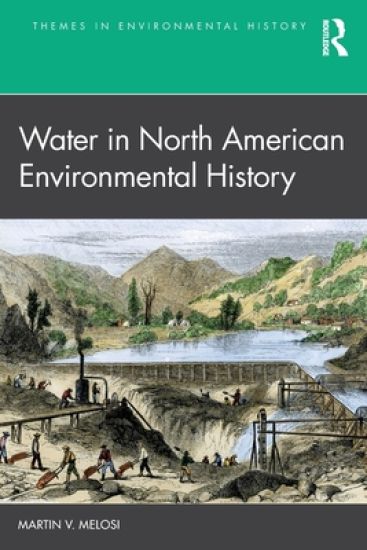
Water in North American Environmental History

Water in North American Environmental History

Martin V. Melosi

TAYLOR FRANCIS LTD
2022
nidottu
Water in North American Environmental History offers 25 cases studies that explore the range of uses and perceptions of water throughout Canadian, Mexican, and United States history.Water has served a myriad of purposes historically as human sustenance, agricultural irrigation, sanitation, fire protection, military defense, power generation, transportation, and much more. Water and its uses provide an excellent entrée into the study of humans and the environment, not only because water is a vital resource for life, but also because water as a medium is so intimately woven into the everyday experiences of humans and into society’s economic, political, and social fabric. A North American perspective is not representative of the world’s water use, but it is an area with a linked history and many overlapping human and environmental features and concerns. With a continental perspective, the book explores many disparate topics without being confined to the history and experiences of just one country. The chapters are short, but descriptive, and departure points for what they tell us about the human experience in dealing with water and the environmental implications of water use. The text leads students to consider water in relation to society, and to the past.The book will be of interest to students of environmental history, geography, and the environmental sciences.
Water in North American Environmental History

Water in North American Environmental History

Martin V. Melosi

TAYLOR FRANCIS LTD
2022
sidottu
Water in North American Environmental History offers 25 cases studies that explore the range of uses and perceptions of water throughout Canadian, Mexican, and United States history.Water has served a myriad of purposes historically as human sustenance, agricultural irrigation, sanitation, fire protection, military defense, power generation, transportation, and much more. Water and its uses provide an excellent entrée into the study of humans and the environment, not only because water is a vital resource for life, but also because water as a medium is so intimately woven into the everyday experiences of humans and into society’s economic, political, and social fabric. A North American perspective is not representative of the world’s water use, but it is an area with a linked history and many overlapping human and environmental features and concerns. With a continental perspective, the book explores many disparate topics without being confined to the history and experiences of just one country. The chapters are short, but descriptive, and departure points for what they tell us about the human experience in dealing with water and the environmental implications of water use. The text leads students to consider water in relation to society, and to the past.The book will be of interest to students of environmental history, geography, and the environmental sciences.
Water Resources and Economic Processes
Water exploitation has increased notably in the world during the last 250 years since the onset of industrialisation. The relationships between economic processes and water use are complex and include many interwoven drivers such as: technological development, dietary choices and food production, climate change, demographic change, and policy reforms, among others. Ensuring food, water, and energy for the growing population remains a common global challenge.Taking on a multi- and inter-disciplinary viewpoint, Water Resources and Economic Processes offers an up-to-date collection of contributions from leading scholars and works to gather research on important aspects of relevant fields and methodologies, including: Historical and long-term overview of the relations between income growth, water use, and technological development;Water markets and collaborative actions’ promise and threats in the fight against water stress;Impact of climate change on water productivity, including inter- and intra-annual variations;Urban reforms and surveys on the attitude of citizens towards private and public mitigation and preservation measures;Regional, national, and global comparative case-studies;International trade, migration, conf licts, and the globalisation of water;Methodological and empirical challenges of building future scenarios.This book is a key reference text for those studying water governance and management. It is suited to PhD students, national institutions, and NGO, as well as other professionals interested in understanding sustainable water use at the local, national, and international scales.
Water, Technology and the Nation-State
Just as space, territory and society can be socially and politically co-constructed, so can water, and thus the construction of hydraulic infrastructures can be mobilised by politicians to consolidate their grip on power while nurturing their own vision of what the nation is or should become. This book delves into the complex and often hidden connection between water, technological advancement and the nation-state, addressing two major questions. First, the arguments deployed consider how water as a resource can be ideologically constructed, imagined and framed to create and reinforce a national identity, and secondly, how the idea of a nation-state can and is materially co-constituted out of the material infrastructure through which water is harnessed and channelled.The book consists of 13 theoretical and empirical interdisciplinary chapters covering four continents. The case studies cover a diverse range of geographical areas and countries, including China, Cyprus, Egypt, Ethiopia, France, Nepal and Thailand, and together illustrate that the meaning and rationale behind water infrastructures goes well beyond the control and regulation of water resources, as it becomes central in the unfolding of power dynamics across time and space.
Water Allocation Law in New Zealand

Water Allocation Law in New Zealand

Jagdeepkaur Singh-Ladhar

TAYLOR FRANCIS LTD
2022
nidottu
This book analyses water allocation law and policy in New Zealand and offers a comparative analysis with Australia.In New Zealand, it is generally accepted that water allocation law has failed to be adequately addressed and New Zealand is now faced with the problem of over-allocation in many catchments. In comparison, Australia has extensive experience in reforming its water law and policy over the last 20 years. This book provides a comparative and critical analysis of the lessons that New Zealand can learn from the Australian experience and offers guidance for the improvement of water allocation outcomes in New Zealand. Starting with the background of water allocation law and policy in New Zealand, the book traces the evolution of legal policies, including the 1967 Water and Soil Conservation Act and the 1991 Resource Management Act, and examines the role they have played in current water allocation issues. The book situates these findings within global challenges, such as the impact of climate change, and the global scarcity of and increasing demand for freshwater resources.This book will be of great interest to students and scholars researching water law and policy, natural resource management and environmental law more broadly. It will also be of use to policy makers and professionals involved in developing and implementing water allocation laws and policies.
Water Systems Analysis, Design, and Planning

Water Systems Analysis, Design, and Planning

Mohammad Karamouz

TAYLOR FRANCIS LTD
2021
sidottu
This book presents three distinct pillars for analysis, design, and planning: urban water cycle and variability as the state of water being; landscape architecture as the medium for built-by-design; and total systems as the planning approach. The increasing demand for water and urban and industrial expansions have caused myriad environmental, social, economic, and political predicaments. More frequent and severe floods and droughts have changed the resiliency and ability of water infrastructure systems to operate and provide services to the public. These concerns and issues have also changed the way we plan and manage our water resources.Focusing on urban challenges and contexts, the book provides foundational information regarding water science and engineering while also examining topics relating to urban stormwater, water supply, and wastewater infrastructures. It also addresses critical emerging issues such as simulation and economic modeling, flood resiliency, environmental visualization, satellite data applications, and digital data model (DEM) advancements.Features: Explores various theoretical, practical, and real-world applications of system analysis, design, and planning of urban water infrastructures Discusses hydrology, hydraulics, and basic laws of water flow movement through natural and constructed environments Describes a wide range of novel topics ranging from water assets, water economics, systems analysis, risk, reliability, and disaster management Examines the details of hydrologic and hydrodynamic modeling and simulation of conceptual and data-driven models Delineates flood resiliency, environmental visualization, pattern recognition, and machine learning attributes Explores a compilation of tools and emerging techniques that elevate the reader to a higher plateau in water and environmental systems managementWater Systems Analysis, Design, and Planning: Urban Infrastructure serves as a useful resource for advanced undergraduate and graduate students taking courses in the areas of water resources and systems analysis, as well as practicing engineers and landscape professionals.
Water: A way of life

Water: A way of life

A.J.M. (Lida) Schelwald-van der Kley; Linda Reijerkerk

CRC Press
2020
nidottu
Why do many water management projects, begun with the best of intentions, still fail? How is it that large infrastructural water works often encounter opposition? Is it perhaps, among other things, the lack of attention for the cultural context? These and other intriguing questions are dealt with in this book. The authors, having 20 years of experience on water and sanitation in an international context, have investigated the relationship between water and culture world-wide in order to find new keys to successful and sustainable water management. This book is based on extensive research and is intended to form a cultural road towards new sustainable water management practices. "Water: a way of life" takes the reader on a water journey through time and across the world’s continents. Along the way it explains the past and present ways in which different cultures around the world, both traditional and modern, view and manage water in response to the distinct environment they inhabit. As beliefs and values are at the heart of any culture, it also highlights the views of the main world religions on water and its use. A better understanding of cultural water beliefs and practices may lead to new concepts for future sustainable water management - from flood management to water supply, sanitation and irrigation management.The book will be useful to water professionals exporting knowledge and technologies to foreign countries where the challenge is to create sustainable solutions for water management by taking into account local, cultural factors. It is also intended to encourage world leaders, politicians and decision-makers responsible for water management to use their power, knowledge and influence to really make a change for the benefit of the people they represent. In this way, water can become a source of cooperation rather than a source of conflict. The authors trust that this book, about water and culture, intended for a truly international audience, will be a source of inspiration.
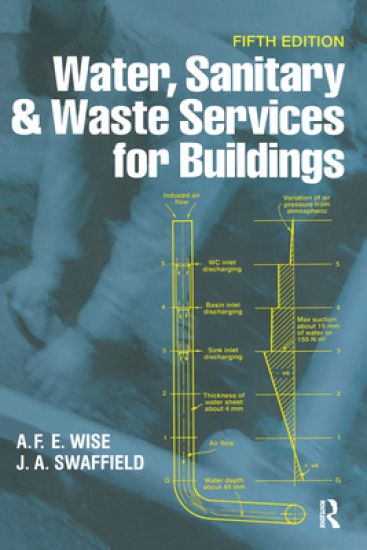
Water, Sanitary and Waste Services for Buildings

Water, Sanitary and Waste Services for Buildings

A.F.E. Wise; John Swaffield

Routledge
2020
nidottu
Water, sanitary and waste services represent a substantial proportion of the cost of construction, averaging 10% of the capital costs of building and with continuing costs in operation and maintenance. Nevertheless, they are often regarded as a 'Cinderella' within the building process. Parts of many different codes and regulations impact on these services, making an overall viewpoint more difficult to get. This new edition of this classic text draws together material from a variety of sources to provide the comprehensive coverage not available elsewhere. It is a resource for the sound design, operation and maintenance of these services and should be on the bookshelf of every building services engineer and architect.
Water and Society from Ancient Times to the Present
As water availability, management and conservation become global challenges, there is now wide consensus that historical knowledge can provide crucial information to address present crises, offering unique opportunities to appreciate the solutions and mechanisms societies have developed over time to deal with water in all its forms, from rainfall to groundwater. This unique collection explores how ancient water systems relate to present ideas of resilience and sustainability and can inform future strategy. Through an investigation of historic water management systems, along with the responses to, and impact of, various water-driven catastrophes, contributors to this volume present tenable solutions for the long-term use of water resources in different parts of the world. The discussion is not limited to issues of the past, seeking instead to address the resonance and legacy of water histories in the present and future.Water and Society from Ancient Times to the Present speaks to an archaeological and non-archaeological scholarly audience and will be a useful primary reference text for researchers and graduate students from a variety of disciplinary backgrounds including archaeology, anthropology, history, ecology, geography, geology, architecture and development studies.
Water, Creativity and Meaning
At a time of great turmoil and crisis, environmentally, socially and politically, water has emerged as a topic of huge global concern. Moreover, many argue that what is needed in order to change our relationship with the environment is a cultural paradigm shift. To this end, this volume brings together diverse approaches to exploring human relationships with the watery world and the other living things that rely upon it. Through exploring multiple creative ways of engaging with water and people, the volume adds to the current zeitgeist of writing about water by expanding the discussion about this vital substance and how, as humans, we relate to it. Chapters focus on creative explorations and explorations of creativity in relation to developing these understandings, including concepts such as hydrocitizenship and responses to drought and flooding. Drawing on the in-depth research and experience of arts practitioners including participatory artists, as well as academics from a variety of fields including geography, anthropology, health studies and environmental humanities, the book provides a rich and multidisciplinary perspective on water and creative ways of engaging and understanding human–water relationships. It represents a valuable source and inspiration for academics, arts practitioners and those involved in environmental policy and governance.