Kirjojen hintavertailu. Mukana 11 717 486 kirjaa ja 12 kauppaa.

Kirjahaku

Etsi kirjoja tekijän nimen, kirjan nimen tai ISBN:n perusteella.

1000 tulosta hakusanalla William G. Cook

Against the Current: How Albert Schweitzer Inspired a Young Man's Journey

Against the Current: How Albert Schweitzer Inspired a Young Man's Journey

William G. Armstrong; Clarinda Higgins

Oakham Press
2014
nidottu
"Against the Current" recounts the African adventures of Mark Higgins, the 18-year-old scion of a New England industrial family who elects to pursue his own destiny rather than the one his father charted for him. In 1959 he postpones college, travels to West Africa, and becomes the first student staff member at the hospital run by Albert Schweitzer, the famous Nobel Peace Prize laureate, philosopher and medical missionary. The Schweitzer clinic is an intellectual crossroads for world-famous scholars, researchers and peace activists. It's an eye-opening education for the young man. What's more, the clinic is staffed by beautiful European nurses and a few handsome doctors whose personal lives sometimes become as heated as the equatorial climate.Higgins works as a handyman, trains to become a medical technician and helps treat lepers. He assists three cardiologists who make a break-through discovery. He lives among the natives, absorbs tribal culture and experiences life-changing events that build his self-confidence. After a year of hard work, Higgins leaves the Schweitzer hospital and embarks on a courageous solo journey across the African continent with Israel as his destination. As the emerging nations of Africa gain their freedom in 1960, the global balance of power is changing. Africa sits at the nexus of east-west contention, as well as being a cauldron of inter-tribal warfare. His travels take him deep into the Congo, where he will be out of contact for weeks. This thoroughly researched and richly detailed narrative describes a young man's quest for authenticity and purpose at a time crucial to African independence. Mark Higgins leaves legacies that have a profound impact on society more than half a century later.

The Six Power Moves of Chess, 3rd Edition: The Missing Key to Finding Good Chess Moves from Any Position!
The Six Power Moves of Chess could be called "The Missing Chess Lesson," because "The Six Power Move Thinking Process" is what is needed most by most players and what is missing from the chess books on your bookshelf. Nothing will improve your game faster than this revolutionary insight into chess which shows the unifying force to both strategy and tactics. Many players don't need to "get better" or learn more per se, what they need is a different model for choosing the best moves. The Six Power Moves are the key to the skillful jousting and maneuvering of the chess pieces in unknown and random positions to gain both tactical and strategic advantages, the skill which separates all players. Suitable for players of all levels from amateur to tournament chess players below expert level. Includes a mini beginner primer. Includes sample Spot the Power Move training videos
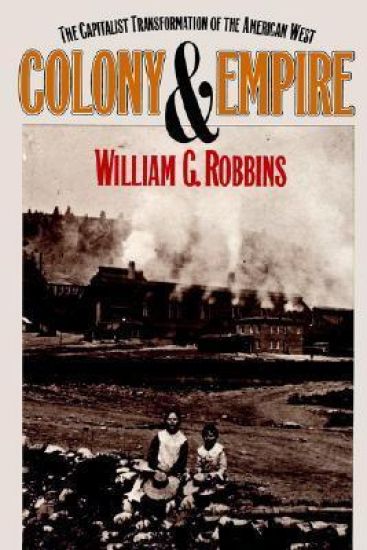
Colony and Empire

Colony and Empire

William G. Robbins

University Press of Kansas
1994
nidottu
This work surveys the way that capitalist ideology and institutions have transformed the West. It focuses on how a region of traders and hunters became an area driven by industrialism.
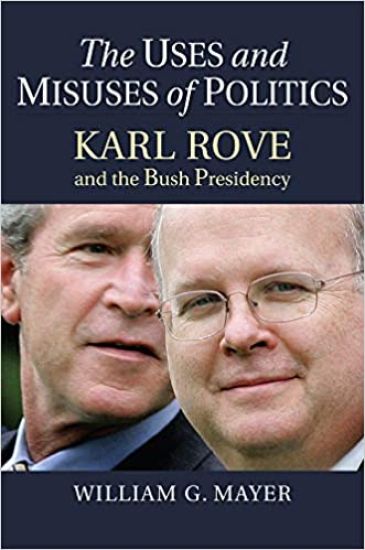
The Uses and Misuses of Politics

The Uses and Misuses of Politics

William G. Mayer

University Press of Kansas
2021
sidottu
The Uses and Misuses of Politics is a detailed examination of the politics of George W. Bush's presidency, focusing on the work-and the mistakes-of presidential political advisor Karl Rove. In his role as political advisor Karl Rove stands apart from his numerous counterparts in modern American politics in three major ways. The first measure of Rove's distinctiveness is the totality of his direction over Bush's political career. Simply put, George W. Bush never won an election, of any kind, in which Rove was not the dominant, even sole campaign strategist. A second important difference between Karl Rove and other major presidential campaign strategists was the role that Rove played in helping formulate policy after Bush became president. In fact, Rove became the first presidential aide to both provide political advice to a sitting president while at the same time controlling the policy levers inside the White House, especially as an advocate for his own agenda in the areas of domestic policy. Finally, Karl Rove is noteworthy for the scope of his ambitions: his goal for the Bush presidency was to create a durable Republican majority that would dominate American politics for the next several decades.,br>Even though theories of party systems and realignments have received serious challenges, Karl Rove was a believer; providing a key insight into how he approached his work with the Bush presidency. Where previous realignments were the result of historical accidents and recognized only after the fact, Karl Rove believed he could engineer the next one.In The Uses and Misuses of Politics William G. Mayer analyzes Karl Rove's performance as presidential advisor: the roles he played, the advice he gave, and how the Republican Party fared with Rove as its principal strategist. By offering the reader a comprehensive assessment, Mayer provides valuable insight into the larger, enduring, and critical questions: What is the proper role of politics in the contemporary presidency? When does politics enhance a nation's long-term welfare, and what does it detract from it? And what positive contributions can political advisors make to a modern-day president?
Bethlehem

Bethlehem

William G. Weiner Jr; Karen M. Samuels

Arcadia Publishing (SC)
2011
nidottu
Located in the Lehigh Valley along the Lehigh River, Bethlehem was founded by Moravian settlers in 1741. In 1845, the traffic on the Lehigh Canal convinced the Moravians to open the town to outsiders who could purchase their land and buildings. The former Moravian farmlands south of the river were soon developed into railroad lines, industrial mills, homes, and Lehigh University. One of the mills evolved into Bethlehem Steel, once the second-largest steelmaker in the United States.
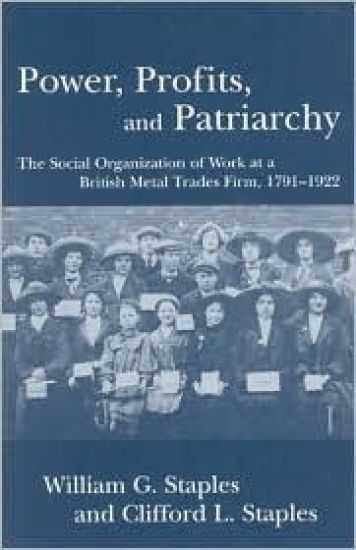
Power, Profits, and Patriarchy

Power, Profits, and Patriarchy

William G. Staples; Clifford L. Staples

Rowman Littlefield Publishers
2001
nidottu
Founded in 1791 and in existence for more than two hundred years, the Kenrick iron foundry of West Bromwich, England produced some of the finest cast-iron hardware ever made. William and Clifford Staples' goal in studying the Kenrick case is to examine how taken-for-granted assumptions about class, gender, and familial relations contributed to the longevity of the firm. The authors' investigation uncovers three distinct political regimes of production that they characterize as successive forms of capitalist patriarchy. Indeed, it is contended that the Kenricks were able to maintain their power and their profits, to a great extent, because they were able to use patriarchy to solve pressing organizational problems. By balancing a concern with both the materiality of production and its ideological, cultural, and political moments, this book offers new insights into the nature of production politics, patriarchy, and the historical sociology of capitalism.
Everyday Surveillance

Everyday Surveillance

William G. Staples

Rowman Littlefield Publishers
2013
sidottu
When we think of surveillance in our society, we usually imagine “Big Brother” scenarios with the government tracking our every move. The actual surveillance of our everyday lives is much more subtle, however, and may be more insidious. William G. Staples shows how our lives are tracked by both public and private organizations—sometimes with our consent, and sometimes without—through our internet use, cell phones, public video cameras, credit cards, license plates, shopping habits, and more. Everyday Surveillance is a provocative exploration of the myriad ways we are watched each day, and how this surveillance shapes our lives. Thoroughly revised, the second edition considers new topics, such as the rise of social media, and updates research throughout. Everyday Surveillance introduces students to concepts of social control and incites classroom discussion about how surveillance impacts the ways we understand people and our lives at home, work, school, or in the community.
Everyday Surveillance

Everyday Surveillance

William G. Staples

Rowman Littlefield Publishers
2013
nidottu
When we think of surveillance in our society, we usually imagine “Big Brother” scenarios with the government tracking our every move. The actual surveillance of our everyday lives is much more subtle, however, and may be more insidious. William G. Staples shows how our lives are tracked by both public and private organizations—sometimes with our consent, and sometimes without—through our internet use, cell phones, public video cameras, credit cards, license plates, shopping habits, and more. Everyday Surveillance is a provocative exploration of the myriad ways we are watched each day, and how this surveillance shapes our lives. Thoroughly revised, the second edition considers new topics, such as the rise of social media, and updates research throughout. Everyday Surveillance introduces students to concepts of social control and incites classroom discussion about how surveillance impacts the ways we understand people and our lives at home, work, school, or in the community.
Urban Sociology

Urban Sociology

William G. Flanagan

Rowman Littlefield Publishers
2010
sidottu
The fifth edition of this text presents a balanced review of the ecological arguments that the urban arena produces unique experiential and urban-based cultural effects while exploring the broader political and economic contexts that produce and modify the urban environment. In addition to examining the urban dimensions of such topics as community formation and continuity, minority and majority dynamics, ethnic experience, poverty, power, and crime, it provides an analysis of the spatial distribution of population and resources with regard to the metropolitanization of the urban form, and the interaction between urban concentration and development and underdevelopment. From a first chapter that begins with a discussion of some of the more micrological features of the urban experience, the text focuses on the significance of the more macrological cultural, social organizational, and political dimensions of urban change, in an historical span that includes the first cities and concludes with an exploration of the implications of cyberspace, transnationalism, and global terrorism for the future of urban sociology. While the work focuses primarily on the North American case, its analytical and integrated discussion makes it applicable to urban societies in general.
Urban Sociology

Urban Sociology

William G. Flanagan

Rowman Littlefield Publishers
2010
nidottu
The fifth edition of this text presents a balanced review of the ecological arguments that the urban arena produces unique experiential and urban-based cultural effects while exploring the broader political and economic contexts that produce and modify the urban environment. In addition to examining the urban dimensions of such topics as community formation and continuity, minority and majority dynamics, ethnic experience, poverty, power, and crime, it provides an analysis of the spatial distribution of population and resources with regard to the metropolitanization of the urban form, and the interaction between urban concentration and development and underdevelopment. From a first chapter that begins with a discussion of some of the more micrological features of the urban experience, the text focuses on the significance of the more macrological cultural, social organizational, and political dimensions of urban change, in an historical span that includes the first cities and concludes with an exploration of the implications of cyberspace, transnationalism, and global terrorism for the future of urban sociology. While the work focuses primarily on the North American case, its analytical and integrated discussion makes it applicable to urban societies in general.
The Maternity Leave Breastfeeding Plan

The Maternity Leave Breastfeeding Plan

William G. Wilkoff

Atria Books
2002
pokkari
Finally, a sensible plan for women who return to work after a three-month maternity leave Anyone who has ever had a baby has heard the prevailing medical wisdom that "breast is best" for baby's first food. Solid science stands behind that wisdom: Excellent studies show that there are immunological and other benefits for the breastfed baby. On the other hand, doctors and breastfeed- ing advocates rarely appreciate or even acknowledge the challenges that go along with breastfeeding until baby is ready for solid food -- anywhere from four to nine months. The simple and reasonable approach is one that many doctors and breastfeeding advocates unfortunately treat as sacrilege: Limit breastfeeding to the length of your maternity leave. As Dr. Wilkoff explains, the truth is that women who nurse for three months (or until their maternity leave is over) provide their children with an optimal start in terms of nutrition and can have the same rewarding experience as mothers who nurse their children much longer. In contrast to the insistence of militant breastfeeding advocates, he offers an important and comforting message: Breast is best for as long as you can comfortably manage it. There are no guilt trips or political agendas here. Instead mothers will find: a practical plan for establishing a nursing schedule troubleshooting advice, including how moms can avoid becoming the baby's pacifier help with making a smooth transition back to the workplace and more
Castles of our Conscience

Castles of our Conscience

William G. Staples

Polity Press
1990
sidottu
Castles of our Conscience presents a new and distinctive analysis of the role of the modern state in the shaping of policies of social control. Staples provides a theoretical framework for understanding the mechanisms of state policy-making and capacity. This framework supports an interpretation of the changing nature of institutions of social control in the United States from the beginning in the nineteenth century to the present day. A distinctive feature of the author’s approach is his critique of existing theories of the state as well as recent revisionist writing in social control. Both, he argues, have tended to either reduce the state to an instrument of class power or treat it in too ‘structuralist’ a fashion. Developing a sophisticated account of the relationship between the state and civil society he provides a history of social control policies in the United States that balances analytical concerns with historical narrative. This book will be of interest to students and professionals in sociology, politics and criminology.
Help for the Hyperactive Child: A Practical Guide Offering Parents of ADHD Children Alternatives to Ritalin
As hyperactivity in children becomes more and more common, many parents are desperate to find a solution. Although there is no quick fix--prescription medications, for example, can often make the situation worse rather than better-- there is an answer that has worked for many families.Scientific studies have shown that a change in diet--specifically, the restriction of certain foods and the addition of others--can greatly decrease a child's hyperactive tendencies. Help for the Hyperactive Child is a user-friendly book that first explains how these dietary modifications can help, and then guides you in pinpointing the foods to which your child may be having adverse reactions. Recipes are included, along with suggestions for making other important lifestyle changes. Help for the Hyperactive Child can help your hyperactive child.
Statistical Graphics for Univariate and Bivariate Data

Statistical Graphics for Univariate and Bivariate Data

William G. Jacoby

SAGE Publications Inc
1997
nidottu
Author William G. Jacoby focuses on graphical displays that researchers can employ as an integral part of the data analysis process. Such visual depictions are frequently more revealing than traditional, numerical summary statistics. Accessibly written, this book contains chapters on univariate and bivariate methods. The former covers histograms, smoothed histograms, univariate scatterplots, quantile plots, box plots, and dot plots. The latter covers scatterplot construction guidelines, jittering for overplotted points, marginal box plots, scatterplot slicing, the Loess procedure for nonparametric scatterplot smoothing, and banking to 45 degrees for enhanced visual perception. This book provides strategies for examining data more effectively. The resultant insights help researchers avoid the problem of forcing an inaccurate model onto uncooperative data and guide analysts to model specifications that provide accurate representations of empirical information.