Kirjojen hintavertailu. Mukana 12 414 163 kirjaa ja 12 kauppaa.

Kirjahaku

Etsi kirjoja tekijän nimen, kirjan nimen tai ISBN:n perusteella.

285 tulosta hakusanalla "Jacques Derrida"

Ethics, Institutions, and the Right to Philosophy

Ethics, Institutions, and the Right to Philosophy

Jacques Derrida; Peter Pericles Trifonas

Rowman Littlefield Publishers
2002
nidottu
This new book reflects Derrida's latest views on the role of education and international organizations in an era of globalization. In this book, Derrida develops a notion of the global citizen that is uniquely post-Kantian. He looks especially at the changing role of UNESCO and similar organizations at a time when individual and national identities, knowledge and commerce, and human rights all are brought to world attention in new ways than they have been in the past. Following Derrida's writings on these issues, prominent scholars engage in a dialogue with him on his approach to understanding the ethics of international institutions and education today.

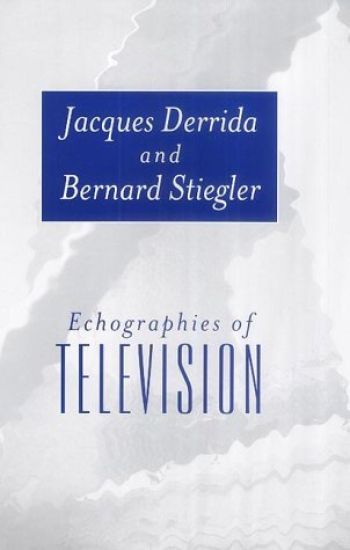
Echographies of Television

Echographies of Television

Jacques Derrida; Bernard Stiegler

Polity Press
2002
sidottu
In this important new book, Jacques Derrida talks with Bernard Stiegler about the effect of teletechnologies on our philosophical and political moment. Improvising before a camera, the two philosophers are confronted by the very technologies they discuss and so are forced to address all the more directly the urgent questions that they raise. What does it mean to speak of the present in a situation of "live" recording? How can we respond, responsibly, to a question when we know that the so-called "natural" conditions of expression, discussion, reflection, and deliberation have been breached? As Derrida and Stiegler discuss the role of teletechnologies in modern society, the political implications of Derrida's thought become apparent. Drawing on recent events in Europe, Derrida and Stiegler explore the impact of television and the internet on our understanding of the state, its borders and citizenship. Their discussion examines the relationship between the juridical and the technical, and it shows how new technologies for manipulating and transmitting images have influenced our notions of democracy, history and the body. The book opens with a shorter interview with Derrida on the news media, and closes with a provocative essay by Stiegler on the epistemology of digital photography. In Echographies of Television, Derrida and Stiegler open up questions that are of key social and political importance. Their book will be of great interest to all those already familiar with Derrida's work, as well as to students and scholars of philosophy, literature, sociology and media studies.
Echographies of Television

Echographies of Television

Jacques Derrida; Bernard Stiegler

JOHN WILEY AND SONS LTD
2002
nidottu
This work provides an extended interview with Derrida about the impact of tele-technologies on our private and public lives. The book contains important new theoretical insights, and includes a related essay by Derrida and a concluding piece by Stiegler.
A Taste for the Secret

A Taste for the Secret

Jacques Derrida; Maurizio Ferraris

Polity Press
2001
sidottu
In this series of dialogues, Derrida discusses and elaborates on some of the central themes of his work, such as the problems of genesis, justice, authorship and death. Combining autobiographical reflection with philosophical enquiry, Derrida illuminates the ideas that have characterized his thought from its beginning to the present day. If there is one feature that links these contributions, it is the theme of singularity - the uniqueness of the individual, the resistance of existence to philosophy, the temporality of the singular and exceptional moment, and the problem of exemplarity. The second half of this book contains an essay by Maurizio Ferraris, in which he explores the questions of indication, time and the inscription of the transcendental in the empirical. A work of outstanding philosophy and scholarship, the essay is developed in close proximity to Derrida and in dialogue with figures such as Plato, Aristotle, Plotinus, Kant, Hegel and Heidegger. It thereby provides a useful introduction to the philosophy of one of Italy's most prominent philosophers as well as an excellent complement to Derrida's own ideas. A Taste for the Secret consists of material that has never before appeared in English. It will be of interest to second-year undergraduates, graduate students and academics in philosophy, modern languages, literature, literary theory and the humanities generally.
A Taste for the Secret

A Taste for the Secret

Jacques Derrida; Maurizio Ferraris

JOHN WILEY AND SONS LTD
2001
nidottu
In this series of dialogues, Derrida discusses and elaborates on some of the central themes of his work, such as the problems of genesis, justice, authorship and death. Combining autobiographical reflection with philosophical enquiry, Derrida illuminates the ideas that have characterized his thought from its beginning to the present day. If there is one feature that links these contributions, it is the theme of singularity - the uniqueness of the individual, the resistance of existence to philosophy, the temporality of the singular and exceptional moment, and the problem of exemplarity. The second half of this book contains an essay by Maurizio Ferraris, in which he explores the questions of indication, time and the inscription of the transcendental in the empirical. A work of outstanding philosophy and scholarship, the essay is developed in close proximity to Derrida and in dialogue with figures such as Plato, Aristotle, Plotinus, Kant, Hegel and Heidegger. It thereby provides a useful introduction to the philosophy of one of Italy's most prominent philosophers as well as an excellent complement to Derrida's own ideas. A Taste for the Secret consists of material that has never before appeared in English. It will be of interest to second-year undergraduates, graduate students and academics in philosophy, modern languages, literature, literary theory and the humanities generally.
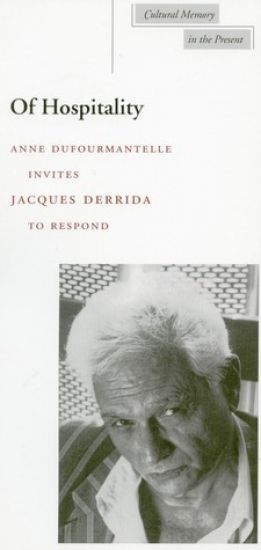
Of Hospitality

Of Hospitality

Jacques Derrida; Anne Dufourmantelle

Stanford University Press
2000
sidottu
These two lectures by Jacques Derrida, "Foreigner Question" and "Step of Hospitality/No Hospitality," derive from a series of seminars on "hospitality" conducted by Derrida in Paris, January 1996. His seminars, in France and in America, have become something of an institution over the years, the place where he presents the ongoing evolution of his thought in a remarkable combination of thoroughly mapped-out positions, sketches of new material, and exchanges with students and interlocutors. As has become a pattern in Derrida's recent work, the form of this presentation is a self-conscious enactment of its content. The book consists of two texts on facing pages. "Invitation" by Anne Dufourmantelle appears on the left (an invitation that of course originates in a response), clarifying and inflecting Derrida's "response" on the right. The interaction between them not only enacts the "hospitality" under discussion, but preserves something of the rhythms of teaching. The volume also characteristically combines careful readings of canonical texts and philosophical topics with attention to the most salient events in the contemporary world, using "hospitality" as a means of rethinking a range of political and ethical situations. "Hospitality" is viewed as a question of what arrives at the borders, in the initial surprise of contact with an other, a stranger, a foreigner. For example, Antigone is revisited in light of the question of impossible mourning; Oedipus at Colonus is read via concerns that also apply to teletechnology; the trial of Socrates is brought into conjunction with the televised funeral of François Mitterrand.
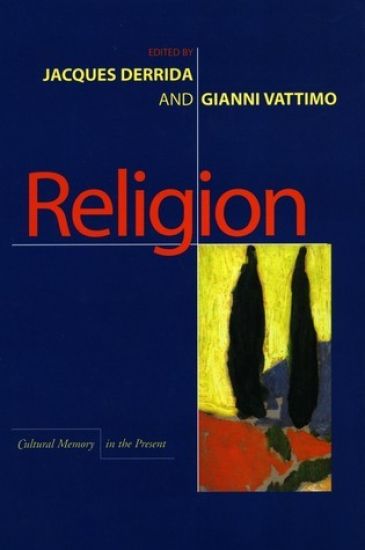
Religion

Religion

Jacques Derrida; Gianni Vattimo

Stanford University Press
1998
sidottu
What should we make of the return to the sacred evidenced by the new vitality of churches, sects, and religious beliefs in many parts of the world today? What are the boundaries between the essential traits of religion and those of ethics and justice? Is there a "truth" to religion? This remarkable volume includes reflections on such questions by three of the most important philosophers of our time—Jacques Derrida, Gianni Vattimo, and Hans-Georg Gadamer. Together with other distinguished thinkers, they address a wide range of questions about the meaning, status, and future prospects of religion. In his meditation on the "return of religion," entitled "Faith and Knowledge: The Two Sources of 'Religion' at the Limits of Mere Reason," Derrida addresses the ways in which this return is intrinsically linked to transformations of which the new media are both the carriers and the symptom. Derrida coins this process one of globalatinization. This neologism signals, among other things, the process of a certain universalization of the Roman word or concept of religion, which tends to become hegemonic, as well as a certain performativity discernible in the new media and in contemporary structures of testimony and confession. Examples of this include, Derrida reminds us, not only the phenomenon of televangelism and televisual stagings of the pope's journeys, and not only the portrayal and self-presentation of Islam, but also the fetishization and becoming virtually absolute of the televisual and the multimedial as such. Using Being and Time as a point of reference, Vattimo suggests that religious experience is both an individual experience and a manifestation of a historical rhythm within which religion regularly appears and disappears. A commentary by Gadamer summarizes and enriches the contributions by Derrida and Vattimo. Four essays by Maurizio Ferraris, Eugenio Trias, Vincenzo Vitiello, and Aldo Giorgio Gargani complete the volume by examining other facets of the "religious."
For What Tomorrow . . .

For What Tomorrow . . .

Jacques Derrida; Elisabeth Roudinesco

Stanford University Press
2004
sidottu
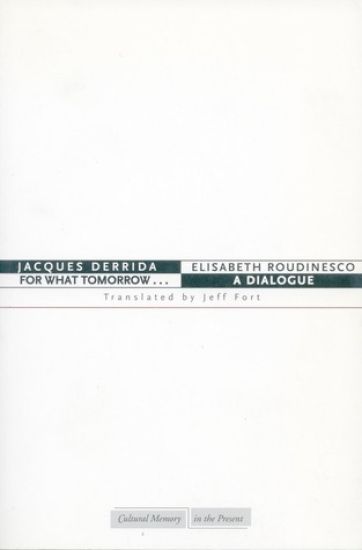
"For what tomorrow will be, no one knows," writes Victor Hugo. This dialogue, proposed to Jacques Derrida by the historian Elisabeth Roudinesco, brings together two longtime friends who share a common history and an intellectual heritage. While their perspectives are often different, they have many common reference points: psychoanalysis, above all, but also the authors and works that have come to be known outside France as "post-structuralist." Beginning with a revealing glance back at the French intellectual scene over the past forty years, Derrida and Roudinesco go on to address a number of major social and political issues. Their extraordinarily wide-ranging discussion covers topics such as immigration, hospitality, gender equality, and "political correctness"; the disordering of the traditional family, same-sex unions, and reproductive technologies; the freedom of the "subject" over and against "scientism"; violence against animals; the haunting specter of communism and revolution; the present and future of anti-Semitism (as well as that which marked Derrida's own history) and the hazardous politics of criticizing the state of Israel; the principled abolition of the death penalty; and, to conclude, a chapter "in praise of psychoanalysis." These exchanges not only help to situate Derrida's thought within the milieu out of which it grew, they also show more clearly than ever how this thought, impelled by a deep concern for justice, can be brought to bear on the social and political issues of our day. What emerges here above all, far from an abstract, apolitical discourse, is a call to take responsibility—for the inheritance of a past, for the singularities of the present, and for the unforeseeable tasks of the future.
For What Tomorrow . . .

For What Tomorrow . . .

Jacques Derrida; Elisabeth Roudinesco

Stanford University Press
2004
pokkari
"For what tomorrow will be, no one knows," writes Victor Hugo. This dialogue, proposed to Jacques Derrida by the historian Elisabeth Roudinesco, brings together two longtime friends who share a common history and an intellectual heritage. While their perspectives are often different, they have many common reference points: psychoanalysis, above all, but also the authors and works that have come to be known outside France as "post-structuralist." Beginning with a revealing glance back at the French intellectual scene over the past forty years, Derrida and Roudinesco go on to address a number of major social and political issues. Their extraordinarily wide-ranging discussion covers topics such as immigration, hospitality, gender equality, and "political correctness"; the disordering of the traditional family, same-sex unions, and reproductive technologies; the freedom of the "subject" over and against "scientism"; violence against animals; the haunting specter of communism and revolution; the present and future of anti-Semitism (as well as that which marked Derrida's own history) and the hazardous politics of criticizing the state of Israel; the principled abolition of the death penalty; and, to conclude, a chapter "in praise of psychoanalysis." These exchanges not only help to situate Derrida's thought within the milieu out of which it grew, they also show more clearly than ever how this thought, impelled by a deep concern for justice, can be brought to bear on the social and political issues of our day. What emerges here above all, far from an abstract, apolitical discourse, is a call to take responsibility—for the inheritance of a past, for the singularities of the present, and for the unforeseeable tasks of the future.
Heidegger, Philosophy, and Politics

Heidegger, Philosophy, and Politics

Jacques Derrida; Hans-Georg Gadamer; Philippe Lacoue-Labarthe; Jean-Luc Nancy

Fordham University Press
2016
sidottu
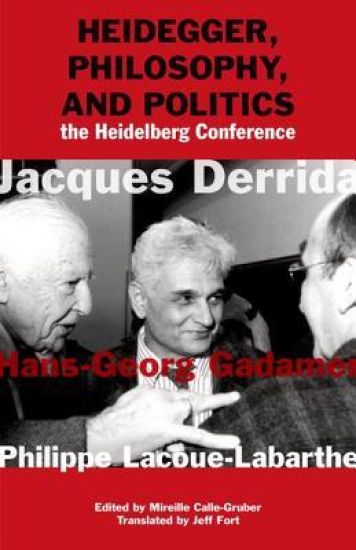
In February 1988, philosophers Jacques Derrida, Hans-Georg Gadamer, and Philippe Lacoue-Labarthe came together in Heidelberg before a large audience to discuss the philosophical and political implications of Martin Heidegger's thought. This event took place in the very amphitheater in which, more than fifty years earlier, Heidegger, as rector of the University of Freiburg and a member of the Nazi Party, had given a speech entitled "The University in the New Reich." Heidegger's involvement in Nazism has always been, and will remain, an indelible scandal, but what is its real relation to his work and thought? And what are the responsibilities of those who read this work, who analyze and elaborate this thought? Conversely, what is at stake in the wholesale dismissal of this important but compromised twentieth-century philosopher? In 1988, in the wake of the recent publication of Victor Farias's Heidegger and Nazism, and of the heated debates that ensued, these questions had become more pressing than ever. The reflections presented by three of the most prominent of Heidegger's readers, improvised in French and transcribed here, were an attempt to approach these questions before a broad public, but with a depth of knowledge and a complex sense of the questions at issue that have been often lacking in the press. Ranging over two days and including exchanges with one another and with the audience, the discussions pursued by these major thinkers remain highly relevant today, especially following the publication of Heidegger's already notorious "Black Notebooks," which have added another chapter to the ongoing debates over this contested figure. The present volume recalls a highly charged moment in this history, while also drawing the debate toward its most essential questions.
Heidegger, Philosophy, and Politics

Heidegger, Philosophy, and Politics

Jacques Derrida; Hans-Georg Gadamer; Philippe Lacoue-Labarthe; Jean-Luc Nancy

Fordham University Press
2016
pokkari
In February 1988, philosophers Jacques Derrida, Hans-Georg Gadamer, and Philippe Lacoue-Labarthe came together in Heidelberg before a large audience to discuss the philosophical and political implications of Martin Heidegger's thought. This event took place in the very amphitheater in which, more than fifty years earlier, Heidegger, as rector of the University of Freiburg and a member of the Nazi Party, had given a speech entitled "The University in the New Reich." Heidegger's involvement in Nazism has always been, and will remain, an indelible scandal, but what is its real relation to his work and thought? And what are the responsibilities of those who read this work, who analyze and elaborate this thought? Conversely, what is at stake in the wholesale dismissal of this important but compromised twentieth-century philosopher? In 1988, in the wake of the recent publication of Victor Farias's Heidegger and Nazism, and of the heated debates that ensued, these questions had become more pressing than ever. The reflections presented by three of the most prominent of Heidegger's readers, improvised in French and transcribed here, were an attempt to approach these questions before a broad public, but with a depth of knowledge and a complex sense of the questions at issue that have been often lacking in the press. Ranging over two days and including exchanges with one another and with the audience, the discussions pursued by these major thinkers remain highly relevant today, especially following the publication of Heidegger's already notorious "Black Notebooks," which have added another chapter to the ongoing debates over this contested figure. The present volume recalls a highly charged moment in this history, while also drawing the debate toward its most essential questions.
Of Grammatology

Of Grammatology

Jacques Derrida; Judith Butler

Johns Hopkins University Press
2016
pokkari
Jacques Derrida's revolutionary approach to phenomenology, psychoanalysis, structuralism, linguistics, and indeed the entire European tradition of philosophy-called deconstruction-changed the face of criticism. It provoked a questioning of philosophy, literature, and the human sciences that these disciplines would have previously considered improper. Forty years after Of Grammatology first appeared in English, Derrida still ignites controversy, thanks in part to Gayatri Chakravorty Spivak's careful translation, which attempted to capture the richness and complexity of the original. This fortieth anniversary edition, where a mature Spivak retranslates with greater awareness of Derrida's legacy, also includes a new afterword by her which supplements her influential original preface. Judith Butler has added an introduction. All references in the work have been updated. One of contemporary criticism's most indispensable works, Of Grammatology is made even more accessible and usable by this new release.
Husserl och geometrins ursprung

Husserl och geometrins ursprung

Jacques Derrida; Edmund Husserl

Bokförlaget Thales
2023
nidottu
Med utgångspunkt i en av Edmund Husserls sista texter, Geometrins ursprung, utvecklar Jacques Derrida här en övergripande analys av fenomenologin med tonvikt på dess förståelse av historia och tradition. Det handlar om att med ledning av geometrin som exempel förstå hur sanning, mening och objektivitet kan uppstå, vidareföras och bestå genom historien. Derrida intresserar sig framför allt för språkets och skriftens roll i denna process. Boken är på samma gång en presentation av fenomenologin och en kritisk granskning av dess förutsättningar. Ur de kritiska reflektionerna framträder flera av de teman som senare skulle utgöra den filosofiska dekonstruktionens hörnpelare: skriften, tidsligheten, närvaron, spåret och skillnaden. På så vis utgör texten också en unik brygga mellan dessa två centrala tankeströmningar. Derridas analys publiceras här tillsammans med Husserls artikel, båda i översättning av Hans Ruin, som också skrivit en kort inledning. Andra reviderade upplagan.
Platons apotek

Platons apotek

Jacques Derrida; Anders Lindström; Sven-Olov Wallenstein

Bokförlaget Faethon
2022
nidottu
»En text är en text bara om den för den första blicken, för förste bäste, döljer lagen för sin sammansättning och reglerna för sitt spel. En text förblir för övrigt alltid oförnimbar. Men lagen och reglerna söker inte skydd i en otillgänglig hemlighet, det är bara så att de aldrig utlämnar sig i nuet åt något som kan kallas en varseblivning i strängare mening « Platons apotek är Jacques Derridas analys av farmakon, det som både kan tjäna som gift och läkemedel. Jan Stolpe har reviderat sin tidigare översättning av texten inför denna nyutgåva. Anders Lindström och Sven-Olov Wallenstein har skrivit ett nytt efterord.
Schibboleth

Schibboleth

Jacques Derrida; Hans Ruin

Bokförlaget Faethon
2022
nidottu
» Utan skrift, oskrivet, växlar icke-skriften över till den fråga om läsning på en tavla som du kanske är. Du är en tavla eller en port: långt senare skall vi se hur ett yttrande kan rikta sig mot, ja, anförtro sig åt en port, förlita sig på en port som är öppen för den andre.« Schibboleth är Jacques Derridas berömda studie av Paul Celans poesi. Den utkom ursprung­ligen 1986 och den svenska översättningen fyra år senare. Här föreligger den i nyutgåva, i reviderad översättning av Aris Fioretos och Hans Ruin. Den senare har också skrivit ett efterord.
Apokalypsen

Apokalypsen

Jacques Derrida; Immanuel Kant; Sven-Olov Wallenstein

Bokförlaget Faethon
2022
nidottu
»På grekiska skulle apokalypsis översätta ord som härletts från det hebreiska verbet gala. Jag hänvisar här till uppslag från André Chouraqui, men utan att från dem hämta någon auktoritet, och jag återkommer till dem. Men jag måste redan nu förvarna er: jag tror att de historier och gåtor gällande översättning jag ska tala om, och som jag kommer att snärja in mig in i av skäl än allvarligare än min inkompetens, inte har något slut.« Apokalypsen samlar två av Jacques Derridas texter om apokalypsen och tre artiklar av Immanuel Kant om alla tings slut och den förnäma tonen i filosofin. Här föreligger dessa samtliga fem texter i översättning av Sven-Olov Wallenstein, som också skrivit inledning och efterord.
Den oändliga dialogen

Den oändliga dialogen

Jacques Derrida; Hans-Georg Gadamer; Sven-Olov Wallenstein

Bokförlaget Faethon
2022
nidottu
»När jag här talar om dialog måste jag medge att jag använder ett ord som av otaliga goda eller dåliga skäl, ch jag ska inte trötta er med att återge dem, under lång tid kommer att förbli främmande för min vokabulär, likt ett främmande språk som skulle kräva omsorgsfulla översättningar med många förbehåll. Och då jag preciserar vad som avses med »inre dialog« gläder jag mig åt att redan ha låtit Gadamer tala i mig.« Den oändliga dialogen innehåller två texter om Paul Celan: Jacques Derridas »Vädurar. Mellan två oändligheter, dikten« och Hans-Georg Gadamers text om Celans diktsvit »Andningskristall«. Båda är översatta av Sven-Olov Wallenstein, som också skrivit ett efterord.
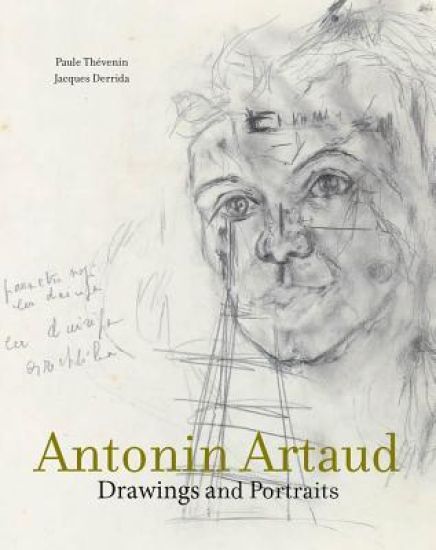
Antonin Artaud

Antonin Artaud

Paule Thévenin; Jacques Derrida

MIT Press
2019
sidottu
Philosophical and biographical accounts of Antonin Artaud's late visual work, all reproduced in color.Antonin Artaud (1896-1948)-stage and film actor, director, writer, and visual artist-was a man of rage and genius. Expelled from the Surrealist movement for his refusal to renounce the theatre, he founded the Theater of Cruelty and wrote The Theater and Its Double, one of the key twentieth-century texts on the topic. Artaud spent nine years at the end of his life in asylums, undergoing electroshock treatments. Released to the care of his friends in 1946, he began to draw again.This book presents drawings and portraits from this late resurgence, all in color. Accompanying the images are texts by by Artaud's longtime friend and editor Paule Thevenin and the philosopher Jacques Derrida."We won't be describing any paintings," Derrida warns the reader. Derrida struggles with Artaud's peculiar language, punctuating his text with agitated footnotes and asides (asking at one point, "How will they translate this?"). Thevenin offers a more straightforward biographical and historical account. (It was on the walls of her apartment that Derrida first saw Artaud's paintings and drawings.) These two texts were previously published by the MIT Press in The Secret Art of Antonin Artaud without the artwork that is their subject. This book brings together art and text for the first time in English.