
Kirjahaku
Etsi kirjoja tekijän nimen, kirjan nimen tai ISBN:n perusteella.
1000 tulosta hakusanalla Adam J Pollack


The Complete Financial History of Berkshire Hathaway 2nd Ed: A Chronological Analysis of Warren Buffett and Charlie Munger's Conglomerate Masterpiece
Adam J. Mead
HARRIMAN HOUSE
2026
sidottu
An authoritative company history of Berkshire Hathaway, fully updated to cover the last five years. Beginning with Berkshire's origins as a struggling textile company, The Complete Financial History of Berkshire Hathaway examines the development of the modern-day conglomerate year-by-year and decade-by-decade, as it transforms into what it is today. This comprehensive analysis distils over 10,000 pages of research material, including Warren Buffett's Chairman's letters, Berkshire Hathaway annual reports and SEC filings, annual meeting transcripts, subsidiary financials, and more. The analysis of each year is supplemented with Buffett's own commentary, and examines all important acquisitions, investments, and other capital allocation decisions. The appendices contain balance sheets, income statements, statements of cash flows, and key ratios dating back to the 1930s, materials brought together for the first time. Combining incredible access with insightful analysis from CEO and author Adam J. Mead, this book allows readers to follow the logic, reasoning, and capital allocation decisions made by Warren Buffett and Charlie Munger from the very beginning. Existing Berkshire shareholders and long-time observers will find new information and refreshing analysis, in this masterful reference guide to the decades of financial moves that built the modern-day Berkshire Hathaway. 'A must-read that belongs on the bookshelf of any serious investor' - Guy Spier, Founder of Aquamarine Capital and author of The Education of a Value Investor

The Complete Financial History of Berkshire Hathaway 2nd ed
Adam J. Mead
HARRIMAN HOUSE PUBLISHING
2026
pokkari
An authoritative company history of Berkshire Hathaway, fully updated to cover the last five years. Beginning with Berkshire's origins as a struggling textile company, The Complete Financial History of Berkshire Hathaway examines the development of the modern-day conglomerate year-by-year and decade-by-decade, as it transforms into what it is today. This comprehensive analysis distils over 10,000 pages of research material, including Warren Buffett’s Chairman’s letters, Berkshire Hathaway annual reports and SEC filings, annual meeting transcripts, subsidiary financials, and more. The analysis of each year is supplemented with Buffett’s own commentary, and examines all important acquisitions, investments, and other capital allocation decisions. The appendices contain balance sheets, income statements, statements of cash flows, and key ratios dating back to the 1930s, materials brought together for the first time. Combining incredible access with insightful analysis from CEO and author Adam J. Mead, this book allows readers to follow the logic, reasoning, and capital allocation decisions made by Warren Buffett and Charlie Munger from the very beginning. Existing Berkshire shareholders and long-time observers will find new information and refreshing analysis, in this masterful reference guide to the decades of financial moves that built the modern-day Berkshire Hathaway. 'A must-read that belongs on the bookshelf of any serious investor' – Guy Spier, Founder of Aquamarine Capital and author of The Education of a Value Investor

This book is about “zero generation” witness literature: texts written by those who died in the Holocaust and who knew, at the time of their writing, that they would not survive.



What if mischief lived in your pocket? Meet the cheeky little monkey who ventures out when the day is done, turning quiet evenings into bursts of laughter, rhyme, and playful mayhem. This joyful picture book celebrates imagination and fun while gently reminding readers of all ages that making things right can be part of the adventure too. Perfect for bedtime snuggles, big giggles, and sharing together again and again.

Before the nineteenth century, American prisons were used to hold people for trial and not to incarcerate them for wrong-doing. Only after independence did American states begin to reject such public punishment as whipping and pillorying and turn to imprisonment instead. In this legal, social, and political history, Adam J. Hirsch explores the reasons behind this change. Hirsch draws on evidence from throughout the early Republic and examines European sources to establish the American penitentiary's ideological origins and parallel development abroad. He focuses on Massachusetts as a case study of the transformation and presents in-depth data from that state. He challenges the notion that the penitentiary came as a by-product of Enlightenment thought, contending instead that the ideological foundations for criminal incarceration had been laid long before the eighteenth century and were premised upon old criminological theories. According to Hirsch, it was not new ideas but new social realities-the increasing urbanization and population mobility that promoted rampant crime-that made the penitentiary attractive to post-revolutionary legislators. Hirsch explores possible economic motives for incarcerating criminals and sentencing them to hard labor, but concludes that there is little evidence to support this. He finds that advocates of the penitentiary intended only that the prison pay for itself through enforced labor. Moreover, prison advocates frequently involved themselves in other contemporary social movements that reflected their concern to promote the welfare of criminals along with other oppressed groups.

An Anthology of Roumanian Women Poets
Sorkin Adam J.; Treptow Kurt W.
CENTER FOR ROMANIAN STUDIES
1998
sidottu


Significantly influencing the sociological study of religion, Hans Mol developed ideas of identity which remain thought-provoking for analyses of how religion operates within contemporary societies. Sacred Selves, Sacred Settings brings current social-religious topics into sharp focus: international scholars analyse, challenge, and apply Mol’s theoretical assertions. This book introduces the unique story of Hans Mol, who survived Nazi imprisonment and proceeded to brush shoulders with formidable intellectuals of the twentieth century, such as Robert Merton, Talcott Parsons, and Reinhold Niebuhr. Offering a fresh perspective on popular subjects such as secularization, pluralism, and the place of religion in the public sphere, this book sets case studies within an intellectual biography which describes Mol’s key influences and reveals the continuing import of Hans Mol’s work applied to recent data and within a contemporary context.

Significantly influencing the sociological study of religion, Hans Mol developed ideas of identity which remain thought-provoking for analyses of how religion operates within contemporary societies. Sacred Selves, Sacred Settings brings current social-religious topics into sharp focus: international scholars analyse, challenge, and apply Mol’s theoretical assertions. This book introduces the unique story of Hans Mol, who survived Nazi imprisonment and proceeded to brush shoulders with formidable intellectuals of the twentieth century, such as Robert Merton, Talcott Parsons, and Reinhold Niebuhr. Offering a fresh perspective on popular subjects such as secularization, pluralism, and the place of religion in the public sphere, this book sets case studies within an intellectual biography which describes Mol’s key influences and reveals the continuing import of Hans Mol’s work applied to recent data and within a contemporary context.
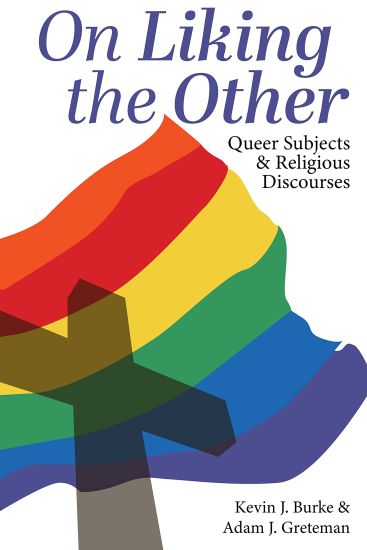
On Liking the Other: Queer Subjects and Religious Discourses studies the intersection of religious and queer discourses in teacher education. It looks at the sometimes difficult topics rooted in these two particular discourses, which are often seen as unwelcome in both public and private educational spaces. In engaging in such a conversation, the authors seek to think about the ways that these discourses, while steeped in discontent, dilemma, and difficulty, might also offer ways to reorient ourselves amidst twenty-first century educational realities. More to the point, the text puts queer histories and logics into conversations with theologies through the concept of liking. Eschewing the typical antagonism that often defines the relationships between religious and queer discourses, this book seeks to look for resonances and overlaps that might provide new habits for conducting the work of meeting in teacher education classrooms and educational worlds. On Liking the Other is an excellent text for a variety of classrooms and courses.

This original six chapter book will briefly review and integrate the basic concepts behind water distribution and movement in the body. This fills a knowledge gap that most medical and undergraduate physiology students acquire when these topics are studied separately. As of now, there is no textbook that fully integrates renal, cardiovascular and water physiology in a clear understandable manner. The book is intended primarily for medical students and undergraduate physiology students. Chapters include: 1) Water and its Distribution; 2) Water Dynamics; 3) Fluid Handling by the Heart and Blood Vessels; 4) Fluid Handling by the Kidneys; 5) Water and Oxygen Delivery; 6) Integration in the Response to Hemorrhage, Volume Depletion, and Water Redistribution.

Back to Basics in Physiology: O2 and CO2 in the Respiratory and Cardiovascular Systems exploits the gap that exists in current physiology books, tackling specific problems and evaluating their repercussions on systemic physiology. It is part of a group of books that seek to provide a bridge for the basic understanding of science and its direct translation to the clinical setting, with a final aim of helping readers further comprehend the basic science behind clinical observations. The book is interspersed with clinical correlates and key facts, as the authors believe that highlighting direct patient care issues leads to improved understanding and retention. Physiology students, including graduate and undergraduate students, nursing students, physician associate students, and medical students will find this to be a great reference tool as part of an introductory course, or as review material.
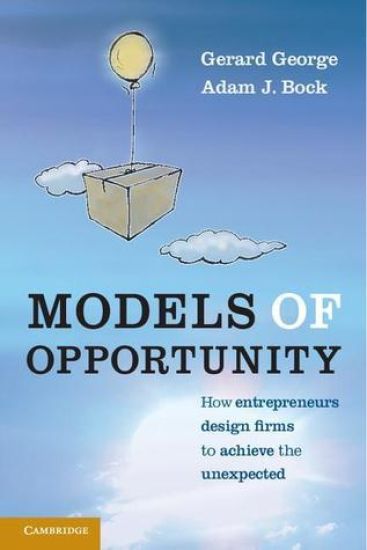
Entrepreneurship is changing. Technology and social networks create a smaller world, but widen the opportunity horizon. Today's entrepreneurs build organisations and create value in entirely new ways and with entirely new tools. Rather than just exploit new ideas, innovative entrepreneurs design organisations to make sense of unlikely opportunities. The time has come to overhaul what we know about entrepreneurship and business models. Models of Opportunity links scholarly research on business models and organisational design to the reality of building entrepreneurial firms. It provides actionable advice based on a deeper understanding of how business models function and change. The six insights extend corporate strategy and entrepreneurship in a completely new direction. Case studies of innovative companies across industries demonstrate how visionary entrepreneurs achieve unexpected results. The insights, tools and cases, provide a fresh perspective on emerging trends in entrepreneurship, organisational change and high-growth firms.
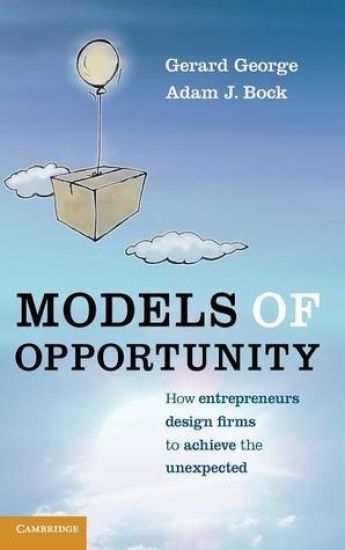
Entrepreneurship is changing. Technology and social networks create a smaller world, but widen the opportunity horizon. Today's entrepreneurs build organisations and create value in entirely new ways and with entirely new tools. Rather than just exploit new ideas, innovative entrepreneurs design organisations to make sense of unlikely opportunities. The time has come to overhaul what we know about entrepreneurship and business models. Models of Opportunity links scholarly research on business models and organisational design to the reality of building entrepreneurial firms. It provides actionable advice based on a deeper understanding of how business models function and change. The six insights extend corporate strategy and entrepreneurship in a completely new direction. Case studies of innovative companies across industries demonstrate how visionary entrepreneurs achieve unexpected results. The insights, tools and cases, provide a fresh perspective on emerging trends in entrepreneurship, organisational change and high-growth firms.

How to Critically Read the Scientific Research Literature
Genevive Bjorn; Adam J. Burgasser
Cambridge University Press
2026
pokkari
Unlock the secrets of scientific articles with CERIC: Claim, Evidence, Reasoning, Implications, and Context. This approachable guide helps readers break down dense articles into their core arguments using a focused hunt-and-seek approach, enabling deeper insight and engagement with the research literature. Each chapter features worked examples drawn from multiple scientific disciplines, pre-empts common misunderstandings, and provides knowledge checks to reinforce learning. Readers emerge able to identify and evaluate claims and evidence, spot gaps in reasoning, and articulate their findings through presentations and literature critiques – skills essential for success in higher education, industry, and informed citizenship. Whether you are an undergraduate tackling your first research article, a graduate student preparing a literature review, or an instructor teaching scientific literacy, the evidence-based CERIC Method transforms reading apprehension into confidence. Accompanying student and instructor supplements can be found online, with further discipline-specific examples and guidance on course preparation and professional development.